Clutter has a funny way of showing up like an uninvited party guest. It starts with one receipt on the counter, one sweater on the chair, one mystery charger in the junk drawer, and suddenly your home looks like it lost a respectful disagreement with gravity. The good news is that getting organized does not require a color-coded spreadsheet, a spiritual awakening, or matching acrylic bins that cost more than your groceries. Sometimes, all you need is a simple system that helps you make decisions fast.
That is exactly why the 4 container method works so well. It takes the big, dramatic problem called “too much stuff” and breaks it into four small, manageable decisions. Instead of staring at a messy room and feeling personally attacked by a pile of mail, you sort each item into one of four containers and keep moving. It is practical, flexible, beginner-friendly, and effective in nearly every room of the house.
Whether you are tackling a crowded closet, a chaotic kitchen, an overflowing garage, or that one drawer full of batteries, scissors, rubber bands, and several objects you do not recognize, this decluttering method can help you reset your space without losing your mind. Here is how it works, why it works, and how to use it to solve almost any clutter problem for good.
What Is the 4 Container Method?
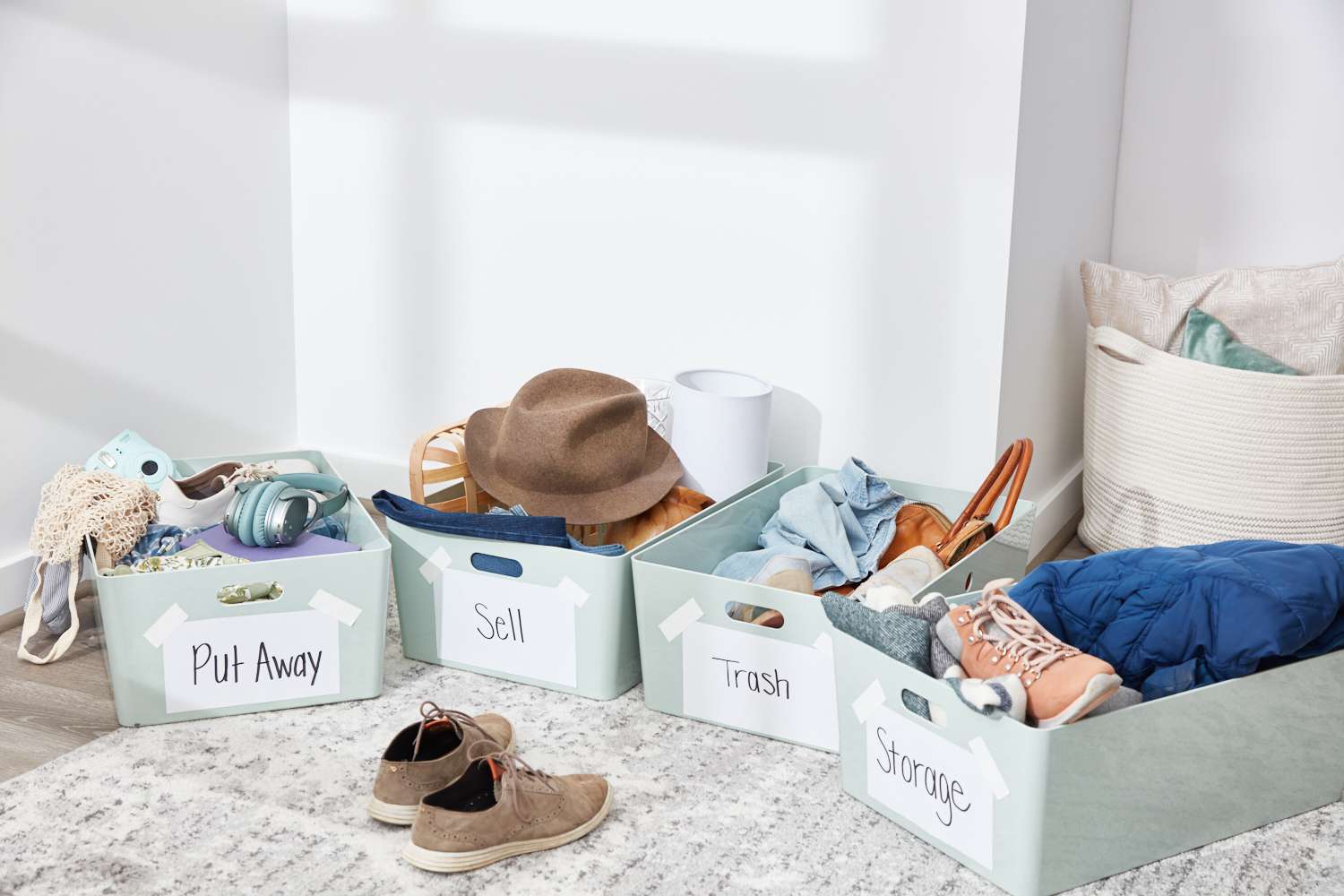
The 4 container method is a simple home organization strategy that asks you to sort every item in a space into one of four categories. The labels can vary a little depending on the organizer, but the most useful version looks like this:
- Keep – items you use, love, or genuinely need.
- Donate or Sell – items in good condition that no longer serve you.
- Trash or Recycle – broken, expired, unusable, or worn-out items.
- Relocate or Store – things that belong somewhere else or are only used seasonally.
That is the whole genius of it. Every object gets a job. Every job has a destination. No long debates. No “I will think about it later” pile becoming a permanent resident on the floor. You decide, place, and continue.
This method is also closely related to other popular decluttering systems built around the same logic: clear out the space, group like items together, cut out the excess, and contain what remains. In other words, decluttering should happen before organizing. There is no reason to buy beautiful storage solutions for stuff you do not even want to keep. That is like putting a tuxedo on a problem.
Why the 4 Container Method Works So Well
The reason this organizing system works is not complicated. It reduces decision fatigue. Messy spaces feel overwhelming because they ask you to make hundreds of choices at once. What stays? What goes? Where does it belong? What if you need it someday? What if that someday is weirdly specific, like a pirate-themed brunch in October?
The 4 container method shrinks those questions into four choices. That narrow framework keeps you moving and prevents perfectionism from taking over. You do not need to create the perfect closet, pantry, or office in one afternoon. You just need to sort the items honestly.
It also creates visible progress quickly. Even a single drawer can look dramatically better once the trash is gone, the duplicates are out, and the random wanderers are returned to their proper homes. Those quick wins matter. They build momentum, and momentum is often the difference between finishing a project and abandoning it halfway through to “take a short break” that somehow lasts six months.
How to Set Up the Method in 10 Minutes
Choose a Small Starting Zone
Start with one shelf, one drawer, one nightstand, one bathroom cabinet, or one section of a closet. Do not begin with the entire garage unless you are unusually brave or have recently had a very strong cup of coffee. Smaller spaces give you a quick win and help you learn the rhythm of the method.
Grab Your Four Containers
You can use boxes, bins, baskets, laundry hampers, paper bags, or even clearly marked areas on the floor. Fancy containers are optional. Labels are not. Write them clearly: Keep, Donate/Sell, Trash/Recycle, and Relocate/Store.
Set a Timer
Give yourself 15 to 30 minutes. A time limit keeps the task from ballooning into an all-day ordeal and helps you stay focused. You are not trying to renovate your personality. You are just trying to clean a drawer.
How to Use the 4 Container Method Step by Step
Step 1: Empty the Space
Take everything out. Yes, everything. This part looks worse before it looks better, but it is essential. Removing all the contents helps you see the true volume of what you own, spot duplicates, and clean the empty area before anything goes back in. It also prevents the sneaky “I guess this can stay” loophole that happens when you organize around items instead of evaluating them.
Step 2: Sort One Item at a Time
Pick up each item and place it directly into one of the four containers. Resist the urge to create bonus categories like “maybe,” “later,” or “let me emotionally process this old takeout menu.” Keep the process simple and decisive.
Step 3: Be Honest About What Belongs in the Keep Container
The keep container is for things you actually use, need, or truly value. That includes daily-use items, working essentials, favorite pieces, and sentimental items that matter enough to earn space in your home. It is not a witness protection program for everything you feel mildly guilty about getting rid of.
A useful test is to ask:
- Do I use this regularly?
- Would I buy this again today?
- Does it serve a real purpose in my life right now?
- Do I have room to store it properly?
Step 4: Fill the Donate or Sell Container with Good Items You No Longer Need
This is where a lot of clutter goes to begin its second life. Clothes that fit but never get worn, duplicate kitchen tools, books you will not reread, decor that no longer suits your taste, and unopened household items can all go here. If something is still usable, someone else may want or need it.
Be realistic, though. If you would not give it to a friend, it probably should not be donated. Torn, dirty, broken, or incomplete items belong in the trash or recycling, not in a donation bag that quietly transfers your clutter problem to somebody else.
Step 5: Be Ruthless With Trash and Recycling
This container is the low-hanging fruit. Expired toiletries, dried-out pens, dead chargers, cracked food containers, broken toys, stained T-shirts, mystery screws, outdated paperwork, and empty boxes should leave without a farewell parade. Recycle what your area accepts, trash what it does not, and enjoy the immediate visual relief.
Step 6: Use Relocate or Store for the Wanderers
This container is the secret weapon. A surprising amount of clutter is not useless at all. It is simply lost. Scissors belong in the office, not the bathroom. A tape measure belongs in the utility drawer, not under the couch. Holiday serving platters can move to storage. Winter scarves should not be hogging prime summer closet space.
The relocate or store box catches all those wandering objects and keeps them from bouncing right back into the newly cleaned space.
Step 7: Put Back Only What Earned Its Spot
Once the sorting is done, clean the empty space and return only the items from the keep category that belong there. Group similar items together. Use bins, dividers, trays, or labels only after you know what is staying. Organizing is easier and cheaper when there is simply less stuff to manage.
Best Places to Use the 4 Container Method
Closets
This method is perfect for clothing because it helps you separate what you wear from what you merely own. Keep the pieces that fit, feel good, and match your life. Donate clothes in good condition that no longer suit you. Trash the damaged items. Store off-season clothing elsewhere if needed.
Kitchen Cabinets and Pantries
Sort out duplicates, expired food, chipped mugs, and novelty gadgets you used once during an overly ambitious phase. Keep the items that support your daily routine. Relocate specialty appliances and seasonal serving pieces if they are crowding your everyday space.
Bathrooms
Bathrooms get messy fast because small items multiply like they are training for the Olympics. Toss expired products, combine duplicates, donate unopened items if appropriate, and keep only what you actually use. Your morning routine should not require an archaeological dig.
Home Offices and Paper Clutter
Paper clutter loves to pretend it is important. Often, it is not. Recycle junk mail, shred old documents you no longer need, relocate papers that belong in another room, and create a simple filing system for the few that deserve to stay. Pens, cords, chargers, notebooks, and office supplies also benefit from fast sorting.
Kids’ Spaces
Toy clutter can make an entire room feel noisy. Keep the favorites and the ones that still get regular play. Donate what has been outgrown. Trash broken toys and incomplete games. Store a few items on rotation if your family prefers fewer toys visible at once.
Mistakes That Make Decluttering Harder
Starting Too Big
Nothing kills motivation faster than choosing the hardest zone in the house on day one. Start small, build confidence, and then work your way up.
Leaving Donation Bags in the House
Once a donation bag sits around for three days, it starts whispering sweet nonsense like, “Maybe keep the blue sweater.” Get outgoing items out quickly. Drop them off, schedule a pickup, or move them to the car immediately.
Buying Storage Too Soon
Storage does not fix clutter by itself. It just gives clutter a prettier apartment. Declutter first, then choose containers that fit what is left.
Letting the Keep Container Get Out of Control
If everything ends up in keep, the method is not the problem. The editing is. Be kind to yourself, but be honest. Space is not unlimited, and every item you keep should have a home.
How to Handle Sentimental Clutter Without Melting Down
Sentimental items are often the hardest category because they are tied to memory, identity, family, and guilt. The answer is not to become a robot. The answer is to add boundaries.
Try limiting keepsakes to one memory box per person, one shelf, or one bin. Keep the best of the best instead of every single reminder. Take photos of bulky items you cannot store. Display a few meaningful pieces instead of hiding twenty-five sentimental objects in a cardboard box you never open.
If you get stuck, save sentimental items for the end of your decluttering session, when you have already built some decision-making momentum. That way, your emotions are not driving the entire project from the first minute.
How to Keep the Clutter From Coming Back
The 4 container method is excellent for a reset, but long-term success comes from a few habits:
- Do a 10-minute weekly reset in high-traffic areas.
- Return misplaced items daily instead of creating “temporary” piles.
- Keep a donation bag in a closet or laundry room year-round.
- Leave some breathing room on shelves and in drawers.
- Revisit problem areas seasonally before they get out of hand again.
Think of decluttering like brushing your teeth. One marathon session helps, but a small amount of regular maintenance keeps things from becoming alarming.
Real-Life Experiences With the 4 Container Method
One of the best things about the 4 container method is how quickly it changes the feeling of a space. In real life, people often start a decluttering project thinking the problem is laziness, lack of discipline, or not having enough storage. Then they try this method and realize the real issue was decision overload. When every item is asking for a verdict, the brain stalls. Four containers solve that immediately.
A junk drawer is a classic example. At first glance, it looks like a tiny mess. In reality, it is usually a greatest-hits album of household confusion: expired coupons, loose batteries, random keys, rubber bands, mystery instruction manuals, and pens that retired years ago without giving notice. Using the 4 container method, that drawer can often be reset in under 20 minutes. Trash leaves first, useful items are grouped, duplicates are reduced, and the objects that belong elsewhere finally go home. The drawer does not just look better. It becomes usable again.
The method also shines in closets. Many people discover that the “clothing problem” is not actually a shortage of hangers. It is a volume problem. When shirts that do not fit, shoes that pinch, and “someday” outfits are removed, the closet suddenly functions like a closet instead of a textile museum. The keep container becomes a collection of clothes that fit real life now. The donate container fills faster than expected. The relocate container catches off-season pieces. And the trash container quietly handles the worn-out items no one wants to admit were done years ago.
Families often have the strongest reaction to the relocate container. That is because so much household clutter is made up of useful items in the wrong place. Toys drift into the living room, chargers migrate to bedrooms, mail piles up on kitchen counters, and cleaning supplies end up wherever gravity last saw them. The relocate box turns chaos into a delivery route. Instead of getting distracted by walking each item back immediately, you keep sorting until the session is done. Then you do one clean sweep through the house and return everything where it belongs. It is efficient, and it keeps you from getting sidetracked halfway through.
Another common experience is the emotional relief that comes from seeing obvious progress. A cluttered room can make people feel guilty before they even start. But once the first bag of trash is full and the donation box has real weight to it, the mood changes. The room feels lighter, and so does the person working on it. That psychological shift matters. It turns decluttering from a shame-based chore into a practical win.
There is also a lesson that comes up again and again: speed beats perfection. People who succeed with this method usually do not ask twenty-seven philosophical questions about every spatula, scarf, or charger. They make a reasonable decision and move on. The point is not to create a museum-quality pantry. The point is to make your home easier to live in.
Some people do hit a wall with sentimental items, hobby supplies, or expensive purchases they regret. That is normal. In those cases, the method still helps because it reveals exactly where the resistance is. Maybe you do not have a clutter problem in general. Maybe you have a “half-finished craft project” problem. That kind of insight makes future organizing much easier because you can solve the actual issue instead of just shuffling things around.
Perhaps the most encouraging experience of all is that the method works in ordinary homes, not just picture-perfect ones. It works in apartments with limited storage, busy family homes, shared spaces, dorm rooms, and houses where life has been hectic for a while. You do not need a perfect schedule or unlimited energy. You need four containers, one small starting point, and the willingness to decide. That is why this method keeps earning fans. It is not fancy. It is simply useful.
Conclusion
If clutter has made your home feel cramped, stressful, or harder to manage, the 4 container method is one of the simplest ways to take back control. It works because it removes confusion. Instead of trying to “get organized” in some vague, intimidating way, you sort every item into four clear outcomes: keep, donate or sell, trash or recycle, and relocate or store.
That structure makes the process faster, easier, and far less emotional. Start with one small area, make honest decisions, and move outgoing items out quickly. Once you do that a few times, you will notice something wonderful: your home starts working for you again. And honestly, that is a lot nicer than living under the rule of a drawer full of expired coupons and three lonely twist ties.