Fresh kitchen cabinet colors can do what new appliances, fancy backsplash tile, and one heroic Saturday trip to the hardware store sometimes cannot: make the whole kitchen feel reborn. Cabinets take up a huge amount of visual space, so their color sets the mood before the coffee maker even has a chance to save your personality.
Inspired by Bob Vila’s classic cabinet color conversation and updated with today’s warmer, earthier, more personal kitchen trends, this guide explores 14 cabinet colors that feel fresh without screaming, “I was chosen during a very emotional Pinterest spiral.” From soft white and mushroom beige to smoky jade, navy, terracotta, and dramatic black, these ideas work for full remodels, weekend repainting projects, and strategic island makeovers.
Why Cabinet Color Matters More Than You Think
Kitchen cabinets are not shy. They cover walls, frame appliances, surround countertops, and quietly judge your snack choices at midnight. Because they occupy so much real estate, the right cabinet paint color can brighten a small kitchen, warm up a cold one, make older cabinets look intentional, and create a more polished design without replacing every box and drawer.
The freshest kitchen cabinet colors right now lean warmer, softer, and more natural. Cool grays and stark whites are no longer the only “safe” options. Homeowners are embracing greens that feel botanical, blues that act like neutrals, rich browns that flatter wood floors, and creamy shades that look relaxed instead of sterile. The best part? Fresh does not have to mean trendy for five minutes. The goal is color with personality, but also enough staying power that you will not want to repaint before the toaster gives up.
The 14 Freshest Kitchen Cabinet Colors
1. Soft Warm White
Warm white cabinets remain a classic for a reason: they brighten the room, flatter nearly every countertop, and make small kitchens feel more open. The key is choosing a white with a little cream, beige, or gray in it, rather than a blinding laboratory white. Soft warm white pairs beautifully with brass hardware, oak floors, marble-look quartz, butcher block, and handmade tile.
This color is perfect if you want a clean kitchen that still feels welcoming. It is especially smart for resale because buyers can imagine their own style in the space. To keep it from looking flat, layer in texture: woven shades, natural wood stools, unlacquered brass, or a patterned runner that can handle crumbs with dignity.
2. Mushroom Beige
Mushroom beige is the grown-up cousin of gray. It has depth, warmth, and a slightly earthy undertone that makes cabinets look custom, even when they are standard builder-grade boxes with new paint and a dream. Unlike cool gray, mushroom does not make a kitchen feel chilly. It works well with stone counters, creamy walls, black accents, and medium wood tones.
Use mushroom on all cabinets for a calm, tailored kitchen, or pair it with white uppers for a light two-tone look. It is also forgiving in busy households because it hides smudges better than bright white. In other words, it understands real life, including children, pets, and adults who somehow miss the drawer pull every time.
3. Sage Green
Sage green has become one of the most loved kitchen cabinet colors because it delivers color without chaos. It feels natural, gentle, and timeless, especially when paired with white walls, warm wood, soapstone-style counters, or aged brass pulls. Sage is ideal for farmhouse, cottage, transitional, and modern organic kitchens.
The trick is to choose a sage with enough gray or olive in it. Too minty, and the kitchen can drift into toothpaste territory. A muted sage creates a relaxed, garden-inspired feeling that works beautifully in both sunny and low-light rooms. It is fresh, but not fussy.
4. Smoky Jade
Smoky jade is a deeper green-blue that brings drama without going full haunted mansion. It feels rich, elegant, and slightly moody, especially on lower cabinets or a kitchen island. This color works well with marble-look surfaces, warm white walls, champagne bronze hardware, and natural textures such as rattan or oak.
If you love green but want something more sophisticated than sage, smoky jade is a strong contender. It gives cabinets a jewel-box quality while still feeling grounded. In a small kitchen, use it below the counter line with lighter upper shelves or cabinets. In a larger space, go bold with full-height cabinetry and let the color do the heavy lifting.
5. Olive Green
Olive green cabinets are earthy, confident, and surprisingly versatile. They pair well with cream, terracotta, walnut, black, and brushed gold. Olive can feel rustic in a farmhouse kitchen, modern with flat-panel doors, or European-inspired when combined with stone floors and simple hardware.
This shade is especially good for homeowners who want a kitchen that feels warm and collected rather than newly unboxed. Choose a muted olive for everyday livability. A darker olive can make a strong statement, but it usually looks best with good lighting and a lighter countertop to keep the room balanced.
6. Dusty Blue
Dusty blue is one of the easiest cabinet colors to live with because it has charm without being loud. It works beautifully in coastal, cottage, traditional, and vintage-inspired kitchens. Think pale blue with gray undertones, not baby blue. The gray keeps it calm; the blue keeps it cheerful.
Dusty blue cabinets look especially fresh with white subway tile, butcher block counters, polished nickel hardware, and open shelving. Use it on an island for a subtle pop, or paint all lower cabinets and keep uppers white. It gives the room a little personality while still behaving like a neutral at family gatherings.
7. Slate Blue
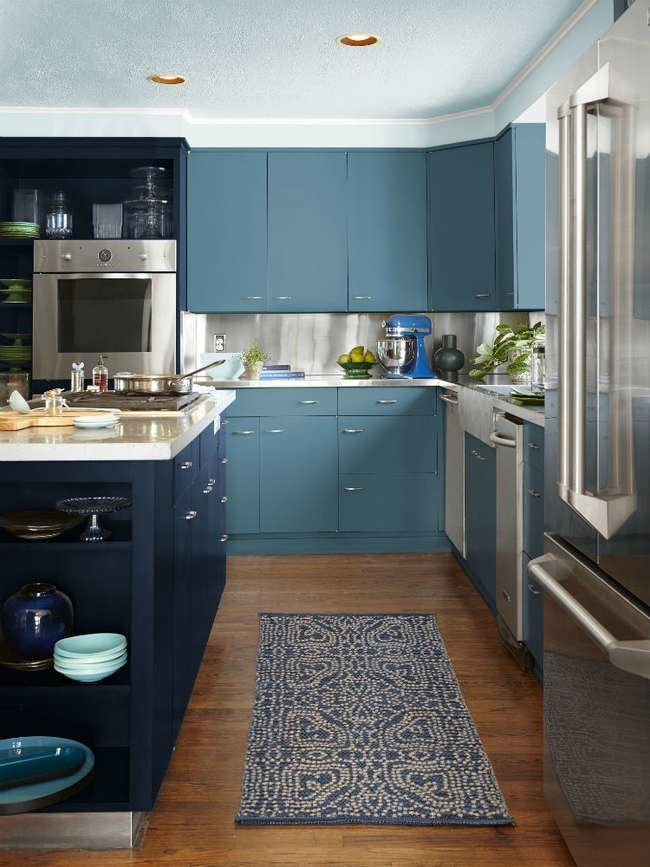
Slate blue is deeper and more tailored than dusty blue. It has a sophisticated gray base that makes it feel calm, not nautical by default. This is a great choice if navy feels too dark but pale blue feels too sweet. Slate blue works with white quartz, stainless steel, black fixtures, walnut shelves, and handmade zellige-style tile.
For a polished look, use slate blue on shaker-style cabinets with simple hardware. For a modern look, try it on slab-front doors with matte black pulls. It is also a strong option for open-concept kitchens because it adds color while remaining easy to coordinate with living room furniture.
8. Classic Navy
Navy cabinets are bold, but they have earned their place as a modern classic. A deep blue island can anchor an all-white kitchen, while full navy cabinetry creates a tailored, high-end effect. Navy looks fantastic with brass, copper, polished nickel, warm wood, and white counters.
The secret is balance. If you use navy on every cabinet, keep the backsplash and countertop lighter. If your kitchen has limited natural light, consider navy lowers with white or cream uppers. The result feels intentional and elegant, not like the kitchen is wearing a tuxedo to breakfast for no reason.
9. Charcoal Gray
Charcoal gray is a powerful alternative to black. It brings depth, contrast, and a sleek edge while feeling a little softer than true black. Charcoal cabinets are especially attractive with light stone countertops, white walls, stainless appliances, and wood flooring.
Choose charcoal with warm undertones if your kitchen already has beige, cream, or brown elements. Choose a cooler charcoal if your space leans modern with stainless steel and crisp white finishes. Matte or satin sheens usually work best because they hide minor cabinet imperfections better than glossy finishes.
10. Matte Black
Matte black cabinets are dramatic, stylish, and surprisingly practical when used thoughtfully. They can hide dents and age better than glossy black, which reflects every little flaw like it has a personal vendetta. Matte black works best with strong contrast: pale counters, warm wood floors, white walls, or light backsplash tile.
Use black on lower cabinets, a pantry wall, or an island if you want impact without overpowering the room. Full black kitchens can be stunning, but they need good lighting, layered textures, and a little warmth from wood, brass, leather, or stone. Done well, black cabinets look expensive even when the project budget was “please do not ask.”
11. Terracotta
Terracotta is warm, earthy, and full of character. It sits between orange, brown, clay, and muted red, which makes it more livable than a bright orange cabinet color. Terracotta pairs beautifully with cream walls, natural stone, white oak, bronze hardware, and handmade tile.
This color is excellent for homeowners who want a kitchen with soul. It can feel Mediterranean, Southwestern, rustic, or modern depending on the cabinet style and surrounding materials. For a lower-risk approach, paint only the island or lower cabinets terracotta and keep the rest of the kitchen neutral.
12. Warm Mahogany Red
Warm mahogany red is not shy, but it is much more refined than fire-engine red. It has brown and burgundy undertones that make it feel grounded, historic, and luxurious. This color works beautifully in kitchens with natural wood, creamy stone, unlacquered brass, and traditional details.
Try warm mahogany on a butler’s pantry, island, or lower cabinets if you want a memorable design moment. In larger kitchens, it can be used more generously, especially when balanced with soft walls and natural materials. It gives the room confidence, and frankly, every kitchen that survives holiday cooking deserves confidence.
13. Butter Yellow
Butter yellow cabinets bring warmth and optimism without looking cartoonish. The best versions are soft, creamy, and slightly muted. They brighten cloudy rooms, flatter vintage details, and make a kitchen feel cheerful even before anyone has located the coffee filters.
Pair butter yellow with white walls, butcher block, pale stone, or blue-gray accents. It works especially well in cottage kitchens and older homes where a sterile modern palette would feel out of place. Avoid overly bright yellow unless you truly want the cabinets to announce themselves from the driveway.
14. Natural Wood Brown
Not every fresh cabinet color comes from a paint can. Natural wood tones are back in a big way, especially white oak, walnut, light stains, and medium brown finishes. Wood cabinetry adds warmth, grain, and texture that painted cabinets cannot fully imitate.
If your existing cabinets have good-quality wood, refinishing may be smarter than painting. Light oak feels airy and modern; walnut feels rich and architectural; medium brown creates a grounded, lived-in look. To keep wood cabinets feeling current, pair them with clean hardware, simple counters, and a restrained backsplash. Let the grain be the star, not the opening act.
How to Choose the Best Cabinet Color for Your Kitchen
Start With the Light
Paint color changes dramatically throughout the day. A lovely sage in morning light can look gray by dinner. A cream that feels soft in the store can turn yellow under warm bulbs. Always test large swatches on several cabinet doors or sample boards, then view them in morning, afternoon, and evening light.
Respect the Fixed Finishes
Your cabinet color should cooperate with the surfaces that are staying: floors, counters, backsplash, appliances, and trim. If your countertop has warm veining, warm whites, mushroom tones, olive, terracotta, and wood finishes usually play nicely. If your kitchen has cool stone, stainless steel, and crisp white tile, slate blue, navy, charcoal, or soft white may feel more natural.
Use Two-Tone Cabinets Carefully
Two-tone kitchens are still popular because they let you enjoy color without committing every cabinet to the cause. A common formula is light upper cabinets with darker lower cabinets or a statement island. Keep the contrast intentional. Warm white with sage, cream with navy, mushroom with walnut, or soft white with smoky jade all feel balanced.
Choose the Right Sheen
Kitchen cabinets take daily abuse from steam, fingerprints, cooking oil, and mysterious splatters nobody in the house will confess to. Satin and semi-gloss finishes are popular because they are easier to wipe down than flat paint. Matte finishes can look beautiful on dark colors, but they need a durable cabinet-grade product to stand up to real kitchen life.
Cabinet Painting Tips for a Fresher Finish
A beautiful cabinet color can only do so much if the prep work is rushed. Remove doors and hardware, label everything, clean grease thoroughly, sand or degloss, prime properly, and use a paint designed for cabinets, trim, or enamel-like durability. Thin, even coats are better than one thick coat that looks like frosting applied by a tired raccoon.
Do not skip curing time. Cabinet paint may feel dry before it is fully hardened. Reinstalling doors too early can lead to sticking, scratches, and emotional damage. Give the finish time to cure, then add hardware that suits the color. Brass warms up greens and blues, black sharpens whites and wood, and polished nickel keeps classic kitchens feeling crisp.
Experience Notes: What Real Cabinet Color Projects Teach You
After seeing how cabinet colors behave in real homes, one lesson becomes obvious: the “best” color is rarely the one that looks prettiest on a tiny paint chip. It is the one that works with the room’s light, the family’s habits, and the finishes that are not changing. A smoky green cabinet color may look luxurious in a photo, but if the kitchen has a busy brown granite counter with strong orange flecks, a softer mushroom or cream may create a calmer result. The cabinet color has to join the existing team, not walk in wearing sunglasses and demanding a solo.
Warm whites are often the safest choice, but they are not automatically boring. In real kitchens, creamy white cabinets can make older tile look intentional, brighten shadowy corners, and create a flexible background for seasonal decor. The mistake is choosing a white without testing undertones. One homeowner may discover that a cool white makes their beige floor look dingy, while another finds that a creamy white turns too yellow under warm LEDs. Testing is not optional; it is the kitchen version of measuring twice and avoiding a minor domestic crisis.
Greens tend to make people happiest over time. Sage, olive, eucalyptus, and smoky jade all bring a connection to nature, which helps the kitchen feel calmer. These shades also hide everyday wear better than pure white. In busy kitchens, that matters. A family that cooks nightly, packs lunches, feeds pets, and hosts relatives will usually appreciate a forgiving color. Cabinets are not museum pieces. They are touched, bumped, leaned on, splashed, and occasionally attacked by spaghetti sauce.
Dark colors are most successful when the room has contrast and texture. Navy, charcoal, mahogany, and matte black can look stunning, but they need visual breathing room. Light countertops, open shelves, glass doors, reflective fixtures, or pale walls can keep the kitchen from feeling too heavy. Dark lower cabinets with light uppers are a practical compromise, especially for homeowners who want drama but still need the room to feel open on Monday morning.
The biggest surprise with cabinet color projects is how much hardware changes the final result. The same sage cabinet can look farmhouse with cup pulls, modern with slim black bars, and elegant with aged brass knobs. Before judging the color, hold up hardware samples and look at them with the countertop and backsplash. Cabinet color is not a solo decision; it is a design conversation.
Finally, fresh does not mean fearless. A kitchen can feel new with a subtle shift from cold gray to warm mushroom, from stark white to soft cream, or from orange-toned wood to a cleaner natural stain. The freshest cabinet colors are the ones that make the kitchen feel more like the people who use it. That is the real win: a space that looks current, functions daily, and still feels good after the trend cycle moves on to whatever color social media decides is “the new neutral” next week.
Conclusion
The freshest kitchen cabinet colors are not just about chasing trends. They are about creating a kitchen that feels brighter, warmer, calmer, richer, or more personal without losing long-term appeal. Soft warm white, mushroom beige, sage green, smoky jade, olive, dusty blue, slate blue, navy, charcoal, matte black, terracotta, mahogany red, butter yellow, and natural wood all offer different ways to refresh the heart of the home.
Before you commit, test samples, study the light, compare colors against fixed finishes, and think about how much maintenance your household can realistically handle. A beautiful kitchen cabinet color should support real life, not require everyone to tiptoe around with clean hands and pure intentions. Choose wisely, prep patiently, and your cabinets can look fresh for years.