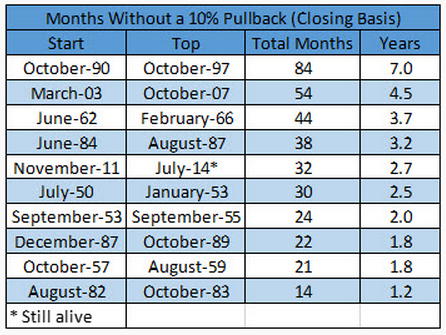
A long stock market winning streak can make investing look suspiciously easy. Prices rise, account balances glow green, and every modest dip appears to be another convenient buying opportunity. Eventually, investors begin acting as though the market has signed a legally binding agreement never to fall again.
Then a correction arrives and reminds everyone that Wall Street did not, in fact, abolish gravity.
Stock corrections after long winning streaks are not unusual accidents. They are a recurring feature of financial markets. Extended rallies can stretch valuations, encourage speculative behavior, concentrate portfolios in recent winners, and create unrealistic expectations. A relatively small disappointment may then trigger profit-taking, faster trading, and a wider retreat.
That does not mean every winning streak is about to end in disaster. Strong markets can remain strong for years, and record highs often lead to additional record highs. The important lesson is more nuanced: a long rally may increase vulnerability, but it cannot tell investors exactly when a correction will begin, how deep it will become, or how quickly prices will recover.
What Is a Stock Market Correction?
A stock market correction is generally defined as a decline of at least 10% from a recent high. The label may apply to a broad index, an individual stock, a sector, or another asset. When a broad market index falls approximately 20% or more from its high, the decline is typically described as a bear market.
These thresholds are useful, but they are not laws of financial physics. A 9.8% decline does not feel delightful simply because it missed the conventional correction line by two-tenths of a percentage point. The terms mainly give investors a consistent vocabulary for discussing the size of a downturn.
Correction, Pullback, or Bear Market?
A pullback is often used to describe a decline of roughly 5% to 10%. A correction usually begins around 10%, while a bear market commonly refers to losses of 20% or more. A crash is less precisely defined but generally involves an unusually fast, severe drop accompanied by extreme fear or market dysfunction.
Corrections are considerably more common than bear markets. Long-term research from major investment firms suggests that the S&P 500 has historically experienced a decline of at least 10% about once every 18 months, although corrections do not politely follow a calendar. Several may occur close together, followed by a long quiet stretch.
Why Corrections Often Follow Long Winning Streaks
A winning streak does not directly cause a correction. Markets do not become exhausted in the way runners do. However, the conditions created during a prolonged advance can make the market more sensitive to bad news.
Valuations Become Less Forgiving
When stock prices rise faster than corporate earnings, valuation multiples expand. Investors are effectively paying more for every dollar of profit. High valuations do not automatically produce a decline, but they leave less room for disappointment.
A company reporting excellent growth may still see its stock fall if investors expected growth to be spectacular. During an expensive market, “good” can become the new “not good enough.” Wall Street can be a demanding dinner guest.
Investor Confidence Turns Into Complacency
After months or years of gains, investors may begin treating recent performance as a permanent condition. They increase stock allocations, buy highly volatile companies, borrow to invest, or abandon diversification because a small group of market leaders appears unbeatable.
This behavior can keep a rally going, but it also creates fragile positioning. When prices begin to fall, crowded trades may unwind quickly because many investors own similar assets for similar reasons.
Profit-Taking Creates Selling Pressure
Investors sitting on substantial gains may need only a modest excuse to sell. A disappointing earnings report, a change in interest-rate expectations, a geopolitical shock, or an unfavorable economic release can prompt portfolio managers to lock in profits.
Early selling does not always become a correction. It may remain a routine pullback. Trouble develops when declining prices encourage additional investors to protect gains, rebalance portfolios, meet margin calls, or reduce risk simultaneously.
Interest Rates Can Change the Valuation Math
Interest rates influence how investors value future corporate profits. When rates rise, bonds and cash-like investments may become more competitive with stocks. Higher borrowing costs can also pressure companies, consumers, and economic growth.
Growth stocks may be particularly sensitive because a larger portion of their assumed value depends on profits expected far in the future. When investors apply a higher discount rate to those earnings, lofty valuations can shrink surprisingly quickly.
Market Leadership Becomes Too Narrow
Sometimes an index continues rising even while many of its components struggle. A handful of giant companies can pull a capitalization-weighted benchmark upward, disguising weakness beneath the surface.
Narrow leadership is not proof that a correction is imminent. Large, profitable companies can lead for legitimate reasons. Still, a market depending heavily on a small group of stocks may become vulnerable when enthusiasm for those leaders fades.
Historical Examples of Corrections After Powerful Rallies
The 1987 Black Monday Crash
U.S. stocks enjoyed a powerful multiyear advance before the crash of October 1987. Valuations had climbed, interest rates were becoming less supportive, and computerized portfolio-insurance strategies added mechanical selling pressure once prices started falling.
On October 19, 1987, the Dow Jones Industrial Average fell 22.6% in a single session. The event demonstrated that selling systems designed to reduce risk can sometimes magnify it when many participants attempt to exit at once.
Despite the severity of the crash, it did not produce another Great Depression. Markets stabilized, regulators introduced new protections such as circuit breakers, and long-term investors eventually recovered. The lesson was not that every rally ends in a one-day collapse. It was that liquidity can disappear when everyone assumes someone else will be willing to buy.
The Dot-Com Boom and Bust
The late 1990s produced extraordinary gains, especially among technology and internet companies. New businesses received enormous valuations based on website traffic, ambitious forecasts, and, occasionally, little more than an exciting name followed by “.com.”
When expectations collided with weak business models and tightening financial conditions, technology shares fell sharply. The broader market entered a prolonged downturn beginning in 2000, while the Nasdaq Composite suffered far deeper losses.
This episode shows that a correction after a winning streak can become a bear market when excessive valuations are combined with deteriorating fundamentals. It also shows why diversification matters. Investors concentrated in the most fashionable corner of the market experienced much greater damage than those holding balanced portfolios.
The 2018 Volatility Return
Markets entered 2018 after an unusually calm and profitable period. Volatility had remained low, economic optimism was widespread, and investors had grown accustomed to steady advances.
That calm ended abruptly. Inflation concerns, rising bond yields, trade tensions, and tighter monetary policy contributed to sharp swings. The S&P 500 experienced its first losing calendar year since 2008 on a total-return basis, although the decline was far smaller than the financial crisis.
The episode was a useful reminder that volatility can return without a recession or financial-system collapse. Sometimes a market correction is simply a rapid repricing of expectations.
The 2022 Bear Market
After three strong calendar years and a remarkably fast recovery from the 2020 pandemic crash, U.S. stocks entered 2022 with elevated valuations and substantial enthusiasm for technology and speculative growth companies.
Inflation surged, the Federal Reserve raised interest rates aggressively, bond yields climbed, and investors reconsidered how much they were willing to pay for future growth. The S&P 500 declined roughly 19% for the calendar year on a price basis and crossed the 20% bear-market threshold during the year.
Many former market favorites fell much further. The broad index concealed severe declines in unprofitable technology companies, cryptocurrencies, special-purpose acquisition companies, and other speculative assets. A long winning streak had encouraged investors to assume that cheap money and rapid growth would continue indefinitely. They did not.
Does a Long Winning Streak Predict a Correction?
No reliable rule says that stocks must fall after a particular number of positive days, weeks, months, quarters, or years. A long winning streak may be evidence of excessive optimism, but it may also reflect improving earnings, productivity growth, falling inflation, supportive monetary policy, or a healthy economy.
Markets can remain expensive longer than cautious investors expect. Selling only because an index reached a record high can be costly because record highs are a normal feature of a market that rises over long periods.
Likewise, the absence of obvious enthusiasm does not guarantee safety. Corrections can begin when investors are already nervous. The trigger may be visible only in hindsight, after financial commentators have enjoyed several days to convert confusion into confident television graphics.
Warning Signs Worth Watching
No indicator can consistently predict market corrections, but several conditions may reveal increasing vulnerability:
- Stock prices rising much faster than corporate earnings
- Heavy concentration in a few companies or sectors
- Rapid growth in margin debt or speculative trading
- Extremely optimistic investor sentiment
- Weakening market breadth beneath a rising index
- Rising interest rates or tightening credit conditions
- Falling earnings estimates despite higher stock prices
- Unusually low volatility that encourages excessive leverage
These are risk indicators, not countdown clocks. Investors who wait for a perfect signal may remain in cash during years of additional gains. Investors who ignore every warning may discover that their supposed risk tolerance existed only while prices were rising.
How Investors Can Prepare for a Correction
Rebalance Instead of Predicting
A long winning streak can push a portfolio far beyond its intended stock allocation. An investor who originally selected a 60% stock and 40% bond portfolio may discover that stocks now represent 70% or more because they appreciated faster.
Rebalancing means trimming assets that have grown above target and adding to those below target. It is not an all-or-nothing forecast. It is routine maintenance, like rotating tires before one of them decides to become an independent contractor.
Match Risk to the Time Horizon
Money needed within the next few years generally should not depend heavily on short-term stock performance. Emergency savings, near-term tuition payments, house down payments, and planned retirement withdrawals may belong in more stable assets.
Long-term retirement savings can usually tolerate greater volatility because they have more time to recover. The appropriate allocation depends on goals, financial circumstances, and the investor’s real behavior during downturnsnot a personality quiz completed while the market was rising.
Avoid Excessive Concentration
A broad index correction may be temporary, but an individual company can decline permanently. Diversification across industries, company sizes, geographic regions, and asset classes reduces dependence on one popular theme.
Diversification cannot eliminate losses, and it will occasionally feel disappointing when a concentrated bet is soaring. That temporary disappointment is the admission price for reducing the chance that one wrong bet destroys an entire financial plan.
Continue Regular Contributions
Investors making regular retirement-plan or brokerage contributions automatically purchase more shares when prices fall. This dollar-cost-averaging process does not guarantee a profit or protect against loss, but it can reduce the temptation to guess the perfect entry point.
A correction is emotionally uncomfortable, yet it allows long-term savers to buy productive assets at lower prices. The same people who cheer a 20% discount on appliances often become strangely offended when stocks go on sale.
Be Careful With Leverage
Borrowed money magnifies gains and losses. A leveraged investor may understand intellectually that markets can fall, but margin calls can remove the luxury of waiting for a recovery. Selling may become mandatory precisely when prices are most unfavorable.
A strategy that survives only when the market rises smoothly is not a robust strategy. It is optimism wearing a spreadsheet.
What Usually Happens After a Correction?
Corrections end in several ways. Prices may rebound quickly, move sideways while earnings catch up, or continue falling into a bear market. No one knows the path in advance.
Historical market data nevertheless provides useful perspective. Major U.S. indexes have experienced average intra-year declines around the low-to-mid teens over long measurement periods, yet most calendar years still finished with positive returns. In other words, a painful decline during the year does not automatically predict a losing year.
Recoveries can also begin when the news remains terrible. Markets anticipate future conditions rather than waiting for official confirmation that everything is fine. By the time the economy looks comfortable again, stock prices may already have risen substantially.
This is why market timing requires two unusually difficult decisions: when to sell and when to buy back. An investor may correctly avoid part of a decline but still underperform by missing a sudden recovery. Some of the market’s strongest daily gains have historically occurred during bear markets or near the beginning of new bull markets.
Practical Experiences and Lessons From Market Corrections
Consider a fictional investor named Daniel who began investing during a long, calm rally. His portfolio rose almost every quarter, and he interpreted the gains as proof that he possessed exceptional market instincts. Daniel gradually sold his bond funds, concentrated his money in recent technology winners, and began checking prices every 20 minutes. This was not portfolio management. It was a part-time job with terrible emotional benefits.
When the market fell 12%, Daniel panicked. He sold most of his holdings, promising to return when conditions became clearer. Prices continued falling briefly, confirming his decision and providing several days of glorious self-satisfaction. Then the market rebounded before the economic headlines improved. Daniel waited for another decline, missed much of the recovery, and eventually repurchased stocks at higher prices.
His biggest mistake was not feeling afraid. Fear is normal. The mistake was entering the downturn without a written plan.
Now consider Maya, another fictional investor with the same time horizon. Before the correction, she had established target allocations, maintained an emergency fund, and automated monthly contributions. When stocks declined, she reviewed her goals rather than financial television. Her portfolio still lost money, and she did not enjoy the experience. Discipline does not transform a correction into a spa weekend.
However, Maya did not need to sell assets to cover ordinary expenses. She rebalanced gradually and continued contributing. When markets recovered, she owned more shares than before. Her advantage was not superior forecasting. It was a structure that prevented temporary fear from rewriting a long-term plan.
A third experience often appears among retirees. Imagine Robert, who entered retirement after several excellent market years. Because his stock allocation had grown, he felt wealthier and increased his planned withdrawals. A correction then reduced his portfolio while he continued selling investments to fund living expenses.
This combination illustrates sequence-of-returns risk. Losses early in retirement can be especially damaging because withdrawals leave fewer assets available to participate in a recovery. Robert could not control market returns, but he could have reduced vulnerability by holding near-term spending reserves, rebalancing after the rally, and using a flexible withdrawal policy.
These examples highlight a central truth: the same correction can create radically different outcomes depending on preparation. Investors with excessive leverage, concentrated holdings, or immediate cash needs may be forced to sell. Investors with diversified portfolios and adequate reserves have more choices.
Another common experience involves waiting for certainty. During a correction, investors often say they will buy after inflation falls, the Federal Reserve changes course, earnings stabilize, elections conclude, or geopolitical tensions disappear. Unfortunately, markets rarely send engraved invitations announcing the exact bottom.
A better approach is to define actions in advance. An investor might rebalance when allocations drift by a specified percentage, invest available cash in several scheduled installments, or continue automatic contributions regardless of headlines. These rules will not always produce the highest possible return, but they reduce dependence on emotional decisions made during stressful conditions.
Finally, corrections teach investors what their risk tolerance actually is. A questionnaire may say someone is comfortable with a 25% decline. Watching a portfolio lose several years of savings can produce a different answer. That information is valuable. After markets stabilize, investors can adjust their allocation to a level they are more likely to maintain through the next downturn.
Conclusion
Stock corrections after long winning streaks are neither mysterious nor reliably predictable. Extended gains can produce expensive valuations, concentrated leadership, excessive confidence, and speculative positioning. Those conditions make the market more vulnerable, but they do not create a dependable schedule for the next decline.
The most useful response is preparation rather than prediction. Investors can rebalance, diversify, limit leverage, maintain adequate cash reserves, continue regular contributions, and align portfolio risk with genuine financial goals. A correction may still hurt, but it does not have to derail a well-designed plan.
Winning streaks feel permanent until they end. Corrections feel permanent while they are happening. History suggests that neither feeling is particularly reliable.