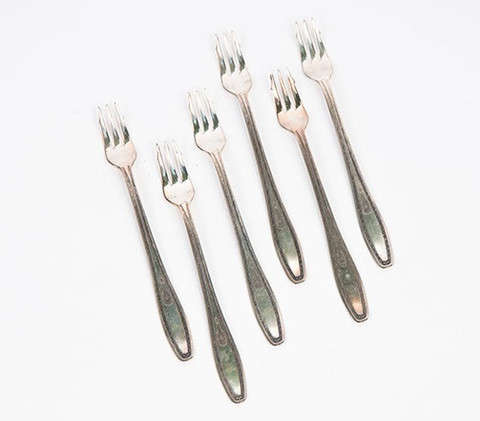
There are ordinary forks, and then there are sterling silver oyster forks: tiny, elegant, slightly mysterious utensils that look as if they were invented for people who host dinner parties with linen napkins, candlelight, and a strong opinion about cocktail sauce. But these petite seafood forks are not just pretty table jewelry. They are practical, collectible, historically interesting, and surprisingly useful far beyond a plate of oysters.
A sterling silver oyster fork is typically a small, narrow fork designed for shellfish, seafood cocktails, hors d’oeuvres, and delicate appetizers. Many traditional examples have three short tines, though some patterns vary. Unlike a dinner fork, it is not built for conquering steak or chasing roasted potatoes around a plate. It is made for precision: lifting an oyster from the shell, spearing shrimp, nudging crabmeat, or politely handling foods that would otherwise invite finger gymnastics.
For collectors, sterling silver oyster forks offer a sweet spot: they are smaller and often more affordable than full dinner forks, yet they carry the same charm, maker history, pattern design, and precious-metal value as larger pieces. For hosts, they add instant polish to a seafood course. For vintage lovers, they are tiny time machines from the golden age of formal dining. In short, they are little forks with big personality.
What Are Sterling Silver Oyster Forks?
Sterling silver oyster forks are specialty flatware pieces made from sterling silver, an alloy traditionally composed of 92.5 percent silver and 7.5 percent other metals, usually copper. Pure silver is beautiful but too soft for everyday utensils, so copper adds strength and durability. That is why genuine sterling flatware is usually marked with “sterling,” “925,” or a maker’s hallmark indicating silver purity.
The oyster fork itself is usually shorter than a salad fork and narrower than a standard cocktail fork. Many measure around five to six inches long, though antique and vintage examples vary by maker and pattern. The business end is small and refined, commonly with three tines. Some tines flare outward slightly, making the fork useful for lifting shellfish from curved shells or narrow cocktail glasses.
In American table-setting etiquette, the oyster fork has a special claim to fame: it is traditionally the only fork that may appear on the right side of the place setting. Forks usually live on the left, while knives and spoons sit on the right. The oyster fork, being the charming rule-breaker of the utensil drawer, is placed to the far right when shellfish is served. If flatware had a rebellious cousin who still wore pearls, this would be it.
A Brief History of Oyster Forks and Fine Dining
The oyster fork rose in popularity during the nineteenth and early twentieth centuries, when formal dining became increasingly elaborate in wealthy American and European households. During this era, a well-appointed table might include specialized utensils for fish, berries, asparagus, ice cream, sardines, olives, bonbons, and almost anything else that could be served with ceremony. If there was a food, someone probably designed a fork for it.
Oysters were especially fashionable in the United States. They were abundant, widely eaten, and served in many forms: raw, broiled, stewed, scalloped, fried, and tucked into soups or sauces. In coastal cities such as New York, Boston, Baltimore, and New Orleans, oysters were both everyday food and luxury fare. A dedicated oyster fork made sense, particularly at formal dinners where each course had its own utensil.
Major American silver manufacturers helped turn these small tools into collectible works of art. Tiffany & Co., Gorham, Reed & Barton, Wallace, Towle, International Silver, Kirk Stieff, Whiting, and other makers produced oyster forks in a wide range of patterns. Some were restrained and classical. Others were dramatic enough to make a Victorian sideboard blush, with scrolls, flowers, shells, acanthus leaves, monograms, pierced details, and sculptural handles.
Because many oyster forks were produced as part of larger sterling flatware services, they often match famous patterns such as Gorham Chantilly, Wallace Grand Baroque, Reed & Barton Francis I, Tiffany Chrysanthemum, Towle Old Master, and Kirk Repousse. Collectors still hunt for these pieces today, especially when they are in good condition and free of excessive wear.
Why Sterling Silver Matters
Not all shiny forks are sterling silver. Silver-plated oyster forks may look similar at first glance, but they are made from a base metal covered with a thin layer of silver. Sterling silver, by contrast, contains silver throughout the piece. This matters for value, longevity, repairability, and collectibility.
Sterling silver oyster forks can be polished repeatedly over generations because the silver is not merely a surface coating. Silver plate can wear through, especially on high-contact areas such as tines and handle tips. Once plating wears away, the base metal shows, and restoration usually requires replating. Sterling may tarnish, scratch, and develop patina, but it remains sterling all the way down.
That said, sterling silver is not indestructible. The tines can bend if abused, sharp polishing can soften details, and dishwasher heat or harsh detergents can dull the finish. Sterling is durable enough for real use, but it appreciates civilized treatment. Think of it as strong, not invincible; elegant, not fragile; fancy, but still willing to work for dinner.
How to Identify Real Sterling Silver Oyster Forks
Check the markings
The first step is to look for marks on the back of the handle or near the stem. Common American marks include “Sterling,” “925,” “925/1000,” or a maker’s name or symbol. Tiffany, Gorham, Reed & Barton, Wallace, Towle, International, Whiting, and Kirk Stieff all used recognizable marks that collectors study closely.
Understand silver plate marks
Marks such as “EP,” “EPNS,” “A1,” “Triple Plate,” “Quadruple Plate,” or “Community Plate” usually indicate silver plate rather than sterling. Silver-plated oyster forks can still be lovely and useful, but they should not be priced as sterling. This is where a magnifying glass becomes less “detective costume” and more “smart shopping tool.”
Consider weight and feel
Sterling silver often has a satisfying weight for its size. Oyster forks are small, so they will not feel heavy like serving pieces, but quality examples have balance and substance. Extremely lightweight pieces may be plated, hollow-handled, or simply made in a thinner style. Weight alone is not proof, but it helps complete the picture.
Look at condition
Inspect the tines for bends, deep wear, thinning tips, cracks, or solder repairs. Check the handle for dents, heavy scratches, rubbed pattern detail, or aggressive polishing. A monogram is not necessarily a flaw; many collectors love old initials because they add history. However, monograms can affect resale value depending on the buyer and pattern.
Popular Styles and Patterns
Sterling silver oyster forks appear in several design families. Simple colonial-style patterns have clean lines, making them easy to mix with modern tableware. Floral patterns feel romantic and traditional. Baroque and repoussé patterns bring drama, texture, and dining-room theater. Art Nouveau examples may include flowing botanical forms, while Art Deco pieces tend to favor geometry and streamlined elegance.
Shell motifs are especially fitting for oyster forks. Some handles feature scallop shells, seaweed curves, or marine-inspired decoration. Tiffany’s more artistic nineteenth-century patterns, for example, often used naturalistic ornament that feels perfectly at home beside seafood. Gorham also produced richly designed flatware that reflects changing American tastes from Victorian abundance to modern restraint.
For collectors, matching a discontinued pattern can be both satisfying and mildly addictive. You may start with four oyster forks for a seafood dinner and somehow end up searching for berry spoons at midnight. This is normal. Silver collecting has a way of turning “just one piece” into “I need the sauce ladle because what if sauce happens?”
How to Use Sterling Silver Oyster Forks Today
The obvious use is oysters. A small sterling oyster fork helps loosen the oyster from the shell, lift it cleanly, or handle garnishes such as mignonette, lemon, horseradish, or cocktail sauce. It is also excellent for clams, mussels, shrimp cocktail, crab claws, lobster bites, smoked fish, caviar accompaniments, olives, pickles, and small appetizers.
Modern hosts do not need to serve a twelve-course dinner to justify using them. Place oyster forks beside a chilled seafood platter, on a charcuterie board, with deviled eggs, beside marinated artichokes, or even with individual dessert bites. They are perfect for foods that are too delicate for a dinner fork and too nice to attack with a toothpick.
They also make wonderful cocktail-party utensils. Instead of disposable picks, set a small cup of sterling oyster forks near appetizers. Guests will notice. Someone will ask about them. Then you can casually say, “Oh, those? Vintage sterling oyster forks.” Try not to sound too smug. Fail gracefully if necessary.
How to Set a Table With Oyster Forks
For a formal place setting, the oyster fork is traditionally placed on the right side of the plate, outside the spoons, if it is the first utensil used. Since flatware is generally arranged from the outside in according to course order, the oyster fork sits where the diner can easily reach it for the shellfish course.
If you are serving oysters casually, you do not need a strict formal setting. You can place the forks directly on the oyster plate, on a small napkin, or in a chilled seafood tray. For buffets, arrange them in a small silver cup, ceramic holder, or linen-lined tray. The goal is practical elegance, not utensil anxiety.
When pairing oyster forks with other flatware, matching patterns are beautiful but not mandatory. Mixed sterling can look charming, especially when the pieces share a similar era, shape, or level of decoration. A table set with varied antique oyster forks can feel collected, personal, and far more interesting than a showroom-perfect setting.
Buying Guide: What to Look For
Choose sterling or silver plate intentionally
If your goal is investment, heirloom quality, or long-term collecting, sterling silver is the stronger choice. If your goal is affordable entertaining, silver plate can work beautifully. Just make sure the price reflects the material.
Match your pattern or embrace mixing
If you already own a sterling flatware pattern, search by maker, pattern name, and piece type. Terms such as “oyster fork,” “cocktail fork,” “seafood fork,” and “shrimp fork” may all appear in listings. If you do not need a match, look for pieces with compatible scale and style.
Check length and tine design
Most oyster forks are small, but size varies. A five-inch fork feels dainty; a six-inch fork may feel more versatile for appetizers. Three-tine forks are classic, while four-tine versions may be described as cocktail or seafood forks. The naming can be flexible, especially in vintage listings.
Compare price by maker, pattern, and condition
Prices can vary widely. A single plain sterling oyster fork from a lesser-known maker may cost far less than a rare Tiffany or ornate Gorham example. Sets of six or twelve usually command more, especially when they are matching, unmonogrammed, and in excellent condition. Rarity, pattern popularity, silver weight, and market demand all influence price.
Care and Cleaning Tips
Sterling silver oyster forks should be washed soon after use, especially after contact with salt, lemon, vinegar, eggs, or seafood sauces. These foods can encourage tarnish or staining if left on the surface. Hand-wash with warm water, mild dish soap, and a soft sponge. Dry immediately with a soft cotton towel to prevent water spots.
Avoid the dishwasher, especially for antique or heirloom pieces. High heat, strong detergents, and contact with stainless steel can dull silver, damage patina, or create marks. The dishwasher may be convenient, but convenience is not always your friend. Sometimes it is just chaos with a rinse cycle.
For tarnish, use a gentle silver polish made for sterling silver and a soft cloth. Do not scrub with steel wool, harsh abrasives, toothpaste, or rough pads. Decorative patterns often have darkened recesses that give depth to the design; over-polishing can remove that contrast and flatten the character of the piece.
Store oyster forks in a tarnish-resistant flatware chest, silver cloth roll, or soft pouch. Keep them away from rubber bands, newspaper, wool, damp environments, and sulfur-heavy materials. If you use them regularly, they may tarnish more slowly because handling and washing remove some tarnish-causing residue. In other words, silver likes to be invited to dinner.
Are Sterling Silver Oyster Forks Worth Collecting?
Yes, especially if you enjoy tableware with history, craftsmanship, and practical beauty. Oyster forks are small enough to collect without needing a mansion-sized sideboard. They are useful enough to justify owning them. And because sterling silver has intrinsic metal value, fine examples are more than decorative curiosities.
The best pieces to collect are those with clear sterling marks, recognizable makers, desirable patterns, good condition, and pleasing design. Complete sets are especially attractive, but single forks can also be worthwhile if they fill a pattern, represent a favorite maker, or simply make your heart do a tiny collector’s tap dance.
For beginners, a set of six sterling oyster forks is a practical starting point. It works for small dinner parties, seafood nights, and appetizer service. For advanced collectors, rare patterns, unusual motifs, and nineteenth-century examples offer deeper rabbit holes. Just remember: buy what you love, research before paying premium prices, and do not confuse tarnish with tragedy. Tarnish can be polished. Regret is harder.
Common Mistakes to Avoid
One common mistake is assuming every small silver-colored fork is sterling. Many cocktail and oyster forks are silver-plated, stainless steel, or made from other metals. Always check markings and seller descriptions carefully.
Another mistake is over-polishing. Bright silver looks appealing, but antique flatware often benefits from gentle patina in the recessed design. Removing every shadow can make an ornate pattern look strangely flat, like a dramatic actor forced to perform under office lighting.
A third mistake is saving sterling silver only for “someday.” Unless a piece is museum-quality, fragile, or extremely rare, it is often better to use and enjoy it. Sterling flatware was made for the table. A fork that never meets food is living only half its life.
Personal Experiences With Sterling Silver Oyster Forks
The first time you use sterling silver oyster forks, the experience can feel slightly theatrical in the best possible way. Imagine a tray of chilled oysters on crushed ice, lemon wedges tucked around the edges, and a few small forks placed nearby like tiny silver instruments waiting for their cue. Suddenly, the seafood course feels intentional. Not fussy, not stiff, just considered. That is the quiet magic of specialty flatware: it turns a simple moment into a small occasion.
One of the most enjoyable experiences with oyster forks is discovering how versatile they are. At first, most people think, “I do not eat oysters often enough to need these.” Fair. But then the forks begin sneaking into other roles. They become the perfect tools for shrimp cocktail, marinated mushrooms, olives, cornichons, crab salad, smoked trout, anchovies, cheese cubes, and little pastry bites. They are especially handy on appetizer boards, where a full-size fork feels clumsy and a toothpick feels a bit too disposable.
There is also a particular pleasure in mixing old sterling with modern dining. A casual Friday seafood dinner becomes more memorable when served with vintage oyster forks. A store-bought shrimp tray looks less like a last-minute supermarket decision and more like a host with a plan. Even canned smoked oysters, served with crackers and a squeeze of lemon, gain dignity when paired with a sterling fork. It is amazing what a five-and-a-half-inch utensil can do for morale.
Collectors often describe the hunt as part of the fun. Finding one fork in a forgotten antique-store case can lead to researching the maker, identifying the pattern, and learning that the design was introduced more than a century ago. A tiny hallmark becomes a breadcrumb trail. Was it made by Gorham in Providence? Tiffany in New York? Reed & Barton in Massachusetts? Did it belong to a wedding service? Was it once used at formal Sunday dinners, hotel banquets, or holiday seafood courses? The fork does not answer, of course, but it certainly invites imagination.
Using inherited oyster forks can be even more meaningful. Perhaps they came from a grandmother’s silver chest, wrapped in flannel and slightly tarnished. Polishing them gently, setting them on the table, and giving them a new purpose can feel like restoring a family ritual. The pieces may be small, but they carry memory: dinners served, guests welcomed, recipes repeated, and generations who believed that the table deserved a little shine.
For hosts, sterling oyster forks are wonderful conversation starters. Guests notice them because they are unusual but not intimidating. Someone may ask, “What is this little fork for?” That question opens the door to a quick explanation of shellfish etiquette, silver patterns, or antique flatware. And if the conversation needs rescuing from weather updates or awkward work stories, a tiny fork can do heroic social labor.
The best experience, though, is realizing that sterling silver does not have to be locked away. It can be used, washed, dried, and returned to a drawer for next time. Scratches will happen. Patina will develop. That is not damage; that is biography. A sterling silver oyster fork with a few honest signs of use is not less beautiful. It is more alive.
Conclusion
Sterling silver oyster forks are elegant, useful, collectible pieces of dining history. They reflect a time when the table was treated as a stage and every course had its proper tool, but they still make sense in modern homes. Whether you use them for oysters, shrimp cocktail, appetizers, or simply the joy of setting a more beautiful table, these small forks bring craftsmanship and charm to everyday entertaining.
For buyers, the key is to understand the difference between sterling and silver plate, inspect marks and condition, and choose pieces that fit your taste and lifestyle. For owners, gentle care and regular use will keep them shining for years. A sterling silver oyster fork may be small, but it carries history, function, and a delightful dose of dining-room drama. And honestly, dinner could use a little dramaas long as it comes with lemon wedges.