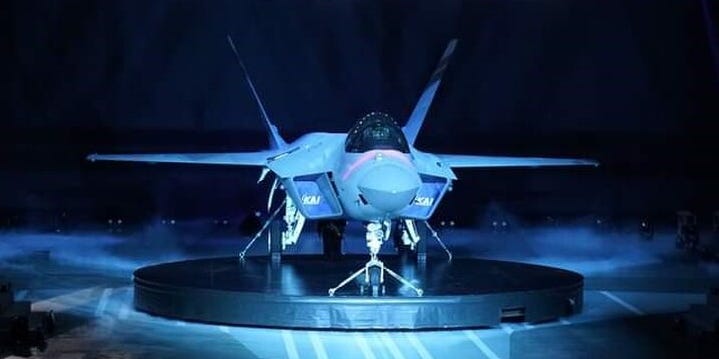
South Korea’s new fighter jet, the KF-21 Boramae, is not just another shiny machine with sharp angles, roaring engines, and the kind of cockpit that makes aviation fans quietly whisper, “I need a poster of that.” It is a national technology statement. Built by Korea Aerospace Industries, or KAI, the KF-21 represents South Korea’s leap from being a buyer and upgrader of advanced aircraft to becoming a serious designer, builder, and future exporter of modern combat jets.
For decades, South Korea has relied on a mix of American-made aircraft, including the F-4 Phantom, F-5 Tiger, F-16, F-15K, and F-35. That mix has served the Republic of Korea Air Force well, but it also came with a familiar problem: dependence. Aircraft supply chains, upgrades, weapons integration, export permissions, and maintenance costs are never just technical issues. They are political, economic, and strategic issues too. The KF-21 Boramae, whose name means “young hawk,” is Seoul’s answer to a future where airpower must be faster, smarter, more independent, and less tied to someone else’s permission slip.
What Is the KF-21 Boramae?
The KF-21 Boramae is a twin-engine, 4.5-generation multirole fighter aircraft developed primarily by South Korea. It is designed to sit between legacy fourth-generation fighters and full fifth-generation stealth aircraft such as the F-35. In plain English, that means it is not a full stealth fighter in the same category as the F-35, but it is far more advanced than older jets it is intended to replace.
The aircraft uses a radar-reduced shape, modern avionics, an active electronically scanned array radar, advanced flight controls, and compatibility with sophisticated air-to-air weapons. It is built for speed, flexibility, and future growth. Think of it as a high-performance smartphone with room for major software updates, except this smartphone flies at supersonic speed and carries missiles instead of embarrassing vacation photos.
The KF-21 is expected to replace aging South Korean fighters such as the F-4 and F-5 while also strengthening the country’s ability to design and manufacture its own advanced military aircraft. That matters because fighter jets are among the most complex industrial products on Earth. Building one requires mastery of aerodynamics, engines, radar, software, materials, weapons integration, testing, and production quality. It is not the kind of project you start because someone had a slow Monday at the office.
Why South Korea Built Its Own Fighter Jet
The main reason behind South Korea’s new fighter jet is strategic independence. Seoul faces one of the most heavily militarized security environments in the world. North Korea continues to develop missiles, drones, artillery, nuclear capabilities, and air-defense systems. At the same time, China, Japan, Russia, and the United States all shape the airpower balance in Northeast Asia. In that neighborhood, having modern jets is not a luxury; it is basic home security, just with afterburners.
South Korea also has a fast-growing defense industry. Its K2 tanks, K9 self-propelled howitzers, FA-50 light combat aircraft, naval systems, missiles, and armored vehicles have attracted global customers. The KF-21 fits into that bigger story. It gives South Korea a flagship aerospace product that can support domestic defense, expand exports, and build advanced industrial skills at home.
Another motivation is cost. The F-35 is extremely capable, but it is also expensive to buy, operate, and maintain. Not every mission requires a full stealth aircraft. A country may want F-35s for the hardest penetration missions, but it also needs a larger fleet for patrols, interception, training, air defense, and conventional strike tasks. The KF-21 is designed to offer high-end performance at a more manageable cost, especially for countries that want something more advanced than older F-16s but cannot afford or cannot access full fifth-generation options.
Key Features of South Korea’s New Fighter Jet
Modern Airframe Design
The KF-21 has a sleek shape that immediately invites comparisons with stealth aircraft. Its canted twin tails, blended fuselage, sharp nose, and clean lines help reduce radar visibility compared with older fighters. However, early KF-21 versions carry weapons externally rather than inside internal weapons bays, which limits stealth performance. That is why it is usually described as a 4.5-generation fighter rather than a true fifth-generation jet.
This design choice is practical. Full stealth is very difficult and very expensive. South Korea appears to have chosen a phased path: build a capable aircraft now, improve it over time, and potentially move toward more advanced stealth features in later versions. That approach reduces risk and gives the air force a usable fighter sooner.
Twin GE F414 Engines
The KF-21 is powered by two General Electric F414-class engines, assembled in South Korea through local industrial participation. The F414 family is already used in proven combat aircraft such as the F/A-18E/F Super Hornet and Saab Gripen E. For the KF-21, the twin-engine layout offers strong thrust, redundancy, and confidence for pilots operating over sea and mountainous terrain.
South Korea has also made clear that future engine independence is a major goal. Developing an indigenous fighter engine is one of the hardest tasks in aviation, but it would reduce export restrictions and deepen the country’s aerospace base. In the long run, engines may become as important to the KF-21 story as the aircraft itself.
Advanced AESA Radar
One of the most important technologies in the KF-21 is its active electronically scanned array radar. AESA radar can track multiple targets, resist jamming better than older radar types, and switch rapidly between air-to-air and air-to-ground functions. It is the aircraft’s electronic eyesight, and in modern air combat, eyesight often decides who gets the first shot.
South Korea’s push to develop domestic radar technology is especially significant. Radar is one of the crown jewels of fighter design. If a country can build its own radar, integrate it with its own mission computer, and update the software over time, it gains far more control over performance and future upgrades.
Weapons and Mission Flexibility
The initial KF-21 Block I aircraft focus mainly on air-to-air missions. Public reporting has linked the aircraft with advanced missiles such as the MBDA Meteor beyond-visual-range missile and the IRIS-T short-range missile. Later Block II versions are expected to add stronger air-to-ground capability, allowing the jet to attack land and maritime targets with guided weapons.
This block-by-block strategy is smart. Instead of waiting for every feature to be perfect before producing the aircraft, South Korea can field the fighter in stages. Pilots train, maintainers learn, factories improve, and software evolves. It is similar to buying a gaming console and receiving major updates later, except the “game” is national air defense and the patch notes are considerably more serious.
Production Milestones and Deployment Timeline
The KF-21 program has moved through several major milestones. The first prototype was unveiled in 2021, and the aircraft made its first flight in 2022. It later achieved supersonic flight during testing. The program then moved through extensive ground and flight evaluations, including weapons separation, avionics checks, radar testing, and aerial refueling demonstrations.
Mass production began after the test program reached key readiness points. The first production KF-21 was rolled out in March 2026, marking a major moment for South Korea’s aerospace industry. A production aircraft then completed its first flight in April 2026, showing that the program had moved from engineering prototypes to operational manufacturing.
The Republic of Korea Air Force is expected to begin receiving and deploying KF-21 aircraft in 2026. Early aircraft will help replace older fighters, while later batches will bring expanded mission capability. South Korea has discussed a long-term plan involving more than 100 aircraft, with Block I and Block II variants forming the backbone of the program.
KF-21 vs. F-35: Competitor or Teammate?
The KF-21 is often compared with the F-35, but the better question is not “Which one wins?” The better question is “What job does each aircraft do?” The F-35 is a full fifth-generation stealth fighter designed for penetrating heavily defended airspace, gathering data, sharing information, and striking high-value targets. It is a flying sensor network with weapons attached.
The KF-21, by contrast, is designed as a more affordable and scalable multirole fighter. It is not expected to match the F-35’s stealth or sensor-fusion capabilities in its early versions. However, it can perform many missions that do not require maximum stealth, such as air defense, interception, patrol, training, and conventional combat operations. In a balanced air force, the KF-21 and F-35 can work together rather than replace each other.
That combination could be powerful for South Korea. F-35s can handle the most dangerous first-day missions, while KF-21s can provide numbers, persistence, and flexibility. In military planning, quantity still matters. A small fleet of exquisite jets may look impressive, but air forces also need enough aircraft to cover real skies, real schedules, and real maintenance cycles.
Why the KF-21 Matters for Asian Security
The KF-21 arrives at a time when Asia is experiencing a major military aviation upgrade cycle. China continues to expand its air force and deploy advanced aircraft. Japan is investing in next-generation fighter development with international partners. North Korea remains unpredictable and continues to improve missile and drone capabilities. Taiwan, Australia, India, and Southeast Asian countries are all watching airpower trends closely.
For South Korea, the KF-21 strengthens deterrence. It gives the country more modern aircraft, a domestic production base, and the ability to upgrade systems on its own timeline. In a crisis, that industrial capacity could matter almost as much as the aircraft’s top speed. A nation that can build, repair, modify, and improve its own jets has options that a pure importer does not.
The fighter also supports alliance operations with the United States. South Korea is not moving away from U.S. defense cooperation; instead, it is becoming a more capable partner. A stronger South Korean aerospace industry can contribute more to shared deterrence, regional stability, and combined military readiness.
Export Potential: Could the KF-21 Become a Global Seller?
South Korea’s new fighter jet has clear export ambitions. Many countries want modern aircraft but face a difficult market. The F-35 is powerful but expensive and politically restricted. Older fighters may be cheaper but less future-proof. Russian aircraft have become less attractive for many buyers because of sanctions, supply-chain concerns, and battlefield performance questions. Chinese aircraft may appeal to some markets but not to countries aligned with the United States or wary of Beijing.
That creates an opening for the KF-21. Countries such as Indonesia, Poland, the Philippines, Peru, and Middle Eastern states have been discussed in relation to potential interest. South Korea already has export credibility thanks to the FA-50 light combat aircraft, K9 howitzer, and other defense products. The KF-21 could become the premium item in that catalog.
However, exports will not be automatic. The aircraft uses some foreign components, including engine technology, which may create export approval issues. Buyers will also want proof of reliability, combat readiness, maintenance cost, weapons compatibility, and upgrade paths. Fighter customers are not buying a weekend gadget. They are buying a 30-year relationship involving training, spare parts, politics, software, and a mountain of paperwork tall enough to qualify as terrain.
Challenges Facing the KF-21 Program
The KF-21 is impressive, but it is not free from challenges. First, the program must prove that production aircraft can be delivered on time and at the expected quality level. Prototypes are one thing; consistent mass production is another. Every aircraft must meet strict standards, and delays can quickly affect air force planning.
Second, South Korea must keep improving weapons integration. Modern fighters are only as useful as the weapons and sensors they can employ. The transition from Block I air-to-air capability to Block II multirole strike capability will be especially important. If the KF-21 can smoothly add air-to-ground weapons, anti-ship roles, and advanced electronic warfare features, its value will rise sharply.
Third, the aircraft must find its identity in the export market. It cannot be marketed as a cheaper F-35 because it is not an F-35. It should instead be positioned as a modern, upgradeable, twin-engine fighter for countries that need serious capability without the full cost or restrictions of fifth-generation stealth platforms.
The Bigger Industrial Story
The KF-21 is not just about one fighter jet. It is about South Korea’s ambition to become a top-tier defense technology power. Fighter programs create entire ecosystems. They involve radar companies, engine manufacturers, software teams, composite material suppliers, electronics firms, universities, test pilots, maintenance schools, and production engineers.
That ecosystem can spill into other industries. Technologies developed for fighter aircraft can influence drones, satellites, sensors, electronic warfare systems, simulators, civilian aerospace, and advanced manufacturing. The KF-21 therefore acts like an industrial gym membership for South Korea’s high-tech economy. It is expensive, painful, and occasionally sweaty, but the long-term strength gains can be enormous.
Experiences and Lessons Related to South Korea’s New Fighter Jet
One of the most interesting experiences related to the KF-21 is how it changes the way observers think about national defense development. For years, many people assumed only a handful of major powers could build advanced fighters. The United States, Russia, China, and a few European groups dominated the conversation. South Korea’s progress shows that a focused, technologically advanced middle power can climb the ladder if it invests consistently, partners wisely, and accepts that fighter development is a marathon wearing steel-toed boots.
The KF-21 also offers a lesson in practical ambition. South Korea did not try to build a perfect stealth aircraft from day one. Instead, it chose a realistic path: create a 4.5-generation platform, field it in blocks, master key systems, and leave room for future upgrades. That approach may not sound as dramatic as announcing a miracle jet, but it is often how successful engineering works. You build what you can prove, then improve what you can control.
For aviation enthusiasts, the KF-21 is exciting because it blends familiar and new ideas. Its twin-engine layout gives it a muscular presence. Its sharp stealth-inspired shaping makes it look modern without pretending to be invisible magic. Its use of proven engine technology reduces risk, while its domestic radar and avionics push South Korea into more advanced territory. Watching the aircraft mature feels a bit like watching a talented rookie move from training camp to the professional league.
For defense planners, the experience is more serious. The KF-21 suggests that future air forces may not rely only on ultra-expensive stealth fleets. Instead, they may use layered fleets: stealth aircraft for the hardest missions, 4.5-generation fighters for daily airpower, drones for risky or repetitive tasks, and networked sensors tying everything together. In that model, the KF-21 makes a lot of sense. It provides capability, numbers, and upgrade potential.
For countries considering the KF-21, the key experience will be trust. Buyers will want to see how South Korea supports the aircraft after delivery. Are spare parts available? Is software updated quickly? Can weapons be integrated without endless delays? Are pilots and maintainers trained effectively? These practical issues often matter more than glossy brochures. A fighter jet may win attention at an airshow, but it wins loyalty in the hangar, on the runway, and during years of reliable service.
The KF-21 also carries a cultural lesson: national confidence grows when engineering becomes visible. A domestically built fighter jet is not merely a military tool; it is a symbol that a country can solve hard problems. South Korea has already become famous for semiconductors, shipbuilding, cars, batteries, entertainment, and consumer technology. The Boramae adds advanced aerospace to that list. It tells young engineers, pilots, and manufacturers that the sky is not a metaphor. It is a workplace.
Finally, the KF-21 experience reminds us that modern defense is not only about having the most advanced machine. It is about building a system that can adapt. The aircraft’s true success will depend on upgrades, training, software, weapons, export support, and industrial learning. The first production jet is not the finish line. It is the first chapter of a much longer story, and South Korea appears determined to keep writing it at supersonic speed.
Conclusion
South Korea’s new fighter jet, the KF-21 Boramae, is one of the most important military aviation programs of the decade. It gives South Korea a domestically built, modern, twin-engine fighter that can replace aging aircraft, strengthen deterrence, support the U.S.-South Korea alliance, and open new export opportunities. While it is not a full fifth-generation stealth fighter in its early form, it offers a smart balance of capability, cost, growth potential, and industrial independence.
The KF-21 matters because it is more than a jet. It is a signal that South Korea wants greater control over its defense future. It is a platform for technology development, a tool for regional security, and a possible challenger in the global fighter market. If the program delivers on its promises, the Boramae may become one of the most successful 4.5-generation fighters of the 21st century. Not bad for a “young hawk” that is only beginning to stretch its wings.