House numbers may be the smallest design decision on the front of a home, but they carry a surprisingly big job description. They tell delivery drivers where to drop the package, help guests find the right porch, guide emergency responders when seconds matter, and quietly introduce the personality of the house before anyone rings the bell. Not bad for a few digits minding their own business near the front door.
That is exactly why the idea of slow design house numbers is worth exploring. Slow design is not about moving at the speed of a sleepy garden snail. It is about choosing with intention, respecting materials, thinking long-term, and designing for real life instead of chasing the latest “must-have” trend that will look dated by next Tuesday. When applied to modern house numbers, slow design asks a better question: not “What looks cool online?” but “What will still look beautiful, useful, readable, and meaningful years from now?”
In a world where curb appeal can feel like a race to install whatever is trending, house numbers offer a refreshing opportunity to slow down. They are functional, decorative, architectural, and personal all at once. The right set can make a bungalow feel more handcrafted, a midcentury home more authentic, a farmhouse more welcoming, or a contemporary exterior more polished. The wrong set can vanish into the siding like a shy raccoon in beige pajamas.
What Slow Design Means for House Numbers
Slow design is rooted in mindfulness, durability, sustainability, and emotional connection. Instead of treating home products as disposable accessories, it values objects that age well, serve a purpose, and fit naturally into their surroundings. For house numbers, that means looking beyond a quick purchase and considering scale, visibility, material, craftsmanship, local climate, home style, and long-term maintenance.
A slow design approach does not require luxury spending. It simply requires attention. A $25 set of well-placed, high-contrast numbers can be more successful than a custom plaque that looks beautiful but cannot be read from the street. Slow design is not design snobbery wearing linen. It is common sense with better posture.
Why House Numbers Deserve More Attention
They Are a Safety Feature First
The most important purpose of house numbers is identification. Many U.S. local codes require address numbers to be plainly visible from the street, contrast with their background, and meet minimum size standards. A common benchmark found in property maintenance codes is numbers at least 4 inches tall with a minimum stroke width of 0.5 inch. Local rules can vary, so homeowners should always check city, county, HOA, or fire department requirements before installing new address numbers.
Visibility matters most at night, in rain, during storms, or when landscaping has grown into a leafy green curtain. If police, firefighters, paramedics, or delivery drivers have to play “guess the house,” the design has failed no matter how elegant the brass finish looks on Instagram.
They Shape First Impressions
House numbers are part of the visual handshake of a home. Along with porch lights, door hardware, mailboxes, planters, and walkways, they help create a finished exterior. When these small details coordinate, a home looks thoughtful. When they compete, the entry can feel like a hardware aisle had a disagreement with a front porch.
For homeowners improving curb appeal, address numbers are one of the easiest upgrades. They are usually affordable, relatively simple to install, and instantly noticeable when chosen well. Better yet, they can improve both beauty and function, which is the design equivalent of finding a parking spot directly in front of the bakery.
The Slow Design Checklist for Choosing House Numbers
1. Prioritize Readability from the Street
Start at the curb, not the checkout cart. Stand where guests, drivers, and emergency responders will first see the house. Can the numbers be read quickly? Are they blocked by porch columns, shrubs, parked cars, seasonal wreaths, or decorative shadows? If you have to squint, lean, or whisper “I think that’s a 6,” the numbers are too subtle.
Choose simple, legible numerals with enough height and stroke width. Clean sans-serif numbers work well for contemporary homes, while traditional serif numbers can suit Colonial, Craftsman, or cottage styles. Avoid overly ornate fonts if they reduce clarity. A beautiful number that cannot be read is not mysterious; it is just inconvenient.
2. Choose Materials That Age Well
Slow design favors materials that last. For exterior house numbers, popular durable choices include stainless steel, aluminum, brass, bronze, ceramic tile, stone, and powder-coated metal. Each material has its own personality.
Brass and bronze develop patina over time, giving the entrance warmth and character. Stainless steel and aluminum feel crisp, modern, and weather-resistant. Ceramic and tile numbers can add color, texture, and handmade charm. Wood can be beautiful, especially for rustic or farmhouse homes, but it needs proper sealing and maintenance to handle moisture and sunlight.
Think about your climate. Coastal homes may need corrosion-resistant materials. Desert homes need finishes that can handle intense sun. Snowy regions require hardware that survives freeze-thaw cycles. In humid areas, untreated iron may rust faster than you can say, “Well, that aged dramatically.”
3. Match the Architecture, Not Just the Trend
The best house number design ideas feel connected to the architecture. A sleek floating number can look fantastic on a modern stucco home but strangely corporate on a sweet 1920s cottage. A hand-painted ceramic tile may charm a Spanish-style bungalow but feel too decorative on a minimalist black-and-glass exterior.
Slow design asks you to listen to the house. What shapes already exist? Are there arched windows, square columns, horizontal siding, brick patterns, black metal railings, or warm wood details? House numbers can echo these cues. For example, rectangular black metal numbers may repeat the rhythm of modern window frames, while aged brass numbers may connect with a vintage door knocker or warm exterior lantern.
4. Think About Placement Like a Wayfinding Designer
House numbers should be placed where people naturally look. Common locations include beside the front door, above the mailbox, on a porch column, on a front-facing wall, on a gate post, or on a freestanding address sign near the driveway. For homes set far back from the road, numbers at the house may not be enough. A mailbox, curb sign, or driveway marker can help.
USPS guidance says curbside mailboxes should display the house or apartment number, and if the mailbox is on a different street from the residence, the full street address should appear on the box. That does not replace local building or fire code requirements for the home itself, but it reinforces the same design truth: addresses should be easy to find.
5. Use Contrast Like You Mean It
Contrast is the quiet hero of good address design. Black numbers on white siding, brass on deep green paint, white ceramic on brick, or stainless steel on charcoal panels can all work beautifully. The key is making the numbers stand apart from the background.
A common mistake is choosing a finish that is stylish but too close in color to the surface behind it. Bronze numbers on dark brown wood may look rich up close and nearly invisible from the street. Matte black on navy siding can disappear at dusk. The goal is not to make visitors admire your subtlety while wandering the block with a cold pizza.
6. Plan for Night Visibility
House numbers need to work after sunset. Consider porch lighting, landscape lighting, solar address plaques, or backlit numbers. Illumination does not have to be flashy. A well-aimed porch sconce or low-voltage path light can make numbers readable while adding warmth to the entry.
Be careful with glare. Highly reflective numbers under harsh light can become difficult to read. Soft, even lighting usually performs better than dramatic spotlighting. Save the full theater treatment for your prize hydrangeas.
House Number Ideas by Home Style
Craftsman Homes
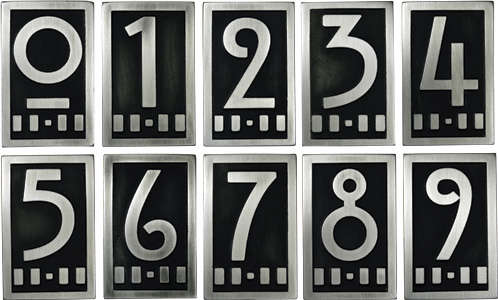
Craftsman houses celebrate honest materials, visible structure, and handmade character. Choose bronze, oil-rubbed metal, ceramic tile, or carved wood numbers. Mounting them on a porch beam, stone column, or wood plaque can feel natural. Keep the design sturdy and grounded rather than delicate.
Midcentury Modern Homes
Midcentury homes love clean lines, geometry, and a little confidence. Floating metal numbers, Neutra-inspired numerals, or oversized horizontal arrangements can work beautifully. Consider placing numbers on a wood slat wall, near a globe light, or beside a brightly painted door.
Farmhouse and Cottage Homes
Farmhouse and cottage exteriors often look best with warm, approachable details. Try enamel plaques, black metal numbers, white-on-black signs, painted wood plaques, or ceramic pieces. The design can have charm, but keep it readable. Whimsy is welcome; illegibility is not.
Brick Colonial Homes
For brick homes, brass, bronze, black iron, or classic serif numbers often feel timeless. Mounting can be tricky, so use masonry anchors and proper drilling techniques. A plaque may be easier than individual numbers and can create a cleaner contrast against busy brick.
Contemporary Homes
Contemporary exteriors can handle bold scale and crisp materials. Stainless steel, matte black aluminum, backlit numbers, or minimalist plaques work well. The key is restraint. Let the numbers feel intentional, not like a tech startup logo escaped onto the porch.
Coastal Homes
For coastal houses, choose corrosion-resistant materials and finishes that can tolerate salt air. Powder-coated aluminum, stainless steel, ceramic tile, and marine-grade hardware are smart options. Blue, white, brass, and driftwood tones can look fresh without leaning too hard into “gift shop seashell.”
DIY vs. Artisan-Made House Numbers
A slow design approach can include either DIY or artisan-made numbers. The difference is intention. A DIY plaque made with care, proper materials, and good placement can be more meaningful than a mass-produced product chosen in a rush. At the same time, artisan-made ceramic, metal, or carved numbers can bring individuality and craft to a home’s exterior.
If you go DIY, prioritize weather resistance. Use exterior-grade paint, sealed wood, rust-resistant screws, and proper anchors. If you choose handmade numbers, ask about material, finish, installation method, and outdoor durability. Beautiful work deserves the right support system. Even the most poetic ceramic “7” does not want to crash onto the porch during a thunderstorm.
Common House Number Mistakes to Avoid
Choosing Style Over Legibility
Decorative scripts, tiny numerals, and low-contrast finishes can make a home harder to find. If the numbers are mainly visible to someone already standing at the door, they are not doing their job.
Mounting Numbers Too Low or Too High
Numbers should be within a natural sightline from the street or walkway. If they sit near the ground behind plants or too high under deep porch shadows, visibility suffers.
Ignoring Landscaping Growth
That cute boxwood may be innocent today, but in two years it could become a leafy address-number bandit. Leave room for plants to mature or commit to regular trimming.
Forgetting About Maintenance
Slow design does not mean no maintenance. It means choosing maintenance you can realistically handle. Polished brass may need cleaning if you want it shiny. Wood may need resealing. Painted plaques may need touch-ups. Pick the kind of aging you actually like.
Practical Installation Tips
Before drilling, tape paper templates to the wall and view them from the curb, driveway, and sidewalk. Check the spacing between digits. A number like “1111” needs careful alignment, while “8026” requires balanced spacing between different shapes. Use a level, measure twice, and avoid eyeballing unless your eyeballs have professional calibration.
For siding, use hardware appropriate to the material. For brick, stone, or concrete, drill pilot holes with a masonry bit and use anchors or masonry screws. For floating numbers, follow the manufacturer’s standoff instructions carefully so the shadows look intentional. Add exterior-grade sealant when needed to keep moisture out of drilled holes.
If electrical lighting is involved, consult a qualified professional. Backlit numbers can look elegant, but wiring errors are not part of the slow design lifestyle. They are part of the “why is the porch making that sound?” lifestyle.
Sustainability and the Beauty of Keeping Things Longer
Slow design house numbers are sustainable because they resist the cycle of constant replacement. Choosing durable materials, timeless shapes, repairable parts, and quality finishes reduces waste. It also creates a deeper relationship with the home. The numbers become part of the building’s story rather than another short-lived decoration.
Consider local makers when possible. A metalworker, ceramic artist, woodworker, or sign painter in your region may create something that reflects local materials and architectural traditions. Local craft can also reduce shipping distance and support community skills. That is a lot of goodness packed into a few digits.
Experience Notes: Living With Slow Design House Numbers
The best lesson about house numbers often comes after installation, not before. At first, most homeowners focus on how the numbers look in daylight. They stand on the sidewalk, tilt their head, take a photo, and feel very accomplished. Then evening arrives, the porch light comes on, and suddenly the beautiful brushed metal numbers are doing an impressive imitation of invisibility. That is when slow design becomes practical rather than theoretical.
One useful experience is to test numbers at different times of day. Morning light, afternoon shadows, rainy weather, and nighttime lighting can completely change how an address reads. A set of black numbers may look sharp at noon but disappear under the shadow of a porch roof at 6 p.m. Brass may glow warmly in sunlight yet lose contrast against tan stucco. The slow design solution is simple: observe before committing. Tape up samples, walk away, drive past, and ask someone else to find the address without hints. If they pause too long, the design needs work.
Another experience many homeowners discover is that scale feels different outside. Numbers that look enormous in your hand may look perfectly normal from the road. Outdoor design needs more visual strength because distance, landscaping, cars, shadows, and architectural details all compete for attention. A 5-inch or 6-inch number often feels more confident than a small decorative set, especially on wider homes or houses set back from the street.
Material also becomes more personal over time. Bright brass may start formal and shiny, then soften into a patina that feels lived-in. Ceramic tile may collect tiny weather marks that add charm. Powder-coated metal may quietly do its job year after year without drama, which is underrated in both house numbers and relatives. Slow design invites homeowners to enjoy this aging process instead of fighting every sign of time.
There is also an emotional side. House numbers are tied to belonging. They mark where birthdays happen, where groceries arrive, where friends gather, where someone returns after a long day. Choosing them thoughtfully can make the front entry feel less generic and more rooted. Even a simple plaque can say, “This place has been considered.” That is the quiet power of slow design.
The most satisfying house number projects usually balance three things: visibility, character, and patience. They are not chosen in a five-minute panic while standing in a hardware store aisle. They are selected after noticing the home’s materials, the way light moves across the porch, the view from the street, and the kind of welcome the homeowner wants to offer. In the end, slow design house numbers are not just about digits. They are about making the first small detail of home feel clear, useful, and unmistakably yours.
Conclusion
Slow design turns house numbers from an afterthought into a meaningful exterior detail. By choosing numbers that are readable, durable, climate-appropriate, architecturally compatible, and beautifully placed, homeowners can improve safety, curb appeal, and everyday enjoyment at the same time. The smartest address numbers do not scream for attention. They simply do their job with clarity, charm, and long-lasting style.
Whether you prefer handcrafted ceramic tiles, floating modern numerals, classic brass digits, or a simple high-contrast plaque, the goal is the same: create a front entry that feels intentional. Slow design reminds us that even the smallest objects deserve thought. Especially the ones that help everyone find their way home.