Taking learning outside does not require a forest, a fancy outdoor classroom, or a principal who owns twelve pairs of hiking boots. Sometimes, it starts with a sidewalk, a patch of grass, a school courtyard, or even a quiet corner near the playground where students can observe, measure, read, write, wonder, and occasionally ask whether every bug is “supposed to look like that.” Outdoor learning is not a break from academics. Done well, it is academics with better lighting, more movement, and fewer fluorescent bulbs humming in the background.
For teachers, parents, and school leaders, the good news is simple: outdoor learning can work for any grade. Kindergarteners can sort leaves by color and texture. Third graders can write sensory poems under a tree. Middle school students can map shadows, test soil, or debate local environmental issues. High school students can collect data, conduct field observations, sketch architectural angles, or use the school grounds as a living case study in science, math, literature, and civic responsibility.
The goal is not to move every lesson outside forever. Nobody is asking algebra to wear a sun hat full-time. The goal is to use outdoor spaces intentionally, so students connect ideas to the real world, build curiosity, move their bodies, and see that learning is not trapped inside four walls.
Why Outdoor Learning Works for Every Grade
Outdoor learning is powerful because it turns abstract ideas into visible, touchable, testable experiences. A lesson on measurement becomes more memorable when students calculate the height of a tree. A writing lesson becomes richer when students describe the sound of wind, the smell of wet soil, or the chaotic confidence of a squirrel. A science lesson becomes more meaningful when students observe insects, clouds, shadows, plants, rocks, or water flow instead of only reading about them.
Learning outside also supports different learning styles. Some students understand best by seeing. Others learn by moving, talking, building, sketching, or experimenting. Outdoor lessons naturally invite visual, kinesthetic, auditory, and social learning. A student who struggles to sit still during a worksheet may suddenly become the class expert when asked to identify patterns in tree bark or track how far a ball rolls on different surfaces.
There is also a wellness benefit. Movement, fresh air, and time in nature can support attention, mood, physical activity, and social-emotional development. Students often return indoors calmer and more focused, especially when the outdoor activity has a clear purpose. Outside time is not magic dust, but it can give the brain a reset button. Teachers know this button well. Some days, it is the difference between “productive discussion” and “everyone is arguing about pencil sharpeners.”
Start Small: Outdoor Learning Does Not Need to Be Complicated
One of the biggest myths about outdoor education is that it must be elaborate. In reality, the best first step is often a ten-minute activity. Teachers can begin by moving one familiar classroom routine outside: silent reading, journal writing, vocabulary review, math warmups, partner discussion, sketch notes, or an exit ticket.
Starting small reduces stress for everyone. Students learn expectations. Teachers learn what works. The class discovers practical details, such as where shade falls, how clipboard paper behaves in wind, and which student will absolutely try to name every ant. Small outdoor routines build confidence before larger projects begin.
Try a Five-Minute Observation
Ask students to sit or stand quietly and record five things they notice. Younger students can draw what they see. Older students can classify observations into categories: living and nonliving, natural and human-made, movement and stillness, sound and silence. This simple routine works across subjects. In science, it builds observation skills. In writing, it develops detail. In art, it trains the eye. In social studies, it can launch a conversation about how people design and use shared spaces.
Use the School Grounds as a Learning Lab
A schoolyard can become a math lab, science station, reading nook, art studio, or history site. Students can measure distances, estimate area, count plant species, track temperature changes, write descriptions, sketch perspectives, or study how people move through public space. The school building itself can become part of the lesson: windows, doors, ramps, shadows, bricks, drainage paths, signs, and landscaping all offer teachable moments.
Outdoor Learning Ideas by Subject
Bringing learning outside becomes easier when teachers stop thinking of “outside” as a separate subject. The outdoors can support almost every academic area. The trick is to match the outdoor task to the learning goal, not the other way around.
Outdoor Reading and Language Arts
Reading outside is one of the easiest ways to begin. Students can bring independent reading books, sit in designated spots, and read for ten to twenty minutes. For younger grades, teachers can lead a read-aloud connected to seasons, animals, weather, friendship, community, or exploration. For older grades, outdoor reading can support poetry, memoir, nature writing, speeches, and reflective essays.
Writing outside may be even more powerful. Students can write sensory paragraphs, haiku, field notes, persuasive letters about improving the schoolyard, or short stories inspired by a specific natural object. A simple prompt like “Describe this place without using the word beautiful” can push students toward stronger vocabulary. Suddenly, grass is not just green; it is damp, springy, patchy, stubborn, or glittering with dew. Congratulations, grass. You have become literature.
Outdoor Math
Math loves the outdoors, even if it pretends to be too serious for field trips. Students can search for geometric shapes in buildings, playground equipment, leaves, fences, and sidewalks. They can measure shadows to explore ratios, calculate perimeter and area, estimate distances, create graphs from weather data, or compare the circumference of different tree trunks.
Younger students can count rocks, sort leaves, make patterns with sticks, or compare sizes. Upper elementary students can use rulers and measuring tapes for real-world problem solving. Middle and high school students can study scale, slope, probability, statistics, angles, symmetry, and data visualization. The outdoors helps students see that math is not just something that happens on paper. It is hiding in branches, bricks, benches, basketball courts, and every shadow that moves across the ground.
Outdoor Science
Science is the obvious outdoor superstar. Students can observe ecosystems, track cloud types, study soil, compare microhabitats, monitor plant growth, investigate insects, test water flow, or collect weather data. Even a small outdoor area can support scientific thinking when students ask questions, make predictions, gather evidence, and explain patterns.
For younger students, science might mean watching worms after rain, noticing seed growth, or comparing textures. For older students, it can involve biodiversity surveys, citizen science projects, watershed mapping, physics experiments, or environmental impact studies. The key is to move beyond “go look at nature” and toward structured inquiry: What do you notice? What do you wonder? What evidence supports your idea? What changed over time?
Outdoor Social Studies
Outdoor learning can strengthen social studies by helping students examine place, community, geography, history, and civic life. Students can map the school grounds, identify accessibility features, observe traffic patterns, study land use, compare natural and built environments, or discuss how public spaces serve different groups.
Older students might analyze how school design reflects community priorities. They can ask: Where do people gather? Who has access to shade? How does water drain after rain? What signs tell people what to do? What stories could this place tell? These questions turn ordinary spaces into civic case studies.
Outdoor Art and Music
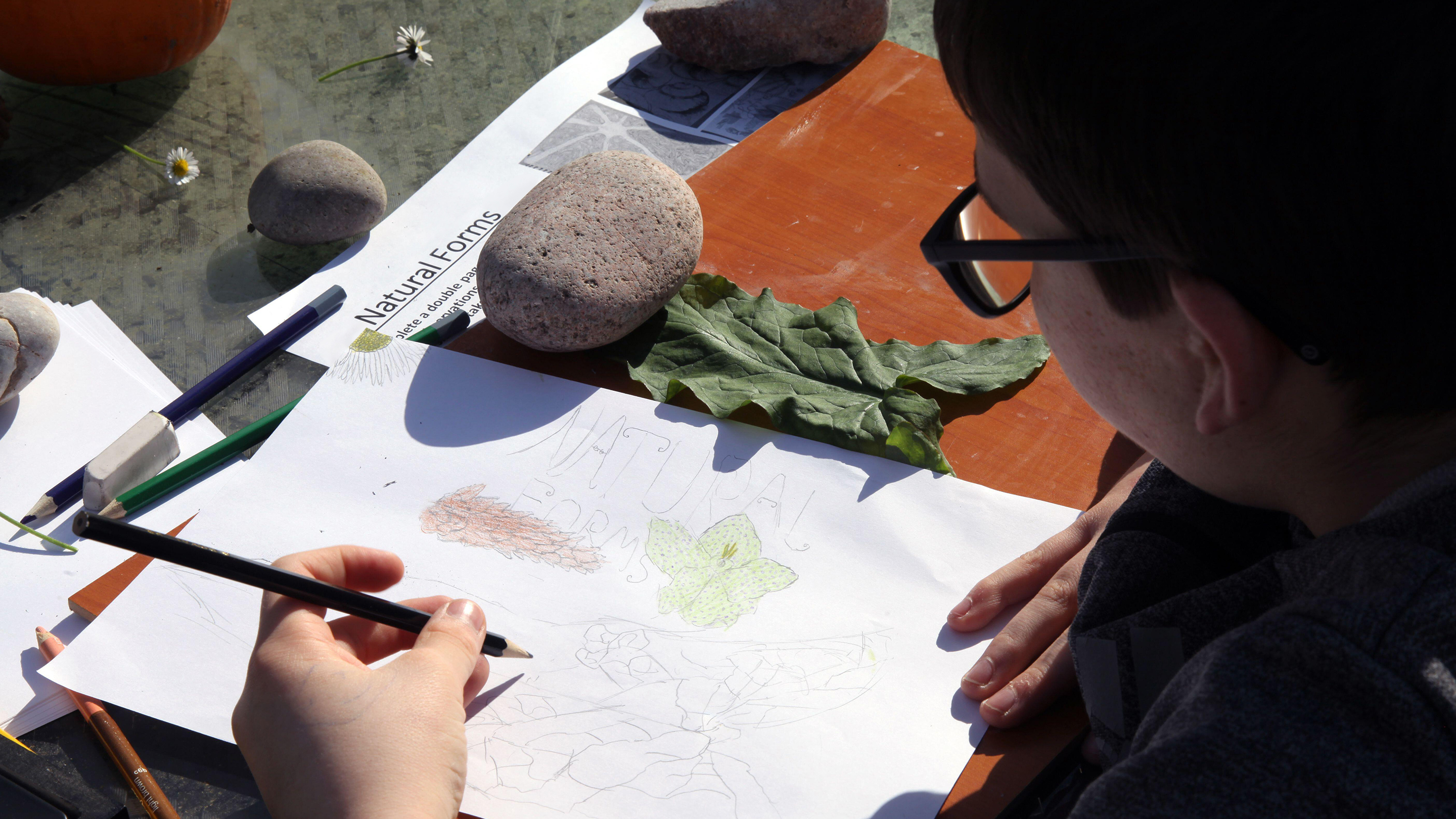
Nature is generous with art supplies, though teachers should set clear rules about what can and cannot be collected. Students can sketch leaves, bark, clouds, insects, buildings, or shadows. They can study texture, color, line, perspective, and pattern. Temporary land art made from fallen leaves or stones can introduce composition without requiring glitter, which is wonderful because glitter is basically classroom confetti with a long-term agenda.
Music lessons can also move outside. Students can listen for soundscapes, identify rhythms in footsteps or rain, compare natural and human-made sounds, or create simple percussion patterns using safe found objects. Outdoor sound activities help students practice careful listening, which is a valuable skill in music, language, and life in general.
Simple Outdoor Activities for Any Grade
The best outdoor activities are flexible. A kindergarten class and a high school class can sometimes do versions of the same activity with different levels of complexity. Below are adaptable ideas that work across age groups.
1. Nature Scavenger Hunt
Create a list of items or qualities for students to find: something rough, something smooth, something symmetrical, something that changes color, something that shows evidence of an animal, something shaped like a triangle, or something that makes sound. Younger students can draw or check off items. Older students can photograph, classify, explain, or connect findings to vocabulary and concepts.
2. Outdoor Vocabulary Walk
Give students academic vocabulary and ask them to find real-world examples. Words such as erosion, symmetry, habitat, contrast, evidence, texture, community, force, adaptation, and perspective become easier to understand when students can point to examples. This works especially well for English learners because it connects language to physical experience.
3. Sit Spot Journaling
Students choose a safe, visible spot and return to it regularly. Each visit, they record observations, questions, sketches, and changes. Over time, sit spot journals help students notice patterns in weather, plant growth, animal behavior, light, sound, and human activity. This practice supports science, writing, mindfulness, and patience, which is useful because patience is not always a student’s favorite subject.
4. Measure the World
Bring rulers, measuring tapes, string, or simple pacing methods outside. Students can measure shadows, sidewalk cracks, garden beds, playground lines, or the distance between objects. Younger students can compare longer and shorter. Older students can calculate ratios, averages, scale drawings, or rates of change.
5. Outdoor Debate Corners
Use four corners of a courtyard or field to represent opinions: strongly agree, agree, disagree, strongly disagree. Read a statement connected to the curriculum, such as “Our school should plant more trees,” “Technology helps people understand nature,” or “Public spaces should prioritize people over cars.” Students move to a position and explain their reasoning. This adds movement to discussion and helps students see a range of viewpoints.
6. Weather and Data Tracking
Students can record temperature, cloud cover, wind direction, precipitation, or seasonal changes. Over days or weeks, they can graph results and make predictions. Older students can compare local observations with official weather data, discuss climate patterns, or evaluate how weather affects school routines and community life.
7. Read the Landscape Like a Text
Ask students to “read” the outdoor environment the way they would read a passage. What is the main idea of this place? What details support it? What has changed? What is the author’s purpose, if the “author” is the person who designed the space? This playful approach connects literacy skills to visual analysis and works especially well with older students.
How to Manage Outdoor Learning Without Losing Your Mind
Outdoor learning works best with clear routines. Before going outside, teachers should explain the academic goal, boundaries, materials, signal for attention, and expected behavior. Students need to know whether they may pick up objects, talk with partners, sit on the grass, use devices, or move freely. Clear expectations prevent the lesson from turning into a surprise festival.
A strong outdoor routine includes a gathering spot, a quiet signal, and a return procedure. Teachers can use call-and-response, a hand signal, a whistle if permitted, or a simple countdown. Materials should be minimal: clipboards, pencils, field notebooks, measuring tools, magnifiers, chalk, or tablets when useful. The less you carry, the less you have to chase across the playground when the wind becomes dramatic.
Plan for Safety and Accessibility
Outdoor lessons should include safety checks. Teachers need to consider weather, allergies, sun exposure, hydration, insects, uneven ground, and student mobility needs. Choose spaces where all students can participate. Provide seating options, shade when possible, and alternative ways to complete tasks. Accessibility is not an extra feature; it is part of good lesson design.
Make the Learning Goal Obvious
Students should know why they are outside. A clear purpose helps them stay focused and helps teachers assess learning. Instead of saying, “We’re going outside for science,” say, “We’re going outside to collect evidence of living and nonliving things.” Instead of “We’re doing writing outside,” say, “We’re gathering sensory details for a descriptive paragraph.” Purpose turns fresh air into instruction.
Outdoor Learning for Different Grade Levels
Preschool and Kindergarten
Young learners benefit from sensory exploration, movement, and play-based discovery. Outdoor activities might include sorting leaves, listening for sounds, drawing clouds, counting steps, naming colors, building with sticks, or acting out animal movements. Teachers can ask simple questions: What do you notice? What feels smooth? What changed since yesterday? At this age, curiosity is the curriculum’s best friend.
Elementary School
Elementary students are ready for more structured observation and recording. They can create nature journals, measure plant growth, write poems, conduct scavenger hunts, graph weather, read outdoors, or map the schoolyard. Outdoor learning helps them connect foundational skills to real experiences. Fractions are less mysterious when students divide a garden bed into equal sections. Adjectives become easier when students are surrounded by things worth describing.
Middle School
Middle school students need movement, relevance, and chances to collaborate. Outdoor lessons can include ecosystem studies, engineering challenges, mapping projects, field sketches, debates, and data collection. Students can test surfaces for friction, compare temperatures in sun and shade, study local biodiversity, or write arguments about improving school green spaces. This age group often responds well when the task feels real and not like a worksheet wearing sunglasses.
High School
High school outdoor learning can be rigorous and interdisciplinary. Students can collect environmental data, conduct statistical analysis, study urban design, write place-based essays, analyze public policy, photograph geometric patterns, or investigate local history through landscapes. They can also mentor younger students in outdoor activities, turning leadership into part of the learning experience.
Assessment: How to Know Outdoor Learning Is Working
Outdoor lessons should still include assessment, but assessment does not always need to be formal. Teachers can use exit tickets, sketches, field notes, group explanations, short reflections, data tables, photos with captions, or quick presentations. The assessment should match the learning goal. If the goal is observation, look for specific details. If the goal is measurement, check accuracy and reasoning. If the goal is collaboration, ask students to reflect on roles and communication.
One effective strategy is the “claim, evidence, reasoning” format. After an outdoor investigation, students make a claim, support it with evidence they collected, and explain their reasoning. This structure works from upper elementary through high school and helps students connect outdoor experiences to academic thinking.
Common Challenges and Easy Solutions
Outdoor learning is rewarding, but it is not always tidy. Weather changes. Students get excited. Pencils disappear into grass as if joining a tiny wooden witness protection program. These challenges are normal and manageable.
If noise is an issue, establish voice levels and use partner zones. If students wander, set visible boundaries. If weather is unpredictable, prepare a backup indoor version of the same lesson. If materials are hard to manage, assign student roles such as equipment manager, recorder, timekeeper, and reporter. If administrators or families are unsure about outdoor learning, explain the academic goals and share examples of student work.
of Practical Experience: What Outdoor Learning Feels Like in Real Classrooms
In practice, outdoor learning often begins with hesitation. A teacher may worry that students will scatter, complain, or treat the lesson like recess with pencils. But after the first few attempts, a rhythm usually appears. Students learn where to gather, how to carry materials, how to listen for the signal, and how to shift from exploration back to discussion. The first outdoor lesson may feel like opening a bag of popcorn in a library. The fifth one often feels like a normal, useful part of the week.
One simple experience that works across grade levels is outdoor journaling. At first, students may write basic observations: “I see a tree. I hear birds. The sky is blue.” That is fine. The magic happens when the routine repeats. By the third or fourth visit, students begin noticing smaller details: ants moving around a crack in the sidewalk, one branch that blooms earlier than another, the way shadows stretch after lunch, or how the same space sounds different after rain. Their writing grows because their attention grows.
Another useful experience is outdoor math measurement. Students who may not love math indoors often enjoy measuring real objects because the task feels practical. A class can estimate the height of a flagpole using shadows, measure the perimeter of a garden, or calculate the average length of leaves from different plants. Mistakes become part of the investigation. If one group gets a wildly different answer, the class can discuss tools, methods, units, and accuracy. That conversation is more memorable than simply marking an answer wrong.
Outdoor learning also changes classroom relationships. Students who are quiet indoors may become observant leaders outside. A student who struggles with long reading passages might shine during a nature walk because they notice patterns others miss. Group work can feel more natural when students have space to move, point, compare, and talk. Teachers often discover strengths that do not appear during traditional desk work.
There is also a special kind of joy in watching older students become curious again. Middle and high school students may act too sophisticated for “looking at leaves,” but give them a real question and a little independence, and curiosity sneaks back in. Ask them which part of campus is hottest and why. Ask them where water goes during a storm. Ask them to photograph examples of symmetry, decay, force, or human impact. Suddenly, the school grounds become a puzzle instead of just the place between classes.
The best outdoor learning experiences are not perfect. Someone forgets a pencil. A gust of wind attacks the data sheet. A bird interrupts a serious explanation with suspiciously comedic timing. But those moments are part of the experience. They remind students that learning is active, alive, and connected to the world they walk through every day. When teachers bring learning outside, they are not escaping the curriculum. They are giving it room to breathe.
Conclusion
Bringing learning outside for any grade is less about having the perfect outdoor classroom and more about using the spaces already available with purpose and creativity. A sidewalk can teach measurement. A tree can inspire poetry. A puddle can launch a science investigation. A schoolyard can become a map, a lab, a studio, a debate space, and a reading room. Outdoor learning helps students connect academic concepts to real experiences, supports movement and engagement, and invites curiosity back into the school day.
Teachers do not need to overhaul the entire schedule. Start with one routine, one subject, one short activity. Build expectations, reflect on what worked, and try again. Learning outside can be simple, meaningful, and surprisingly joyful. Plus, the ceiling is literally the sky, which is hard for any classroom bulletin board to compete with.