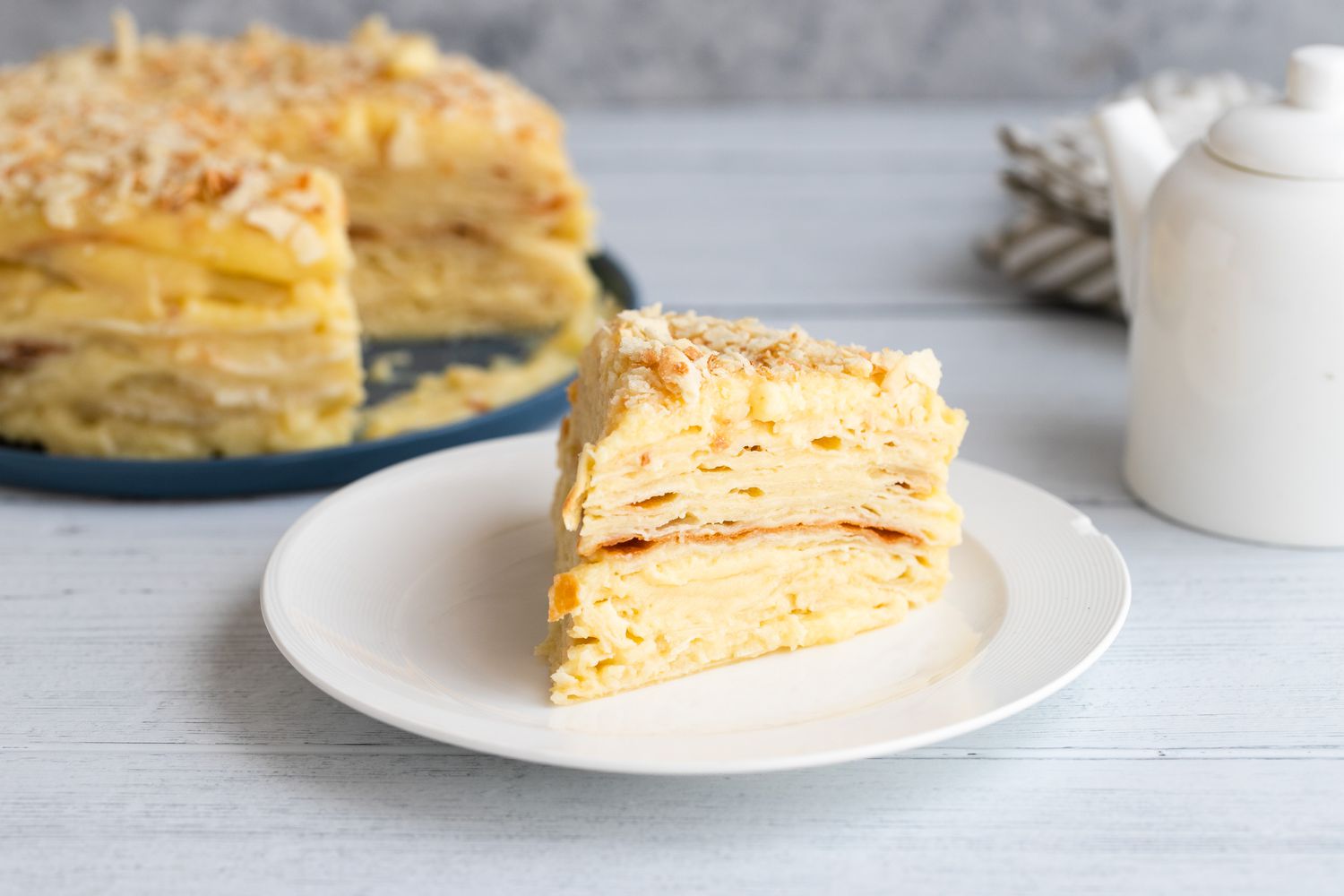
Some cakes enter a room politely. Russian Napoleon cake kicks the door open in a coat made of buttery flakes and says, “I brought custard.” If you have never made Napolyeon Tort before, here is the good news: it looks wildly impressive, tastes like a bakery window on its best behavior, and is much more doable than its dramatic layers suggest.
This classic Russian Napoleon cake recipe is all about contrast. You get crisp, golden pastry sheets, silky vanilla custard cream, and a snowy shower of pastry crumbs on top. After a long chill in the refrigerator, the layers soften just enough to become tender without losing their charm. The result is a cake that slices like a dream, tastes even better the next day, and makes everyone think you have either elite pastry skills or a secret grandmother named Nina.
In this guide, you will get a practical, home-kitchen-friendly version of the dessert using store-bought puff pastry for ease, plus plenty of tips to help you nail the signature texture. Whether you are baking for a holiday, a birthday, or a random Tuesday that needs more joy, this Napolyeon Tort recipe is worth the flaky mess.
What Is Russian Napoleon Cake?
Russian Napoleon cake, often called Napolyeon Tort, is a layered dessert made with many thin sheets of baked pastry and a rich custard-based cream. It is related to the French mille-feuille, but the Russian version usually has more layers, softer texture after chilling, and a full coating of pastry crumbs instead of a glossy pastry-shop finish.
That crumb coating is not just decoration. It adds texture, hides imperfections, and gives the cake its cozy, homemade personality. In other words, this is a dessert that understands the power of good lighting and strategic styling.
Why You Will Love This Napoleon Cake Recipe
- It delivers bakery-style results without making puff pastry from scratch.
- The vanilla custard cream is rich, smooth, and deeply comforting.
- It is an excellent make-ahead dessert because the flavor improves after chilling.
- The crumb-coated finish makes it elegant without being fussy.
- It is ideal for celebrations, holiday tables, and anyone who respects a layered dessert.
Ingredients for Russian Napoleon Cake
For the Pastry Layers
- 2 packages all-butter puff pastry, thawed according to package directions
- 1 to 2 tablespoons granulated sugar, optional, for a lightly caramelized top
- All-purpose flour, for dusting
For the Custard Cream
- 4 cups whole milk
- 1 cup granulated sugar
- 6 large egg yolks
- 1/2 cup cornstarch
- 1/4 teaspoon fine sea salt
- 4 tablespoons unsalted butter
- 2 teaspoons pure vanilla extract
- 1 cup heavy cream, cold
- 2 tablespoons powdered sugar
Optional Garnish
- Fresh berries
- Extra powdered sugar
Ingredient Notes That Actually Matter
Use all-butter puff pastry if possible. This is one of those moments when butter earns its paycheck. Better flavor, better aroma, better color.
Whole milk makes a better custard. Lower-fat milk can work, but the filling will not feel as luxurious. And this cake is not here to be emotionally distant.
Heavy cream lightens the custard. Folding whipped cream into cooled pastry cream gives you a softer, silkier filling that spreads beautifully between layers.
How to Make Russian Napoleon Cake
1. Prepare the Puff Pastry
Preheat your oven to 400°F. Line baking sheets with parchment paper. On a lightly floured surface, roll each puff pastry sheet a bit thinner so you can cut even rectangles or circles. Aim for 8 to 10 layers total, depending on your preferred cake height and pan size.
Transfer the pastry pieces to lined baking sheets and prick them all over with a fork. This step helps keep the pastry flatter instead of puffing into dramatic little mountains. If you want especially neat layers, place another sheet of parchment on top and weigh them down with a second baking sheet.
Bake for 15 to 20 minutes, or until deeply golden and crisp. Cool completely on wire racks. Reserve one baked piece or some trimmings for crumbs.
2. Make the Custard Base
In a large saucepan, heat the milk until steaming but not boiling. In a separate bowl, whisk together the sugar, egg yolks, cornstarch, and salt until smooth. Slowly pour some of the hot milk into the egg mixture while whisking constantly. This tempers the eggs so they do not scramble and ruin your afternoon.
Pour the tempered mixture back into the saucepan. Cook over medium heat, whisking constantly, until the custard thickens and begins to bubble. Continue cooking for about 1 minute more to fully activate the starch and stabilize the cream.
Remove from the heat and whisk in the butter and vanilla. Transfer the custard to a bowl, press plastic wrap directly onto the surface, and chill until completely cold.
3. Whip the Cream
In a chilled bowl, whip the heavy cream with powdered sugar until medium peaks form. Do not whip it into submission. You want it airy and smooth, not stiff enough to patch drywall.
4. Finish the Filling
Once the custard is fully cold, whisk it briefly until smooth. Fold the whipped cream into the custard in two or three additions. The result should be light, creamy, and easy to spread.
5. Assemble the Cake
Place one pastry layer on your serving plate or cake board. Spread a generous layer of cream over the top, going nearly to the edges. Repeat with the remaining pastry and cream, stacking carefully as you go. Leave enough cream to coat the top and sides.
Crush the reserved pastry piece into fine crumbs. Coat the top and sides of the cake with the crumbs. Press them on gently so they stick. At this point, the cake may look a little rustic. Good. Rustic is charming. Rustic says, “I know what browned butter smells like.”
6. Chill Before Serving
Refrigerate the assembled cake for at least 8 hours, preferably overnight. This resting time is what transforms the dessert from crisp pastry stack to classic Russian puff pastry cake. The layers soften just enough to become sliceable while still keeping a delicate texture.
Best Tips for a Beautiful Napolyeon Tort
Keep the Pastry Cold
If the dough gets too warm while you work, chill it briefly before baking. Cold dough creates better layers and a cleaner puff.
Do Not Skip the Fork Pricks
Docking the pastry helps control rise and keeps your layers flatter, which makes the cake easier to assemble and slice.
Cool the Custard Completely
If the custard is even slightly warm when you add whipped cream, the filling can loosen too much. Patience is not flashy, but it is delicious.
Use a Serrated Knife to Slice
When serving, use a gentle sawing motion rather than pressing straight down. This helps preserve the layers instead of crushing them.
Common Mistakes to Avoid
- Underbaking the pastry: Pale pastry turns soggy faster. Bake until truly golden.
- Rushing the chill: Freshly assembled cake is tasty, but overnight cake is the legend.
- Using too little filling: The cream is what softens the layers and creates that classic texture.
- Making uneven layers: Trim and portion as neatly as possible for a more stable cake.
- Serving it ice-cold from the deepest corner of the fridge: Let it sit 10 to 15 minutes before slicing for the best texture.
Flavor Variations to Try
Berry Napoleon Cake
Add thin layers of raspberries or sliced strawberries between some of the custard layers for a fruit-forward version.
Coffee Custard Napoleon
Whisk a little espresso powder into the hot milk for a subtle mocha flavor that pairs beautifully with the pastry.
Condensed Milk Twist
For a richer Eastern European bakery vibe, replace part of the sugar with sweetened condensed milk in the filling.
Holiday Finish
Top the cake with crushed freeze-dried berries, sugared cranberries, or curls of white chocolate for a festive look.
How to Store Russian Napoleon Cake
Store the cake covered in the refrigerator for up to 3 days. It is at its best within the first 24 to 48 hours, when the pastry has softened into the filling but still keeps a little structure. You can also make the custard a day ahead and bake the pastry layers ahead of time, then assemble the cake the night before serving.
What to Serve with Napoleon Cake
This dessert loves company. Serve it with hot black tea, strong coffee, or a small glass of dessert wine. Fresh berries add brightness, and unsweetened whipped cream can mellow the richness if your guests are the kind who claim they “just want a tiny slice” before taking one the size of a paperback novel.
Why This Recipe Works
The beauty of this Napoleon tort recipe is balance. Store-bought puff pastry keeps the project manageable while still delivering that signature flaky structure. The custard is thickened with cornstarch and enriched with butter, then lightened with whipped cream so it feels luxurious rather than heavy. The long chill marries everything together. You start with crisp sheets and soft cream, then end up with a layered dessert that tastes unified, tender, and just complicated enough to impress people.
It is also one of those rare desserts that rewards restraint. No need for six extracts, seventeen garnishes, or a gold-leaf identity crisis. Butter, vanilla, cream, pastry, time. That is the whole magic trick.
Final Thoughts
If you love layered desserts, creamy fillings, and recipes that make people widen their eyes when you walk into the room, this Russian Napoleon Cake (Napolyeon Tort) belongs in your baking rotation. It is flaky, creamy, elegant, nostalgic, and just messy enough to feel gloriously homemade.
Make it once, and you will understand why this cake has such loyal fans. Make it twice, and you will start casually saying things like, “Oh, that old pastry project?” while secretly feeling like a dessert wizard.
Experiences and Lessons from Making Russian Napoleon Cake
Making Russian Napoleon cake is one of those kitchen experiences that changes your relationship with “fancy” desserts. At first glance, it looks like the sort of thing that should require a pastry degree, three marble countertops, and the emotional stability of a saint. In reality, it is more like building a delicious paper tower, one buttery sheet at a time. The first time I made a cake in this style, the kitchen looked like it had been hit by a flaky snowstorm. Pastry crumbs were everywhere, my whisk had seen things, and I was convinced the layers would slide sideways like a dessert traffic accident. Then it chilled overnight, and somehow the whole thing transformed into something elegant enough to silence a table full of talkative people.
That is the real charm of Napolyeon Tort: it teaches patience. The pastry comes out crisp and dramatic, the custard feels almost too soft, and the assembled cake can look a little chaotic at first. But this is a dessert that improves while you are doing absolutely nothing to it. Overnight, the cream settles into the layers, the pastry relaxes, and the flavors deepen. It is a good reminder that not every recipe rewards speed. Some desserts need a nap, and frankly, that is relatable.
Another memorable part of the experience is the sound. Yes, the sound. When you press your fork into a well-made Russian Napoleon cake, there is a gentle crackle from the crumb coating and the softened pastry layers. It is not loud, but it is deeply satisfying, like opening a present that happens to be made of butter. Then comes the first bite: cool cream, tender pastry, a little flake on your plate, and usually one moment of silence while your brain catches up with how good it is.
This cake also has a funny way of making people emotional. Maybe it is because layered custard desserts feel old-fashioned in the best way. Maybe it is because the cake looks celebratory even before you decorate it. Or maybe it is because every slice seems slightly too generous and yet mysteriously disappears. At gatherings, this is the dessert people ask about twice. First they ask, “What is this?” Then they come back later and ask, “Do you happen to have another piece?” They never “happen” to have another piece. They absolutely planned it.
From a baker’s perspective, the experience becomes easier and more enjoyable each time you make it. You learn that your pastry does not need to be perfect. You learn that a thick, smooth custard is worth whisking properly. You learn that crumbs hide many sins and should be treated with respect. Most importantly, you learn that the cake is meant to feel homemade. Its beauty is not in geometric perfection. Its beauty is in those many tender layers and the generosity of the filling.
There is also something wonderfully theatrical about bringing this cake to the table. It looks substantial. It feels special. It suggests that an occasion is happening, even if the occasion is simply that you made it through the week and deserve dessert with layers. In that sense, Russian Napoleon cake is more than a recipe. It is an experience in slowing down, trusting the process, and sharing something that feels both grand and comforting. Not bad for a cake that starts with a box of puff pastry and a little nerve.