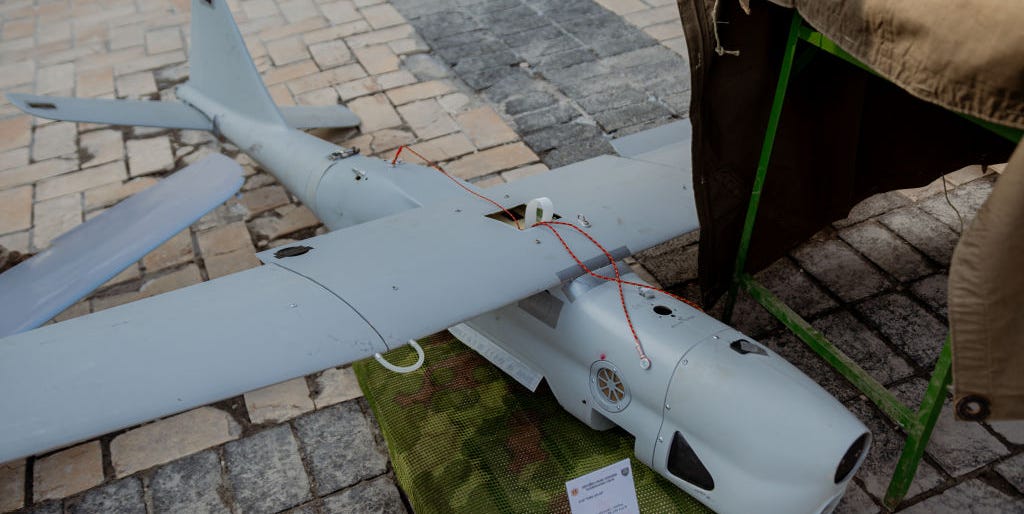
Note: This article is written for informational and editorial analysis only. It does not provide instructions for building, deploying, modifying, or evading defenses with drones.
In the endlessly strange toolbox of modern warfare, “hibernating drones” sound like something a screenwriter would invent after drinking three coffees and watching too many spy movies. Yet Russia has publicly claimed it is developing FPV drones that can “sleep” for extended periods before being remotely activated. The idea is simple in concept but unsettling in its implications: instead of flying toward a target immediately, a small unmanned system could be positioned, powered down into a low-signature standby state, and later awakened for a short final action.
The claim first drew broad attention after Russian state-linked reporting described a hibernation device for the Joker line of FPV drones, including a model called Ultimatum. Russian developer Dmitry Kuzyakin said the device could allow drones to remain dormant for weeks, reduce radio visibility while inactive, and shorten the time between activation and action. As with many battlefield technology claims, the smart approach is not panic, applause, or popcorn. It is skepticism with a notebook.
Russia’s statement fits a larger pattern in the war in Ukraine: both sides are racing to make small drones cheaper, harder to detect, more resistant to electronic warfare, and easier to use at scale. FPV drones, loitering munitions, interceptor drones, drone relays, fiber-optic systems, autonomous navigation modules, and low-cost air-defense adaptations have turned Ukraine into the world’s most watched laboratory for unmanned warfare. The hibernating drone claim is one more chapter in that story.
What Are “Hibernating Drones”?
A hibernating drone is not literally taking a cozy nap under a tiny blanket. In public descriptions, the phrase refers to a drone placed into a low-power standby mode after it has already been moved into a useful position. While inactive, it would reduce or stop emissions that might otherwise help electronic warfare teams locate, jam, or identify it. When activated, it could return to operation quickly.
The concept matters because drone warfare is increasingly a battle of signatures. A flying drone can be seen, heard, tracked, jammed, or intercepted. A powered-down drone is much harder to notice, especially in a cluttered environment where small objects are everywhere. That does not mean such a drone is invisible. It means defenders may need different detection habits, better ground awareness, and layered countermeasures that do not depend only on catching drones while they are already airborne.
Russia’s Claim: The Joker FPV Drone and “Sleeper” Mode
According to Russian descriptions, the hibernation device was designed for FPV drones in the Joker family. FPV stands for “first-person view,” meaning an operator sees video from the drone’s onboard camera. In civilian life, FPV drones are associated with racing, filming, and hobby flying. In the Ukraine war, modified FPV drones have become a dominant battlefield tool, used for reconnaissance, logistics observation, and attacks.
The Russian claim centered on the ability to place a drone into a dormant state and later activate it. The reported advantage is not raw speed or range, but timing. Instead of crossing a long distance under observation, a sleeper drone would already be near the area where it is intended to operate. In theory, that shortens the visible flight window and gives defenders less time to react.
That is the promise. The reality is more complicated. A drone left in the field has to survive weather, damage, battery loss, physical discovery, communications limits, and changing battlefield conditions. Technology that sounds elegant in a press statement can become moody and fragile in mud, cold, heat, dust, rain, and the everyday chaos of war. Even so, the claim is worth studying because it shows where Russian drone development is trying to go: lower signatures, more surprise, and more pressure on defenders.
Why Russia Would Want Drones That “Sleep”
The Russia-Ukraine war has made one lesson painfully obvious: cheap drones can impose expensive defensive problems. A small drone may cost a fraction of the system used to stop it. That cost mismatch changes military planning. It also creates a brutal math problem for air defense, electronic warfare, and logistics teams.
A hibernating drone concept tries to exploit three battlefield pressures at once. First, it reduces exposure time. A drone that spends less time flying is less likely to be spotted or jammed in flight. Second, it complicates electronic warfare. If the drone is not actively transmitting while dormant, it may be harder to detect using radio-frequency monitoring. Third, it allows ambush-style timing. The operator does not need to send the drone across the entire route at the moment of use.
In plain English: the drone is not trying to be stronger. It is trying to be sneakier. That is why the concept has attracted attention among defense watchers. It reflects the same logic behind many modern drone adaptations: avoid the strongest defensive layer, exploit a weak moment, and force the opponent to spend more energy watching more places more often.
The Role of Electronic Warfare
Electronic warfare is the invisible wrestling match behind much of today’s drone combat. Jamming can interfere with control links, navigation signals, video feeds, or data transmission. Spoofing can confuse systems. Direction-finding can help locate operators or devices. In Ukraine, both Russian and Ukrainian forces have adapted quickly, with each new drone technique often followed by a new countermeasure.
Hibernation is attractive because many counter-drone systems rely on finding an active signal. If a drone is not transmitting, it may present fewer clues. But this advantage is not magical. A dormant drone still exists physically. It can be discovered through patrols, sensors, visual inspection, thermal clues in some circumstances, or intelligence about likely placement patterns. It also has to reconnect or activate at some point, and that moment may create a detectable signature.
The bigger takeaway is that drones are pushing militaries away from single-solution defense. No one tool solves the problem. Electronic warfare, physical barriers, interceptor drones, radar, acoustic detection, optical systems, training, camouflage discipline, and rapid reporting all matter. The drone war has become a layered contest, not a one-button video game.
How Hibernating Drones Fit the Broader Drone Race
Russia’s hibernating drone claim should not be viewed as an isolated gadget story. It belongs to a wider trend in which small unmanned systems are evolving rapidly. Russia has reportedly adapted reconnaissance drones as carriers or relays for smaller FPV drones. It has expanded its use of Shahed-type long-range attack drones. It has experimented with fiber-optic control links to reduce vulnerability to jamming. It has also pushed toward AI-enabled and semi-autonomous systems that may operate in more contested environments.
Ukraine, meanwhile, has become a major innovator in defensive drones, interceptor drones, battlefield software, and rapid drone production. Ukrainian units have developed low-cost ways to intercept incoming drones, and Ukrainian industry has turned frontline feedback into design changes at remarkable speed. This is not a slow defense procurement story with a dusty binder and a conference room sandwich. It is rapid iteration under pressure.
That pressure is exactly why a sleeper-drone concept matters. When one side improves detection, the other side tries to reduce signatures. When jamming improves, drone makers explore fiber optics, autonomy, or pre-positioned systems. When air defenses become more efficient, attackers test saturation, decoys, route changes, altitude changes, and timing tricks. Every improvement creates the next problem.
Potential Advantages of Sleeper Drones
From an analytical perspective, a hibernating drone could offer several theoretical advantages without needing to be technologically glamorous. The first is concealment. A small drone that is inactive may blend into a messy environment better than a moving drone in the sky. The second is timing. Being already positioned could allow a very short activation window. The third is operator efficiency. Public Russian comments suggested that one operator could manage multiple dormant drones, although such claims should be treated cautiously until independently verified.
The fourth advantage is psychological. Weapons do not need to be everywhere to make people feel as if they might be anywhere. The possibility of dormant drones could force troops, logistics teams, and civilians in threatened areas to think more carefully about exposed routes, open spaces, and routine movement. That burden is part of the effect.
Still, “possible” is not the same as “proven.” A concept can be real but limited. It can work in certain conditions and fail in others. It can be useful tactically without changing the strategic picture. Many wartime technologies look terrifying in headlines but become just one more tool in a crowded, improvised, fast-changing battlefield ecosystem.
Limitations and Practical Problems
The biggest weakness of hibernating drones is that the battlefield is not a showroom. Batteries degrade. Weather changes. Units move. Mud happens. Civilians move through areas. Animals, debris, and accidental discovery can interfere. A dormant system may be hard to detect electronically, but it is also not doing anything while it sleeps. If the tactical situation changes, the drone may wake up to find that its intended opportunity has disappeared.
Communications are another challenge. A dormant drone still needs a reliable way to receive an activation command or follow a programmed trigger. The more it communicates, the more detectable it may become. The less it communicates, the less flexible it may be. That tradeoff is at the heart of many unmanned systems problems.
There is also the question of scale. A handful of successful sleeper drones might create dramatic examples. Turning the idea into a dependable mass capability is much harder. Mass production requires components, quality control, training, maintenance, logistics, software reliability, and integration with broader operations. Russia has shown an ability to adapt and scale certain drone systems, but not every battlefield invention becomes a war-winning machine.
Why the Claim Should Be Treated Carefully
Russia’s public statements about new military technology often serve more than one purpose. They may describe real capabilities, advertise industry progress, encourage domestic audiences, intimidate opponents, or shape foreign perceptions. Sometimes they do several of those things at once. That does not make the claims false, but it does mean readers should avoid treating every announcement as a finished battlefield fact.
The hibernating drone claim is plausible because low-power standby electronics are not science fiction. Many devices sleep and wake on command. But battlefield usefulness depends on much more than the basic idea. It depends on durability, concealment, communications, operator skill, countermeasures, production scale, and whether the system solves a real tactical problem better than cheaper alternatives.
In other words, the right headline is not “unstoppable robot bats are here.” The better headline is: Russia says it is developing sleeper FPV drones, and the concept reflects a real trend toward lower-signature, lower-cost, more adaptive unmanned systems.
What This Means for Ukraine
For Ukraine, the emergence of sleeper-drone concepts adds another layer to an already complex defensive environment. Ukrainian forces have spent years adapting to Russian drones, from long-range Shahed attacks against cities and infrastructure to short-range FPV threats near the front. Defensive innovation has included interceptor drones, electronic warfare, mobile air-defense teams, improved reporting networks, and rapid local manufacturing.
Sleeper drones would push defenders to think beyond the sky. If a threat can be inactive before activation, then detection cannot rely only on watching flying objects. Area security, route discipline, sensor fusion, and rapid information sharing become more important. So does public safety communication in areas affected by the war, because unexploded or abandoned devices can create danger long after fighting shifts.
The broader Ukrainian response is likely to remain adaptive. That has been one of the defining traits of the war. A new drone tactic appears; defenders test countermeasures; attackers adjust; defenders adjust again. It is exhausting, expensive, and technically demanding. It is also the new normal.
What This Means for the United States and NATO
For the United States and NATO, the hibernating drone story is less about one Russian gadget and more about future battlefield assumptions. Western militaries have traditionally invested heavily in exquisite systems: advanced aircraft, missiles, radars, and command networks. Those remain important. But Ukraine has shown that small, cheap, attritable drones can affect battlefield movement, logistics, air defense, and morale at scale.
The key lesson is not simply “buy more drones.” It is “build organizations that can learn faster.” Drone warfare rewards speed: fast design changes, fast software updates, fast training loops, fast repair, and fast feedback from users. A military that takes years to approve a small modification may struggle against an opponent that changes a drone design in weeks.
Hibernating drones also highlight the importance of counter-UAS defense at the small-unit level. Large air-defense systems cannot be everywhere. Soldiers, bases, vehicles, ports, power plants, and logistics hubs need layered protection against small systems. That protection must be affordable, because using very expensive interceptors against very cheap drones creates a losing budget equation.
The Human Side of the Drone War
It is easy to discuss drones as if they are chess pieces, but their use affects real people. Cities hit by long-range drones face interrupted sleep, damaged infrastructure, and fear. Troops near the front face constant observation. Civilians in contested areas may be exposed to risks from both active drones and debris from intercepted systems. The technology may be small, but the consequences are not.
That is why responsible reporting matters. A good article should explain what is known, what is claimed, and what remains uncertain. It should not sensationalize every new device as a superweapon. It should also avoid turning dangerous technology into a hobbyist recipe. The public needs understanding, not a manual.
Could Hibernating Drones Change Warfare?
Hibernating drones could influence warfare, but probably as part of a broader family of unmanned tactics rather than as a standalone revolution. Their main value would come from surprise, reduced signature, and timing. Their limitations would come from endurance, reliability, discovery risk, and the difficulty of operating in chaotic conditions.
The most important change is conceptual. Drones are no longer just flying cameras or one-way attack systems. They are becoming sensors, relays, decoys, interceptors, communications nodes, and occasionally dormant threats. The line between air defense, surveillance, electronic warfare, and robotics is blurring. Modern forces increasingly have to fight in the air, on the ground, in the electromagnetic spectrum, and in software at the same time.
That is the real detail behind Russia’s hibernating drone claim. The drone itself may or may not become widely effective. But the direction of travel is clear: unmanned systems are becoming more patient, more adaptive, and more deeply integrated into battlefield planning.
Experience-Based Takeaways: What Watching This Drone Race Teaches Us
Following the Russia-Ukraine drone war over time feels like watching technology age in dog years. A system that looks cutting-edge in January can feel ordinary by summer. A clever countermeasure can dominate for a few weeks, then lose effectiveness once the other side adapts. That rapid cycle is one of the strongest lessons from the hibernating drone story.
The first experience-based takeaway is that simple ideas can matter. Hibernation mode is not as flashy as artificial intelligence or hypersonic weapons. It is closer to a practical engineering trick: reduce activity, conserve energy, lower signature, and wait. Yet practical tricks can be powerful when they solve a real battlefield problem. Many important wartime innovations are not glamorous. They are awkward, improvised, and useful.
The second lesson is that context beats hype. A sleeper drone in a press release sounds dramatic. A sleeper drone in the real world has to survive weather, handling, detection, battery limits, and communications problems. Analysts, editors, and readers should always ask: Where would this actually work? How often? At what cost? Against what countermeasures? If a technology only works under narrow conditions, it may still matter, but it should not be treated as a magic wand with propellers.
The third lesson is that drone warfare is a systems competition. The drone is only one part of the story. Operators, training, repair shops, software, supply chains, batteries, cameras, chips, electronic warfare teams, intelligence feeds, and command decisions all shape whether a drone tactic succeeds. A country can announce a clever drone, but the harder question is whether it can produce, maintain, and use that drone at scale.
The fourth lesson is about defense. Counter-drone work cannot depend on one shiny solution. In real conflicts, defenders need layers. Some threats may be jammed. Some may be intercepted. Some may be found through observation. Some may be avoided through better movement discipline and route security. Some may require public safety procedures after they are discovered. The more diverse the drone threat becomes, the more diverse the defense must become.
The fifth lesson is ethical. Small drones make violence feel remote, technical, and almost abstract. That is dangerous. Behind every drone headline are people who may lose homes, sleep, power, safety, or lives. Responsible discussion should keep that human reality in view. It is possible to analyze military technology clearly without cheering for destruction or turning it into entertainment.
The final experience-based takeaway is that the future of drones will be shaped by adaptation, not perfection. Hibernating drones do not need to be perfect to matter. Defenders do not need perfect defenses to reduce risk. The side that learns faster, repairs faster, updates faster, and shares lessons faster gains an edge. In that sense, Russia’s claimed sleeper drones are less a bizarre one-off and more a signal of the age we are entering: warfare where small machines wait, software decides more, and the smartest response is constant, careful adaptation.
Conclusion
Russia’s claim that it is building hibernating drones deserves attention, but not hysteria. The idea is plausible: a small FPV drone could be placed into a low-power standby mode and later activated, potentially reducing exposure to electronic detection and shortening the response time available to defenders. But the battlefield is not kind to neat concepts. Reliability, battery life, communications, weather, discovery risk, and countermeasures all matter.
The deeper story is that drone warfare is moving toward lower cost, lower signature, greater autonomy, and faster adaptation. Hibernating drones are one expression of that trend. Whether Russia’s specific Joker-related system becomes widespread or remains a limited tool, it points to a future where unmanned systems do not simply fly; they wait, relay, observe, deceive, intercept, and pressure defenses in new ways.
For readers, policymakers, and defense observers, the lesson is clear: do not chase the headline alone. Watch the ecosystem. The future of drone warfare will be decided not by one sleeping drone, but by the networks, factories, operators, sensors, software, and countermeasures that determine what happens when it wakes up.