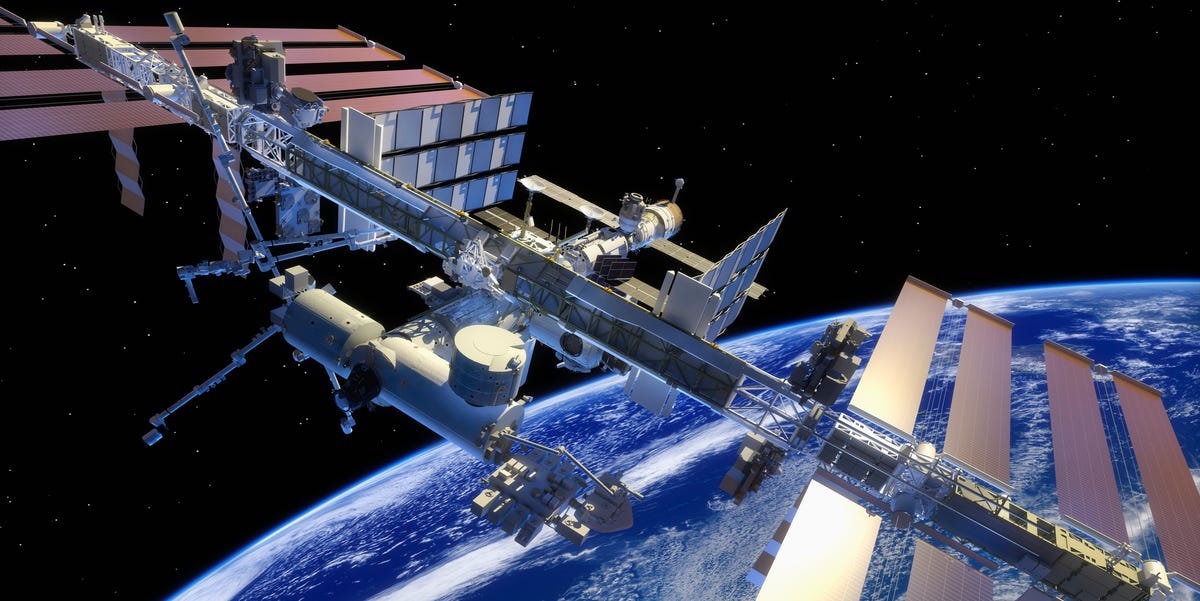
When Russia announced that it would leave the International Space Station after 2024, the reaction was immediate, dramatic, and just a little bit cinematic. Headlines practically wrote themselves. The world’s most famous orbiting laboratory suddenly sounded like a friendship bracelet with one side already reaching for the scissors. But space policy is rarely that tidy, and the story behind the announcement turned out to be far more complicated than a clean break.
The Russia ISS exit story mattered because the International Space Station has never been just a machine. It is a symbol, a scientific platform, and one of the last major U.S.-Russia partnerships still functioning through years of geopolitical strain. That is a lot of pressure to place on a structure flying hundreds of miles above Earth at roughly 17,500 miles per hour. No big deal.
To understand why the headline “Russia says it will leave the International Space Station after 2024” caused such a stir, you have to look at three things at once: what was actually said, why it mattered in the moment, and what happened next. The short version is that the announcement was real, the uncertainty was real, and the eventual picture was more drawn out than the early shock suggested.
Why the Announcement Hit So Hard
In July 2022, Yuri Borisov, the newly appointed head of Roscosmos, said Russia would leave the ISS after 2024 and focus on creating its own orbital outpost. Coming just months after Russia’s invasion of Ukraine and the resulting avalanche of Western sanctions, the statement sounded like more than a program update. It sounded like another fracture in a relationship already under intense pressure.
That mattered because the International Space Station partnership was built on shared hardware, shared operations, and shared trust. The station is not a single-country project with a few guest chairs around the table. It is a carefully balanced multinational system involving the United States, Russia, Canada, Japan, and European partners. Every major player contributes something important, and the system works best when everyone keeps showing up.
So when Russia said it was leaving “after 2024,” people did not hear a routine administrative adjustment. They heard potential disruption to astronaut access, research planning, station maintenance, and the future of continuous human presence in low Earth orbit. In other words, this was not one roommate moving out. This was one roommate taking part of the plumbing manual with them.
The Most Important Phrase Was “After 2024”
The most overlooked detail in the early coverage was the wording itself. Russia did not say it would leave in 2024. It said after 2024. That sounds tiny, but in space diplomacy, tiny words can do heavyweight lifting.
That phrasing left a wide window. It could mean 2025. It could mean later. It could also mean that the declaration was partly political theater, partly bargaining posture, and partly a signal that Russia wanted flexibility while it figured out how quickly it could transition to a proposed Russian orbital station.
NASA’s initial response reflected that ambiguity. U.S. officials said they had not received formal notice of a Russian withdrawal at the time. That detail was critical. Public comments can move markets, dominate headlines, and set off a thousand hot takes, but official international cooperation does not end because someone drops a dramatic line in a meeting. Agencies need notices, negotiations, transition plans, and a practical roadmap for what happens next.
So the first lesson of this story is simple: the announcement was serious, but the timeline was fuzzy. In space, fuzzy timelines are not unusual. Rockets slip. Missions delay. Governments posture. Even orbital relationships come with fine print.
Why the ISS Could Not Easily Shrug Off a Russian Exit
The ISS is often described as a marvel of engineering, and that is true. It is also a marvel of interdependence. The U.S. segment and the Russian segment do not mirror each other, but they do rely on one another in important ways. The United States and its partners provide much of the station’s electrical power, life-support capability, and laboratory infrastructure. Russia has long played a major role in propulsion and orbit maintenance functions.
That operational reality is why the idea of a fast Russian departure alarmed engineers and policymakers alike. The question was not just whether the station could keep going politically. The question was whether it could keep going smoothly, safely, and without a messy rush to replace critical functions.
NASA had already been thinking about those risks. Reports later showed the agency had contingency plans in motion, including efforts to strengthen commercial transportation options and prepare for a future beyond the station’s current life cycle. The takeaway was clear: even before the 2022 announcement, NASA understood that cooperation with Russia could not be treated as immortal, permanent, or magically immune to events on Earth.
The Science Was Bigger Than the Drama
Lost in the noise was the reason the station matters in the first place. The ISS is not just an expensive orbiting peace symbol with solar panels. It is a laboratory where researchers study biology, materials science, human physiology, combustion, fluid behavior, and technologies that support future missions deeper into space. It has also produced Earth-facing benefits in medicine, engineering, remote operations, and commercial research.
That is why every rumor about the station’s future attracts outsized attention. The ISS is not a side project. It is the main low Earth orbit stage on which modern human spaceflight has practiced living and working off-world for more than two decades.
What Happened After the 2022 Headline
Here is where the story gets more interesting and, depending on your taste for clean endings, slightly less theatrical. After the initial uproar, cooperation did not instantly collapse. In fact, mixed crews continued flying, and NASA and Roscosmos kept working under agreements designed to ensure that at least one U.S. astronaut and one Russian cosmonaut could remain on the station through separate transportation systems.
Then came the bigger twist: in 2023, NASA said Russia had confirmed support for continued ISS operations through 2028, while the United States, Japan, Canada, and participating European nations were backing operations through 2030. That did not erase the earlier announcement, but it did reshape its meaning. Russia still signaled that it saw the ISS as a project with an endpoint, not a forever home. Yet the feared near-term cliff edge became more of a long ramp.
That change mattered for planning. It gave NASA and its partners more breathing room for station operations, commercial low Earth orbit development, and end-of-life strategy. It also reminded everyone that space cooperation, like international politics, can move in zigzags. One year brings fiery rhetoric. The next year brings a practical extension because gravity, budgets, and engineering requirements are stubborn negotiators.
Russia’s Bigger Goal: A Post-ISS Future
The announcement was never just about leaving. It was also about what Russia wanted next. Roscosmos made clear that a future Russian orbital station was part of the long-term plan. That ambition was not born overnight. Russian officials had been discussing the limitations of the aging ISS for years and signaling interest in a platform more tailored to Russia’s national priorities.
On paper, a new station offers appealing talking points: more control, more independent decision-making, and a clear message that Russia wants to remain a major human-spaceflight power on its own terms. In reality, building a new space station is a giant technical, financial, and political challenge. Designing modules is hard. Launching them is harder. Sustaining them for years is harder still. Space programs love ambitious timelines the way movie trailers love dramatic music.
That is one reason many analysts treated the 2022 ISS exit declaration with caution. Leaving a station is one thing. Replacing it with a fully functioning alternative is another. The gap between “we will build our own outpost” and “our crews are routinely living there” is not measured in press statements. It is measured in hardware, launches, funding, and patience.
What the Announcement Meant for NASA
For NASA, the entire episode reinforced several priorities at once. First, it underlined the need for redundancy in human access to orbit. The station program became more resilient once U.S. commercial crew vehicles were back in operation, reducing the era when NASA depended entirely on Soyuz seats for astronaut transport.
Second, it strengthened the case for planning the station’s final chapter instead of pretending the ISS could orbit forever. In 2024, NASA selected SpaceX to build the U.S. Deorbit Vehicle that will eventually help guide the station safely out of orbit at the end of its life. That move was not a panic button. It was part of serious end-of-life planning for an aging but still productive platform.
Third, it accelerated the broader push toward commercially developed low Earth orbit destinations. NASA wants a future in which the end of the ISS does not create an orbital ghost town. Instead, the goal is a transition from a government-led station to commercial platforms that can host research, astronaut missions, and private activity.
So while the Russia leaves ISS storyline sounded like a threat to the station’s survival, it also sharpened NASA’s strategic focus. Sometimes a geopolitical headache doubles as a planning memo.
What This Story Really Says About Space Cooperation
There is a reason this story traveled so far beyond the space community. It was about rockets and modules, sure, but it was also about whether cooperation can survive when trust on Earth is badly damaged. The ISS has often been held up as proof that science and exploration can outlast politics. That is partly true. But the 2022 announcement showed the limits of that idea.
Space cooperation is not separate from geopolitics. It is shaped by geopolitics, tested by it, and sometimes temporarily protected by shared self-interest. The ISS did not float above world events in some magical bubble of zero-gravity harmony. It continued because the partners still had reasons, mechanisms, and responsibilities that made continued cooperation useful and necessary.
That may be the most honest way to read the entire episode. The station was not saved by sentiment. It was sustained by engineering reality, institutional commitments, and the uncomfortable fact that orbital systems do not care about your rhetoric. Bolts still need tightening. Crews still need rides. Research still needs schedules. Low Earth orbit is many things, but it is not impressed by dramatic speeches.
The Human Experience of an Orbiting Partnership in Limbo
For many people watching from Earth, the strangest part of this story was emotional rather than technical. The ISS has been in the background of modern life for so long that it feels permanent, almost like a constellation people built for themselves. You grow up hearing about astronauts rotating through missions, school science experiments heading to orbit, and photos of Earth drifting across your screen saver. Then one day, a headline suggests that one of the core partners may walk away, and suddenly the station feels less like a fixture and more like a fragile arrangement held together by aluminum, software, and diplomacy.
That sense of fragility changes how people experience the story. Space news usually arrives wrapped in wonder: moonshots, rover selfies, telescope discoveries, astronauts floating with the calm confidence of people who somehow made microgravity look like a yoga class. But the ISS exit headlines introduced something else: uncertainty. It reminded the public that even the most inspiring scientific projects are still built by countries with competing interests, clashing policies, and very earthly grudges.
For longtime space fans, the announcement felt like the possible end of an era. The ISS has always represented more than science. It has represented continuity. It is one of the few global projects where international teamwork is not a slogan on a conference banner but a daily operational fact. Watching that partnership wobble felt like seeing a favorite bridge develop cracks. The structure may still hold, but you walk differently once you notice the sound.
There was also something deeply human in the contrast between politics on Earth and daily life in orbit. While officials argued, crews still worked. They ran experiments, monitored systems, exercised, prepared cargo, and shared a confined environment where cooperation is not just noble but necessary. Up there, there is no luxury of performative chaos. A space station is not social media. No one wins points for making the oxygen situation awkward.
For students, researchers, engineers, and ordinary readers, the story became a lesson in how big institutions really function. Headlines can be abrupt, but major transitions are slow. Public declarations can sound final, yet technical systems force compromise. The emotional experience of following the story was a crash course in patience. It taught people that the truth often sits between the alarm bell and the official memo.
In that sense, the ISS story still inspires, just in a more mature way. It is not a fairy tale about nations becoming best friends in space forever. It is a real-world example of how cooperation survives through friction, necessity, adaptation, and repeated acts of professionalism. That may be less shiny than the old idealistic version, but it is also more impressive. Hope that works under perfect conditions is pleasant. Hope that keeps operating while the world argues below is a sturdier kind of achievement.
So the lasting experience of the “Russia says it will leave the International Space Station after 2024” moment is not just anxiety. It is perspective. It reminds us that space exploration is never only about where humanity is going. It is also about how humanity manages to keep going together, even when the ground beneath that cooperation feels unsteady.
Final Thoughts
In the end, the headline was both important and incomplete. Russia’s 2022 declaration was a serious warning that the ISS partnership had limits and that Moscow wanted a future beyond the current station. But the feared immediate rupture did not happen. Cooperation continued, timelines stretched, and the broader partnership gained more time to manage operations and plan for what comes after the ISS.
That makes this story a perfect case study in modern space policy. It combines symbolism, strategy, engineering dependence, and old-fashioned political ambiguity. It also proves that in space, the scariest sentence is often not the one that gets the biggest headline. It is the one with the vaguest timeline.
If the International Space Station has taught the world anything, it is that building something together is hard. Keeping it together is harder. And leaving it? Apparently, that takes a while too.