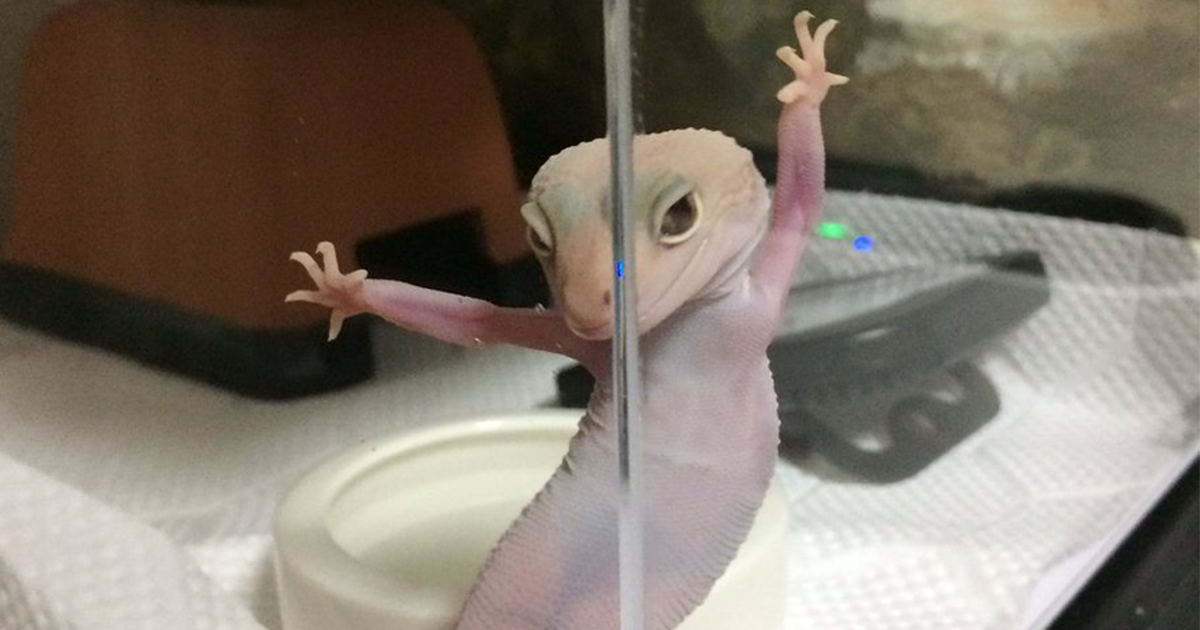
Every few years, the internet remembers what it does best: it spots one gloriously weird image, points at it like a caffeinated museum docent, and says, “Yes. This. We shall now make 500 jokes.” In this case, the star was a tiny gecko with a face so absurdly camera-ready that it looked less like a reptile and more like a celebrity who had just been told the lighting was “soft and flattering.” The result was a full-blown Photoshop battle, the kind of joyful, low-stakes chaos the web used to invent before every post became a product launch.
The image that kicked everything off showed a pale, wide-eyed gecko striking what can only be described as a suspiciously confident pose. It didn’t merely sit there. It served. The expression looked half runway model, half smug toddler, half creature that had accidentally wandered into a fragrance ad and decided to stay. Yes, that is three halves. Math is powerless in the presence of this much charisma.
What followed was a wave of edits, jokes, and “please put this lizard in even more dramatic situations” energy. And honestly, it made perfect sense. A ridiculously photogenic gecko is basically internet catnip for people who love animals, memes, and the sacred art of putting an innocent creature into scenes it absolutely did not ask for. The whole thing worked because it sat at the perfect intersection of adorable, strange, and instantly remixable.
How One Tiny Gecko Became Internet Royalty
Photoshop battles thrive on a simple formula: one unforgettable image plus thousands of people who all think, “I can make this sillier.” The gecko photo had everything that formula needs. It had a clean subject, a strong facial expression, a pose that already looked theatrical, and a visual vibe that begged for context. Put differently, the gecko looked like it had shown up to a photo shoot with opinions.
Part of the photo’s appeal came from the animal itself. The lizard in the viral image looked very much like a young leopard gecko or a similarly built gecko species: big-eyed, compact, expressive, and a little powdery-looking, as if it might have been near a shedding cycle. That pale, velvety appearance matters more than you might think. It gave the gecko a glamorous, almost airbrushed look before a single internet stranger opened editing software.
And unlike many people’s idea of lizards as cold, alien, or hard to read, geckos are surprisingly easy to project feelings onto. Their large eyes, rounded heads, and delicate little features make them visually legible in a very internet-friendly way. You don’t have to know anything about reptiles to glance at the photo and think, “That little guy knows exactly what he’s doing.”
Why This Photo Was So Funny Before Anyone Edited It
The face looked accidentally iconic
Some animal photos are cute. Others are funny. This one was funny because it was cute in an overly serious way. The gecko’s expression suggested confidence, poise, mystery, and maybe a tiny bit of diva energy. People love animal images that seem to imply a human mood, even when the animal is not actually making a human expression at all. We’re wired to read faces, invent personalities, and assign little storylines to creatures who never signed off on any of it.
The pose had built-in drama
The gecko wasn’t caught in random motion blur. It looked posed. The body angle, the lifted stance, the directness of the stareeverything about it felt theatrically complete. That meant editors didn’t have to do much heavy lifting. The image already contained a joke. Photoshop simply gave that joke a wardrobe budget.
The photo invited endless new settings
A good Photoshop battle image has what comedians might call range. You can drop it into a fashion campaign, an action movie, a Renaissance portrait, a red carpet, or the moon, and it still works. This gecko had range for days. It could be glamorous, absurd, heroic, overdramatic, or weirdly moving. It was the Meryl Streep of tiny reptiles.
The Secret Life of a “Smiling” Gecko
Let’s clear one thing up: the gecko was not literally smiling for the camera in the way a human would. That is our storytelling brain doing what it always does with animals. Still, that doesn’t make the reaction fake. It just means the humor comes from the overlap between the gecko’s real anatomy and our talent for reading intention into a face.
Geckos are fascinating little reptiles in their own right. Many species are small, nocturnal, and insect-eating. Leopard geckos are especially beloved by reptile keepers because they have expressive eyes, movable eyelids, and a surprisingly calm presence. Unlike many gecko species that can scamper up smooth vertical surfaces like they owe gravity money, leopard geckos lack the sticky toe pads that make wall-climbing famous. They are more terrestrial, more grounded, and somehow that makes their “supermodel” vibe even funnier.
Shedding adds another layer. As geckos grow, they shed their skin regularly, and before that happens their appearance can turn pale or chalky. If the viral gecko was indeed near a shed, that dusty, softened texture may have helped create the glamorous look people responded to. The internet thought it was serving high fashion. Biology may have quietly been serving “new skin loading, please wait.”
Why Photoshop Battles Never Really Go Out of Style
The gecko phenomenon also says something bigger about online culture. In the best version of the internet, a joke is not something you passively consume. It is something you join. That is the genius of a Photoshop battle. One image becomes a creative prompt, and suddenly hundreds of people are building on the same setup in different ways. It is meme-making with a little more craftsmanship and a lot more visual chaos.
That collaborative energy is why these battles feel less mean than many viral trends. Nobody is dunking on the gecko. Nobody is trying to expose it, ratio it, or send it to an apology notes app. The lizard is not the butt of the joke. It is the muse. The tiny celebrity. The scaled inspiration that wandered into our feeds and accidentally launched a communal improv exercise.
There is also something refreshingly democratic about this format. You do not need a production team, a sponsorship deal, or a social media strategy deck that uses the phrase “brand authenticity” 14 times. You need one good image, one funny idea, and enough editing ability to place a gecko inside a movie poster, a shampoo ad, or a presidential portrait without making everyone’s eyes hurt.
The Kinds of Edits a Photogenic Gecko Naturally Inspires
Even if you never saw the original battle, you can probably guess the categories that came next. A gecko this photogenic practically writes its own casting sheet.
Fashion gecko
This is the most obvious route. Put the gecko on a runway. Put it on the cover of a glossy magazine. Give it dramatic backlighting, impossible cheekbones by reptile standards, and a headline like “Fall Skincare Secrets: Shed, Glow, Repeat.” The joke lands because the gecko already looks like it is one ring light away from demanding a trailer.
Action-hero gecko
Also inevitable. Tiny body, giant confidence, cinematic stare. Drop it into an explosion scene, a spy thriller poster, or a fantasy battlefield and it somehow makes sense. The humor comes from scale. Nothing says “blockbuster energy” like a six-inch lizard behaving as if it just saved the planet in act three.
Art-history gecko
One of the internet’s all-time best instincts is taking an animal with a dramatic face and inserting it into classic paintings. A gecko in an oil portrait, looking deeply burdened by court politics, is exactly the kind of nonsense civilization should continue funding.
Office gecko
Perhaps the most relatable version of all: the gecko as co-worker, boss, intern, or employee who has opened one spreadsheet and is already emotionally finished. The reptile stare translates beautifully to workplace comedy because it can mean almost anything: confidence, confusion, disapproval, or “this meeting could have been an email.”
Why the Whole Thing Feels Weirdly Wholesome
Animal virality works because it gives people a low-risk way to feel delight together. Cute or funny animal images often cut through the usual online tension because they are simple, immediate, and emotionally generous. You do not need to understand niche discourse to enjoy a glamorous lizard. You just need eyes and a functioning sense of absurdity.
There is real psychology behind that response. Humans are highly responsive to features associated with cuteness, expressiveness, and vulnerability. Big eyes, small bodies, rounded proportions, and face-forward poses can trigger attention and warmth almost instantly. Add a funny context, and your brain gets a two-for-one deal: affection plus surprise. That combination is rocket fuel for sharing.
The gecko battle also appealed to a group that does not always get top billing in mainstream pet culture: reptile lovers. Dogs and cats usually dominate the internet’s emotional economy, while lizards often get treated like side quests. But anyone who has lived with a gecko knows they can be funny, distinct, and oddly charismatic. This photo was a reminder that reptiles are not just cool-looking animals. Sometimes they are comedy with toes.
Want to Add Yours? Here’s How to Make a Gecko Edit That Actually Lands
Start with the story, not the software
The funniest edits usually answer one question: “What is this gecko doing here?” A random background swap can be mildly amusing, but a clear joke works better. Is the gecko a pop star? A Renaissance noble? The exhausted manager at a failing candle boutique? Pick the bit first. Then build the image around it.
Use the gecko’s expression as your punchline
Don’t fight the face. The whole reason the image works is that the gecko already looks emotionally overqualified. Let the expression drive the scene. The best edits feel like the background was waiting for this lizard all along.
Commit to the absurdity
If you’re making the gecko a movie star, make it a star. Add dramatic lighting. Add overblown typography. Give it a tagline no reptile has earned. Half-hearted weirdness is just clutter. Fully committed weirdness is art.
Keep it playful, not cruel
The original charm of the battle came from affection. The gecko is funny because it looks fabulous, not because anyone is mocking the animal. That tone matters. Internet humor is better when the joke feels like a celebration rather than a cheap shot.
The Larger Lesson of the Ridiculously Photogenic Gecko
For all its silliness, this gecko moment captured something important about online creativity. A single image became a shared stage. People from different corners of the web turned one strange, charming reptile into a collaborative joke machine, and in doing so, they made the internet feel less like a shouting contest and more like a giant digital art room.
That may sound too grand for a lizard meme, but honestly, why should cats get all the symbolic weight? Sometimes culture is shaped by world events. Sometimes it is shaped by a tiny reptile that looks like it just booked a fragrance campaign called Eau de Cricket. Both things can be true.
So yes, the ridiculously photogenic gecko inspired a hilarious Photoshop battle. But it also reminded us why these moments stick. They are funny, communal, weirdly creative, and rooted in that old internet magic where strangers see the same ridiculous thing and decide to make it even better together. In a timeline full of stress, the little star gave us something rare: a joke nobody had to argue about.
More on the Experience Behind the Meme
What makes this gecko story linger is not just the image itself. It is the experience around it. If you have ever posted a pet photo online and watched strangers instantly invent a whole personality for your animal, you already understand the feeling. A sleepy dog becomes “regional manager of naps.” A cat staring into the middle distance becomes “Victorian orphan with a dark secret.” And a gecko with suspiciously elegant posture becomes a reptilian supermodel with a side hustle in dramatic cinema. The internet does not merely react to animal photos. It writes lore for them.
That experience is especially interesting with reptiles because reptile owners are used to explaining their pets to people. Dog people get instant recognition. Cat people get instant projection. Gecko people often get questions. Is it friendly? Does it bite? Why is it staring like that? Is it smiling? Then one incredible photo appears, and suddenly the entire web understands the appeal in about half a second. No lecture required. The gecko has done its own public relations.
There is also a particular delight in seeing a “nontraditional” pet get the full celebrity treatment. It feels like a correction to the usual hierarchy of cute. Reptiles can be beautiful, but they can also be goofy, expressive, nosy, dignified, and unintentionally hilarious. Anyone who has watched a gecko pause mid-step as if it forgot its own storyline knows these animals have comic timing that deserves more credit. The viral image simply caught that truth in a perfectly timed frame.
For viewers, the experience is part nostalgia and part participation. Photoshop battles bring back an older style of web humor, one built less on outrage and more on contribution. You do not just laugh and move on. You imagine your own version. You think, “What if the gecko were on a talk show set?” or “What if it were the lead singer of an indie band with three vinyl-only albums and a very intense fan base?” Even people who never open editing software still become part of the creative chain because the image invites them to keep riffing.
And for the person behind the camera, there is a strange joy in watching an ordinary pet moment turn into a collective joke. One second you have a funny little photo. The next second your gecko is being treated like a public figure with a stylist, a fan club, and several imaginary endorsement deals. That transformation is absurd, of course, but it is also weirdly affectionate. The internet is saying, in its own chaotic language, that this tiny creature mattered for a minute. It made people laugh. It gave them something playful to do together.
That is why the experience of the ridiculously photogenic gecko feels bigger than one meme. It is about recognition, creativity, and the pleasure of a shared bit that keeps growing. It is about the delight of discovering that a tiny reptile can command a frame, a joke, and an entire comment section. Mostly, though, it is proof that charisma does not care about species. Sometimes the funniest face online belongs to a gecko that looks like it absolutely knows its angles.
Note: This article is formatted for direct web publication, excludes source links by request, and removes placeholder citation artifacts.

