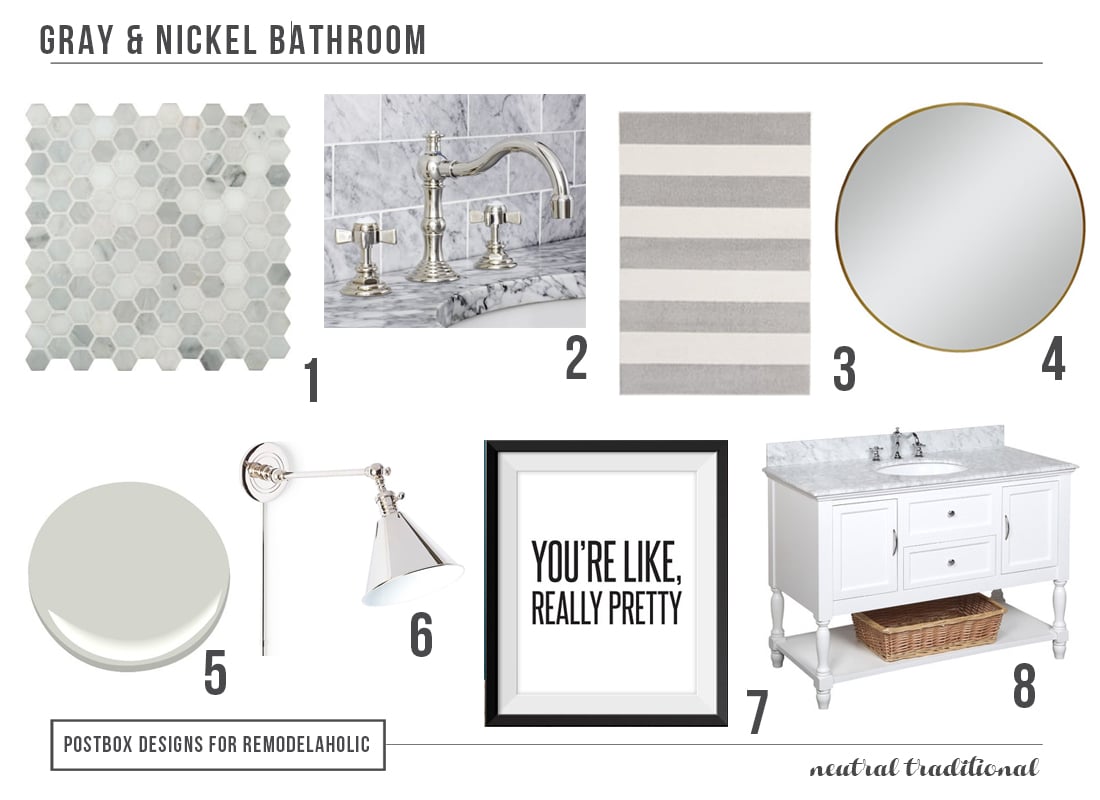
A polished nickel and gray bathroom is the design equivalent of a crisp white shirt with excellent shoes: clean, timeless, quietly confident, and unlikely to make you ask, “What was I thinking?” six months later. Gray tile gives the room structure and calm, while polished nickel brings a warm silver shine that feels more elevated than basic chrome but not as shouty as brass. Best of all, this look does not require a marble quarry, a trust fund, or a contractor who says “custom” every four minutes.
The sweet spot is using affordable ceramic and porcelain tile strategically. Retailers still list plenty of bathroom-friendly floor and wall tile options under $10 per square foot, especially in subway, 12-by-24, hex, matte porcelain, marble-look porcelain, and simple mosaic formats. Floor & Decor notes that basic ceramic tile can start around $1 per square foot, while mid-range porcelain generally costs more but offers added durability; Home Depot also categorizes tile under $10 per square foot as a budget-friendly DIY option.
So, let’s build the dream: a polished nickel and gray bath that looks designer, photographs beautifully, cleans without drama, and leaves enough money in the budget for towels that do not feel like sandpaper.
Why Polished Nickel Works So Well in a Gray Bathroom
Polished nickel is not just “silver hardware.” It has a warmer undertone than chrome, which helps it play nicely with gray tile, white walls, marble-look surfaces, and even a little brass or black accenting. Architectural Digest has long highlighted gray bathrooms as cozy and glamorous, especially when paired with shiny nickel fixtures or other refined metal finishes.
That warmer shine is the secret sauce. Cool gray can sometimes drift into “office restroom at a tech conference” territory. Polished nickel softens the palette. It reflects light, flatters stone-look tile, and gives vanities, faucets, shower trim, towel bars, and mirrors a tailored finish. Think less hospital, more boutique hotel where the soap smells expensive and nobody has ever seen a plastic shower caddy.
Polished Nickel vs. Brushed Nickel vs. Chrome
Chrome is bright, crisp, and usually very affordable. Brushed nickel is softer and more matte, with a subtle texture that hides fingerprints. Polished nickel sits between classic and luxe: shiny like chrome, but warmer and slightly richer. Better Homes & Gardens recommends choosing one dominant metal finish, then using other metals as accents if you want a layered look; it also notes that nickel has warm undertones compared with cooler silver finishes like chrome or stainless steel.
For a polished nickel and gray bath, use polished nickel as the main character. Let it appear on the faucet, shower trim, vanity hardware, and towel hooks. Then, if you want contrast, add a small amount of matte black in the mirror frame or a soft brass accent in lighting. The trick is hierarchy. If every metal in the room is screaming for attention, your bathroom starts to feel like a tiny plumbing showroom having an identity crisis.
The Case for Gray Tile: Classic, Calm, and Very Forgiving
Gray bathroom tile is popular because it gives you choices. Pale gray feels airy and spa-like. Medium gray adds depth without making the room gloomy. Charcoal gray can create drama, especially on a floor or feature wall. The Spruce highlights gray tile as a classic bathroom option and suggests using contrast, playful patterns, dark vanities, stone looks, and multiple gray tones to create depth.
Gray is also extremely practical. It hides dust better than black, looks cleaner longer than bright white grout-heavy surfaces, and works with many paint colors. White, cream, greige, soft blue, charcoal, oak, walnut, and navy all get along with gray tile. Gray is basically the friend who can sit anywhere at dinner.
Light Gray for Small Bathrooms
In a small bathroom, light gray tile keeps the room open while adding more personality than plain white. Daltile advises that glossy ceramic or porcelain finishes can help distribute light in tight spaces, especially on shower walls, backsplashes, accent bands, or full-height surfaces.
Try light gray 3-by-12 subway tile stacked vertically in the shower, or use a soft gray 12-by-24 porcelain tile on the floor. Pair it with white walls, polished nickel fixtures, and a warm wood vanity. The result feels fresh but not sterile.
Medium Gray for a Balanced Look
Medium gray tile is the all-purpose option. It has enough body to anchor a bathroom but not so much darkness that it shrinks the space. Use it on the floor with white shower tile, or carry it onto one shower wall for a soft focal point. Medium gray also works beautifully with polished nickel because the metal adds brightness while the tile adds weight.
Charcoal Gray for Drama
Charcoal tile is gorgeous, but it should be used with intention. A charcoal hex floor, dark gray shower niche, or slate-look porcelain accent wall can make polished nickel fixtures gleam. Keep the rest of the palette lighter so the bathroom does not feel like it is auditioning for a moody detective series.
$10 and Under Tile Round-Up: What to Look For
The phrase “under $10 tile” does not mean “sad leftover tile from aisle 47.” It means shopping smart. Ceramic and porcelain are the heroes here. Better Homes & Gardens lists glazed ceramic and porcelain as popular bathroom tile choices that come in many colors, patterns, shapes, and sizes, and notes that they can be cleaned with mild detergent and water.
Here are the best budget tile categories for a polished nickel and gray bath.
1. Gray Porcelain 12-by-24 Tile
A 12-by-24 gray porcelain tile is one of the easiest ways to make a bathroom look modern on a budget. The larger format creates fewer grout lines, which visually expands the room and makes cleaning less annoying. Floor & Decor’s current 12-by-24 listings include several porcelain tiles well below $10 per square foot, including options shown around $1.79, $1.99, $2.49, and $2.99 per square foot.
Use this tile on bathroom floors, shower walls, or both. For a classic layout, run the tile in a straight stack. For a softer look, use a one-third offset. Avoid a heavy 50 percent brick pattern with long tile unless the manufacturer approves it, because tile warpage can make lippage more obvious. Translation: your floor may look like it has tiny speed bumps, and nobody invited that.
2. White or Light Gray Subway Tile
Subway tile remains popular because it is affordable, flexible, and easy to style. Lowe’s highlights glossy ceramic subway wall tile as useful for bathrooms, shower walls, laundry rooms, and backsplashes, with neutral tones helping small rooms feel more open and airy.
For a polished nickel and gray bath, subway tile works best when you tweak the details. Choose a longer size like 3-by-12 or 4-by-12 instead of only the classic 3-by-6. Stack it vertically for a fresh look, or use a herringbone pattern behind the vanity. Pair it with pale gray grout for a soft outline or bright white grout for a cleaner, more traditional effect.
3. Marble-Look Porcelain
Real marble is beautiful, but it can be expensive and high-maintenance. Marble-look porcelain gives you the veining without the panic of every toothpaste blob becoming a geological event. Lowe’s carries polished and matte porcelain marble-look floor and wall tile options, showing how accessible the style has become for everyday bathroom projects.
Choose a marble-look porcelain with soft gray veining and a white or warm-white background. This type of tile pairs especially well with polished nickel because both have a refined, classic feel. Use it on the shower wall, bathroom floor, or vanity backsplash. To avoid the “fake stone billboard” effect, look for tiles with varied faces, meaning the pattern changes from piece to piece.
4. Gray Hex Tile
Hex tile is small, charming, and excellent for adding pattern without a loud color. Gray hex tile works on floors, shower pans, and accent areas. Smaller tiles also create more grout lines, which can improve traction on wet shower floors. Bedrosians notes that smaller tiles are often used on shower floors because grout lines provide better traction and help prevent slips.
For a timeless look, use 2-inch gray hex tile on the shower floor and larger light gray porcelain on the shower walls. Finish it with polished nickel shower trim and a simple frameless or semi-frameless glass door. It will look intentional, not like you accidentally bought three unrelated things and hoped grout would be the family therapist.
5. Penny Tile in Gray, White, or Soft Blue-Gray
Penny tile gives a bathroom vintage character. In a polished nickel setting, it can lean classic, coastal, or boutique depending on the grout color and surrounding materials. Use gray penny tile on the floor with white walls, or white penny tile with gray grout for a crisp pattern. Keep the rest of the space simple so the floor can do the fun little tap dance.
6. Concrete-Look Porcelain
Concrete-look porcelain is ideal if you want a modern gray bathroom without real concrete maintenance. It works well with polished nickel because the contrast between matte, industrial tile and reflective metal creates depth. The Spruce points out that concrete-style tile is often overlooked but can work beautifully in bathrooms, especially when used for a durable, moisture-friendly look.
Choose a light or medium concrete-look tile for floors, then soften it with a white vanity, plush towels, and polished nickel hardware. Without those softening details, concrete-look tile can go a little “underground parking garage chic.” With them, it feels calm and architectural.
7. Patterned Gray-and-White Ceramic Tile
Patterned ceramic tile is perfect for a powder room or guest bath. Use it on the floor and keep the walls quiet. The design will feel custom even if the tile is affordable. Look for encaustic-look porcelain or ceramic rather than real cement tile if you want easier maintenance and a lower price point. Better Homes & Gardens notes that cement tile can be durable and decorative but often averages $10 to $30 per square foot and requires sealing, while ceramic and porcelain are typically easier to maintain.
A gray-and-white pattern with polished nickel fixtures feels fresh, graphic, and classic. Add a simple white vanity and a round mirror. Done. You may now accept compliments with false modesty.
How to Make Budget Tile Look Expensive
The tile itself matters, but installation and styling matter just as much. A $3 tile can look high-end when the layout is thoughtful, the grout is chosen carefully, and the edges are finished properly. A $25 tile can look chaotic if the grout fights it, the cuts are sloppy, and the trim looks like an afterthought.
Use Fewer Tile Types
Pick two main tiles and one optional accent. For example: light gray 12-by-24 floor tile, white shower wall tile, and gray hex shower floor tile. This keeps the room cohesive and budget-friendly. Too many tile types can make a small bathroom feel like a sample board fell over.
Match Grout to the Tile for a Softer Look
Contrasting grout is great when you want a pattern to pop. Matching grout is better when you want a seamless, more expensive feel. Pale gray grout with pale gray tile hides lines and stains better than bright white grout. For shower walls, warm white grout can soften white tile and pair beautifully with polished nickel.
Run Tile Higher Than Expected
If the budget allows, take shower tile to the ceiling. Full-height tile makes a bathroom feel taller and more custom. If you cannot tile the full room, focus on the shower or vanity wall. A single tiled feature area often looks more intentional than a half-hearted border stripe. Border stripes had their moment. That moment is currently in a box with old sponge-painted samples.
Use Proper Edge Trim
Do not ignore tile edges. Bullnose, pencil trim, metal trim, or clean mitered corners can make affordable tile look polished. Daltile emphasizes trim as a finishing detail that helps complete a design, from bullnose to thresholds and pencil liners.
Best Paint Colors for a Polished Nickel and Gray Bath
Gray tile and polished nickel need a wall color that keeps the bathroom warm, bright, and human. The safest options are warm white, soft greige, misty blue-gray, pale mushroom, and very light taupe. Avoid cold blue-gray paint if the tile is already cool; otherwise, the room can feel chilly.
For a classic look, choose warm white walls, a gray tile floor, and polished nickel hardware. For a softer spa look, try pale greige walls with marble-look porcelain. For a moodier powder room, use charcoal tile with warm white upper walls and polished nickel sconces. The polished nickel will catch the light and prevent the space from feeling flat.
Vanity, Lighting, and Mirror Ideas
A polished nickel and gray bathroom benefits from contrast. If the floor is light gray, try a navy, charcoal, white oak, or warm white vanity. If the tile is dark gray, use a white or natural wood vanity to brighten the room. The Spruce highlights pairing gray tile with darker vanities for visual depth, and that same principle works in reverse when the tile is dark and the vanity is light.
For lighting, polished nickel sconces on either side of the mirror are almost always more flattering than a single overhead light. Add a framed mirror rather than a plain builder mirror if you want an instant upgrade. The bathroom mirror should feel like part of the design, not something that was installed by a person who had ten minutes and a coupon.
Polished Nickel Care: Keep the Shine, Skip the Panic
Polished nickel is beautiful, but it likes gentle care. Southern Living warns that many glass cleaners contain ammonia or acidic ingredients that can damage polished nickel plating, and recommends warm water, a soft damp cloth, gentle dish soap when needed, and drying the fixture after cleaning. Moen’s general faucet care guidance also recommends mild liquid dish soap, rinsing with water, and drying with a soft cloth.
That means no abrasive pads, no bleach, no harsh limescale remover, and no “I saw this cleaning hack online” chemistry experiment. Keep a microfiber cloth under the sink and wipe water spots regularly. Your fixtures will stay bright, and you will avoid the heartbreak of realizing your faucet finish has been personally victimized by a spray bottle.
Sample Budget Tile Combinations Under $10
Classic Guest Bath
Use light gray 12-by-24 porcelain tile on the floor, white glossy subway tile in the shower, polished nickel shower trim, a warm white vanity, and a marble-look countertop. This is the safest choice for resale because it feels clean, neutral, and familiar without being dull.
Modern Spa Bath
Use concrete-look porcelain tile on the floor and shower walls, a floating oak vanity, polished nickel fixtures, a frameless mirror, and soft white towels. Add one plant if there is natural light. If there is no natural light, add a very convincing faux plant and do not confess unless asked under oath.
Vintage Polished Nickel Bath
Use gray penny tile on the floor, white subway tile on the walls, polished nickel cross-handle faucets, a medicine cabinet mirror, and a small marble threshold. This look works beautifully in older homes because it nods to history without turning the bathroom into a museum exhibit with shampoo bottles.
Graphic Powder Room
Use patterned gray-and-white ceramic tile on the floor, warm white walls, a small charcoal vanity, and polished nickel hardware. Because powder rooms are smaller and drier than full baths, they are great places to use a bolder tile pattern without committing to a whole-house personality change.
Common Mistakes to Avoid
The first mistake is choosing tile only from a tiny sample. Always order or buy samples and look at them in the actual bathroom. Gray changes dramatically depending on light. A tile that looks soft and elegant online may look purple, green, or “sad parking lot” under your bulbs.
The second mistake is ignoring slip resistance. Glossy wall tile is great for reflecting light, but bathroom floors and shower floors need traction. Use matte or textured tile where feet meet water, especially in showers.
The third mistake is mixing too many grays. Gray tile, gray walls, gray vanity, gray towels, and gray art can become a fog bank with plumbing. Add white, wood, cream, navy, black, or soft color to give the room dimension.
The fourth mistake is forgetting the boring-but-important items: waterproofing, backer board, movement joints, grout type, edge trim, and layout planning. These are not glamorous, but neither is ripping out a shower because the pretty tile was installed like a craft project.
Real-World Experience: What Actually Happens When You Build This Look
Here is the honest, lived-in truth about a polished nickel and gray bath: the design looks simple, but the choices multiply quickly. You begin by saying, “I just want a gray bathroom,” and suddenly you are comparing warm gray, cool gray, greige-gray, stone-gray, fog-gray, mushroom-gray, and a shade that can only be described as “contractor coffee.” This is normal. Gray is not one color. Gray is a full committee meeting.
The best experience starts with the tile sample. Take the sample home. Place it on the bathroom floor in the morning, afternoon, and evening. Turn on the vanity light. Hold it next to the vanity, countertop, paint swatch, and polished nickel finish. A tile that looks perfect in the store may shift blue under cool LED bulbs. Another may look beige next to a white tub. The goal is not to find a perfect gray; it is to find the gray that behaves best with everything else in the room.
Polished nickel is usually the moment the bathroom starts to feel finished. Before the fixtures go in, gray tile can look a little flat, especially if the walls are still unfinished and the room is dusty. Then the faucet, shower trim, towel hooks, and cabinet pulls arrive, and suddenly the space has sparkle. Not glittery sparkle. Adult sparkle. The kind that says, “I know where the extra toilet paper is stored.”
One of the biggest lessons is that affordable tile rewards precision. A budget porcelain tile can look fantastic when the layout is centered, cuts are balanced, and grout is tidy. Spend time planning the first row, niche placement, and visible edges. In a shower, make sure the niche lines up with grout joints if possible. Around a vanity, check that tiny sliver cuts will not appear in the most obvious spot. These details cost little but make the bathroom feel expensive.
Another real-world lesson: grout color matters more than most people expect. With gray tile, a grout that is too light can create a busy grid. A grout that is too dark can make the tile look heavier. A mid-tone gray grout often gives the cleanest result. For white subway tile, soft white or pale gray grout is usually easier to live with than stark white. It also hides the tiny realities of bathroom life, because even dream bathrooms must face toothpaste.
Maintenance is refreshingly manageable if you choose the right materials. Matte porcelain floors are generally forgiving. Glossy wall tile wipes down easily. Polished nickel needs gentle drying, but it is not difficult if you build the habit. Keep a soft cloth nearby and wipe the faucet after splashes. It takes ten seconds and prevents mineral spots from staging a rebellion.
Finally, the best polished nickel and gray bathrooms do not feel cold because they include warmth somewhere. Add wood, woven baskets, cream towels, a warm white wall color, or art with soft earth tones. Gray and polished nickel provide the elegant foundation; texture makes the room feel like home. The finished bathroom should feel calm in the morning, flattering before dinner, and forgiving when someone leaves a wet towel on the floor. In other words, beautifulbut still ready for real life.
Conclusion
A polished nickel and gray bath is one of the smartest ways to create a bathroom that feels elegant, flexible, and long-lasting. The palette is calm, the finish is classic, and the tile options under $10 per square foot make the look achievable without sacrificing style. Focus on ceramic and porcelain, choose gray tones carefully, use polished nickel consistently, and finish the details with thoughtful grout, trim, lighting, and texture.
The magic is not in spending the most money. It is in making clear decisions. A light gray porcelain floor, glossy white shower tile, polished nickel fixtures, warm lighting, and one beautiful mirror can do more than a room full of expensive materials fighting for attention. Keep it simple, keep it balanced, and your bathroom will look polished in every sense of the word.
Note: This article synthesizes current U.S. bathroom design guidance, tile retailer information, fixture care recommendations, and budget tile pricing patterns. Product prices and availability can change by location, store, and date, so homeowners should confirm final specifications before purchasing.