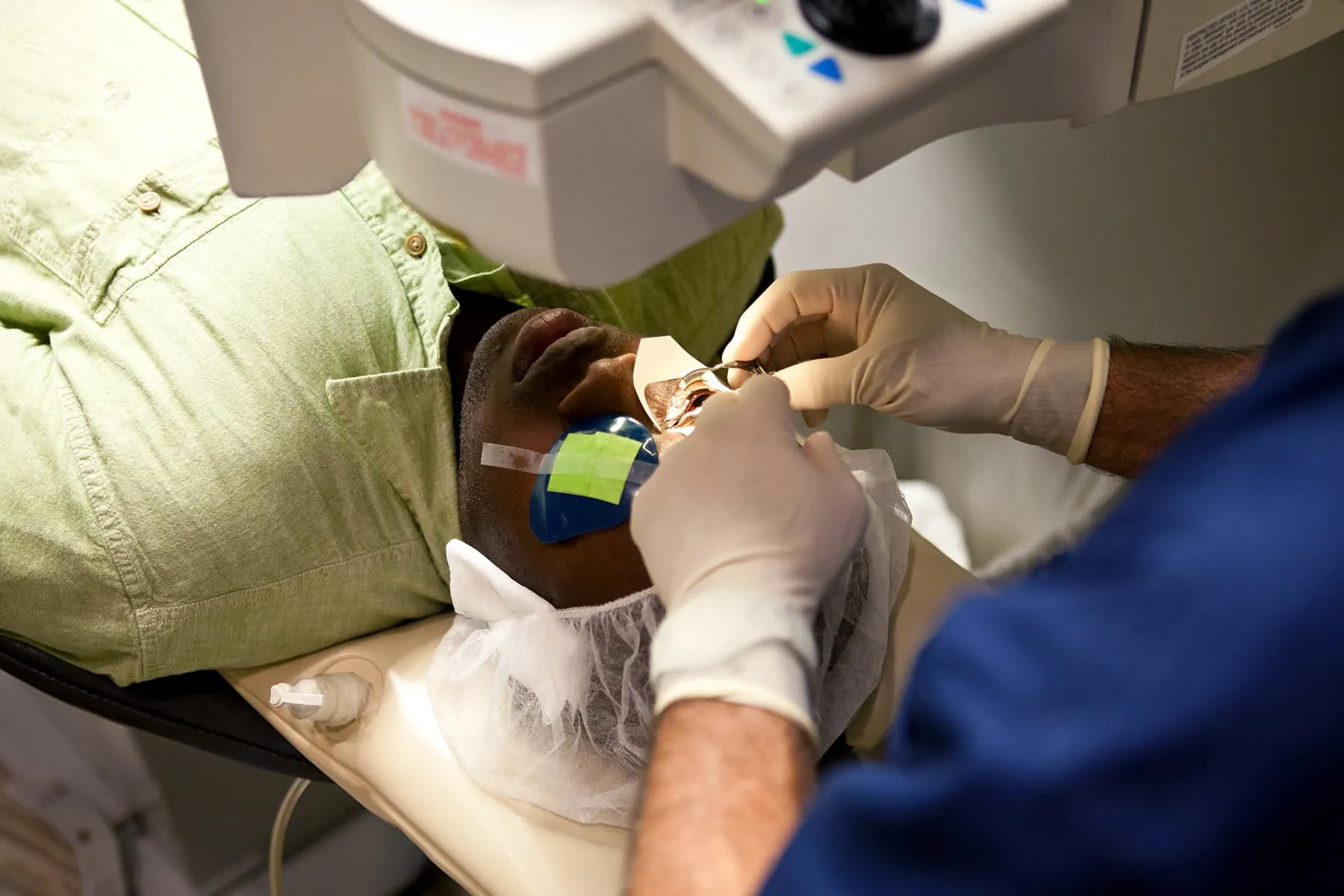
A photo of laser eye surgery can make the whole process look oddly simple: a patient reclines, a laser glows, and everyone leaves with superhero vision before dinner. Real life is a little more nuanced. LASIK and PRK can reduce dependence on glasses or contact lenses, but the best results begin long before the laser turns on. They begin with careful screening, realistic expectations, and a willingness to ask more questions than a curious toddler in a grocery store.
This guide explains what pictures of vision correction surgery usually show, what they leave out, how LASIK and PRK differ, and which side effects deserve calm attention rather than panic-Googling at 2 a.m.
What Pictures of LASIK and PRK Surgery Actually Show
Most pictures of vision correction surgery focus on the high-tech parts: the laser machine, the patient bed, the surgeon looking intensely professional, and the impressive-looking eye-tracking display. Those images are useful, but they do not tell the whole story.
Laser vision correction changes the shape of the cornea, the clear front surface of the eye. By adjusting that curved surface, the surgeon changes how light enters the eye and focuses on the retina. This can help correct nearsightedness, farsightedness, and astigmatism.
What a LASIK Procedure Picture Usually Shows
LASIK stands for laser-assisted in situ keratomileusis. In a typical LASIK image sequence, the surgeon creates a thin corneal flap, gently folds it back, reshapes the tissue underneath with an excimer laser, and then returns the flap to its original position.
The flap is the visual headline of LASIK. It is why LASIK recovery is often quicker than PRK recovery. Because the surface layer remains mostly intact, many patients notice meaningful vision improvement within a day or two. That said, “quick recovery” does not mean “instantly perfect vision with a dramatic movie soundtrack.”
What a PRK Procedure Picture Usually Shows
PRK, or photorefractive keratectomy, reshapes the cornea too, but it does not create a flap. Instead, the surgeon removes the outer corneal layer, called the epithelium, before using the laser on the underlying tissue.
A protective bandage contact lens is usually placed over the eye while the epithelial layer grows back. In a PRK recovery picture, patients may have red eyes, watery eyes, light sensitivity, or a slightly “why did I volunteer for this?” expression during the first few days. That is common during early healing, but worsening pain or sudden vision changes should always be reported to the surgical team.
LASIK vs. PRK: Same Goal, Different Route
LASIK and PRK are not rival sports teams. They are related procedures with different strengths, trade-offs, and recovery patterns. The right option depends on the health and shape of your eyes, your prescription, your lifestyle, and your surgeon’s findings during a detailed preoperative exam.
| Feature | LASIK | PRK |
|---|---|---|
| How it works | A corneal flap is created, then tissue beneath it is reshaped. | The surface layer is removed, then the cornea is reshaped directly. |
| Early recovery | Often faster, with many patients returning to routine activities within days. | Usually slower, with several days of discomfort and weeks of fluctuating vision. |
| Corneal flap | Yes. | No. |
| Common consideration | May be suitable for people with healthy corneas and stable prescriptions. | May be considered for thinner corneas or people who want to avoid a flap. |
| Visual stabilization | Can improve quickly, though healing and refinement continue for months. | Can take longer because the corneal surface needs to regenerate. |
People often ask, “Which one is better?” That question is a bit like asking whether hiking boots are better than running shoes. Better for whom? Better for which terrain? Better for what goal? LASIK may suit one patient beautifully, while PRK may be the more cautious choice for another.
PRK is sometimes considered when corneas are thinner or when a surgeon wants to avoid creating a flap. LASIK may appeal to people hoping for faster visual recovery. Neither procedure should be chosen from a billboard, a discount coupon, or a friend who insists their own vision is now “basically eagle-level.”
What Surgery Pictures Cannot Show: Your Candidacy
A gorgeous photo of a laser machine does not tell you whether you are a good candidate for laser vision correction. That decision requires testing. Before surgery, eye specialists may evaluate your prescription stability, corneal thickness, corneal shape, pupil size, tear production, overall eye health, and medical history.
Stable Vision Matters
A changing prescription can make laser correction less predictable. Surgeons generally want evidence that your vision prescription has been stable before considering surgery. A moving target is not ideal when the goal is precision.
Dry Eye Deserves Serious Attention
Dry eye can affect comfort and visual quality before surgery, and it may worsen after LASIK or PRK. A thorough evaluation may include questions about burning, grittiness, fluctuating blur, contact lens intolerance, frequent artificial tear use, and time spent staring at screens like a determined office potato.
Corneal Shape Is Not Optional Homework
Corneal imaging and thickness measurements help identify whether the cornea is healthy enough for surgery. Conditions such as keratoconus, certain prior eye injuries, active eye disease, uncontrolled inflammation, or significant corneal thinning may make laser correction inappropriate or require a different treatment plan.
Age Changes the Conversation
LASIK and PRK reshape the cornea, but they do not stop the natural aging of the eye’s internal lens. Many adults eventually develop presbyopia, the age-related loss of near focusing ability that often makes reading glasses part of the midlife starter pack. Even someone with excellent distance vision after surgery may need reading glasses later.
LASIK and PRK Side Effects: The Honest Picture
The most useful pictures of laser eye surgery are not always the glossy “before and after” photos. They are the recovery photos: a person using eye drops, wearing sunglasses, resting in a dim room, or looking at headlights at night and wondering whether the halos will fade. Those images are less dramatic, but much more honest.
Common Early Effects
Blurry vision, mild discomfort, tearing, light sensitivity, scratchiness, fluctuating vision, and redness can happen during healing. LASIK patients may notice a gritty feeling or temporary dryness soon after surgery. PRK patients may experience more noticeable discomfort during the first few days because the surface layer of the cornea needs to regrow.
Dry Eye Symptoms
Dry eye is one of the best-known side effects of laser vision correction. It can cause burning, stinging, redness, fatigue, fluctuating vision, or the strange sensation that your eye contains a tiny grain of beach sand with excellent job security.
Some dry eye symptoms improve as corneal nerves heal and tear production stabilizes. Others can last longer and may require treatment such as preservative-free artificial tears, prescription drops, punctal plugs, lid care, or management of underlying eyelid gland problems.
Halos, Glare, Starbursts, and Night Driving Problems
Some people notice halos around lights, glare, double images, ghosting, or starbursts, especially at night. These symptoms can be more noticeable while driving, walking through dim parking lots, or trying to enjoy a restaurant with moody lighting that suddenly feels like an airport runway.
Many visual symptoms improve over time, but they should be discussed clearly before surgery. The Food and Drug Administration has reported that some patients who had no symptoms before LASIK later reported halos, dry eye symptoms, or other visual changes at follow-up, even though overall satisfaction with vision remained high.
Rare but Serious Complications
Serious complications are uncommon, but they matter because vision is not a body part anyone wants to treat casually. Potential complications can include infection, corneal haze, irregular healing, flap problems after LASIK, undercorrection, overcorrection, corneal ectasia, reduced contrast sensitivity, or worsening vision that may not be fully correctable with glasses or contact lenses.
Contact your surgeon urgently if you experience sudden vision loss, severe or worsening pain, increasing redness, swelling, discharge, or symptoms that feel dramatically different from the recovery instructions you were given.
Recovery Timeline: What the First Months May Look Like
The First Day
After LASIK, vision may be blurry or hazy, and the eyes may water or feel irritated. After PRK, discomfort and light sensitivity may be more noticeable. You should arrange transportation home, avoid rubbing your eyes, and follow instructions about drops, shields, and rest.
The First Week
Many LASIK patients return to work or normal routines within a few days, depending on their visual demands and the surgeon’s guidance. PRK recovery often requires more patience. A person may return to work after about a week, but vision can continue to fluctuate for several weeks.
The First Month
Vision often becomes clearer, but dryness, glare, or nighttime visual symptoms may continue. Follow-up appointments are important because your surgeon is monitoring healing, not grading your ability to read the eye chart like it is a game show challenge.
Two to Six Months
Healing and vision stabilization continue. PRK results may take longer to settle than LASIK results. Some people may need updated treatment for dry eye, changes in drops, or additional monitoring before the surgeon can determine whether the final correction is where it should be.
Questions to Ask Before Choosing LASIK or PRK
- Am I a candidate for LASIK, PRK, or another vision correction option?
- Is my prescription stable enough for surgery?
- Do I have dry eye, thin corneas, large pupils, or corneal shape concerns?
- What side effects are most likely in my case?
- How might surgery affect night driving, screen use, sports, or my job?
- Will I likely need reading glasses later?
- What happens if I am undercorrected, overcorrected, or unhappy with my result?
- How often will I need follow-up appointments?
A good consultation should feel like a medical discussion, not a timeshare presentation. You should understand the benefits, alternatives, limitations, expected recovery, and possible complications before committing to an elective procedure.
Patient Experience Lens: What LASIK and PRK Recovery Can Feel Like
The following experiences are composite examples based on common recovery patterns discussed in clinical guidance. They are not promises, personal medical advice, or guarantees of a particular outcome. Your eyes are wonderfully unique, which is charming until you are trying to compare recovery stories online.
A typical LASIK experience often begins with nervous excitement. The actual procedure is usually brief, and numbing drops help prevent pain during treatment. Patients may notice pressure, lights, a faint smell from the laser, and a strong urge to remain extremely still. Afterward, the eyes can feel watery, scratchy, or sensitive to light. Some people describe the first evening as “sleepy and blurry,” while others describe it as “I can see the clock, but it looks like it is underwater.”
The next day can feel surprisingly dramatic in a good way. Many LASIK patients notice a major improvement in distance vision quickly. Street signs may become readable. The bathroom mirror may become alarmingly detailed. The leaves on trees may suddenly look individually designed instead of forming one green blob. Still, vision may fluctuate, and dry eye symptoms can make clarity come and go. The key is not to confuse an early good day with the final result.
PRK patients often describe a different rhythm. The procedure itself may feel straightforward, but the first several days can be more uncomfortable. Light sensitivity, tearing, stinging, and a foreign-body sensation are common topics in recovery stories. Screens may feel too bright. A sunny window may feel like a personal attack. Rest, medication, lubricating drops, and careful use of the protective contact lens are major parts of the early PRK experience.
By the end of the first week, many PRK patients begin to feel more functional, but vision may still be fuzzy or inconsistent. One day may feel encouraging, and the next may feel like the world has been covered with a soft-focus filter. This does not automatically mean something is wrong. PRK healing can take time because the corneal surface must regenerate before vision settles more completely.
Both LASIK and PRK patients commonly mention nighttime vision during the first months. Headlights, streetlights, digital screens, and bright signs may look different while the cornea heals. Some people notice halos or glare that gradually improve. Others find dry eye is the bigger issue, especially in air-conditioned spaces, during long workdays, or after prolonged screen use. Regular follow-up visits matter because symptoms that seem minor in a casual conversation can provide useful clues for treatment.
The most satisfied patients are not necessarily the ones who expected “perfect vision forever.” They are usually the ones who understood that surgery can reduce dependence on glasses or contacts, not guarantee a lifetime exemption from aging, dry eye, reading glasses, or routine eye care. Laser vision correction can be life-changing for the right candidate, but the best experience comes from pairing advanced technology with patient expectations that are clear, informed, and pleasantly free of superhero assumptions.
Conclusion: Better Vision Starts With Better Questions
Pictures of LASIK and PRK surgery can make vision correction look futuristic, fast, and remarkably simple. The truth is still encouraging, but more detailed. Both procedures can help reduce dependence on glasses and contact lenses by reshaping the cornea. LASIK generally offers faster early recovery, while PRK avoids a corneal flap and may be preferred in certain situations.
The most important picture is not the laser itself. It is the full picture of your eye health, prescription stability, corneal measurements, dry eye status, lifestyle, and expectations. Talk openly with an experienced ophthalmologist or refractive surgeon, especially about side effects such as dry eye, halos, glare, and night-driving concerns. Clear vision is wonderful. Clear expectations are even better.