In the internet’s never-ending theater of fascination, criticism, admiration, and “wait, is this real?” moments, few figures have sparked as much debate as tech entrepreneur and longevity experimenter Bryan Johnson. Known for spending millions on an aggressive anti-aging program called Project Blueprint, Johnson has turned his own body into a kind of living laboratory. The goal sounds simple enough: slow aging, improve biomarkers, and maybedepending on how poetic the headline writer is feelingfight time itself.
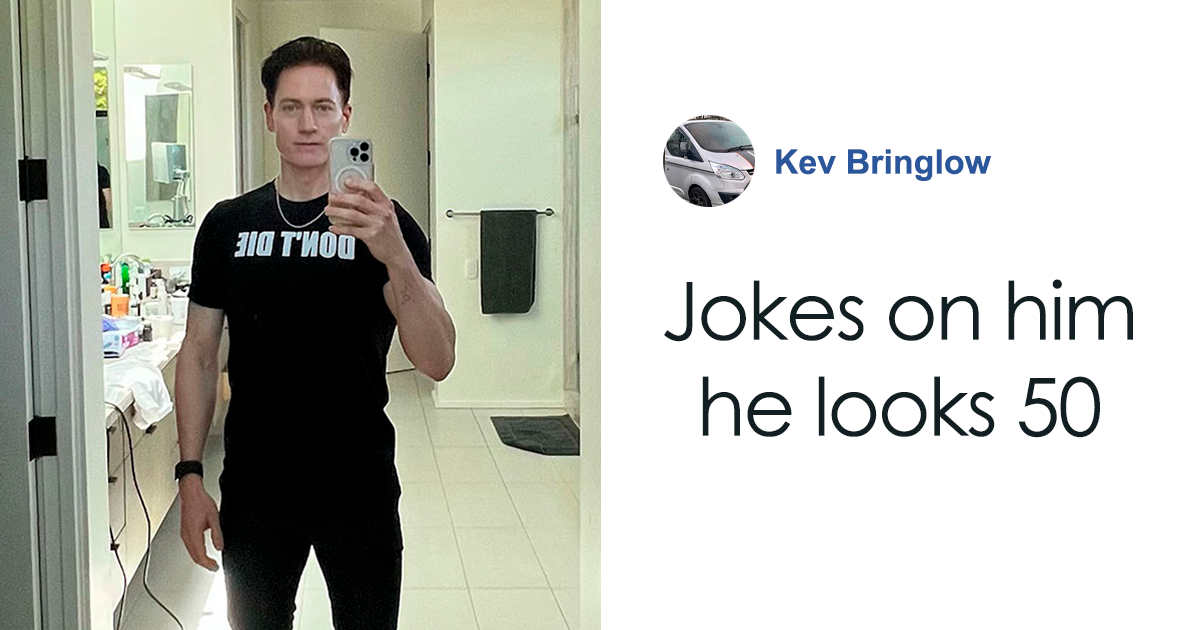
But the public conversation took a sharper turn when people began commenting that his attempt at age reversal had given him an “uncanny valley” look. That phrase, usually reserved for robots, hyper-realistic avatars, or movie CGI that makes your brain quietly whisper, “Nope,” became part of the online reaction to Johnson’s changing appearance. Some viewers said he looked impressively youthful. Others said he appeared strangely artificial, too polished, too pale, or too medically optimized to read as naturally young.
And that is where the story becomes bigger than one man’s face. It becomes a cultural mirror. Johnson’s quest asks a very modern question: if technology can help us look younger, feel stronger, and track our bodies with laboratory precision, how far should we go before “healthy” starts looking a little haunted?
Who Is Bryan Johnson, And Why Is Everyone Talking About His Face?
Bryan Johnson is an American tech entrepreneur best known for founding Braintree, the payments company that acquired Venmo and was later sold to PayPal. After making a fortune in the tech world, he shifted his attention toward health, longevity, and the possibility of using data to slow biological aging. His best-known project, Blueprint, is a highly controlled lifestyle and medical program built around diet, sleep, exercise, supplements, testing, skincare, and frequent measurement of health markers.
Johnson’s public image is inseparable from his routine. He has described living by strict rules, eating carefully planned meals, prioritizing sleep, undergoing medical tests, and relying on a team of professionals to measure nearly everything his body does. The idea is not simply to “look good for his age.” It is to reduce biological aging across the body. In tech language, he is trying to optimize the human operating system. In regular human language, he is trying to make time hit the brakes.
That ambition has made him famous far outside wellness circles. Netflix released a documentary about him, Don’t Die: The Man Who Wants to Live Forever, which introduced his mission to an even wider audience. Viewers did not just see a man following a health routine. They saw someone attempting to rebuild life around the refusal to decline. Naturally, the internet had opinions. The internet always has opinions. If a sandwich is cut diagonally, someone will call it dystopian.
What Does “Uncanny Valley” Mean In This Context?
The “uncanny valley” describes the uncomfortable feeling people may get when something looks almost human, but not quite. A robot with realistic skin, a digital actor with slightly lifeless eyes, or an overly smoothed face filter can trigger the sensation. The closer something gets to human realism without fully landing there, the more unsettling it can feel.
When people use the term for Johnson’s appearance, they usually do not mean he literally looks robotic. They mean his face appears unusual to them in a specific way: youthful in some signs, older in others, and heavily influenced by intervention. This mix can confuse the brain. A face may have smooth skin, low body fat, intense lighting, and carefully managed features, yet still carry expressions, structure, or subtle cues associated with age and experience. The result can feel visually mismatched.
That mismatch is what fuels the conversation. Humans are extremely good at reading faces. We notice texture, color, fullness, movement, fatigue, warmth, and expression almost instantly. When some signals say “young” and others say “not quite,” people react. Sometimes kindly. Sometimes cruelly. Sometimes with memes, because civilization apparently peaked at the comment section.
Project Blueprint: The Anti-Aging Routine Behind The Headlines
Project Blueprint is Johnson’s data-driven system for improving health and slowing biological aging. It includes a strict diet, structured exercise, sleep optimization, skincare, supplements, medical imaging, bloodwork, and other forms of monitoring. Johnson has presented the project as a way to remove bad decision-making from daily life. Instead of relying on cravings, moods, or late-night snack logicalso known as the “cookie has chosen me” philosophyBlueprint aims to make health automatic.
Supporters find this fascinating. They see Johnson as someone willing to test longevity ideas in public, publish data, and challenge the lazy assumption that aging must be ignored until it becomes a crisis. In a world where many people sleep too little, eat too much processed food, and treat exercise like a suspicious rumor, his discipline can look impressive.
Critics see something else. They worry that the routine is extreme, expensive, difficult to generalize, and too focused on measurement. They also question whether biological age tests can truly prove what the public thinks they prove. A lower “biological age” number sounds clean and scientific, but aging is complicated. Organs, cells, hormones, immune function, skin, muscle, brain health, and emotional well-being do not always move in perfect harmony like a well-trained marching band.
Why His “Baby Face” Experiment Got So Much Attention
One of the biggest viral moments came from Johnson’s attempt to restore facial volume after becoming very lean. He has explained that while his biomarkers improved, his face appeared gaunt. That created a strange contradiction: the data suggested health gains, but the mirrorand public reactionsuggested something was off.
Facial fat plays a major role in how people perceive youth. Younger faces often have more softness and volume, while aging and weight loss can reduce fullness. Johnson’s “Project Baby Face” aimed to address that. However, a procedure involving donor-derived material reportedly caused a severe allergic reaction, and images of his swollen face spread quickly online. The story became irresistible to media outlets because it had everything: wealth, technology, beauty anxiety, medical risk, and a face doing something faces are generally not supposed to do.
The episode also highlighted a central tension in anti-aging culture. Health optimization can improve strength, sleep, metabolic markers, and physical performance. But looking young is not the same as being healthy. A person can have excellent lab results and still look tired. Another person can look vibrant and have hidden health issues. The face is not a spreadsheet, no matter how badly Silicon Valley wants to put it in one.
Why People Are Both Fascinated And Uncomfortable
The reaction to Johnson is not just about one tech mogul. It taps into broader American feelings about aging. We say aging is natural, then spend billions trying to soften, delay, recolor, tighten, supplement, filter, freeze, and negotiate with it like it is a customer service representative. We praise authenticity but reward youth. We celebrate wisdom but market wrinkle cream with the urgency of a disaster alert.
Johnson makes this contradiction impossible to ignore because he does not hide the machinery. He is not simply using flattering lighting and pretending to drink more water. He is openly building a system. That honesty is part of why people watch him. It is also part of why people recoil. When the process is visible, the fantasy becomes less magical. Eternal youth, it turns out, may involve spreadsheets, early bedtimes, medical teams, and meals so disciplined they make a salad look rebellious.
The “uncanny valley” criticism may also reflect discomfort with optimization itself. A face shaped by ordinary life carries tiny signals: laughter, sun, stress, rest, grief, joy, and the occasional regrettable haircut. When someone attempts to edit away too many signs of time, observers may feel that something human has been removed. The issue is not simply whether Johnson looks young. It is whether he looks lived-in.
The Science: Can Aging Really Be Reversed?
Aging research is a serious and rapidly developing field. Scientists study cellular damage, inflammation, metabolism, DNA methylation, senescent cells, muscle loss, brain health, and the many biological systems that change over time. There is evidence that habits such as regular exercise, nutritious eating, adequate sleep, not smoking, and maintaining a healthy weight support healthier aging. Research on calorie restriction, strength training, and certain biomarkers has also generated real scientific interest.
However, there is a big difference between improving healthspan and reversing aging in the dramatic way headlines often suggest. Healthspan means the number of years a person lives in good health. That is a realistic and worthy goal. Immortality, on the other hand, remains in the land of science fiction, philosophy, and billionaires with excellent lighting.
The FDA has warned that no medication has been proven to slow or reverse the aging process. That does not mean all longevity research is nonsense. It means consumers should be careful when claims leap from “may support healthy aging” to “turn back the clock.” The body is not a phone battery. You cannot simply replace a part, clear the cache, and expect to reboot into freshman year.
What Ordinary People Can Learn From The Bryan Johnson Debate
The useful lesson is not that everyone should copy Johnson. In fact, most people cannot and should not attempt an extreme, medically intensive anti-aging program without professional supervision. The practical lesson is that many basics still matter: sleep, movement, balanced meals, social connection, stress management, preventive healthcare, and limiting harmful habits.
There is something refreshing about Johnson’s seriousness. He treats health as something measurable and worth protecting before crisis arrives. That mindset can inspire people to take their own routines more seriously. But there is also a warning in the public reaction. If health becomes an obsession with control, appearance, and numbers, it can start to shrink life instead of expanding it.
Aging well should not mean turning yourself into a museum exhibit labeled “Technically Alive.” It should mean having enough strength, clarity, mobility, and emotional richness to enjoy being here. Data can help. Doctors can help. Good habits can help. But joy, flexibility, friendship, and the ability to eat birthday cake without treating it like a felony should probably stay in the plan.
Why The “Uncanny Valley” Label Sticks
The label sticks because Johnson represents a new kind of celebrity: the quantified human. He is not famous for acting, singing, or launching rockets. He is famous for turning his body into a public dashboard. His face becomes part of that dashboard, whether he wants it to or not. Every image is interpreted as evidence. Does he look younger? Healthier? Too pale? Too smooth? Too intense? The internet zooms in like it has been deputized by dermatology.
But faces are not scientific reports. They are emotional objects. People respond to them with instinct before analysis. If a person’s appearance seems caught between youth and age, natural and modified, human and hyper-managed, the “uncanny valley” phrase becomes an easy shorthand.
It may not always be fair. Public commentary on appearance can quickly become mean-spirited. Johnson is a real person, not just a headline with cheekbones. Still, the reaction reveals something important: people do not only want youth. They want youth that appears effortless, warm, and believable. When youth looks engineered, the fantasy glitches.
The Bigger Cultural Story: We Are All Biohackers Now
Even if Johnson’s routine is extreme, the mindset behind it is everywhere. Smart rings track sleep. Watches measure heart rate. Apps count calories, steps, mood, and meditation streaks. Skincare routines have become chemistry sets with nicer packaging. Fitness influencers talk about recovery, inflammation, protein, cold exposure, and zone training as casually as people once discussed the weather.
In that sense, Johnson is not an alien from the future. He is an exaggerated version of the present. Many people want more control over their health. Many fear aging. Many hope data will help them make better choices. The difference is that Johnson has the money, time, medical access, and unusual commitment to take those desires to their logical extreme.
That is why he fascinates us. He is both inspiring and unsettling. He shows what discipline can do, but also what discipline can cost. He makes healthy habits look powerful, but he also makes immortality look like a full-time job with terrible snack options.
Experience Section: What This Story Feels Like In Real Life
Anyone who has tried to “optimize” their life even a little can understand the strange pull of Johnson’s project. You buy a fitness tracker, and suddenly sleep has a score. You eat a salad, and your app congratulates you like you just rescued a village. You miss a workout, and the little ring on your phone looks disappointed. At first, the data feels empowering. Then, if you are not careful, it starts acting like a tiny manager who lives in your pocket and has no respect for weekends.
The Bryan Johnson story feels familiar because many people have had a smaller version of the same experience. Maybe you started a skincare routine and spent two weeks inspecting your pores under bathroom lighting that should be illegal. Maybe you tried intermittent fasting and became the kind of person who says “my eating window” at parties. Maybe you bought supplements, compared protein powders, tracked steps, or promised yourself that this would finally be the month you became a morning person. We laugh, but the desire underneath is real. We want to feel better. We want more energy. We want our bodies to cooperate. We want time to be kinder.
The problem begins when self-care turns into self-surveillance. A healthy routine should make life bigger. It should help you walk farther, think clearer, sleep deeper, and enjoy your days more. But optimization can quietly become a cage if every choice is judged only by whether it improves a metric. A dinner with friends may be emotionally nourishing even if it is not perfectly timed. A lazy Sunday may restore something no wearable can measure. A laugh line may be evidence that you laughed, which is not exactly a design flaw.
That is why the “uncanny valley” reaction to Johnson lands so strongly. It is not just about whether his face looks unusual. It is about the fear that in chasing perfect health, a person might accidentally sand away the charming irregularities that make someone feel alive. We are drawn to people who look human in the full sense: expressive, relaxed, imperfect, and present. A face does not need to look eighteen to be compelling. Sometimes it is more interesting when it looks like it has attended meetings, survived heartbreak, enjoyed tacos, and learned a few things the hard way.
Still, it would be too easy to dismiss Johnson as merely eccentric. His project raises useful questions for everyone. What habits would we change if we took aging seriously before illness forced us to? How much of our daily behavior is chosen, and how much is just momentum wearing sweatpants? Could better sleep, regular exercise, and thoughtful nutrition improve our lives without turning us into spreadsheet monks? The answer is probably yes.
The best takeaway is balance. Borrow the sane parts: protect sleep, move your body, eat food that would not confuse your grandparents, get medical checkups, and pay attention to how your choices affect your energy. Leave the extreme experiments to people with medical teams, legal waivers, and apparently a heroic tolerance for routine. Aging well does not require becoming a viral science project. It may simply require building a life you are healthy enough to enjoyand human enough to actually live.
Conclusion
Bryan Johnson’s attempt to reverse aging has become one of the most talked-about wellness stories of the modern tech era because it sits at the intersection of science, vanity, ambition, fear, and spectacle. His Project Blueprint routine is serious, disciplined, and undeniably fascinating. It also raises hard questions about how far people should go in the pursuit of youth.
The “uncanny valley” criticism says as much about us as it does about Johnson. We want longevity, but not if it looks too artificial. We admire discipline, but worry about obsession. We want science to help us age better, but we still crave warmth, spontaneity, and faces that look like they belong to people who occasionally stay up late for a good reason.
In the end, Johnson may be less a warning or a role model than a preview. As anti-aging science advances and health tracking becomes more common, more people will face the same question in smaller ways: are we trying to live better, or are we trying to outrun being human?