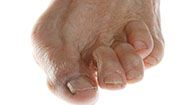
Your big toe may not have the star power of your heart or brain, but it performs important work every time you stand, walk, climb stairs, squat, or push off to take a step. When arthritis develops in the joint at its base, even an ordinary trip across the kitchen can feel like a badly designed obstacle course.
This condition is called hallux rigidus, meaning “stiff big toe.” It is a form of osteoarthritis affecting the first metatarsophalangeal joint, commonly shortened to the first MTP joint. Hallux rigidus can cause pain, swelling, bone spurs, and a progressive loss of motion. Although the condition cannot be erased with a magic shoe insert, many people control their symptoms effectively through footwear changes, activity adjustments, medication, injections, or surgery when necessary.
What Is Hallux Rigidus?
Hallux rigidus is degenerative arthritis of the joint where the big toe meets the foot. The joint connects the first metatarsal bone in the forefoot with the proximal phalanx of the big toe. Two small sesamoid bones underneath the joint assist with weight-bearing and push-off.
Healthy joint surfaces are covered with smooth articular cartilage. This slippery tissue helps the bones move with minimal friction. With osteoarthritis, cartilage becomes damaged and gradually wears away. The joint space narrows, exposed bone may rub against bone, and the body can respond by producing extra bone called an osteophyte, or bone spur.
In hallux rigidus, a spur commonly develops on top of the first MTP joint. The spur may block upward movement of the toe and rub painfully against the inside of a shoe. Early loss of motion is sometimes called hallux limitus. As degeneration progresses and movement becomes severely restricted, the condition is generally described as hallux rigidus.
Why the Big Toe Joint Matters So Much
The first MTP joint bends whenever the body moves forward over the foot. During the final part of a normal step, the heel rises and the big toe extends upward, creating a stable platform for push-off. When that movement becomes painful, people often shorten their stride, turn the foot outward, or transfer pressure to the outside of the foot.
These compensations may reduce toe pain temporarily, but they can create new discomfort in the ball of the foot, ankle, knee, hip, or lower back. The big toe is small, but it is apparently unaware of this fact and behaves as if it manages the entire walking department.
Common Symptoms of Big Toe Osteoarthritis
Symptoms usually develop gradually, although a previous injury can make them appear earlier. Common signs of hallux rigidus include:
- Pain at the base or top of the big toe during walking, running, lunging, or climbing stairs
- Stiffness and reduced ability to bend the toe upward or downward
- Swelling, tenderness, or mild redness around the joint
- A hard bump or bone spur on top of the first MTP joint
- Pain when shoes press against the bony prominence
- Difficulty pushing off through the big toe
- Discomfort while squatting, kneeling, or standing on tiptoe
- A grinding, clicking, or catching sensation in the joint
- Walking on the outside edge of the foot to avoid pressure
In early disease, pain may occur mainly at the end of the toe’s available motion. In advanced arthritis, the joint may ache through its entire range or even while resting. Some people notice that cold or damp weather seems to aggravate stiffness, although weather is not responsible for causing the cartilage damage.
What Causes Hallux Rigidus?
There is not always one identifiable cause. Hallux rigidus often develops through a combination of joint anatomy, inherited foot structure, repetitive loading, and accumulated cartilage damage.
Foot Structure and Biomechanics
Certain anatomical patterns may place unusual stress on the first MTP joint. Examples include an elevated or relatively long first metatarsal, flat feet, excessive pronation, or other alignment differences that alter how the big toe moves during walking. Hallux rigidus can also run in families because inherited foot shape may influence joint mechanics.
Previous Injury
A significant toe injury can damage cartilage directly. Repeated minor trauma may have a similar cumulative effect. A history of turf toe, fractures, forceful stubbing, or repetitive jamming of the joint may contribute to arthritis years later.
Repetitive Stress
Dancers, runners, athletes, tradespeople, and workers who frequently squat or kneel may repeatedly load the big toe joint. Repetition does not guarantee arthritis, but it may increase stress in a joint that is already anatomically vulnerable.
Inflammatory Joint Disease
Not every painful big toe is ordinary osteoarthritis. Gout, rheumatoid arthritis, psoriatic arthritis, and other inflammatory conditions can affect the first MTP joint. A clinician may investigate these possibilities when symptoms appear suddenly, involve multiple joints, or include unusual warmth and swelling.
Hallux Rigidus vs. a Bunion, Gout, and Turf Toe
Hallux Rigidus vs. Bunion
A bunion, or hallux valgus, usually creates a prominence on the inner side of the first MTP joint as the big toe shifts toward the smaller toes. Hallux rigidus more commonly produces a spur on top of the joint, accompanied by loss of motion. A person can have both conditions, so location alone does not always settle the question.
Hallux Rigidus vs. Gout
Gout often causes a sudden attack of intense pain, heat, redness, and swelling. Even the weight of a bedsheet may feel intolerable. Hallux rigidus generally develops more gradually and is closely associated with movement and mechanical pressure. However, gout and osteoarthritis can coexist.
Hallux Rigidus vs. Turf Toe
Turf toe is a sprain of the soft tissues supporting the big toe joint, usually after the toe is forcefully bent upward. It often begins with a distinct injury. Hallux rigidus is a degenerative joint disorder, although an old turf toe injury may contribute to its development.
How Hallux Rigidus Is Diagnosed
Diagnosis typically begins with a history and physical examination. A healthcare professional may ask when the pain started, which movements trigger it, what shoes make it worse, and whether there was a prior injury.
During the examination, the clinician may:
- Inspect the joint for swelling, redness, calluses, or a dorsal bone spur
- Measure how far the toe moves upward and downward
- Determine whether pain occurs only at the end of motion or throughout the movement
- Evaluate foot alignment, gait, and pressure distribution
- Check for tenderness beneath the joint or in nearby structures
Weight-bearing X-rays are commonly used to assess joint-space narrowing, bone spurs, cysts, sclerosis, and changes in alignment. Standing images are particularly useful because they show the foot while it is supporting weight. MRI or CT scans are not routinely required, although they may be ordered when the diagnosis is uncertain or more detailed surgical planning is needed.
Blood tests do not diagnose osteoarthritis. They may be useful when gout, rheumatoid arthritis, infection, or another inflammatory condition is suspected. Joint fluid may occasionally be analyzed when a joint is unusually hot, red, or swollen.
Stages of Hallux Rigidus
Clinicians may grade hallux rigidus according to range of motion, symptoms, and X-ray findings. In general:
- Early-stage disease: Mild stiffness, pain mainly at the end of upward motion, and small bone spurs
- Moderate disease: Greater loss of motion, more frequent pain, visible joint-space narrowing, and larger spurs
- Advanced disease: Severe cartilage loss, pain through much of the movement, substantial stiffness, and possible bone-on-bone contact
- End-stage disease: Very limited or nearly absent motion, with pain that can occur during daily activities or at rest
The X-ray does not make treatment decisions by itself. Some dramatic-looking joints cause surprisingly modest symptoms, while less impressive images can accompany considerable pain. Treatment should reflect the person, not merely the photograph of the person’s foot.
Nonsurgical Treatment for Hallux Rigidus
Most treatment plans begin conservatively. Nonsurgical care cannot regrow lost cartilage, but it can reduce painful joint motion, decrease pressure, and improve daily function.
Choose Shoes That Limit Painful Motion
Footwear is often the most practical first intervention. Helpful features may include:
- A wide and deep toe box that does not press on the bone spur
- A stiff sole that limits bending through the first MTP joint
- A rocker-bottom sole that helps the body roll forward with less toe extension
- Low heels that reduce pressure on the forefoot
- Soft upper material over the painful bump
Thin, highly flexible shoes and high heels often make symptoms worse. Going barefoot may also be uncomfortable because the big toe has to bend without the protection of a rigid sole.
Orthotics and Shoe Inserts
A rigid insert, carbon-fiber plate, Morton’s extension, or custom orthotic may reduce painful motion at the joint. Arch support can also improve pressure distribution in people with particular foot mechanics. The ideal insert depends on the person’s anatomy, footwear, occupation, and activities.
Activity Modification
Temporary reduction of running, jumping, steep hill climbing, deep lunges, or repeated squatting may calm a flare. Lower-impact options such as cycling, swimming, or carefully adjusted strength training may preserve fitness with less big toe extension.
Activity modification does not necessarily mean giving up exercise. It means changing the workload so the joint stops filing daily complaints with management.
Ice and Symptom Control
A cold pack wrapped in a thin towel may reduce pain and swelling after activity. It should not be placed directly on the skin. Some people prefer gentle warmth for stiffness, although heat should be avoided when the joint is acutely hot and swollen until infection or gout has been excluded.
Medication
Nonsteroidal anti-inflammatory drugs, or NSAIDs, may reduce pain and inflammation. Oral NSAIDs are not suitable for everyone. They can increase the risk of stomach bleeding, kidney problems, fluid retention, heart attack, heart failure, and stroke, especially when taken at higher doses or for longer than directed.
People with kidney disease, cardiovascular disease, stomach ulcers, bleeding disorders, uncontrolled high blood pressure, or medication interactions should consult a clinician or pharmacist before using them. Topical anti-inflammatory medication may be an option for some patients because it produces less whole-body exposure, although it still requires appropriate precautions.
Corticosteroid Injections
A corticosteroid injection into the joint may provide temporary relief, particularly when inflammation is contributing to pain. It does not restore cartilage or permanently stop progression. Repeated injections also have potential disadvantages, so timing and frequency should be discussed with a qualified clinician.
Physical Therapy
Physical therapy may address gait, calf flexibility, balance, foot strength, and compensatory movement patterns. Aggressively forcing a severely arthritic joint to bend can increase pain, however. Exercises should match the disease stage and should not turn the big toe into an unwilling participant in a medieval stretching experiment.
When Is Surgery Considered?
Surgery may be considered when pain remains significant despite appropriate nonsurgical treatment, footwear becomes difficult to tolerate, or the condition prevents important work, recreation, or daily activities. The procedure depends on cartilage loss, joint motion, pain location, alignment, age, activity goals, and personal preferences.
Cheilectomy
Cheilectomy removes bone spurs and a portion of bone from the top of the joint, creating more room for the toe to bend. It is most often used for mild to moderate hallux rigidus when pain is concentrated around the dorsal spur and meaningful cartilage remains.
Cheilectomy can improve motion and relieve shoe pressure, but it does not replace damaged cartilage. Arthritis may continue progressing, and some patients later require another operation.
Osteotomy
An osteotomy involves cutting and repositioning a bone to alter joint mechanics. A Moberg osteotomy, for example, changes the angle of the proximal phalanx to improve functional upward movement. It may be combined with cheilectomy in selected cases.
First MTP Joint Fusion
Arthrodesis, commonly called fusion, removes the remaining damaged cartilage and permanently joins the bones of the joint. It is widely used for advanced arthritis because it reliably eliminates painful motion.
The trade-off is that the first MTP joint no longer bends. Most people can still walk, hike, cycle, and perform many activities once the bones heal, but footwear choices and certain high-demand movements may need adjustment.
Joint-Preserving or Joint-Replacement Procedures
Interposition arthroplasty, resection arthroplasty, and implant procedures attempt to reduce pain while retaining some movement. These operations may be appropriate for carefully selected patients, but they have different risks, durability concerns, and activity restrictions. Fusion may still be required if a motion-preserving procedure fails.
Recovery After Surgery
Recovery varies considerably according to the operation. Some procedures permit early protected weight-bearing in a postoperative shoe, while others require a longer period of restricted loading so bone can heal. Swelling may persist for months even when the surgical site is progressing normally.
Patients may need elevation, wound care, temporary mobility aids, activity restrictions, and follow-up imaging. Returning to work depends on the procedure and whether the job involves sitting, driving, walking, lifting, or prolonged standing. A surgeon’s instructions should take priority over generic recovery timelines found online.
Can Hallux Rigidus Be Prevented?
Hallux rigidus cannot always be prevented, particularly when inherited anatomy or an old injury is involved. Practical measures may reduce stress or help identify the condition earlier:
- Wear shoes with enough toe room and appropriate support
- Replace worn-out athletic footwear
- Treat significant big toe injuries rather than repeatedly “walking them off”
- Increase training volume gradually
- Alternate high-impact activities with lower-impact exercise
- Address persistent pain before major stiffness develops
- Maintain a weight that supports overall joint health, when medically appropriate
When to Seek Medical Care
Schedule an evaluation when big toe pain persists, repeatedly returns, changes the way you walk, or limits footwear and activity. Early assessment may provide more nonsurgical and joint-preserving options.
Seek prompt medical attention for sudden severe pain, intense warmth and redness, fever, an open wound, rapidly increasing swelling, or inability to bear weight after an injury. Those symptoms may indicate gout, infection, fracture, or another condition requiring timely treatment.
Living With Hallux Rigidus: Common Experiences and Practical Lessons
Hallux rigidus often enters a person’s life quietly. The first clue may be a favorite shoe that suddenly feels too tight across the top of the toe. A runner may notice discomfort only during uphill training. Someone who gardens may discover that kneeling with the toes bent underneath has become remarkably unpopular with one particular joint.
At first, many people assume they have a bunion, a minor sprain, or simply an aging foot. They loosen their shoelaces, avoid a few activities, and wait for the problem to disappear. Sometimes the pain settles temporarily, but stiffness gradually becomes harder to ignore. The toe may stop bending normally, and a visible bump can form on top of the joint.
One of the most common real-world lessons is that footwear matters more than expected. A flexible sneaker may look supportive while still allowing the painful joint to bend with every step. Switching to a wider shoe with a stiff or gently rockered sole can make walking noticeably more comfortable. Many people experiment with multiple pairs before discovering that the best shoe is not necessarily the softest one; it is often the shoe that reduces motion in the correct place.
Another common experience is compensation. To avoid pushing through the big toe, a person may roll onto the outside of the foot or shorten the affected stride. This can lead to soreness under the smaller toes, ankle fatigue, or discomfort farther up the leg. A gait evaluation, physical therapy, or properly selected insert may help reduce these secondary problems.
Activity decisions can be emotionally frustrating. A dancer, runner, warehouse employee, or weekend hiker may worry that treatment means abandoning an important part of life. In practice, management is often more nuanced. Some people reduce mileage, rotate activities, choose flatter routes, or schedule recovery days. Others find that cycling or swimming provides a satisfying workout without repeatedly forcing the toe into painful extension.
For people considering surgery, the decision is rarely based on an X-ray alone. The more useful question is how much the joint interferes with daily life. Someone with advanced changes but little pain may continue conservative care. Another person with moderate arthritis may choose surgery because standing at work has become intolerable despite appropriate shoes, inserts, and medication.
Expectations also matter. Cheilectomy may reduce impingement and improve motion, but it does not create a brand-new joint. Fusion sacrifices motion to obtain stability and pain relief. Motion-preserving procedures retain flexibility but may have limitations or a greater possibility of revision. A productive surgical conversation therefore includes preferred activities, acceptable footwear, recovery demands, and the trade-offs the patient is willing to make.
Perhaps the most useful lesson is not to judge the condition by the size of the toe. Hallux rigidus can meaningfully affect mobility, independence, exercise, and mood. Seeking treatment is not an overreaction to “just a toe.” When the big toe hurts at every push-off, it manages to submit several thousand reminders per day.
Conclusion
Osteoarthritis of the big toe is a progressive condition, but progressive does not mean untreatable. Early recognition, roomy footwear, stiff or rocker soles, appropriate inserts, activity adjustments, and carefully selected pain treatments can help many people remain active. When conservative measures no longer provide adequate relief, operations such as cheilectomy or first MTP fusion may offer substantial improvement.
The best treatment is based on symptoms, joint damage, daily demands, and personal goals. A podiatrist or orthopedic foot and ankle specialist can confirm the diagnosis, rule out look-alike conditions, and help create a plan that keeps one small but surprisingly influential joint from running the entire schedule.