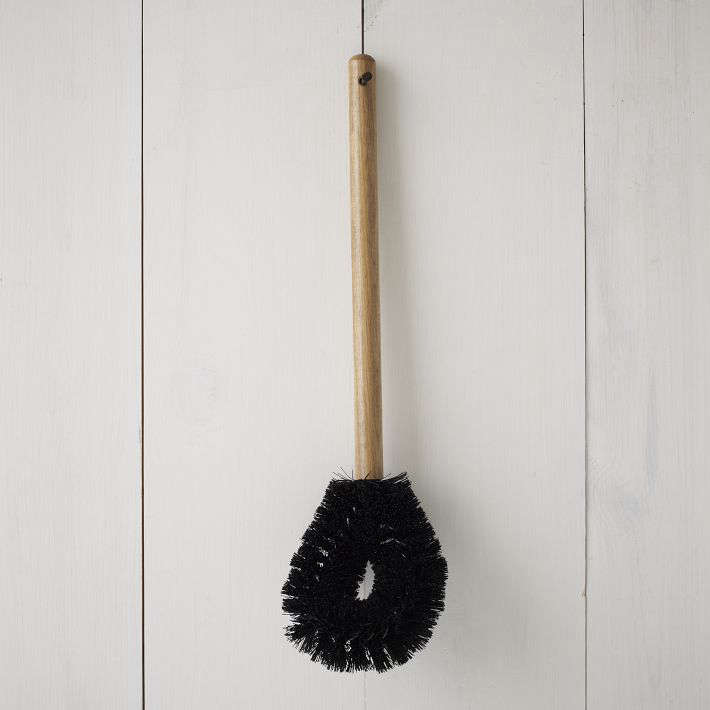
Most bathroom tools try to disappear. The NYCIB Sanitary Bowl Brush takes a different approach: it looks like an honest piece of equipment, does one unglamorous job, and skips the chrome-plated theatrics. There is no app, charging cable, or “smart cleaning ecosystem.” It is a toilet brushand refreshingly proud of it.
Originally offered through West Elm and produced in collaboration with New York City Industries for the Blind, this American-made cleaning tool combines a solid wood handle with tightly secured polypropylene bristles. Its appeal lies in straightforward construction, practical reach, and a social-enterprise story that gives an ordinary household object unusual significance.
What Is the NYCIB Sanitary Bowl Brush?
The NYCIB Sanitary Bowl Brush is a traditional long-handled toilet bowl brush designed for routine bathroom cleaning. Archived product information describes an 18-inch tool with a solid wood handle and synthetic polypropylene bristles. It was manufactured in the United States and originally listed for approximately $9, although that historical price should not be treated as a current retail offer.
| Feature | Product Detail |
|---|---|
| Overall size | Approximately 5 inches wide, 2.5 inches deep, and 18 inches high |
| Handle | Solid wood |
| Bristles | Polypropylene |
| Manufacturing | Made in the USA |
| Original positioning | Durable, affordable, utilitarian bathroom tool |
| Holder | No dedicated holder was highlighted in the archived product description |
In other words, the design is closer to a dependable janitorial tool than a decorative bathroom accessory. That is not a criticism. A toilet brush has one performance review, and it takes place under the rim.
A Household Tool with a Meaningful Backstory
New York City Industries for the Blind, commonly abbreviated as NYCIB, was established as a nonprofit organization in the mid-1990s. Its industrial operations helped preserve employment opportunities for people who were blind after an earlier New York manufacturing program closed.
This history places the sanitary bowl brush within a broader American tradition of producing practical goods through employment-focused organizations. Brushes, mops, brooms, and similar supplies have long been part of that manufacturing landscape because they require consistent workmanship and serve stable household and institutional needs.
The NYCIB collaboration therefore added more than a logo to the handle. Purchasing the brush supported a production model built around employment and economic participation. That does not automatically make the brush superior to every competing product, but it gives buyers a compelling reason to examine who made an everyday objectnot merely which shade of beige its holder comes in.
Why Its Simple Design Works
The Long Wood Handle Improves Reach
An 18-inch handle keeps the user’s hand comfortably away from the water while providing leverage for scrubbing. The length is also useful for reaching deeper into the trap and around the bowl’s curves without forcing the wrist into an awkward angle.
Wood gives the brush a warm, old-school appearance that suits utility rooms, vintage bathrooms, and minimalist interiors. It can also feel more substantial than a hollow plastic handle. However, wood requires sensible care: repeatedly leaving it wet can encourage swelling, discoloration, or cracking.
Polypropylene Bristles Provide Practical Scrubbing Power
Polypropylene is widely used in household brushes because it resists water, maintains useful stiffness, and can be rinsed relatively easily. The tightly secured bristles on the NYCIB bowl brush are intended to disturb ordinary residue, loosen buildup, and carry cleaner across the porcelain surface.
A traditional bristle head can deliver more concentrated scrubbing action than some flexible silicone designs. The tradeoff is that dense bristles may retain water or trap debris if they are not rinsed thoroughly. A brush that looks heroic while scrubbing but spends the next week marinating in its holder has misunderstood the assignment.
The No-Frills Construction Reduces Fuss
There are no hinged covers, magnetic collars, detachable mechanisms, or moving pieces to jam. Simplicity can be valuable in a frequently used cleaning tool because fewer components mean fewer crevices to wash and fewer connections that can loosen.
The apparent lack of a purpose-built caddy is the main inconvenience. A compatible holder would need to be purchased separately or improvised carefully. The best option is a stable, washable container that supports the handle without allowing the wet brush head to sit in pooled water.
How Well Should the NYCIB Bowl Brush Clean?
The product does not appear to have undergone a current independent laboratory comparison, so sweeping claims about it being the “best toilet brush ever” would be more marketing confetti than useful analysis. Its specifications nevertheless cover several fundamentals of effective toilet cleaning: a long handle, durable synthetic bristles, a broad working head, and enough rigidity to apply pressure.
Modern product testing suggests that brush-head shape and contact with the bowl matter at least as much as the choice between traditional bristles and silicone. Angled or specialized rim-cleaning heads can be more effective in narrow spaces. The NYCIB brush’s conventional rounded profile should handle the main bowl and trap well, but it may require extra wrist movement beneath a sharply curved rim.
For routine weekly cleaning, the brush should be capable of removing ordinary film and loose deposits when paired with an appropriate toilet bowl cleaner. Heavy mineral rings, rust stains, or longstanding hard-water scale may require a cleaner specifically labeled for those deposits. Scrubbing harder is not always the answer; sometimes chemistry needs to take its turn.
How to Use the NYCIB Sanitary Bowl Brush Safely
1. Prepare the Bathroom
Turn on the exhaust fan or open a window, especially when using a disinfecting product. Put on reusable cleaning gloves and keep children and pets away from the work area.
2. Apply the Correct Cleaner
Use a product formulated for the inside of a toilet bowl. Apply it beneath the rim and around the bowl according to the label. Do not assume every cleaner disinfects; some products primarily remove soil or mineral buildup.
3. Respect the Contact Time
If the label specifies a waiting period, allow the product to remain wet for that entire contact time. Scrubbing and immediately flushing may remove visible dirt without giving a disinfectant enough time to work effectively.
4. Scrub Methodically
Work under the rim first, then move around the sides, waterline, lower bowl, and accessible portion of the trap. Controlled strokes reduce splashing and usually clean better than attacking the bowl like it owes you money.
5. Flush and Rinse
Flush while keeping the brush head in the clean moving water, provided the cleaning-product label allows it. Inspect the bristles for trapped material and rinse again if necessary.
6. Dry Before Storage
Let excess water drain into the bowl. One common method is to secure the handle temporarily beneath the lowered seat so the brush head hangs over the bowl without touching the water. Once dry, place it in a clean, ventilated holder.
Critical safety rule: Never mix bleach with ammonia, acids, vinegar, toilet bowl cleaner, or another disinfectant. Dangerous fumes can result. Follow the product label rather than combining chemicals in hopes of creating a bathroom-cleaning super potion.
Cleaning and Maintaining the Brush
A toilet brush is a cleaning tool, not a self-cleaning tool. Rinsing it after every use prevents visible residue from drying between the bristles. Periodic disinfection can then address microorganisms that ordinary rinsing may leave behind.
Use a disinfectant suitable for the brush materials and follow its label for dilution, application, protective equipment, and contact time. The Centers for Disease Control and Prevention notes that cleaning removes soil and many germs, while disinfecting is a separate process intended to kill remaining germs. In an ordinary healthy household, routine cleaning is often sufficient; additional disinfection may be appropriate when someone is ill or particularly vulnerable.
Pay attention to the wooden handle. Avoid soaking the entire brush unless the manufacturer of the disinfecting product and the condition of the wood make that appropriate. Extended immersion can be hard on unfinished or lightly finished wood. Wipe the handle with a compatible cleaner, remove excess moisture, and let it dry completely.
When Should the Brush Be Replaced?
Replacement should be based on condition rather than the calendar alone. Retire the brush when its bristles become permanently bent, loose, badly discolored, difficult to rinse, or persistently odorous after cleaning. Cracks, splinters, softness, or swelling in the wood handle are also clear signs that its toilet-cleaning career has reached a dignified conclusion.
NYCIB Brush Versus Modern Toilet Brush Designs
Compared with Silicone Brushes
Silicone or thermoplastic cleaning heads usually shed water quickly and provide fewer spaces for debris to lodge. They can flex beneath the rim but may require more repeated passes against stubborn residue. The NYCIB brush offers the familiar bite of conventional bristles, making it attractive to users who prioritize scrubbing power over rapid drying.
Compared with Disposable Cleaning Wands
Disposable heads reduce the need to store a used brush and can be convenient in guest bathrooms. They also create recurring waste and require replacement refills. The NYCIB sanitary bowl brush is reusable, mechanically simple, and free from a proprietary refill system.
Compared with Premium Brush-and-Caddy Sets
Contemporary sets often include ventilated holders, replaceable heads, non-slip grips, and angled rim cleaners. Those details improve storage and ergonomics, but they can substantially increase the price. The NYCIB model represents a stripped-down alternative: buyers receive the essential scrubbing tool and can choose their own storage solution.
Who Is This Bowl Brush Best For?
The NYCIB Sanitary Bowl Brush makes the most sense for people who appreciate uncomplicated American-made tools, natural-looking handles, and products associated with socially focused manufacturing. It also suits shoppers who prefer reusable cleaning equipment over disposable systems.
It may be less suitable for anyone who wants an enclosed matching caddy, a replaceable head, a specialized under-rim extension, or a handle that can remain wet without concern. People with limited grip strength might also prefer a contoured rubber handle instead of smooth wood.
Because the original listing is archival, shoppers should verify actual availability, condition, dimensions, and seller claims before purchasing one through a resale marketplace. A vintage or unused example may be appealing, but a previously used toilet brush is where adventurous shopping should draw a firm and sensible line.
Real-World Experiences with a Traditional NYCIB-Style Bowl Brush
The First Impression: More Workshop Than Showroom
Living with a traditional wood-handled brush changes the visual tone of the bathroom in a small but noticeable way. Instead of resembling a capsule from a futuristic dental office, it looks like a practical household implement. The wood is easy to spot, easy to grab, and comfortable when dry. Its 18-inch length provides welcome distance during a chore in which distance feels like a luxury feature.
The absence of an elaborate holder is immediately apparent. A narrow ceramic crock may look attractive, but it must be stable and large enough to avoid trapping the damp bristles against its walls. A cheap, solid plastic caddy is often more practical because it can be washed thoroughly. The storage decision has a greater effect on daily hygiene than whether the container matches the towel rack.
During Cleaning: Firm Bristles Reward a Slow Technique
A conventional bristle head performs best with deliberate overlapping passes. Beginning beneath the rim allows the cleaner to spread downward while the rest of the bowl is scrubbed. The long handle supplies useful leverage, so excessive force is rarely necessary. Two controlled circuits around the waterline are generally more productive than a burst of frantic plunging.
The rounded head feels effective on the broad sides and lower curve of a standard bowl. Tight rim channels may take a few angled passes because the brush lacks the projecting rim-cleaner found on some newer models. This is a modest inconvenience during regular maintenance but becomes more noticeable when buildup has been allowed to settle for weeks.
Splatter control improves quickly with experience. Keeping the head in contact with the porcelain and using shorter strokes prevents the bristles from snapping droplets into the surrounding area. The technique is less cinematic, but the bathroom floor will appreciate the restraint.
Afterward: Drying Is the Deciding Habit
The most important part of the experience happens after the bowl is clean. Dropping a saturated brush directly into a closed container creates standing moisture, odor, and an unpleasant surprise at the next cleaning. Rinsing the head, draining it over the bowl, and allowing it to air-dry makes the tool much easier to live with.
The wooden handle also encourages better habits. Any water running down the shaft should be wiped away, and the brush should not lean against a wet wall or sit in a puddle beside the toilet. With basic care, the wood feels solid and pleasant. Neglect it, and the same natural material that gives the brush character can become its weakness.
Over time, the NYCIB design’s greatest advantage is its predictability. There is no cartridge to reorder and no hinge to clean. The brush waits, scrubs, rinses, and dries. Its greatest disadvantage is equally straightforward: the user must manage drying and storage instead of relying on an engineered caddy. For someone comfortable with that routine, the brush offers an honest and satisfying experience. It will not make toilet cleaning glamorous, but it can make the job efficientand asking for glamour here may be unreasonable.
Final Verdict
The NYCIB Sanitary Bowl Brush is memorable precisely because it does not try to reinvent its category. Its solid wood handle, synthetic bristles, generous reach, American manufacturing, and employment-centered history turn a basic bathroom tool into a thoughtful example of functional design.
Modern brushes may offer faster-drying holders, replaceable heads, and more sophisticated rim access. Even so, the NYCIB brush remains appealing to anyone who values durability, visual simplicity, and a product with a human story behind it. Clean and dry it properly, pair it with a stable ventilated holder, and it should handle routine bowl maintenance without drama. In the world of toilet brushes, “without drama” is about as glowing as praise gets.