Some comic strips politely deliver a joke. Others invite you into a perfectly ordinary situation, offer you a comfortable chair, pour you coffee, and then remove the floor beneath your feet. Torbjørn Lien’s comics belong enthusiastically to the second category.
The Norwegian cartoonist behind Chez Cuckoo turns relationships, parenting, parties, awkward conversations, music, social expectations, and household disasters into compact stories with wonderfully unpredictable conclusions. His characters may begin a strip discussing dinner, dating, exercise, marriage, or responsible adulthood. By the final panel, somebody’s dignity has usually left the building through an emergency exit.
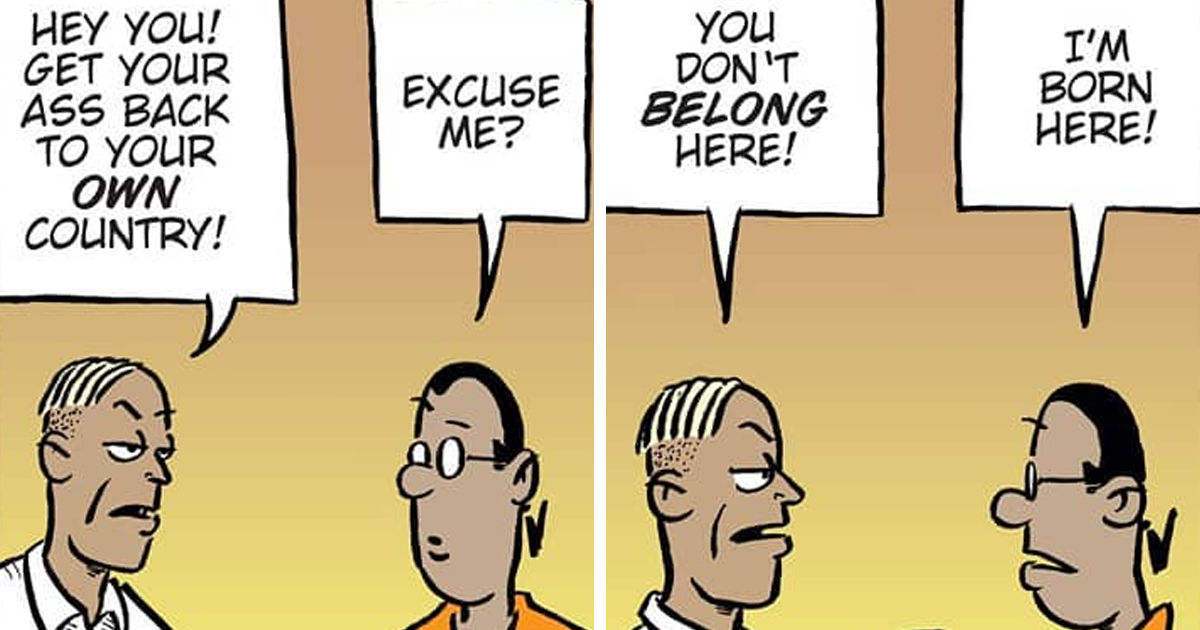
This collection of 70 funny comics with unexpected endings shows why Lien’s work remains so easy to recognize and dangerously easy to binge. The artwork is approachable, the conversations feel familiar, and the punchlines arrive with the precision of a snowball launched by someone who has been hiding behind the garage for twenty minutes.
Meet Torbjørn Lien, the Artist Behind Chez Cuckoo
Torbjørn Lien is a Norwegian comic artist best known for Kollektivet, the long-running series introduced to international readers under the English title Chez Cuckoo. The comic began around 2000 and follows a large group of very different people attempting to live, socialize, argue, flirt, celebrate, and occasionally behave like functioning adults.
“Attempting” is doing important work in that sentence.
Lien’s connection with comics began early. As a child, he read the Norwegian Donald Duck magazine and has said that comics helped teach him to read. He started creating his own strips while still young, first entertaining friends and contributing to a school publication. As a teenager in Mosjøen, Norway, he began seeing his work published regularly in a local newspaper. National comic-magazine appearances followed not long afterward.
That early start eventually developed into a career lasting more than two decades. Longevity matters in comic strips because a recurring series requires more than attractive drawing. The creator must keep finding new combinations of characters, conflicts, misunderstandings, cultural changes, and ridiculous human behavior. Fortunately for cartoonists, humanity continues to produce ridiculous behavior at industrial scale.
What Is Chez Cuckoo About?
Chez Cuckoo is built around a lively ensemble rather than a single hero. Its characters have different personalities, beliefs, romantic histories, musical tastes, weaknesses, and definitions of what counts as a sensible decision.
The cast includes people connected through friendship, family, shared homes, former relationships, and the kind of social circles where everyone knows far too much about everyone else. Ronny, one of the series’ most recognizable characters, is associated with black metal and a lifestyle that does not always shake hands with moderation. Other recurring figures bring perspectives shaped by parenting, feminism, sexuality, religion, dating, work, marriage, and generational conflict.
Lien has explained that he deliberately created characters who were different enough to bounce off one another. Some contain fragments of his personality, while others draw from people he has encountered or from pure invention. That mixture gives the series a sitcom-like engine: place incompatible personalities in one room, introduce a harmless topic, and wait for the smoke alarm.
A Comic World Fueled by Everyday Disasters
The subjects are often recognizable before they become absurd. A character may misunderstand a compliment, make a terrible romantic assumption, reveal an inconvenient secret, or discover that a supposedly clever plan has one tiny weaknessusually reality.
This everyday foundation is essential. Readers understand the setup immediately because they have experienced similar conversations. They know the discomfort of saying the wrong thing, trying to impress someone, arguing with a child, negotiating with a partner, or pretending to understand a cultural reference. Lien then exaggerates the situation until the final panel exposes a second meaning or an unseen consequence.
Why the Unexpected Endings Work So Well
A surprise ending cannot succeed through randomness alone. If the final panel has no relationship to the setup, the reader feels confused rather than amused. Effective comic-strip humor creates one interpretation, encourages the audience to trust it, and then reveals a different interpretation that also fits the evidence.
In other words, the reader should think, “I did not see that coming,” followed immediately by, “Of course that is what happened.”
1. Familiar Setups Lower Our Defenses
Lien frequently opens with ordinary conversations. The characters discuss relationships, food, appearance, parenting, music, money, household responsibilities, or social etiquette. Nothing initially appears dangerous, unless one considers small talk inherently dangerouswhich, to be fair, many people do.
Because the situation feels familiar, readers unconsciously predict where it is going. That prediction gives the artist something to overturn.
2. Dialogue Creates Misdirection
The wording often allows more than one interpretation. A character may believe a conversation concerns one subject while another person understands it completely differently. The audience usually follows the more obvious interpretation until the visual reveal changes the meaning of everything that came before.
This is where comic strips have an advantage over plain text. Words establish one version of events, while expressions, props, clothing, background details, and body language quietly prepare another.
3. The Final Panel Changes the Story
A strong punchline does more than add a joke. It rewrites the previous panels in the reader’s mind. Suddenly, an innocent remark becomes suspicious, a romantic gesture becomes wildly impractical, or a confident character is revealed to have misunderstood the entire situation.
The result is a tiny narrative trap. The reader walks into it willingly, laughs, and then immediately enters the next strip. This is not rational behavior, but neither is opening a second bag of chips because the first bag made you thirsty.
The Art of Comic Timing in a Few Panels
Timing in a comic strip is controlled through space. Each panel acts like a beat in a conversation. A wide panel can slow the moment down. A close-up can emphasize a reaction. A silent expression can function like the pause before a comedian delivers the final line.
Lien’s layouts generally prioritize clarity. Readers can identify who is speaking, understand where the scene takes place, and follow the action without studying the page like a complicated appliance manual. This straightforward presentation allows the joke to remain the focus.
Expressions Do Part of the Writing
A character’s face may communicate embarrassment, suspicion, excitement, disappointment, or the horrifying realization that a sentence cannot be pulled back into the mouth once released. These reactions often make the punchline funnier than dialogue alone could manage.
The characters are expressive without becoming visually cluttered. Their gestures and postures tell readers where to look, while exaggerated reactions supply emotional punctuation. An open mouth becomes an exclamation point. A frozen stare becomes a paragraph titled “Consequences.”
Clean Visual Storytelling Makes the Humor Travel
Although Chez Cuckoo comes from Norway and occasionally draws on Scandinavian culture, metal music, and regional references, its central situations are broadly understandable. Romantic miscommunication, parenting chaos, bad decisions, social embarrassment, and generational disagreements require very little translation.
The English-language version also allows international audiences to discover a comic that had already spent years building its world in Norway. The result feels culturally specific without becoming inaccessible. Readers may not recognize every musical reference, but everyone recognizes the expression of a person who has just realized the plan was terrible.
Classic Comic Influences With a Modern Personality
Lien has identified several important influences from American comic-strip history. Early inspirations included Mort Walker’s Beetle Bailey, Dik Browne’s Hägar the Horrible, and Gordon Bess’ Redeye. He later encountered Bill Watterson’s Calvin and Hobbes, which he has praised for its storytelling and command of the comic-strip form.
The influence does not mean imitation. Instead, readers can see a shared appreciation for recognizable characters, economical storytelling, expressive artwork, and jokes built through personality rather than interchangeable punchlines.
Lien has also cited Mad magazine and artists such as Sergio Aragonés and Don Martin as important to his comedic development. That connection helps explain the series’ willingness to embrace physical comedy, visual exaggeration, absurd escalation, and occasional darkness.
The final style is distinctly his own: a crowded social universe where warm friendships and catastrophic judgment coexist peacefully, often in the same panel.
More Than 70 Separate Jokes
A gallery of 70 comics can be enjoyed as a collection of quick laughs, but the recurring cast adds another level. Readers gradually learn how each character thinks, what they value, and what kinds of mistakes they are most likely to make.
That familiarity strengthens later jokes. A punchline becomes funnier when it grows naturally from a character’s history. The reader is not merely laughing at an isolated situation; the reader is laughing because this specific person has once again made the most predictable unpredictable choice possible.
Continuity Rewards Returning Readers
Relationships change, characters grow older, romantic partnerships evolve, and new conflicts appear. The series has addressed shifting identities, breakups, returning characters, family dynamics, and changing social attitudes. These developments give the comic a living quality rather than trapping everyone in an eternal reset button.
At the same time, new readers can usually understand individual strips without completing twenty years of homework. That balance is one of the strengths of an ensemble comic: continuity enriches the experience, but a clear setup and punchline allow almost anyone to enter.
The Themes Beneath the Punchlines
The comedy covers friendship, feminism, gender, sexuality, religion, drinking, music, family life, romance, and everyday social failure. These topics can become serious quickly, yet Lien often approaches them through character conflict rather than delivering a lecture.
Humor creates enough distance for readers to recognize prejudice, hypocrisy, vanity, selfishness, or insecurity without feeling that they have opened a textbook by mistake. The characters are allowed to be flawed. They misunderstand each other, behave badly, recover awkwardly, and occasionally reveal more wisdom than anyone expected.
The comic does not require every reader to approve of every character. In fact, much of the fun comes from watching incompatible viewpoints collide. The strip’s household is less a model of perfect harmony and more a controlled experiment in how many personalities can occupy the same social ecosystem before somebody hides the wine.
Why Readers Keep Sharing Funny Comics With Twists
Short comics suit online reading because the reward arrives quickly. A reader can understand the setup in seconds, experience the reversal, and share the strip with someone who has survived a similar situation.
Unexpected endings also encourage a second reading. Once the twist is known, readers return to the earlier panels looking for clues. A facial expression, object, or carefully chosen word may suddenly appear more important. That miniature rereading cycle gives a four-panel comic more staying power than its size suggests.
Most importantly, the strips provide recognition. Readers see exaggerated versions of arguments, embarrassing mistakes, romantic confusion, parenting negotiations, and social disasters they have witnessed themselves. Lien changes the details, sharpens the timing, and supplies the response most people only think of three hours later while brushing their teeth.
A Reader’s Experience: Spending Time in the Chez Cuckoo Universe
Reading a large collection of Chez Cuckoo comics feels less like browsing seventy unrelated pictures and more like visiting an unusually chaotic apartment building. At first, the reader notices the bold personalities and fast punchlines. After several strips, patterns emerge. Certain characters approach every problem with confidence, even though confidence is frequently the first symptom of the approaching disaster.
The best way to experience the collection is not to race toward every final panel. Pausing briefly before the reveal makes the construction easier to appreciate. Ask where the conversation appears to be going. Notice which assumption the characters share and which assumption the reader has quietly added. The punchline often depends on that invisible agreement.
There is also pleasure in watching reactions. In many funny comics, the line that technically completes the joke is only half the reward. The other half is the face of the person who must now process what was said. A raised eyebrow, rigid posture, or silent stare can communicate an entire emergency meeting.
Another enjoyable experiment is to cover the last panel and invent an ending. Most readers will create something logical because the setup encourages logical thinking. Lien’s solution is often funnier because it remains connected to the scene while turning toward a less polite possibility. The exercise reveals how difficult a good surprise ending is. The artist must conceal the destination without hiding the road.
The collection also works well when shared. Different readers respond to different characters because humor is personal. One person may laugh hardest at relationship misunderstandings, another at parenting strips, and another at jokes involving metal musicians whose decision-making process appears to consist of turning the volume higher.
For aspiring cartoonists, the gallery offers a practical lesson: start small. A comic does not need a complicated fantasy world or a twelve-page action scene. Begin with something ordinarya shopping trip, a family dinner, a text message, a compliment, or an argument about chores. Establish what the audience expects, then search for a believable second meaning.
The experience ultimately becomes more affectionate than cynical. These characters fail repeatedly, but their failures are recognizable. They continue living together, loving one another, irritating one another, and returning for another strip. Beneath the sarcasm and unexpected endings is a surprisingly warm idea: people can be inconsistent, embarrassing, dramatic, and impossible, yet still belong to the same community.
That may be why the series remains inviting after so many years. The jokes are sharp, but the world does not feel empty. Every disaster becomes another shared story, every argument creates a future callback, and every terrible decision provides employment security for the cartoonist.
Conclusion: Ordinary Life, Expertly Derailed
Torbjørn Lien’s Chez Cuckoo demonstrates how much storytelling can fit inside a small number of panels. His funny comics combine recognizable situations, clashing personalities, clean visual communication, and surprise endings that force readers to reinterpret the setup.
The series also benefits from something no shortcut can manufacture: years of character development. Lien knows how these people speak, what they hide, and exactly which terrible choice each one is likely to make when placed under pressure.
As you explore these 70 comics, watch the details before jumping to the punchline. The joke may be waiting in a facial expression, an ambiguous phrase, a background object, or one character’s heroic confidence in an obviously doomed plan.
Just remember: whenever a conversation in Chez Cuckoo seems completely normal, the final panel is probably warming up behind you.