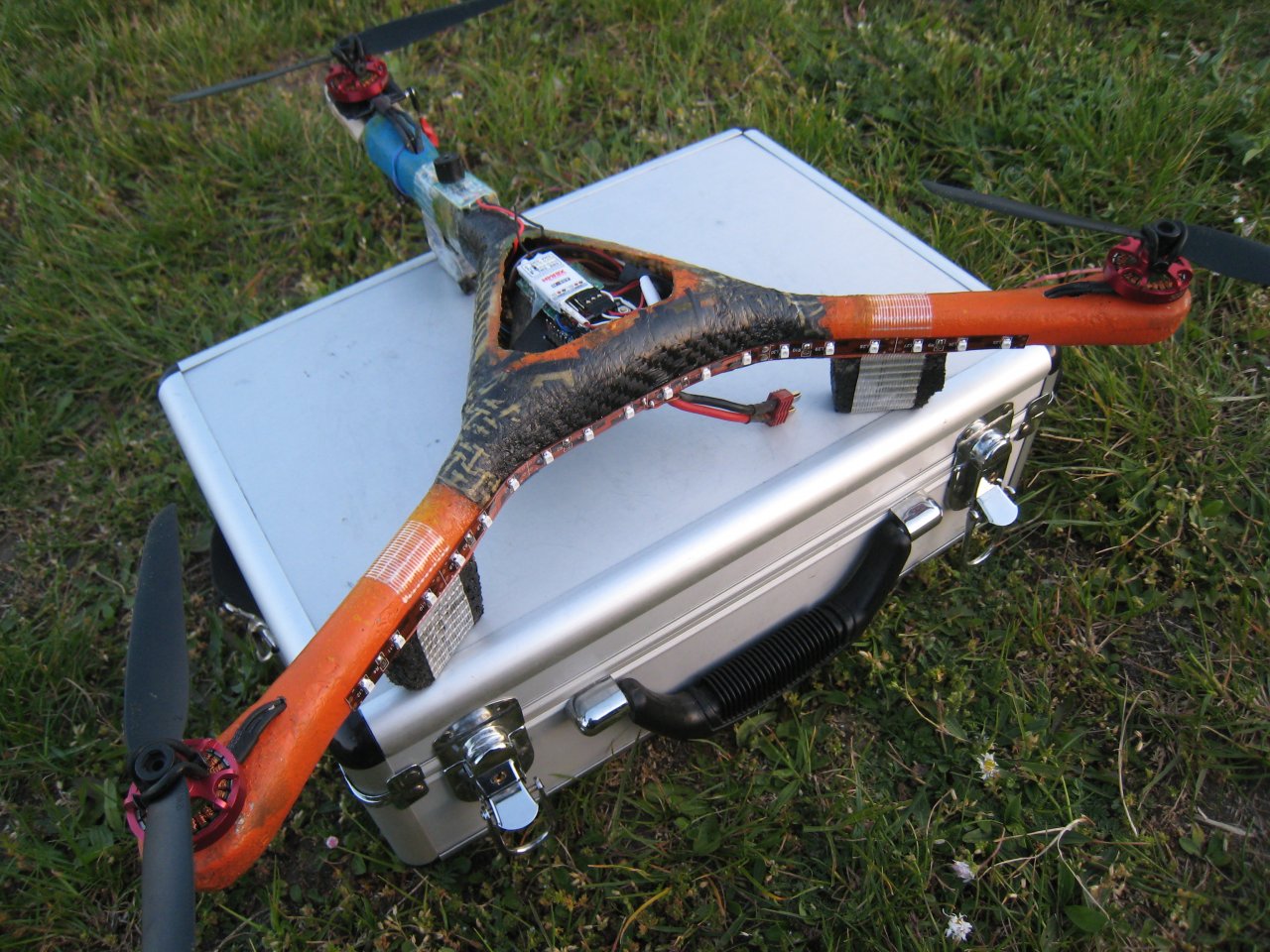
Every tech revolution has its glamorous origin story, and then it has the real one. The real one usually involves cheap parts, burned fingers, a mysterious buzzing noise, and a person in a garage saying, “Well, that definitely wasn’t supposed to happen.” The rise of the multicopter fits that pattern perfectly. Today, drones can hover like camera cranes, zip through forests in FPV races, inspect bridges, and map fields with the confidence of a caffeinated dragonfly. But before sleek consumer quadcopters became normal, multicopters were a glorious mash-up of hobby RC culture, open-source tinkering, and one particularly clever hack involving Nintendo Wii parts.
That hack became MultiWii, an open-source flight controller project that helped transform multicopters from an experimental curiosity into something hobbyists could actually build, tune, crash, repair, and fly again. If modern drones are the polished graduates, MultiWii was the scrappy kid in the workshop with solder on its sleeves and big ideas in its head. Its beginnings tell the story of how the multicopter scene became practical, accessible, and wildly influential.
What Makes Multicopters Different?
A multicopter is an aircraft that uses multiple rotors to generate lift and control movement. Instead of relying on helicopter-style mechanical complexity like swashplates, variable-pitch linkages, and tail rotor assemblies, multicopters steer mostly by changing the speed of their motors. That sounds simple because, frankly, compared with traditional helicopters, it is simple. Not easy, mind you. Just simpler in hardware and much trickier in software.
That tradeoff is the heart of the multicopter story. Mechanically, these machines are elegant. Four arms, four motors, four propellers, and a frame can be enough for a basic quadcopter. Tricopters, hexacopters, octocopters, and oddball layouts like Y4 and Y6 followed similar logic. Fewer moving mechanical parts meant lower cost, easier repairs, and more room for experimentation. But it also meant the aircraft needed constant, fast electronic correction to stay level. A multicopter is always making tiny adjustments. It does not so much “rest in the air” as negotiate a truce with gravity about a thousand times per minute.
That is why flight controllers matter so much. Without fast sensor feedback and rapid motor corrections, a multicopter becomes less “precision aircraft” and more “confused blender with aspirations.”
Why the Timing Was Perfect for a Multicopter Boom
Multicopters did not suddenly appear because one person had a bright idea. The ingredients had been arriving for years. Small electric brushless motors became more useful for hobby aircraft. Lithium-polymer batteries packed serious power into lighter packs. Electronic speed controllers, or ESCs, gave builders a way to command those motors precisely. Meanwhile, sensors that once felt exotic started getting smaller and cheaper thanks to the consumer electronics boom.
This convergence mattered. A multicopter is basically a group project involving motors, batteries, sensors, firmware, radio control, and a frame that hopefully remains in one piece. Earlier generations of hobbyists could build flying machines, but the parts were either too expensive, too heavy, or too awkward for widespread experimentation. By the late 2000s and early 2010s, the equation changed. Suddenly, enough off-the-shelf parts existed to make small electric multicopters practical for regular builders, not just research labs or deep-pocketed specialists.
The Sensor Breakthrough Hidden in Plain Sight
One of the funniest twists in this whole story is that an important building block of early multicopters came from a game accessory. The Nintendo Wii MotionPlus contained gyroscopes that clever hobbyists realized could be repurposed. In an era when dedicated inertial sensing hardware could still feel pricey or niche, the Wii ecosystem accidentally handed experimenters a low-cost path into motion sensing.
That mattered because a multicopter lives and dies by orientation awareness. It needs to know whether it is rolling left, pitching forward, or yawing off into nonsense. Gyroscopes measure rotational motion, while accelerometers help estimate tilt and movement relative to gravity. Put those together in an IMU, and the aircraft can begin to understand its attitude. Pair that with decent code, and you are not just throwing parts into the sky anymore. You are building a feedback system.
Research Proved It, Hobbyists Democratized It
Long before multicopters became common in backyards and parks, quadrotors had already been used in research. Universities and labs explored quadrotor dynamics, control laws, navigation, and autonomous flight. So it would be wrong to say MultiWii invented multicopters. It did not. What MultiWii did was arguably more important for hobby history: it democratized them. It took ideas that had existed in academic and professional settings and helped turn them into something makers could build on kitchen tables with Arduino boards, salvaged sensors, and a stubborn refusal to quit.
How MultiWii Was Born
The origin of MultiWii has become maker folklore for good reason. The project is associated with Alexandre Dubus, known as Alexinparis, who used the sensor package from a Nintendo Wii MotionPlus and built control firmware around an Arduino Pro Mini. That combination gave hobbyists a practical route to a working multicopter flight controller. The name itself tells the story: MultiWii was a multicopter controller with Wii-derived sensor roots.
It was a hacker’s solution in the best sense of the word. It was affordable, clever, open, and immediately useful. You did not need aerospace-grade hardware. You needed patience, some soldering skill, enough courage to wire up a board that looked mildly suspicious, and the willingness to tune software until the machine stopped trying to interpret “hover” as “dramatic sideways exit.”
From Wii MotionPlus to Flying Platform
The earliest MultiWii spirit was wonderfully direct: take a device meant for game motion tracking, extract value from its gyros, combine it with Arduino-friendly code, and use it to stabilize an aircraft. Hobbyists soon expanded beyond scavenged Wii parts and began using broader IMU options as sensor boards matured. But the original idea remained the same. The controller read motion data, estimated the aircraft’s attitude, and adjusted motor outputs to keep the craft under control.
That sounds neat and orderly on paper. In practice, it was a festival of calibration, vibration problems, wiring quirks, and enough PID tuning to make people question their life choices. Yet that struggle was part of the appeal. MultiWii was not a sealed appliance. It was a platform people could understand and modify. If something drifted, oscillated, or flipped, you could dig into the code and settings rather than simply glare at a black box.
A Controller Board for More Than Just Quadcopters
Another reason MultiWii stood out was flexibility. It was not locked to one airframe. Hobbyists used it for bi-, tri-, quad-, hex-, octo-, Y4-, and Y6-style configurations. That openness fed experimentation. Some builders wanted a practical quadcopter. Others preferred tricopters for their character and yaw mechanics. Others liked piling on motors because more props somehow felt like more authority, which is a very hobbyist way to solve a problem.
In short, MultiWii did not just support one type of flying machine. It encouraged a whole ecosystem of layouts and personal preferences. That helped multicopters become a category instead of a single fad.
Why MultiWii Mattered So Much
To understand MultiWii’s importance, you have to remember what hobbyists wanted at the time. They did not just want a drone. They wanted a machine they could build. They wanted to learn how stabilization worked. They wanted a path into inertial sensing, control loops, ESC timing, receiver inputs, and frame design. MultiWii gave them that path.
It also arrived at the perfect cultural moment. Open-source hardware and maker culture were thriving. Arduino lowered the barrier to embedded development. Forums turned individual tinkering into community knowledge. If one person solved a sensor issue or discovered better tuning values, hundreds of others could benefit. MultiWii grew in exactly that environment: not as a finished consumer product, but as a community-built ladder into flight control.
The Joy of Software You Could Actually Touch
One of MultiWii’s great strengths was transparency. The code was something enthusiasts could inspect, configure, and adapt. That is a huge deal in aviation-adjacent hobby work. A machine that reacts violently to small mistakes becomes less intimidating when its logic is visible. Builders could learn how sensor fusion worked, how receiver commands translated into motor mixes, and how tuning values affected behavior.
There is also a deeper reason that mattered. Open software does more than lower cost. It transfers confidence. When a project invites you to poke around under the hood, you become less of a consumer and more of a participant. MultiWii taught many people not just how to fly a multicopter, but how a multicopter thinks.
MultiWii Serial Protocol and Lasting Influence
MultiWii’s influence did not stop at early flight stabilization. The project also helped establish the MultiWii Serial Protocol, or MSP, which became a long-lived interface for configurators, telemetry, and communication between flight systems and external tools. In hobby tech, that kind of legacy matters. A project may fade from the spotlight while still leaving behind protocols, ideas, and habits that later systems inherit.
That is exactly what happened. As the ecosystem evolved, later firmware families such as Baseflight, Cleanflight, Betaflight, and iNav built on concepts that emerged during the MultiWii era. Hardware got faster. Sensors improved. Software became cleaner, more specialized, and often more performance-focused. But MultiWii’s DNA stayed visible in the culture of open tuning, modular sensors, configurable layouts, and community-driven flight stacks.
The Real Early Multicopter Experience
Modern pilots are spoiled, and honestly, good for them. Today you can buy a polished quadcopter with excellent stabilization, GPS features, return-to-home logic, and a camera that shoots footage prettier than some vacation brochures. Early MultiWii-era multicopters were more like partnerships with chaos.
You built the frame yourself or assembled parts from several vendors. You worried about vibration damping. You flashed firmware. You calibrated sensors. You checked motor direction, then checked it again because getting one prop backward is a classic hobby tradition. You tuned PIDs by test flights that often looked less like “flight testing” and more like “public negotiation with an unstable coffee table.”
And yet, when it worked, it felt magical. A pile of electronics, aluminum, carbon, foam, zip ties, and optimism would rise into a stable hover because your code and wiring had finally agreed to cooperate. That sensation hooked people. It made multicopters feel less like gadgets and more like earned achievements.
Crashes Were Part of the Curriculum
Let’s not romanticize too much. Early multicopter building involved crashes. Many crashes. Some were dramatic. Some were humble little “tip-overs with attitude.” But failure was educational. Builders learned about center of gravity, frame resonance, prop balance, motor mixing, radio endpoints, and sensor mounting because the aircraft taught those lessons with great enthusiasm.
MultiWii fit that world perfectly because it was built for people who expected to iterate. The project did not assume perfection. It assumed tinkering. That made it resilient as a community tool.
From Garage Hack to Drone Era
As multicopters became easier to build and buy, they moved from workshop curiosity to mainstream technology. Consumer drones exploded in popularity. Research expanded. Commercial uses multiplied. Regulators, including the FAA, responded with formal frameworks for small unmanned aircraft as the field matured. That broader drone era was bigger than MultiWii, of course, but MultiWii helped prepare the hobby culture that fed it.
Its legacy lives on in the idea that flight control should be understandable, configurable, and open to improvement. Even if many pilots today fly systems that are far more advanced than an early Arduino-based setup, the mindset remains familiar: measure accurately, tune intelligently, share knowledge, improve the stack, and never trust a propeller label without checking it yourself.
What Modern Builders Can Still Learn from MultiWii
MultiWii’s story still matters because it reminds us that innovation is often embarrassingly practical. It is easy to imagine technology history as a parade of polished breakthroughs. In reality, many turning points come from people reusing available parts in imaginative ways. MultiWii did not wait for perfect hardware. It took the hardware that existed, wrote code around it, and made the result useful.
That lesson still applies. Whether you are building drones, robots, IoT devices, or something too weird to explain at family dinner, the MultiWii approach is powerful: start with accessible components, understand the system deeply, share what works, and let the community improve it. Fancy tools are nice. Cleverness ages better.
Experiences From the Bench and the Field
If you want to understand the soul of the MultiWii era, do not picture a glossy drone ad with cinematic mountains and a guy wearing sunglasses indoors. Picture a workbench. There is probably a half-finished frame on it. One arm is slightly crooked. Three propellers match and one definitely came from a different bag. There is an Arduino board, a sensor breakout, a nest of servo wires, and a coffee mug that should not be that close to the soldering iron but somehow always is.
The experience of building a MultiWii multicopter was intensely personal because every aircraft reflected its builder. One person used wood arms because they were cheap and easy to drill. Another used aluminum because it looked serious. Someone else used zip ties with such confidence that the zip ties became a structural philosophy. That was part of the fun. You were not buying a finished identity off a shelf. You were assembling your own flying argument.
Then came the first power-up. This was the moment where your confidence met reality. The motors beeped. The board initialized. You armed the controller, stepped back slightly farther than necessary, and advanced the throttle with the caution of someone defusing a tiny airborne lawnmower. Maybe it lifted cleanly. More often it skittered, leaned, buzzed, and informed you that your “careful engineering” still had a few emotional issues.
But progress happened in layers. First, you got the sensors talking. Then you got the motor directions right. Then you discovered that “right” and “confidently right” are very different things. Then you learned how much vibration could confuse a controller. Then you learned that moving one battery strap could fix a balance problem you had been blaming on software for two days. MultiWii taught patience because flight was never just one problem. It was a stack of small truths waiting to be discovered.
The best moments were always a little absurd. A craft built from repurposed gaming hardware, hobby motors, handmade brackets, and code from an online community would suddenly hover in front of you like it had every right to be there. That first stable hover felt less like consumer convenience and more like witness testimony. Yes, the math worked. Yes, the hardware worked. Yes, this ridiculous machine actually flies.
Those experiences built loyalty. People remember MultiWii not only because of what it did for multicopters technically, but because of how it made them feel as builders. It rewarded curiosity. It tolerated experimentation. It turned mistakes into lessons and lessons into better aircraft. And when a build finally behaved, it gave the pilot a rare kind of satisfaction: not the satisfaction of opening a box, but of understanding a system well enough to make it rise.
That is why the project still carries affection in drone history. MultiWii was imperfect, fiddly, and occasionally determined to embarrass you in public. It was also empowering. It gave hobbyists a way into flight control at the exact moment the parts, the community, and the ambition were all ready. In the history of multicopters, that is not a footnote. That is a launch point.
Conclusion
Multicopters became mainstream through a mix of better sensors, cheaper electronics, stronger software, and a growing appetite for small, agile flying machines. But the MultiWii chapter remains one of the most memorable because it captured the transition from experimental build logs to a real hobby movement. It showed that multicopters could be open, modifiable, and achievable for regular builders. More than that, it showed that a clever hack could shape an entire category.
So yes, today’s drones are smarter, smoother, and much better dressed. But a big part of their family tree still leads back to an Arduino, a Wii accessory, some fearless code, and a community that believed a homemade multicopter could do more than wobble itself into legend.