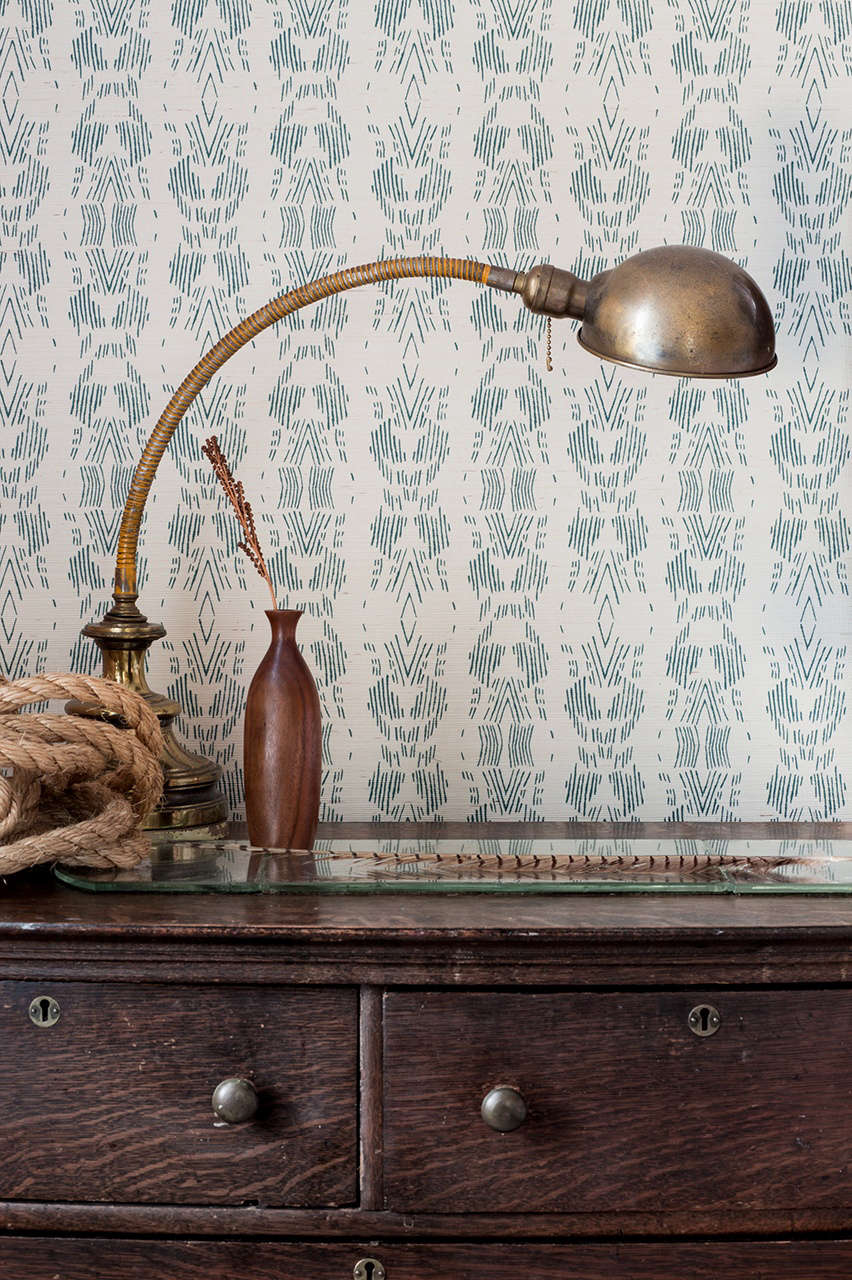
Some wallpapers shout. Some wallpapers whisper. And then there is hand-drawn wallpaper from a New England studio: the kind that quietly walks into a room, adjusts the lighting, pours itself tea, and makes the whole space feel more considered. “Markings and Line Work: Hand-Drawn Wallpaper from a New England Studio” is not just a poetic title; it captures a design mood that has been steadily gaining admiration among homeowners, interior designers, and lovers of artisan wallcoverings.
At the center of this story is Fayce Textiles, a Massachusetts-based studio led by designer Kim Rosen. Her wallpaper work is rooted in delicate hand-drawn line work, regional memory, and the textures of New England: weathered barn boards, coastal rocks, old factory facades, plaster, lath, farmlands, pine silhouettes, and the subtle geometry of tailored clothing. The result is wallpaper that feels modern but not cold, rustic but not kitschy, and artistic without looking like it is trying too hard.
In a world full of digital prints and instant decor trends, hand-drawn wallpaper brings back something wonderfully human. The lines are not sterile. The patterns have rhythm, hesitation, movement, and mood. They remind us that design does not always need fireworks; sometimes a pencil mark, repeated thoughtfully, can transform a room.
What Makes Hand-Drawn Wallpaper So Special?
Hand-drawn wallpaper begins with the artist’s hand, not a software template. That matters. A hand-drawn line carries personality. It can be slightly uneven, wonderfully expressive, and full of quiet energy. Unlike mass-market wallpaper that often depends on predictable repeats or oversized novelty prints, artisan wallpaper can feel like a conversation between wall, room, and maker.
Kim Rosen’s work for Fayce Textiles shows how line work can become atmosphere. Her patterns are not literal illustrations of New England; they are interpretations. Instead of drawing a barn, she might translate the feeling of weathered wood into dashes, stripes, grids, or soft irregular marks. Instead of painting the coastline like a postcard, she might borrow the movement of waves against stone and turn that into a flowing repeat. This is where the magic happens: the wallpaper does not scream “theme room.” It simply adds depth.
That is a key reason hand-drawn wallpaper works so well in modern interiors. It gives a space soul without locking it into one style. A quiet linear pattern can sit comfortably beside shaker furniture, midcentury chairs, linen curtains, brass lighting, or even a very opinionated vintage rug. Good wallpaper knows how to get along with others.
The New England Influence: Weather, Architecture, and Honest Materials
New England design has always had a complicated relationship with simplicity. On one hand, the region is known for restraint: painted wood, practical forms, old houses, and no-nonsense craftsmanship. On the other hand, it has rich visual texture everywhere you look. Clapboard siding ages. Stone walls shift. Mill buildings carry grids of windows and brick. Winter fields flatten into soft horizontal bands. Pine trees draw dark lines against pale skies.
Fayce Textiles taps into this layered regional language. The studio’s patterns often feel as if they were built from small observations: a lapel edge, a pleat, a pocket line, a reed by the water, a shadow on plaster. This gives the wallpaper a strong sense of place without becoming decorative tourism. You do not need to live in Massachusetts, Maine, Vermont, or Rhode Island to enjoy it. The patterns travel well because they are based on texture, memory, and proportion rather than obvious motifs.
From Illustration to Interior Design
Kim Rosen’s background as an illustrator is important to understanding the studio’s appeal. Illustration teaches a person how to simplify an idea without flattening it. A good illustrator can take a complex scene and reduce it to the essential marks. In wallpaper design, that skill is gold. Too much detail can exhaust a wall. Too little can look forgettable. Fayce’s hand-drawn wallcoverings often land in the sweet spot: enough pattern to create movement, enough restraint to let a room breathe.
This is especially useful for homeowners who love wallpaper but fear commitment. A pattern such as a fine stripe, a loose grid, or a botanical-inspired abstraction can feel expressive without overwhelming the sofa, artwork, or nervous houseguest who still has flashbacks to grandma’s orange kitchen wallpaper.
Pattern Names That Tell a Story
One charming aspect of Fayce Textiles is how the pattern names point toward their inspiration. Names such as Pines, Phragmites, Pleat, Lapel, Tailor, Shadow, Flora, Grid, Line, and Kingdom suggest both natural and constructed worlds. That duality is part of the brand’s personality. A wallpaper pattern can come from a winter landscape, a field reed, a garment detail, or an architectural surface. In other words, inspiration is allowed to be humble.
That humility is refreshing. Interior design can sometimes behave as if every object needs a dramatic origin story involving a villa, a duchess, and possibly a horse. Here, the sources are more grounded: fabric folds, coastal stone, old buildings, tree lines, and the marks of everyday life. It makes the final work feel lived-in from the start.
Pleat, Lapel, and Tailor: Fashion Meets the Wall
Patterns inspired by tailoring show how a small visual reference can become a room-wide rhythm. Pleats suggest movement and folded geometry. Lapels suggest structure and a clean edge. Tailor-like stripes can feel crisp, masculine, soft, or classic depending on color and material. These designs are particularly good for rooms that need order but not boredom: studies, entryways, dining rooms, bedrooms, powder rooms, and narrow hallways.
Used well, a tailored wallpaper can do for a room what a great blazer does for a simple outfit. It sharpens everything. It says, “Yes, I planned this,” even if the laundry basket just outside the frame tells a different story.
Pines, Phragmites, and Flora: Nature Without the Postcard
Nature-inspired wallpaper is everywhere, but not all botanical wallpaper has to involve giant flowers climbing the walls like they are taking over civilization. Fayce’s nature references tend to be more abstract and atmospheric. Pines can suggest a distant winter tree line. Phragmites can evoke reeds, fields, and breezy edges. Flora can bring organic softness without turning the room into a greenhouse.
This subtle approach works beautifully in homes where natural materials already play a big role: oak floors, linen bedding, stone counters, wool rugs, handmade ceramics, or antique wood furniture. The wallpaper adds another layer of organic texture rather than competing for attention.
Materials, Inks, and the Feel of the Surface
One reason artisan wallcoverings feel different is that the surface matters. Fayce wallpapers include options printed on non-woven fiber, clay-coated paper, grasscloth, and embroidered grounds, depending on the pattern. Some grounds have an ultra-matte texture that resembles handmade paper. Others offer the natural depth of sisal grasscloth or the tactile dimension of embroidery.
Eco-conscious production is also part of the conversation. Many of Fayce’s wallpapers are printed with eco-friendly or earth-friendly water-based inks, and product specifications often note made-to-order production, made-in-the-USA manufacturing, custom colors, commercial-grade options, and practical care guidance. These details matter for designers and homeowners who want beauty but also want to understand what they are putting on their walls.
Wallpaper is no longer just a decorative skin. It is a material choice. Texture affects light. Ink affects color depth. Paper ground affects how refined, rustic, matte, or dimensional the final installation feels. A hand-drawn pattern on a flat ground can look crisp and graphic. The same pattern on grasscloth can become warmer, more layered, and slightly imperfect in the best possible way.
Where Hand-Drawn Wallpaper Works Best
Hand-drawn wallpaper can work in almost any room, but it shines brightest when chosen with scale and mood in mind. A large room can handle a stronger repeat or deeper color. A small space, such as a powder room or entry, can become unforgettable with a bolder pattern. A bedroom usually benefits from softer tones and gentler movement. A home office may need line work that feels focused but not visually noisy.
Powder Rooms: The Small-Space Superstar
If wallpaper had a favorite room, it might be the powder room. Small rooms can take more personality because visitors do not spend hours there. A hand-drawn wallpaper in a powder room can feel like a tiny art installation. Add a simple mirror, a warm sconce, and a stone or wood accent, and suddenly the smallest room in the house has main-character energy.
Bedrooms: Quiet Pattern, Better Sleep
In bedrooms, hand-drawn line work is most effective when it feels restful. Soft neutrals, muted teals, clay tones, charcoal, cream, and pale gray can create a calm backdrop. The trick is to choose a pattern that adds texture without making the wall feel busy. Fine lines, organic spacing, and low-contrast palettes are ideal for creating a bedroom that feels layered but still serene.
Entryways and Hallways: First Impressions With Taste
Entryways are perfect for artisan wallpaper because they set the tone for the entire home. A New England-inspired line pattern can create a sense of craft and welcome before anyone even takes off their shoes. Hallways also benefit from vertical or linear designs because they can visually guide the eye and make transitional spaces feel intentional rather than forgotten.
How to Style Hand-Drawn Wallpaper Without Overdoing It
The best way to style hand-drawn wallpaper is to let it lead without forcing it to perform a solo concert. Pair it with materials that echo its honesty: linen, wool, unfinished or lightly finished wood, matte ceramics, aged brass, blackened metal, stone, rattan, or simple cotton. Avoid surrounding it with too many competing patterns unless you are deliberately going for a layered maximalist look.
For a softer room, combine a cream or pale gray wallpaper with natural oak, warm white paint, and linen upholstery. For a moodier effect, try charcoal line work with dark wood, bronze lighting, and ivory textiles. For a coastal New England feeling that does not involve anchors or seashells, choose a muted blue or teal pattern with white trim, woven shades, and a vintage landscape painting.
The goal is not to match everything. The goal is to create a room where each element feels like it belongs to the same conversation. Hand-drawn wallpaper is excellent at starting that conversation.
Why This Style Feels So Current
Wallpaper has been enjoying a major comeback, but the most interesting direction is not simply “more pattern.” It is more personality. Designers and homeowners are looking for wallcoverings that bring texture, craft, and story into a space. That is why hand-painted looks, textured wallcoverings, grasscloth, murals, botanical abstractions, and artisan-made patterns keep appearing in design conversations.
After years of plain white walls and fast decor trends, people want homes that feel specific. Hand-drawn wallpaper answers that desire because it brings evidence of a person’s eye and hand into the room. It feels slower. It feels made. It has a point of view.
Fayce Textiles fits into this larger movement while keeping its own identity. The studio does not rely on loud novelty. Its strength is restraint, proportion, and the ability to turn small marks into atmosphere. That is why the work feels equally at home in a farmhouse, a city apartment, a modern cottage, or a carefully edited traditional home.
Buying Considerations Before Choosing Artisan Wallpaper
Before buying hand-drawn wallpaper, measure carefully and confirm the repeat, width, minimum order quantity, lead time, and whether the paper arrives trimmed or untrimmed. Many premium wallpapers are made to order, which is wonderful for quality but not ideal for last-minute decorating emergencies. If your dinner party is Saturday and your wall is still bare on Friday, wallpaper is not the problem; time management is.
Always order a sample first. A pattern that looks quiet online may have more movement in person. A color that appears warm on a screen may shift cooler in northern light. Grasscloth and textured papers can vary naturally, which is part of their beauty, but it also means you should know what you are getting before committing to an entire room.
For installation, consider hiring a professional, especially with premium papers, grasscloth, or untrimmed rolls. A skilled installer understands seams, pattern matching, wall preparation, and paste requirements. Beautiful wallpaper deserves a smooth wall and a steady hand. The “I watched one video, how hard can it be?” approach can work for peel-and-stick panels, but artisan wallcovering is less forgiving.
Experience Section: Living With Hand-Drawn Wallpaper
There is a different kind of pleasure in living with hand-drawn wallpaper. Paint changes a wall’s color, but wallpaper changes the way a room behaves. Line work catches the eye at different times of day. Morning light may make a pale pattern look almost invisible. By late afternoon, the same wall can reveal shadows, texture, and movement you did not notice before. It is a slow reveal, and that is part of the charm.
Imagine walking into a small reading room with a soft charcoal linear wallpaper. At first, the room feels calm. Then you notice that the marks are not perfectly mechanical. There is a tiny looseness to them, a rhythm that feels drawn rather than manufactured. A wooden chair sits in the corner. A cream shade filters the light. The wallpaper does not steal attention from the books or the furniture; it makes them feel more settled. The room feels designed, but not decorated to death.
In a dining nook, a nature-inspired pattern can make even a simple breakfast feel more intentional. Coffee, toast, morning emails, and a wall that quietly suggests reeds, fields, or distant trees: that is a pretty good start to the day. The wallpaper does not need to be bright to be memorable. In fact, the best hand-drawn designs often succeed because they leave space for imagination. They give your brain just enough information to wander.
There is also emotional value in choosing wallpaper from a small studio. It feels less anonymous. Knowing that a pattern began as a drawing, inspired by a specific region and refined through a designer’s eye, gives the room a backstory. Guests may not know the details, but they often sense the difference. They may say the room feels warm, grounded, interesting, or peaceful. That is the quiet power of good line work.
For homeowners who are nervous about pattern, hand-drawn wallpaper can be a gentle first step. Start with one wall, a powder room, a hallway, or the back of built-in shelves. Choose a color that already exists elsewhere in the home. Repeat one material from the room, such as linen, wood, or black metal, to make the wallpaper feel connected. Then let the pattern do what it does best: add character without demanding applause.
Over time, the wallpaper becomes part of daily life. You stop seeing it as a new purchase and begin experiencing it as atmosphere. It is behind birthday candles, quiet dinners, winter mornings, rainy afternoons, and ordinary Tuesdays. That longevity is exactly why artisan wallpaper matters. It is not only surface decoration. It becomes part of the home’s memory.
Conclusion: Small Marks, Big Mood
“Markings and Line Work: Hand-Drawn Wallpaper from a New England Studio” is a reminder that walls do not have to be blank to feel calm, and patterns do not have to be loud to be interesting. Fayce Textiles and Kim Rosen’s design approach show how humble inspirations—factory facades, coastal rocks, fields, pine trees, garment details, and weathered surfaces—can become refined wallcoverings with real staying power.
Hand-drawn wallpaper works because it balances art and utility. It gives a room movement, texture, and story while still functioning as a livable background. Whether used in a powder room, bedroom, entryway, dining nook, or study, this style brings warmth and individuality to interiors that might otherwise feel too polished or too plain.
In the end, the beauty of hand-drawn wallpaper is not just in the pattern. It is in the evidence of attention. Every line suggests someone looked closely, drew carefully, and trusted small marks to do meaningful work. That is design with patience, and in a fast world, patience looks surprisingly stylish.