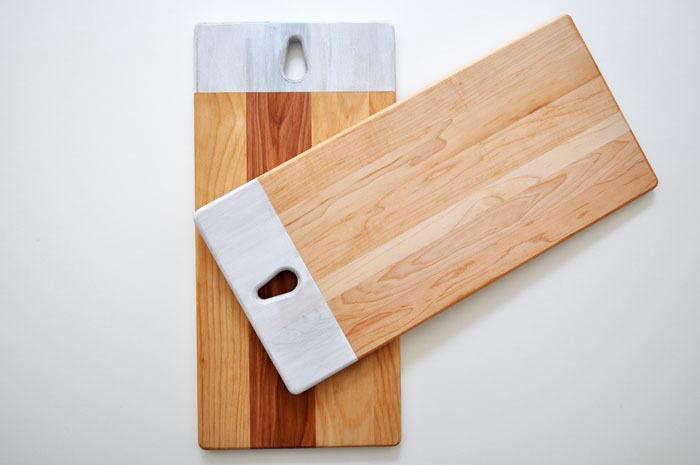
The Maple Cutting Board 1.4 is the kind of kitchen object that quietly judges your plastic board from across the counter. Simple, slim, and made for everyday prep, it belongs to that rare category of tools that can chop vegetables in the afternoon and look like a tiny design exhibit by dinner. It is not loud. It does not need silicone neon edges, built-in scales, Bluetooth, or a motivational quote about onions. It just shows up as a clean, slender maple cutting board with a light wood tone, a white milk-paint border, and a small hole for hanging on the wall.
That minimalist description is exactly why this board is interesting. In a market packed with oversized butcher blocks, dishwasher-safe plastic slabs, bamboo bundles, and boards shaped like every state except possibly Wyoming after a bad haircut, the Maple Cutting Board 1.4 goes the other direction. It is decorative without being precious, practical without looking industrial, and small enough to live in a real kitchen instead of a showroom pretending nobody ever spills coffee.
This review-style guide explores what makes a maple cutting board appealing, how a slim board like the Maple Cutting Board 1.4 fits into everyday cooking, what to know about care and food safety, and whether this kind of board deserves space in your kitchen. Spoiler: if you love simple design, natural materials, and tools that look better with honest use, maple makes a pretty convincing case.
What Is the Maple Cutting Board 1.4?
The Maple Cutting Board 1.4 is best understood as a design-forward wooden cutting board with practical kitchen DNA. The original product description presents it as a simple and slender cutting board made of maple or cherrywood, bordered by a strip of white milk paint, with a hole at the top so it can hang on a wall. That combination tells you almost everything about its personality: part prep board, part serving board, part “yes, I do have taste, thank you for noticing.”
The “1.4” in the name appears to identify the design model rather than a complicated technical specification. The overall impression is light, narrow, and intentionally minimal. This is not the giant end-grain butcher block you leave permanently on the counter because moving it feels like relocating a small coffee table. It is closer to an everyday board for slicing fruit, prepping herbs, serving bread, presenting cheese, or giving a kitchen wall a warmer, handmade touch.
In practical terms, the Maple Cutting Board 1.4 works best as a small-to-medium utility board. It is the board you reach for when the job is real but not dramatic: cutting a lemon, slicing a sandwich, prepping garnishes, serving crackers, or giving a few strawberries a dignified place to sit. For heavy-duty carving or large meal prep, a thicker butcher block may be better. For daily light prep and visual charm, this style makes a lot of sense.
Why Maple Is a Favorite Wood for Cutting Boards
Maple has earned its popularity in American kitchens because it balances durability, beauty, and usability. Hard maple, especially Northern hard rock maple, is commonly used in premium wooden cutting boards because it is dense enough to resist everyday wear but not so harsh that it feels like chopping on a sidewalk. That balance matters. A cutting board should be firm, stable, and smooth, but it should not punish your tools or turn basic prep into a wrist workout.
Maple’s pale, creamy color also helps it blend with many kitchen styles. It looks clean in modern spaces, warm in farmhouse kitchens, and quietly elegant in minimalist interiors. Unlike darker woods, maple shows its grain in a subtle way. It does not scream for attention; it politely raises its hand and then looks fantastic in natural light.
Another reason maple remains a trusted cutting board material is its closed-grain structure. In general, close-grained hardwoods are preferred for boards because they offer a smoother surface and are less likely to trap moisture than more open-grained woods. That does not make wood magical or maintenance-free, but it does make maple one of the more sensible choices for daily kitchen use. With proper washing, drying, and oiling, a maple board can age gracefully instead of turning into a warped kitchen fossil.
Design: Simple, Slender, and Wall-Worthy
The most distinctive part of the Maple Cutting Board 1.4 is not just the maple. It is the styling. The white milk-paint border gives the board a dipped, framed, or gallery-like appearance. In a world where many cutting boards look purely utilitarian, this one has a little personality. Not “I collect novelty aprons” personality. More like “I know where the good olive oil is kept.”
The hole at the top is a smart detail. Hanging storage is underrated, especially in smaller kitchens where cabinet space is treated like oceanfront property. A board that can hang on the wall stays accessible, dries more easily, and doubles as decor. That makes the Maple Cutting Board 1.4 especially attractive for apartment kitchens, open shelving, cottage-style kitchens, and anyone who enjoys the look of natural wood without committing to a massive butcher block.
The slender profile also changes how people use it. Thick boards feel permanent and serious. Slim boards feel flexible. You can move them from counter to table, use them as casual serving boards, hang them near the stove, or grab one quickly for a small prep job. The trade-off is that thinner boards generally require careful handling. They should not be soaked, run through high heat, or left wet on one side, because wood likes balance and dislikes being treated like a dinner plate.
Maple Cutting Board 1.4 vs. Thick Butcher Blocks
Comparing the Maple Cutting Board 1.4 to a thick butcher block is a bit like comparing a linen shirt to a winter coat. Both are useful, but they are not trying to solve the same problem. A thick maple butcher block is built for stability, repeated heavy prep, and long-term surface renewal. It may be reversible, edge-grain or end-grain, and substantial enough to stay put during demanding kitchen work.
The Maple Cutting Board 1.4 is more about lightness, convenience, and style. It is easier to lift, easier to store, and more natural as a serving piece. If you regularly prepare big roasts, break down large produce, or want a board that can be sanded and refreshed many times over decades, a thicker board is the safer investment. If you want a beautiful everyday board for smaller tasks and tabletop presentation, the Maple Cutting Board 1.4 has a more graceful footprint.
This is why many experienced home cooks keep more than one board. A larger board handles big prep sessions. A smaller maple board handles quick tasks, snacks, breakfast, fruit, bread, and serving. The smaller board often becomes the one used most frequently, because convenience wins more daily battles than kitchen ambition. Nobody wants to haul out a giant board just to slice an apple. That is how apples become “maybe later” fruit.
Edge Grain, End Grain, and What It Means for Buyers
Wooden cutting boards are often described as edge-grain or end-grain. Edge-grain boards show long strips of wood grain along the cutting surface. They are usually more affordable, lighter, and easier to maintain. End-grain boards expose the ends of the wood fibers, creating a checkerboard or brick-like pattern. They are often prized because the surface can be more forgiving and tends to show wear differently over time.
The Maple Cutting Board 1.4 appears to be a slim design board rather than a heavy end-grain butcher block. That places it closer to the world of light utility and serving boards. This is not a disadvantage; it is simply a different category. Edge-style and slim boards are excellent for everyday use when treated with care. They are not meant to be abused, soaked, overheated, or used as a substitute countertop during a culinary thunderstorm.
For shoppers, the key is to match the board to the job. Choose a thick end-grain board if you want a premium prep station. Choose a slim maple board if you value easy handling, attractive presentation, and quick access. The Maple Cutting Board 1.4 fits the second category beautifully.
Food Safety: What to Know Before Using Any Wood Board
Wooden cutting boards can be safe in home kitchens when cleaned and maintained properly. The most important rules are simple: wash after use, rinse well, dry thoroughly, and avoid cross-contamination. A wood board should not sit wet in the sink, take a long bubble bath, or go into the dishwasher unless the manufacturer specifically says it can. Most wooden boards dislike dishwashers with the passion of a cat dislikes surprise baths.
For everyday cleaning, warm water and mild dish soap are usually enough. Scrub the surface, rinse it clean, and dry it immediately with a towel. Then let it stand upright or hang so air can circulate around both sides. This drying step matters because moisture imbalance can lead to warping. A board left wet on one side may cup or twist over time, which is rude behavior from an otherwise charming object.
For stronger sanitation, food-safety guidance often recommends diluted unscented bleach solutions for cutting boards, especially after contact with high-risk foods. The exact dilution may vary by guidance source, so users should follow current local or manufacturer recommendations. The big idea is consistent: keep the board clean, avoid deep grooves and cracks, and replace or retire any board that becomes difficult to clean. A beautiful cutting board is not worth keeping if it has become a secret apartment complex for bacteria.
How to Care for a Maple Cutting Board
Care is where wooden boards separate the casual owners from the board whisperers. Fortunately, maintaining a maple cutting board is not hard. It just requires consistency. After each use, wash with mild soap and warm water. Dry immediately. Store upright or hang. Do not soak it. Do not leave it next to a sink puddle. Do not run it through the dishwasher and then act surprised when it comes out looking emotionally changed.
Oiling is the second major habit. Food-grade mineral oil is commonly recommended because it is stable, neutral, and does not turn rancid. Apply a light coat when the board looks dry or when water no longer beads on the surface. Let the oil absorb, then wipe away the excess. Some users also finish with a board cream made from mineral oil and beeswax, which adds a slightly more protective feel.
The white milk-paint border on the Maple Cutting Board 1.4 deserves a little extra awareness. Painted decorative edges should be treated gently. Avoid aggressive scrubbing on the painted area, and use the main wood surface for food prep. If the board is used heavily as a serving piece, wipe the border clean rather than soaking it. The goal is to let the board develop character without turning the painted edge into a distressed art project before its time.
Best Uses for the Maple Cutting Board 1.4
1. Everyday Light Prep
This board is ideal for quick prep tasks: slicing fruit, trimming herbs, preparing toast toppings, cutting a sandwich, or setting up ingredients for a small meal. Its slim profile makes it easy to grab, use, clean, and hang again.
2. Bread and Pastry Serving
Maple’s pale tone looks excellent with bread, pastries, biscuits, and breakfast spreads. The white border adds a neat visual frame, which makes even a basic loaf look like it has an agent and a publicist.
3. Cheese, Fruit, and Snack Boards
The Maple Cutting Board 1.4 can work beautifully as a small serving board. Add cheese, grapes, nuts, crackers, or sliced apples, and suddenly “I found things in the fridge” becomes “rustic entertaining.” That is the power of a good board.
4. Wall Display
Because it includes a hanging hole, this board can live in plain sight. It adds warmth to a kitchen wall and makes storage feel intentional. For small kitchens, that combination is practical gold.
5. Gift Giving
A maple cutting board with a minimalist design makes a strong gift for new homeowners, newlyweds, design lovers, food enthusiasts, or anyone whose current cutting board looks like it survived a raccoon incident.
What to Consider Before Buying
The Maple Cutting Board 1.4 is best for people who value design as much as function. If you want a rugged, heavy-duty board for serious daily prep, consider a thicker maple butcher block. If you want a light, attractive, hangable board that can handle everyday tasks and look good doing it, this style is appealing.
Also consider size. A slender board is convenient, but it may feel limiting if you regularly prep large meals. Counter space matters too. A smaller board is excellent for compact kitchens, but cooks with generous counters may prefer a larger work surface. The most practical solution is often a two-board system: one large board for big prep and one smaller maple board for quick work and serving.
Finally, think about maintenance. Wood rewards care. If you enjoy simple rituals like oiling a board and storing it properly, maple is a pleasure. If you want something you can toss into a dishwasher every night, a wooden board may not be your soulmate. It may still be attractive, but it will not enjoy your lifestyle choices.
Pros and Cons of the Maple Cutting Board 1.4
Pros
- Clean, minimalist design that works as both a prep board and decor
- Maple offers a durable, attractive cutting surface for light daily use
- Slender shape is easy to move, hang, and store
- White milk-paint border adds visual character
- Good choice for serving bread, cheese, fruit, snacks, and small bites
Cons
- Not ideal for heavy-duty prep compared with thick butcher blocks
- Requires hand-washing, drying, and occasional oiling
- Decorative painted border should be treated carefully
- Smaller work area may not suit large meal preparation
Real-World Experience: Living With a Maple Cutting Board 1.4
The first thing you notice when using a board like the Maple Cutting Board 1.4 is how often you reach for it. Large boards are wonderful when you need them, but they can feel like a production. A slender maple board is different. It is already hanging nearby, looking useful and smug. You take it down to slice a pear, then again for toast, then again for herbs, and by the end of the week it has quietly become part of your routine.
In daily use, the appeal is convenience. The board is light enough to carry from counter to table and attractive enough that you do not need to transfer everything to another plate. This is especially helpful for casual meals. A few slices of bread, a small bowl of olive oil, some cheese, and fruit look intentional on maple. Put the same items on a random plate and it says “snack.” Put them on a maple board and it says “European countryside, but with Wi-Fi.”
The hanging hole is also more useful than it sounds. When a board hangs on the wall, it dries better and stays visible. Visibility matters because hidden tools become forgotten tools. A board stored under three baking sheets and a rogue pot lid may as well be in another time zone. Hanging storage turns it into a daily object, not a special-occasion prop.
Maintenance becomes part of the experience. After washing, drying the board right away feels less like a chore and more like taking care of a favorite tool. Oiling it every now and then gives the maple a richer tone, and the surface feels smoother afterward. It is oddly satisfying, like watering a plant that cannot guilt you by wilting dramatically.
There are a few habits to learn. Do not leave wet citrus halves sitting on the board for a long time. Do not let it rest flat on a damp countertop. Do not scrub the painted border as though you are trying to erase a parking ticket. Treat the decorative edge as part of the board’s design, not as the main work zone. The maple surface is where the practical action belongs.
Over time, small marks may appear. That is not failure; that is a wooden board becoming yours. A maple board that is used, cleaned, dried, and oiled develops a soft patina. It looks less like a product photo and more like a kitchen companion. The best kitchen tools do not stay perfect forever. They become familiar. They pick up history. They remind you of breakfasts, quick lunches, small parties, and the time you thought arranging crackers in a spiral was a personality trait.
The Maple Cutting Board 1.4 is not the only cutting board a serious home cook may need, but it may become the most charming one. It suits people who cook in real kitchens, not imaginary kitchens with endless counters and zero crumbs. It is practical enough for daily tasks, stylish enough for serving, and simple enough to avoid feeling trendy. That combination is harder to find than it should be.
Conclusion
The Maple Cutting Board 1.4 is a thoughtful reminder that kitchen tools can be useful, beautiful, and pleasantly uncomplicated. Its slim maple or cherrywood construction, white milk-paint border, and hanging hole make it more than a basic cutting surface. It is a small design object with real kitchen purpose.
For heavy-duty prep, a thick maple butcher block still has the advantage. But for everyday light cutting, serving, display, and small-space living, the Maple Cutting Board 1.4 hits a sweet spot. It offers the warmth of natural wood, the convenience of a lightweight board, and the kind of visual charm that makes a kitchen feel more personal.
The best way to think about it is this: not every board needs to be a tank. Some boards should be graceful, useful, and ready to hang beside your favorite pan. The Maple Cutting Board 1.4 is exactly that. Treat it well, keep it dry, oil it when needed, and it can become one of those quiet kitchen pieces you use constantly without fully realizing how much you rely on it.