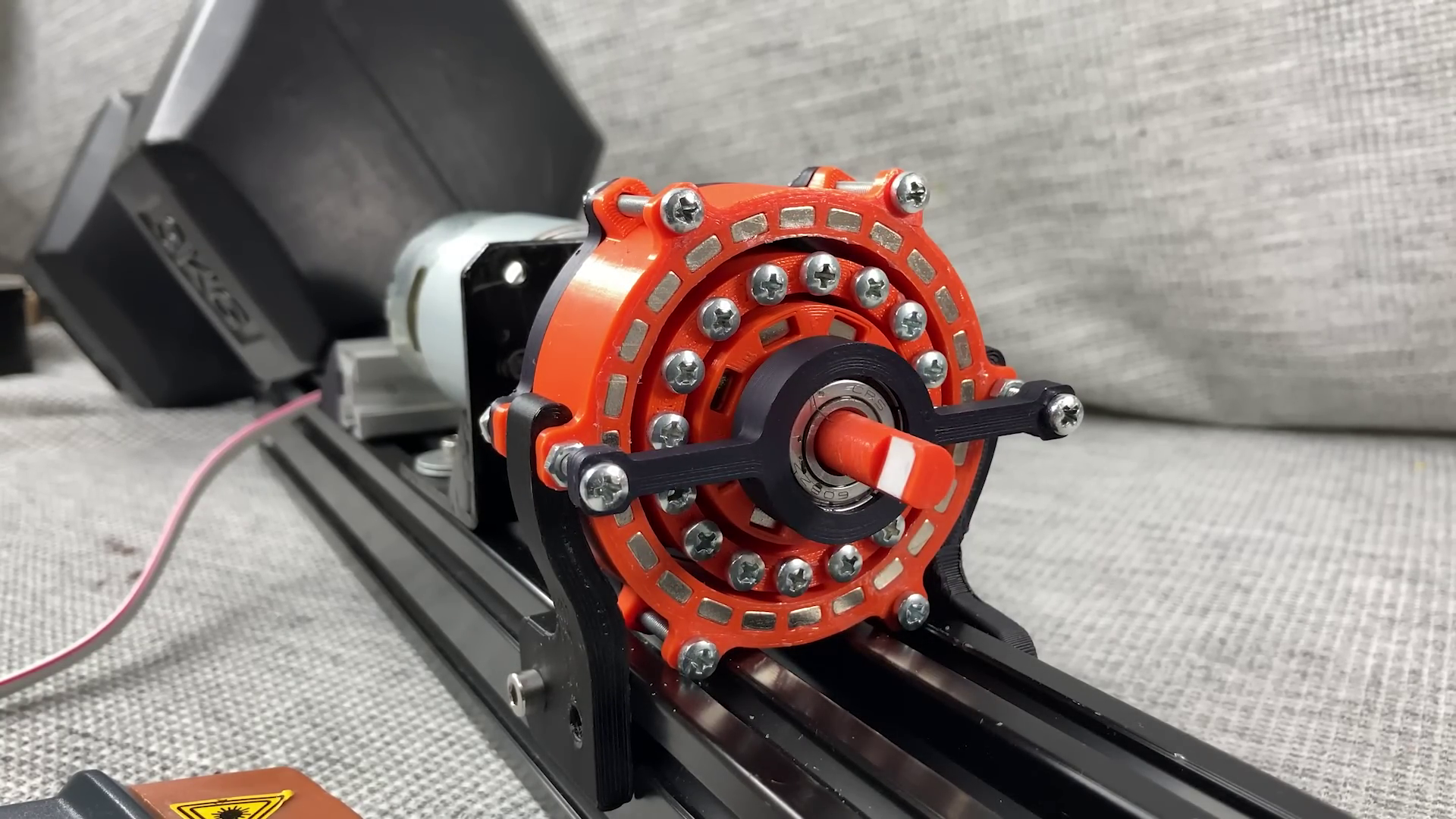
A magnetic gearbox sounds like something a science-fiction mechanic would install right before saying, “Trust me, this baby runs on invisible forces.” In reality, it is a real and fascinating power transmission technology. Instead of using metal teeth that grind, mesh, wear, and occasionally complain like a shopping cart with one bad wheel, a magnetic gearbox transfers motion through magnetic fields. The result can be quiet, smooth, contactless, and surprisingly fast.
But there is a catch, and it is the kind of catch engineers love because it turns into five more problems, three research papers, and one very expensive prototype. A magnetic gearbox can spin quickly, but it may not handle sudden load changes or high torque as well as a traditional mechanical gearbox. That is the idea behind the phrase “magnetic gearbox can go fast but not hard.” Speed is possible. Heavy force is harder.
This article explores how magnetic gearboxes work, why they are exciting, where they struggle, and why the technology keeps attracting attention in robotics, electric vehicles, aerospace, wind turbines, sealed pumps, and hobbyist 3D-printed experiments.
What Is a Magnetic Gearbox?
A magnetic gearbox is a speed-changing device that uses magnetic attraction and repulsion instead of direct tooth-to-tooth contact. In a conventional gearbox, one gear physically pushes another gear. In a magnetic gearbox, rotating magnets interact through an air gap. The magnetic field does the pushing.
That contactless design brings several attractive benefits. There is no tooth wear in the usual sense, no need for gear oil between meshing teeth, less mechanical noise, and built-in overload protection. If the load becomes too high, the magnetic coupling can slip rather than shatter parts. Traditional gears tend to say, “I will break now.” Magnetic gears say, “Nope, I am just going to lose sync for a moment.” In engineering terms, that can be a feature, not a failure.
Magnetic gearboxes come in several designs, but one of the most important types is the concentric magnetic gear. It usually includes an inner rotor with permanent magnets, an outer rotor with permanent magnets, and a middle ring called a flux modulator. The flux modulator is made with ferromagnetic segments that shape and redirect the magnetic field. This arrangement can create a gear ratio in a compact space, similar in purpose to a planetary gearbox.
How a Magnetic Gearbox Works
To understand a magnetic gearbox, imagine two wheels covered with magnets. If one wheel spins, its magnetic field can pull or push the magnets on the second wheel, causing it to rotate. The number of magnetic pole pairs helps determine the speed ratio between the input and output.
Simple magnetic couplings have existed for a long time. They are common in sealed pumps, laboratory stirrers, and devices where torque must pass through a wall without a shaft seal. A magnetic gearbox goes further by changing speed and torque ratio, not merely coupling one shaft to another.
The Role of the Flux Modulator
The flux modulator is the clever part. In a coaxial magnetic gearbox, the inner and outer magnet rings may not directly synchronize in a useful way by themselves. The modulator changes the magnetic field pattern so the rotors can interact at a designed ratio. In simple language, it translates one magnetic rhythm into another.
This is why magnetic gearboxes can behave somewhat like mechanical planetary gears. A small high-speed rotor can drive a larger low-speed rotor, or the system can be arranged for different speed and torque relationships. The magic is not magic, of course. It is electromagnetic field design, permanent magnet geometry, air-gap control, and a lot of simulation work.
Why Magnetic Gearboxes Are Exciting
The biggest advantage is contactless power transmission. Mechanical gears are tough, efficient, and well understood, but they live hard lives. Gear teeth experience friction, impact, lubrication challenges, heat, vibration, and wear. A magnetic gearbox avoids direct contact between the rotating torque-transmitting parts.
That gives engineers several reasons to pay attention.
Lower Wear and Less Maintenance
No physical tooth contact means less wear in the torque transfer path. Bearings still exist, shafts still need support, and the system is not magically maintenance-free, but the gear interaction itself avoids the usual scraping and meshing of metal teeth. This can be valuable in machines that are difficult to access, such as offshore wind turbines, aerospace systems, sealed industrial equipment, or remotely operated mechanisms.
Quiet Operation
Anyone who has listened to a cheap gearbox scream at high speed knows that gears have opinions. Magnetic gearboxes can be much quieter because there is no tooth impact. They can still produce vibration from torque ripple, imbalance, and electromagnetic effects, but the absence of tooth meshing gives them a natural advantage in noise-sensitive applications.
Built-In Overload Protection
A magnetic gearbox has a maximum torque it can transmit before it loses synchronization. In a mechanical gearbox, overload can strip teeth, bend shafts, or damage bearings. In a magnetic gearbox, the magnetic coupling may slip. That makes it naturally torque-limiting.
This is useful in systems where a jam or sudden shock load should not destroy the drivetrain. Think small robots, delicate automation equipment, sealed mixers, or test rigs where protecting the motor matters more than forcing the output shaft to obey at all costs.
No Lubricated Tooth Interface
Because torque is transferred through magnetic fields, magnetic gears do not need oil between contacting gear teeth. That can simplify designs for clean rooms, food-processing environments, vacuum systems, medical equipment, or space mechanisms where lubricants are inconvenient, risky, or performance-limiting.
The Big Problem: Torque
Now we get to the “but not hard” part. A magnetic gearbox can spin fast, but transmitting strong torque through an air gap is difficult. Mechanical gear teeth are direct, solid, and brutally effective. Magnets are elegant, but magnetic force drops quickly with distance. The air gap matters. Magnet strength matters. Alignment matters. Geometry matters. At high loads, the system can slip out of synchronization.
A hobbyist magnetic gearbox demonstration showed this perfectly. The design could accelerate a sun wheel to very high rotational speed when the system was brought up slowly, but sudden speed changes caused it to lose sync. At a 1:4 ratio, the measured torque limit was very small. That does not make the experiment a failure. It makes it a wonderfully clear example of the tradeoff: magnetic gearboxes can be smooth and fast, but raw torque transfer is the mountain they must climb.
Air Gap: The Tiny Space That Causes Big Trouble
The air gap between magnetic components is one of the most important design factors. A smaller gap usually increases torque transfer because the magnetic field is stronger. But making tiny, uniform gaps is difficult, especially in 3D-printed prototypes. Printed parts can be slightly warped, rough, or dimensionally inconsistent. At high speed, even a small wobble can matter.
Professional designs use precision machining, advanced materials, laminated magnets, and careful balancing. Hobby designs often use printed plastic, screws, off-the-shelf magnets, and optimism. Optimism is cheap, but it has poor torque density.
Torque Density Is the Commercial Challenge
Torque density means how much torque a device can transmit for its size or weight. Mechanical gearboxes are already excellent at this. They are compact, strong, and relatively inexpensive. For magnetic gearboxes to compete in vehicles, aircraft, wind turbines, or industrial systems, they must deliver enough torque without becoming too large, heavy, or costly.
Research prototypes have shown impressive efficiencies and promising torque performance, especially in optimized coaxial designs. But the technology still faces practical barriers. Permanent magnets can be expensive. Rare-earth magnet supply chains are complicated. Eddy-current losses can create heat. Torque ripple can create vibration. Manufacturing tolerances can make or break performance.
Why Speed Is Easier Than Sudden Force
A magnetic gearbox can rotate quickly because there is no tooth contact limiting the smoothness of engagement. No teeth are slamming together, no lubricant film is being squeezed between gear faces, and no physical meshing pattern is creating the familiar mechanical whine. With good balance and low losses, high rotational speed is achievable.
But sudden force is different. When a load changes quickly, the magnetic fields must remain synchronized. If the torque demand exceeds the magnetic coupling’s ability to hold position, the rotors slip relative to each other. That is why a magnetic gearbox may handle gradual acceleration but fail during abrupt changes.
Picture carrying a tray of drinks across a room. Walking quickly in a straight line is manageable. Suddenly stopping, turning, and stepping over a dog toy is when the lemonade becomes airborne. Magnetic gearboxes also dislike sudden drama.
Ways Engineers Improve Magnetic Gearbox Torque
The limitations are real, but engineers are not just staring at magnets and sighing. Several design strategies can increase torque transfer and improve performance.
Using Stronger Magnet Arrangements
Halbach arrays are one popular method. A Halbach array arranges magnets so the magnetic field is strengthened on one side and weakened on the other. In a magnetic gearbox, that can concentrate useful flux where it improves torque transfer. This is not a free lunch, because magnet placement becomes more complex, but it can significantly improve performance.
Reducing Air Gaps
Smaller air gaps increase magnetic coupling. In a serious engineering design, reducing the gap requires rigid structures, accurate bearings, precision manufacturing, and careful thermal planning. If the parts expand with heat or wobble at speed, the gap can change. Too large, and torque drops. Too small, and rotating parts may touch, which defeats the whole “contactless” party trick.
Improving the Flux Modulator
The modulator controls how the magnetic field is shaped. Its material, segment count, geometry, and mechanical support all affect torque, losses, and smoothness. Poor modulator design can reduce torque and increase ripple. Better magnetic materials and optimized geometry can improve performance.
Managing Eddy-Current Losses
At high speed, changing magnetic fields can induce currents in conductive materials. These eddy currents create heat and waste energy. Designers often use laminated magnetic materials, segmented magnets, or materials with higher electrical resistance to reduce those losses. This is one reason magnetic gearbox design overlaps heavily with electric motor design.
Where Magnetic Gearboxes Make Sense
Magnetic gearboxes are not likely to replace every mechanical gearbox in your garage tomorrow. A traditional steel gearbox is still hard to beat when you need compact, affordable, high-torque power transmission. But magnetic gears are compelling in special situations.
Robotics and Delicate Motion Systems
Robots often need quiet, smooth, overload-tolerant motion. A magnetic gearbox can protect delicate joints by slipping under excessive load. In collaborative robots, medical robots, and small experimental mechanisms, that behavior can be useful.
Sealed Pumps and Clean Environments
Magnetic couplings are already used to transmit torque through sealed barriers. Magnetic gearboxes could expand that idea by adding speed reduction or multiplication without requiring a shaft seal. That is attractive for chemical processing, laboratory equipment, sterile systems, and vacuum chambers.
Wind Turbines
Wind turbines need reliable gear systems that can handle large loads with minimal maintenance. Gearbox failures are expensive, especially offshore. Magnetic gearing has been explored as a way to improve reliability, reduce maintenance, and enable high ratios. The challenge is scaling torque capacity while controlling mass, cost, and losses.
Electric Vehicles
Electric vehicles need efficient, compact, quiet drivetrains. Magnetic gearboxes and magnetically geared motors could theoretically offer smooth transmission and overload protection. However, EV drivetrains are highly cost-sensitive and space-sensitive. Any magnetic gearbox would need to prove that its benefits outweigh its magnet cost, weight, and complexity.
Aerospace
Aerospace is interested in high efficiency and low maintenance, but it is merciless about weight. NASA research has explored high-efficiency magnetic gear prototypes, showing that the concept can reach serious engineering performance. Still, aerospace applications require excellent specific torque, reliability, thermal behavior, and manufacturability.
Magnetic Gearbox vs. Mechanical Gearbox
A mechanical gearbox is like a weightlifter: strong, direct, and proven. A magnetic gearbox is more like a very skilled magician with a physics degree: smooth, clever, and impressive, but not always the best choice when something heavy must be forced to move immediately.
Mechanical gearboxes win in torque density, low cost, and established manufacturing. Magnetic gearboxes win in contactless operation, overload behavior, low tooth wear, and potential quietness. The right choice depends on the job.
If the application needs brute force, compact packaging, and low cost, mechanical gears are still the default. If the application needs sealed operation, reduced wear, quiet motion, or overload slip, magnetic gearing becomes interesting.
What Hobbyists Can Learn from 3D-Printed Magnetic Gearboxes
3D-printed magnetic gearboxes are great educational tools because they reveal both the promise and the pain of the technology. A printed prototype can demonstrate speed ratios, non-contact motion, synchronization, and magnetic slip. It can also show how quickly torque disappears when air gaps are large, magnets are weak, or alignment is imperfect.
For hobbyists, the lesson is not “magnetic gears are bad.” The lesson is “magnetic gears are sensitive.” A tiny design choice can have a big effect. Magnet spacing, polarity pattern, modulator material, rotor stiffness, shaft alignment, and bearing quality all matter.
That sensitivity makes magnetic gearboxes a wonderful playground for learning. They combine CAD design, 3D printing, magnetics, rotating machinery, measurement, and a healthy respect for tolerances. They also teach humility, which is what happens when your beautiful prototype spins at impressive speed until you ask it to do actual work.
The Future of Magnetic Gearbox Technology
The future of magnetic gearboxes will likely be selective, not universal. They may not conquer every drivetrain, but they can become valuable in high-performance niches. The most promising developments will come from better magnetic materials, smarter flux modulators, lower-cost manufacturing, improved simulation tools, and integrated motor-gear designs.
One especially interesting direction is the magnetically geared motor, where the motor and gear are designed as one system. Instead of building a motor and adding a gearbox, engineers can integrate magnetic gearing into the motor architecture. That can save space and improve efficiency if done well.
Another direction is advanced modeling. Magnetic fields are complex, and design optimization requires simulation. Faster modeling tools allow engineers to test thousands of design variations before building hardware. That is critical because small geometry changes can make large differences in torque, loss, and ripple.
Experience Notes: What Working Around Magnetic Gearboxes Teaches You
The first practical experience related to a magnetic gearbox is that it feels almost unfairly smooth when it works. Watching one rotor move another without contact is deeply satisfying. It is the mechanical equivalent of seeing someone open an automatic door with perfect timing. There is motion, but no obvious pushing. For students, makers, and engineers, that visual moment is powerful because it turns invisible magnetic fields into something you can see.
The second experience is that your expectations need recalibration. If you come from mechanical gears, you expect a gearbox to grab, hold, and force motion through the drivetrain. A magnetic gearbox does not behave that way. It has a personality. It will transmit torque up to a point, then slip when the load exceeds the magnetic coupling. That can feel disappointing until you realize it is also a form of mechanical protection. The gearbox is not weak by accident; it is limited by design physics.
In a prototype setting, alignment becomes an obsession. With ordinary gears, imperfect alignment is bad. With magnetic gears, imperfect alignment can be the difference between a clean demonstration and a confused wobbling sculpture. Air gaps must be consistent. Shafts must run true. Magnets must be placed accurately. The modulator must be rigid enough to hold its geometry. A 3D printer that is “good enough” for a phone stand may not be good enough for a high-speed magnetic gearbox.
Another experience is that speed can trick you. A magnetic gearbox spinning quickly looks successful, and in one sense it is. But speed with no load is not the same as useful power. Many prototypes can rotate impressively when unloaded, then lose synchronization when asked to accelerate suddenly or drive a real mechanism. This is why torque testing matters. A magnetic gearbox should not be judged only by how fast it spins on a bench. It should be judged by torque, efficiency, heat, noise, stability, and repeatability.
There is also a strong “design rabbit hole” effect. Once you improve one part, another limitation appears. Reduce the air gap, and now the rotor must be more precise. Add stronger magnets, and assembly becomes more difficult. Use a Halbach array, and now polarity placement becomes more demanding. Increase speed, and eddy-current losses become more important. Improve the modulator, and torque ripple may still need attention. Magnetic gearbox design is a chain of compromises, and every link has a tiny magnet attached to it.
For educational projects, that is exactly why the topic is valuable. A magnetic gearbox teaches that engineering is not only about making something move. It is about making it move predictably under real conditions. It also teaches that “failure” can be data. If the rotor slips, that tells you something about torque capacity. If it heats up, that says something about losses. If it vibrates, that suggests imbalance, ripple, or alignment problems.
The best way to appreciate magnetic gearboxes is to see them as specialized tools. They are not magic replacements for steel gears. They are elegant machines with unusual strengths. They can be fast, quiet, clean, and forgiving under overload. But when the job demands compact brute force, they still have to prove themselves. In other words, a magnetic gearbox can go fast, but making it go hard is where the real engineering begins.
Conclusion
A magnetic gearbox is one of those technologies that seems simple at first glance and becomes more impressive the longer you study it. It transfers motion without contact, changes speed through magnetic field interaction, and offers potential advantages in wear, noise, sealing, and overload protection.
At the same time, the technology faces serious challenges. Torque density, air-gap control, magnet cost, eddy-current losses, torque ripple, and manufacturing precision all affect whether a magnetic gearbox can compete with traditional mechanical gears. The phrase “magnetic gearbox can go fast but not hard” captures the current reality well. Speed is achievable. Smoothness is achievable. But strong, compact, affordable torque transmission remains the hard part.
For hobbyists, magnetic gearboxes are a fantastic learning project. For researchers, they are a promising field with real commercial possibilities. For industry, they are a technology to watch carefully, especially in applications where contactless operation is more valuable than brute-force torque density.