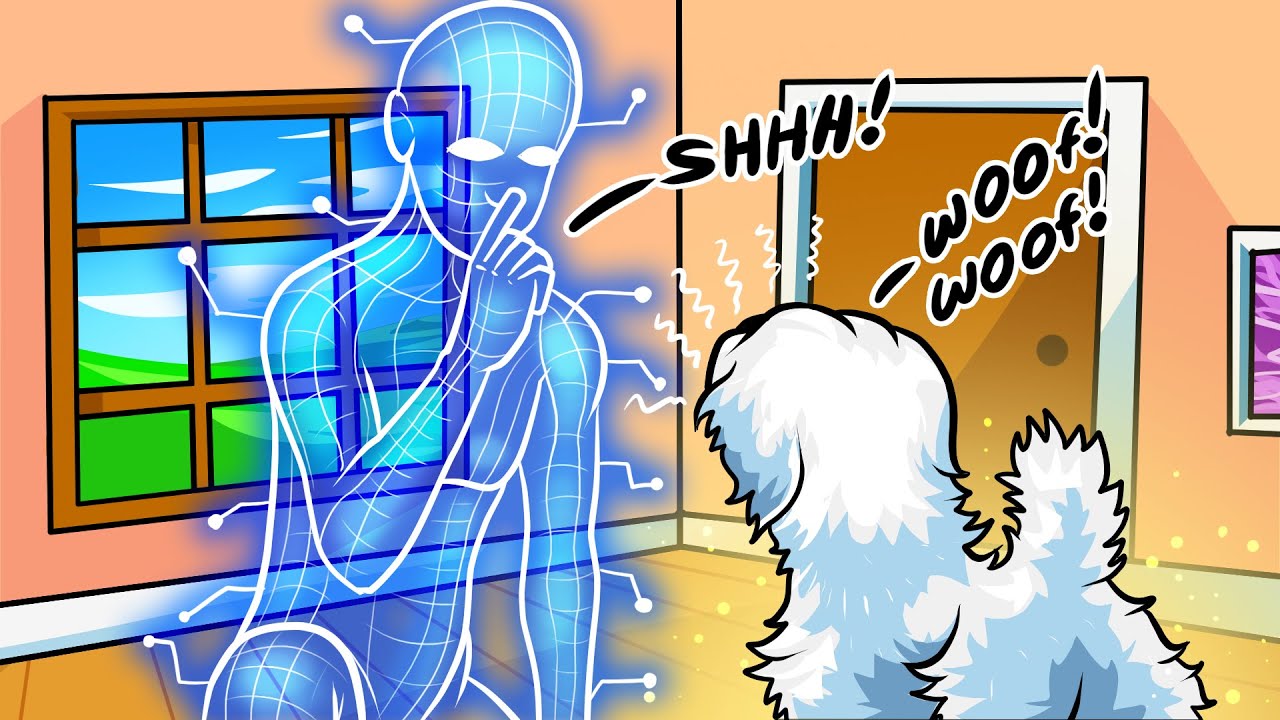
A dog barking at an empty house is not necessarily auditioning for the neighborhood opera. The noise may signal boredom, fear, frustration, separation-related distress, or an urgent desire to inform the couch that it looks suspicious. Whatever the cause, repeated barking can be stressful for the dog, exhausting for the owner, and deeply unpopular with anyone sharing a wall.
That problem inspired a clever maker project involving Clairette, a dog who became strongly attached to her family while everyone was home during the COVID-19 pandemic. When school and work resumed, she struggled with the sudden solitude. Rather than installing a full-time human in the living room, developer Nathaniel Felleke built a TinyML system that listened for barking and played recordings of a familiar family member’s voice. The result was essentially a pocket-size digital dog sitterminus the ability to refill the water bowl.
The Big Idea: Hear a Bark, Play a Familiar Voice
The concept behind the machine learning dog bark stopper was refreshingly simple. A microphone continuously monitored the room. When an on-device neural network decided that a sound was a dog bark rather than speech, household noise, or random audio chaos, the system triggered a recording. Clairette then heard a familiar voice telling her either that everything was okay or that it was time to settle down.
This was not a machine translating every “woof” into a detailed emotional monologue. The model performed binary audio classification: bark or other. That narrower goal made the system practical enough to run on a small microcontroller instead of sending every sound to a large cloud server.
Running inference locally is an important part of the project. TinyML brings machine learning to low-power embedded devices equipped with microphones, motion sensors, cameras, and other inputs. Local processing can reduce response time, limit internet dependence, and keep raw household audio from being continuously uploaded elsewhere.
How the TinyML Dog Bark Stopper Worked
Step 1: Build a Bark Dataset
A machine learning system learns from examples, and dogs do not conveniently arrive with downloadable folders labeled “anxious bark,” “mail carrier bark,” and “I have seen a squirrel.” Felleke therefore combined several sources of training data, including Google AudioSet bark samples, household recordings of Clairette, background sounds from the home, the Google Speech Commands dataset, and an additional collection of cat and dog audio.
Google AudioSet is a large collection of human-labeled, 10-second clips representing real-world sound events. Its dog category includes thousands of bark annotations, making it a valuable starting point for audio-event detection. However, public datasets rarely sound exactly like a particular kitchen, living room, television, air conditioner, or dog. The recordings made in Clairette’s own home helped the model encounter the acoustic conditions it would face after deployment.
The samples were divided into short, one-second clips and labeled either “bark” or “other.” Background noise was added during preprocessing to make the classifier more robust. The creator also manually reviewed mislabeled clipsan unglamorous but essential step. In machine learning, carefully cleaned data often contributes more than another fancy layer in the neural network. Garbage in, garbage out; mislabeled Chihuahua in, confused computer out.
Step 2: Turn Sound Into a Spectrogram
Raw audio is a waveform showing how sound pressure changes over time. A neural network can process waveforms directly, but small embedded systems often benefit from a compact time-frequency representation. In this project, the audio was converted into a Mel-filterbank energy spectrogram.
A spectrogram represents changing frequencies almost like an image. Time runs in one direction, frequency in another, and intensity shows how much acoustic energy appears in each region. A bark may then reveal patterns that are difficult to notice in the original waveform but easier for a classifier to distinguish from conversation, music, or a clattering dish.
Step 3: Train a Model That Fits on Tiny Hardware
The project used Edge Impulse’s EON Tuner to test model and signal-processing configurations. EON Tuner is an automated machine learning tool designed to identify combinations that balance accuracy, memory use, and computational cost for a selected embedded device. That balance matters because a model can be impressively accurate on a laptop yet completely unsuitable for a microcontroller with limited RAM.
The resulting classifier was exported as an Arduino library and deployed to an Arduino Nano 33 BLE Sense. This compact board combines an Arm-based microcontroller with an onboard digital microphone and other sensors, and it was designed to support embedded machine learning applications. The original board runs Arm Mbed OS and can execute TinyML models without maintaining a connection to a remote computer.
Step 4: Trigger the Audio Response
When the classifier detected a bark, it signaled a second Arduino that controlled audio playback. The builder used an Adafruit Music Maker FeatherWing, which contains a VS1053 codec capable of decoding formats such as MP3, Ogg Vorbis, MIDI, FLAC, and WAV.
A separate controller was necessary because audio playback from the primary board became choppy while it was simultaneously running the classifier. Dividing the work allowed one device to listen and make predictions while the other handled the response recordings. It is a tiny two-person office, except both employees are circuit boards and neither steals yogurt from the refrigerator.
Why Barking Alone Does Not Prove a Dog Is Stressed
The project’s title suggests that machine learning shushes stressed dogs, but the classifier itself detected barking, not stress. That distinction is important. Dogs bark for many reasons: territorial alerting, play, attention seeking, excitement, frustration, boredom, fear, pain, cognitive changes, and separation anxiety.
Separation-related distress usually involves a larger pattern. Warning signs may include persistent barking or howling, pacing, panting, trembling, excessive drooling, indoor elimination, destructive behavior near doors or windows, and frantic escape attempts. Some dogs become visibly distressed as soon as they notice departure cues such as shoes, keys, or a work bag.
A reliable welfare system therefore should not assume that every bark represents the same emotional state. A single bark at a delivery truck requires a different response from 40 minutes of pacing, vocalizing, and scratching at an exit. The audio classifier can identify an event, but owners still need context to understand why that event occurred.
Can Familiar Voices and Calming Sounds Help?
Playing a trusted person’s voice may interrupt a barking episode, mask an external trigger, or create a sense of familiar presence. Some dogs respond well to spoken audio, audiobooks, white noise, or music. Research reviewed by veterinary specialists suggests that classical music, reggae, and soft rock may promote calmer behavior in certain settings, although results vary by study, environment, dog, and musical selection.
Variety also appears relevant because animals can become accustomed to audio that plays continuously. A track that initially encourages resting may eventually become the sonic equivalent of wallpaper. Research does not support the idea that one playlist will reliably calm every dog, and some studies have found little benefit from specialized “dog music” compared with ordinary slow-tempo selections or silence.
White noise can be useful when barking is triggered by hallway footsteps, traffic, construction, or other dogs outside. However, audio should be kept at a comfortable volume, introduced while the dog is relaxed, and combined with behavior modification when anxiety is present. A louder sound is not automatically a more convincing soundparticularly to an animal with sensitive hearing.
How Well Can Machine Learning Understand Dog Barks?
Automated analysis of canine vocalizations is more advanced than simple bark detection. An influential machine learning study analyzed more than 6,000 barks recorded in six behavioral contexts and found that acoustic features could carry information about both the situation and the individual dog. More recent deep learning research has explored classification by identity, breed, age, sex, and barking context.
Modern systems can examine pitch, duration, rhythm, spectral shape, pauses, harmonics, and energy distribution. Researchers have also adapted representation models originally trained on human speech to canine bark-classification tasks. These methods can outperform simpler acoustic baselines in some experiments, suggesting that speech technology may provide useful tools for animal bioacoustics.
Still, “dog emotion recognition” deserves healthy skepticism. A bark’s meaning depends on surroundings, body posture, facial tension, tail movement, activity, previous events, health, and the identity of nearby people or animals. Models trained on a limited number of dogs may memorize individual voices instead of learning universal signs of fear or relaxation. Household acoustics also differ wildly. One home has hardwood echoes; another has carpeting, children, a robot vacuum, and a television apparently determined to sell insurance at maximum volume.
Benefits of an On-Device Bark Response System
A well-designed machine learning dog monitor could offer several practical advantages. It can react immediately instead of waiting for an owner to notice a phone alert. Local inference reduces the need to stream continuous audio to the cloud. The system can be personalized with recordings, sounds, and thresholds chosen for one dog. It can also log the frequency and duration of barking episodes, helping owners identify patterns connected to departure times, deliveries, neighborhood activity, or specific rooms.
Most importantly, the technology can serve as an observation tool. A record showing that barking begins two minutes after departure is more informative than returning home and asking, “Were you good?” while the dog sits beside a pillow that has somehow exploded.
Limitations and Animal-Welfare Concerns
A bark-triggered recording should never become an automated punishment device. Shouting, startling noises, shock collars, and other aversive responses may suppress visible behavior without resolving the underlying fear. Veterinary guidance consistently warns that punishment can increase distress in anxious or noise-sensitive dogs.
Repeatedly playing a scolding voice could also create unintended associations. A dog might learn that barking summons the owner’s voice, reinforcing the behavior. Alternatively, an anxious dog could begin associating that voice with being left alone. The safest responses are neutral or reassuring, low in volume, limited in frequency, and tested while someone is present to observe the dog’s reaction.
False positives are another challenge. A classifier might respond to a television dog, a squeaky chair, a cough, or the neighbor’s pet. False negatives are equally important because the system may miss whining, scratching, panting, or silent freezing. Reducing barking is not the same as reducing stress, so success should be measured through the dog’s overall behavior rather than decibel count alone.
Designing a Smarter and Kinder Version
Personalize the Training Data
Record the individual dog in the actual deployment room at different distances and times of day. Include plenty of negative examples: conversation, television, doorbells, kitchen sounds, outside dogs, vacuum cleaners, and silence. A personalized dataset may prevent the classifier from behaving as though every thump is a Labrador emergency.
Add Confidence Thresholds and Cooldown Periods
The system should require a sufficiently high bark probability before responding. It can also wait for several detections within a short window instead of reacting to one uncertain sound. After playback, a cooldown period can prevent the same message from repeating every few seconds.
Use More Than Audio
A future system could combine sound with motion, posture, heart rate, room occupancy, or video processed locally. Barking plus rapid pacing might justify a different response from one isolated bark followed by sleep. Multimodal monitoring is technically harder, but it is closer to how veterinarians and experienced owners evaluate behavior.
Measure Welfare, Not Just Silence
Owners should compare total vocalization time, pacing, resting, destructive behavior, food engagement, and recovery after departures. If barking decreases while escape attempts or panting increase, the system has not solved the problem. It has merely encouraged the problem to change costumes.
Experiences and Practical Lessons From Using Bark-Detection Technology
The following is a realistic composite scenario based on the project workflow and common challenges in household audio classification, not a claim of personal ownership or a controlled scientific trial.
The first experience many builders have with a bark detector is discovering that their home is much louder than they thought. During an initial test, the model may perform beautifully with curated recordings and then become strangely enthusiastic in the real world. A closing cabinet sounds like a bark. The television contains three dogs. A delivery notification produces a sharp electronic chirp. The washing machine enters its dramatic spin-cycle finale. Suddenly, the reassuring message intended for the dog is playing to an empty kitchen.
The fastest improvement usually comes from collecting these mistakes. Each false trigger becomes a new “other” example. After retraining with household sounds, the model stops reacting to dishes and begins focusing on Clairette’s actual vocal pattern. This illustrates a central lesson of edge machine learning: deployment is not the end of training. Real environments expose gaps that a laboratory-style dataset cannot predict.
The next surprise involves placement. A microphone beside a speaker may hear the response recording and classify part of it as another bark. Moving the components farther apart, reducing playback volume, and adding a cooldown period can break that feedback loop. Placement near a window may also capture outdoor dogs more clearly than the intended pet. A location closer to the dog’s resting area often provides cleaner, more relevant audio.
Choosing the response sound requires experimentation. A stern recording might stop barking immediately but cause the dog to pace or stare at the door. A calm statementspoken naturally rather than in a theatrical “Who is a good puppy?” voicemay produce a slower but more relaxed response. Some dogs settle with familiar speech, while others search the house for the missing person and become more agitated. In those cases, low-volume music, white noise, or no automated playback may be the better choice.
Reviewing video alongside the bark log is particularly revealing. An owner may initially celebrate because barking falls by half. Video can show whether the dog lies down afterward or continues pacing silently. That difference determines whether the intervention is genuinely calming or merely interrupting vocalization. The dog’s body language remains the final judge, and unlike a software dashboard, it cannot be improved by changing the graph colors.
A practical trial also shows the value of short absences. Testing the device during a five-minute departure allows the owner to return before distress escalates. Longer durations can be introduced gradually only when the dog remains comfortable. This approach works best alongside exercise, predictable routines, enrichment toys, gradual desensitization, and positive associations with alone time.
The most important experience is recognizing when technology has reached its limit. A dog that drools heavily, injures itself near exits, refuses food when alone, eliminates indoors, or remains distressed for extended periods needs professional evaluation. Veterinary behavior plans may include structured desensitization, counterconditioning, environmental management, and medication when appropriate. The ASPCA and veterinary sources emphasize that moderate or severe separation anxiety requires more than simply distracting the dog after barking begins.
In the best case, a TinyML bark monitor becomes one useful member of a larger support team. It notices patterns, provides gentle audio at carefully chosen moments, and gives owners better evidence about what happens after they leave. It does not diagnose emotion, replace training, or substitute for veterinary care. The real goal is not to produce a perfectly silent dog. It is to help the dog feel safe enough that barking is no longer necessary.
Conclusion
“Machine Learning Shushes Stressed Dogs” captures the playful appeal of a project that joins pet care with embedded artificial intelligence. By training an audio classifier, deploying it to a microphone-equipped Arduino, and triggering familiar voice recordings, the creator demonstrated how TinyML can respond to real household behavior without requiring a powerful computer or constant cloud connection.
The project also highlights the boundary between detecting a sound and understanding an animal. Machine learning can recognize barking patterns, but stress must be evaluated through context, body language, health, and behavior over time. Used gently, a bark detector may support observation, enrichment, and early intervention. Used as an automatic scolding machine, it risks treating the symptom while ignoring the dog attached to it.
Note: A bark-response device is not a medical or behavioral treatment. Persistent distress, escape behavior, self-injury, severe destruction, or prolonged vocalization should be discussed with a veterinarian or qualified veterinary behavior professional.