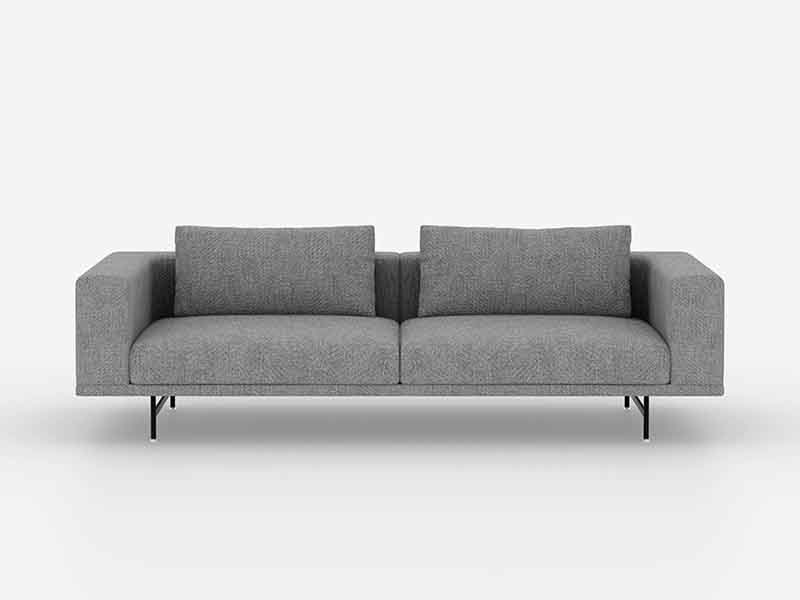
The Loft Module Sofa, 3-Seater is what happens when Scandinavian restraint meets serious lounging ambition. Its broad proportions, slim metal base, and generously deep seat create a sofa that looks architectural without feeling like an upholstered geometry lesson. It is refined enough for a design-focused loft yet relaxed enough for movie night, Sunday reading, and the occasional accidental nap.
Often associated with Vipp’s modular furniture collection, the Loft three-seater combines an angular upholstered body with a wood-and-steel structure and slender, powder-coated metal legs. The result is visually light but physically substantial. Before ordering one, however, buyers should consider its unusual seat depth, room requirements, upholstery choices, delivery conditions, and long-term care.
What Is the Loft Module Sofa, 3-Seater?
The Loft Module Sofa is a modern modular couch built from individual seating units joined into a unified configuration. The three-seater version provides a ready-made arrangement for households that need generous everyday seating without committing to a sprawling sectional.
Its design is characterized by a wide, low profile, sharply defined cushions, and a narrow black frame beneath the upholstered body. Rather than hiding its supporting structure behind a fabric skirt or bulky base, the sofa lets the steel frame become part of its appearance. This exposed construction makes a large sofa seem lighter and gives cleaning tools a fighting chance underneath it.
Key Specifications
The current three-seat configuration measures approximately 94.5 inches long, 39.3 inches deep, and 24 inches high. Its seat height is about 15.7 inches, while the listed seat depth is approximately 31.5 inches. The sofa weighs roughly 181 pounds.
These numbers immediately reveal its personality. This is not a compact apartment couch pretending to be luxurious in a product photograph. It is a broad, deep, low-slung sofa designed primarily for lounging. At nearly eight feet wide, it needs breathing room as well as an unobstructed delivery route.
Construction and Upholstery
The Loft sofa uses a wood-and-steel construction supported by a slender powder-coated frame. Depending on the selected version, upholstery may include textured textiles in neutral, earthy, or softly contrasting colors. Current fabric collections include options such as Bark, Brook, and Wavy, each offering a different visual texture and fiber composition.
Some upholstery options have published abrasion ratings around 35,000 to 50,000 Martindale cycles. Although Martindale testing is more commonly referenced in Europe, those figures suggest materials intended for substantial residential use. Abrasion resistance is useful, but it is only one part of durability. A fabric’s weave, stain response, colorfastness, pilling tendency, and cleaning instructions also matter.
Design: Industrial Structure Meets Soft Comfort
The Loft Module Sofa, 3-Seater succeeds because it balances apparent opposites. The metal base looks precise and engineered, while the upholstered modules appear soft and inviting. Straight lines give the sofa discipline; deep cushions stop it from resembling lobby furniture where nobody is supposed to get comfortable.
Its low back preserves sightlines in open-plan rooms. That quality can be especially valuable in a loft, where one piece of furniture may separate the living area from the dining space or kitchen. A tall-backed sofa can become a padded barricade. The Loft provides visual separation without building an indoor border wall.
Colors and Interior Styles
Neutral upholstery allows the angular silhouette to do most of the talking. Off-white and light gray fabrics soften black flooring, concrete walls, and dark cabinetry. Brown, chestnut, and bark-inspired tones bring warmth to rooms filled with steel, glass, and stone.
The sofa works particularly well with Scandinavian, industrial, minimalist, contemporary, and modern-rustic interiors. It can also anchor an eclectic room when paired with vintage lighting, handmade ceramics, patterned pillows, or a weathered wood coffee table. The trick is to add contrast without burying the sofa beneath seventeen decorative cushions that must be relocated every time someone sits down.
Comfort: A Sofa Made for Lounging
Seat depth has a major influence on how a sofa feels. A conventional seat depth of roughly 18 to 22 inches generally supports upright conversation and makes it easier for shorter users to keep their feet on the floor. Deeper seats invite reclining, curling up, and sitting cross-legged.
With a listed seat depth of approximately 31.5 inches, the Loft sofa sits decisively in lounge territory. Taller adults may appreciate the extra room immediately. Shorter users may want a lumbar pillow behind the back when sitting upright. Decorative cushions therefore become functional equipment rather than merely colorful sofa jewelry.
The relatively low seat height reinforces the relaxed experience. It feels casual and grounded, but it may be less convenient for people with limited hip, knee, or lower-body mobility. Anyone who finds low chairs difficult should test a similarly proportioned sofa before placing a made-to-order purchase.
How Many People Does It Really Seat?
A three-seater should comfortably accommodate three adults for conversation. Because the sofa is wide and deep, two people can lounge with considerable personal space. One person can stretch out for a nap without performing advanced human origami.
Seat count is not the same as usable comfort, however. Wide arms, individual module divisions, and loose cushions can affect where people naturally sit. Check the internal seating width rather than relying exclusively on the “three-seater” label.
Why the Modular Design Matters
Modular furniture is assembled from separate components that can be combined, expanded, or replaced. The Loft’s three-seat layout works as a finished sofa, but compatible modules may allow owners to create a larger arrangement, add an open-ended seat, or include an ottoman.
This flexibility is useful when life changes. A three-seat sofa may suit a downtown apartment today and become one section of a larger configuration after a move. A freestanding ottoman can act as a footrest, occasional seat, or temporary coffee-table substitute when paired with a stable tray.
Modularity does not automatically mean effortless rearrangement. At around 181 pounds in its assembled configuration, the Loft is substantial. Buyers should confirm how sections connect, whether modules are sold individually, and whether older and newer production versions remain compatible.
Advantages of a Three-Seater Configuration
- It provides useful seating without occupying as much space as a corner sectional.
- Its straight footprint is easier to position opposite a television, fireplace, or large window.
- Separate modules can make delivery through certain entrances more manageable.
- The design can potentially grow with future seating needs.
- Individual sections may be easier to repair or reupholster than one oversized fixed frame.
Measure the Room Before You Fall in Love
At 94.5 inches wide and nearly 40 inches deep, the Loft three-seater occupies a meaningful amount of floor area. Use painter’s tape to outline its complete footprint before ordering. Leave the outline in place for a day or two and walk around it during normal activities. If everyone begins moving sideways through the room like crabs, the layout needs revision.
Allow comfortable circulation around the sofa and sufficient distance from a coffee table. Approximately 16 to 18 inches between the sofa and table usually provides access without making drinks feel geographically remote. Keep heating vents, doors, drawers, and frequently used walkways clear.
Check the Entire Delivery Path
Measure more than the front door. Record the clear width and height of exterior doors, interior doorways, hallways, staircases, elevator openings, and landings. Account for railings, light fixtures, doorknobs, ceiling slopes, and tight corners.
Compare those numbers with the dimensions of each shipping component, not only the completed sofa. Diagonal depth matters because furniture is often tilted during delivery. Ask whether the legs, arms, or back can be removed and whether curbside service includes carrying, assembly, or packaging removal.
The current Loft sofa is made to order, and published policies may classify it as nonreturnable. Delivery estimates and service levels can vary by market. Confirm the final upholstery, dimensions, lead time, access requirements, warranty, and cancellation terms in writing before paying.
Choosing the Right Upholstery
Upholstery should match the way the sofa will actually be used. A delicate pale textile may look magnificent in a quiet formal room. In a home with children, pets, red wine, or a determined habit of eating noodles on the couch, cleanability deserves equal billing with color.
Order fabric swatches and observe them at different times of day. Warm artificial lighting can make a cool gray appear beige, while direct sunlight may expose undertones invisible on a phone screen. Rub samples against clothing, press them against bare skin, and test how readily loose fibers or pet hair cling to the surface.
Questions to Ask About Fabric
- What fibers are used, and how tightly is the textile woven?
- What is the abrasion rating?
- Does the fabric pill or develop a visible nap?
- Are covers removable, replaceable, or professionally cleanable?
- What cleaning code and stain-treatment procedure apply?
- How resistant is the color to sunlight?
- Are low-emission or responsible-material certifications available?
Families concerned about indoor air quality can look for verified low-emission certifications rather than relying on vague labels such as “eco-friendly.” For wood components, chain-of-custody certifications can provide additional information about sourcing. Certification does not make a sofa immortal, but it does turn broad marketing claims into something more measurable.
Care and Maintenance
Vacuum upholstery regularly with a soft brush attachment, paying particular attention to seams and gaps between modules. Dust and grit act like fine sandpaper when repeatedly pressed into fabric. Rotate or reposition loose cushions when the design permits so wear develops evenly.
Blot spills promptly with a clean, absorbent cloth. Do not scrub aggressively; scrubbing can spread the stain and alter the textile’s surface. Always follow the manufacturer’s care instructions and test any approved cleaner in a concealed area first.
Understanding Upholstery Cleaning Codes
- W: Use an approved water-based upholstery cleaner.
- S: Use a water-free solvent cleaner.
- W/S: Either an approved water-based or solvent method may be suitable.
- X: Vacuum or brush only; professional care is generally safest.
Never assume that water is harmless. On the wrong fabric, it can leave rings, cause shrinkage, or distort the texture. Similarly, household “miracle” mixtures should remain on social media unless the furniture manufacturer approves them.
Protect the sofa from prolonged direct sunlight, which can fade upholstery unevenly. Check modular connectors and accessible frame fasteners periodically. Lift modules when repositioning them rather than dragging the steel base across the floor.
Potential Drawbacks
The Loft Module Sofa, 3-Seater is not designed for every household. Its very deep seat may be inconvenient for upright sitters and shorter adults. The low profile can make standing more difficult for users with mobility limitations. Its width may overwhelm a narrow living room even though the slim frame looks visually light.
Premium construction, specialized textiles, and made-to-order production also place it in a higher price category than mass-market modular couches. Returns may be restricted, and delivery can require patience. Buyers who move frequently should verify module dimensions and weight because “modular” does not necessarily mean “easy to carry up four flights of stairs.”
Finally, a low back offers less shoulder and head support than a traditional high-backed sofa. That is an aesthetic advantage in an open room but a comfort compromise for someone who wants to lean back fully during a three-hour movie.
Who Should Buy the Loft Three-Seater?
This sofa is best suited to someone who values understated modern design, deep seating, durable structural materials, and the option to develop a larger modular arrangement. It is particularly appealing in spacious apartments, open-plan homes, studios, and contemporary living rooms where the rear of the sofa remains visible.
It may not be ideal for shoppers who need a compact couch, prefer upright seating, require a high back, or want an easy return policy. A household with young children or shedding pets should carefully evaluate the upholstery rather than choosing solely from a styled photograph.
Prepurchase Checklist
- Mark the sofa’s 94.5-by-39.3-inch footprint on the floor.
- Measure every section of the delivery route.
- Test a similarly deep, low seat in person if possible.
- Order upholstery samples and inspect them in the room.
- Review fabric composition, abrasion data, and cleaning instructions.
- Confirm module connectors and future expansion options.
- Read the warranty, return restrictions, delivery scope, and lead time.
Living With a Loft Module Sofa: Experience-Based Observations
The first noticeable experience is visual rather than physical. Although the three-seater is large, its narrow black base creates a gap between the upholstered body and the floor. That strip of open space makes the sofa appear to hover. In a room where a solid-base sectional might look like an enormous fabric island, the Loft feels considerably more composed.
Then comes the first sit. Because the seat is low and exceptionally deep, most people naturally shift from formal posture into lounge mode. Taller users can sit well back while keeping their legs comfortable. Shorter users often reach for one of the included or supplemental back cushions. With a firm pillow behind the lower back, the same deep seat becomes more practical for reading, conversation, or working briefly on a laptop.
During movie night, the generous proportions become the sofa’s strongest feature. Two adults can stretch out without negotiating every square inch, while three can sit comfortably with snacks nearby. A matching ottoman changes the experience again, creating a chaise-like position without permanently assigning the extension to one side of the room.
Daily life also reveals why fabric selection matters. Textured upholstery is excellent at giving neutral colors depth, but pronounced weaves may collect crumbs or pet hair more visibly. A quick weekly pass with a soft upholstery attachment prevents debris from becoming part of the design. Light-colored fabric can remain attractive in an active home, but only when spills are treated immediately and the correct cleaning method is followed.
The modular divisions are subtle in normal use, yet they become helpful when rearranging the room. Moving one component at a time is more manageable than wrestling with a single eight-foot frame. Even so, these are substantial furniture pieces. Rearrangement is best treated as a two-person project, preferably before anyone has placed a full mug of coffee on the nearby table.
In an open living and dining area, the sofa’s back looks finished enough to face the room rather than hiding against a wall. Positioning it as a divider creates a natural conversation zone while preserving sightlines. A narrow console behind it can hold a lamp or books, although the console should respect the sofa’s low height instead of towering over it.
After extended use, comfort depends on habits. People who like sitting upright for long periods may continue adding lumbar cushions. Those who curl up, recline, or nap are more likely to consider the depth a luxury. The Loft behaves less like a formal parlor sofa and more like a calm, carefully engineered platform for unwinding.
The low seat can take a little adjustment. Rising feels different from standing up from a standard-height couch, particularly for taller adults with stiff knees. Guests may comment on the height the first time they sit, but most quickly understand the intention: this is furniture that invites the body to slow down.
Styling is pleasantly straightforward. A wool throw, one or two contrasting pillows, and a low coffee table are usually enough. Because the silhouette and textile already provide visual interest, excessive decoration can weaken the clean architectural effect. The sofa looks most convincing when allowed to occupy space confidently rather than being squeezed between oversized side tables.
Overall, living with a Loft Module Sofa is an experience shaped by depth, openness, and restraint. It rewards careful measurement and realistic thinking about posture. For the right room and the right sitter, it can become the place where everyone gathersnot because it demands attention, but because it quietly makes staying seated feel like an excellent plan.
Conclusion
The Loft Module Sofa, 3-Seater combines an airy steel base, structured upholstery, deep comfort, and modular flexibility in one distinctly modern package. Its proportions are generous, its seating position is relaxed, and its finished profile works especially well in open-plan interiors.
Success with this sofa depends on preparation. Measure the room and delivery path, test the low seating style, compare fabric samples, and understand the made-to-order terms. Complete those steps, and the Loft can offer lasting comfort without surrendering the crisp visual discipline that makes Scandinavian furniture so appealing.