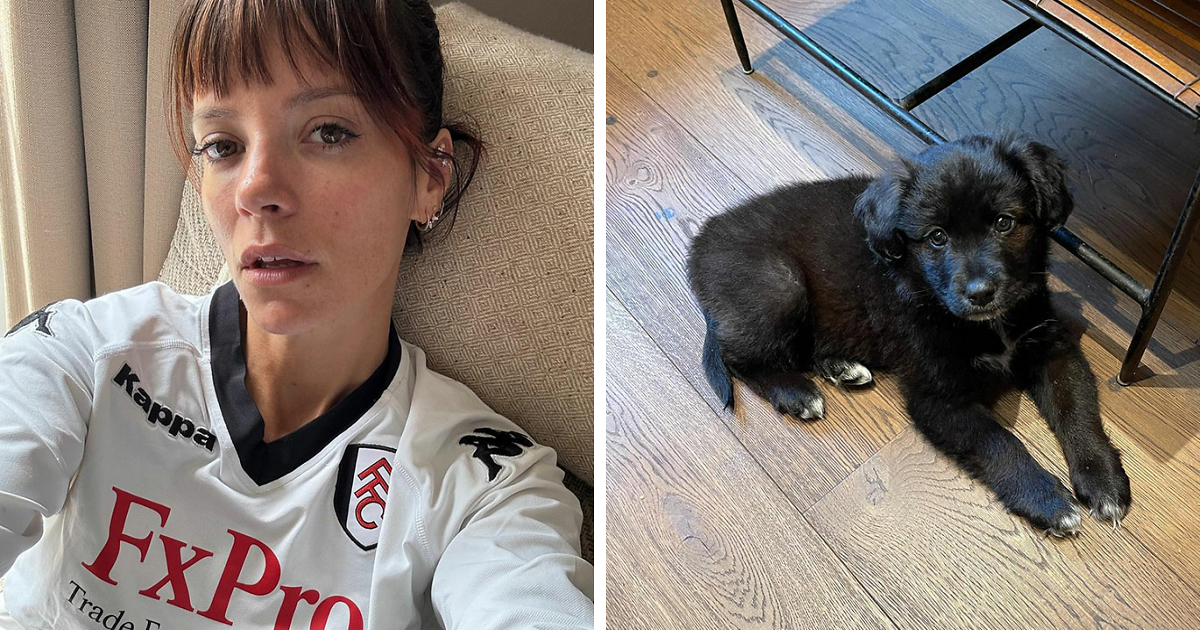
Celebrity pet stories usually arrive wrapped in cuteness: tiny paws, sleepy snouts, and an Instagram caption that reads like a rom-com written by a golden retriever. Lily Allen’s puppy story, however, took a hard left turn into chewed passports, ruined travel plans, online outrage, and one of the internet’s favorite activities: judging a stranger’s life with the confidence of a courtroom lawyer and the speed of a caffeinated squirrel.
The British singer and podcast host sparked a wave of conversation after saying on her podcast Miss Me? that she returned a puppy her family had adopted during the pandemic after the dog ate the family’s passports and visas. Allen said the incident caused major stress, delays, and expense, especially because her children needed to travel between the United States and the United Kingdom to see their father. Her now-famous reaction that the puppy had “ruined” her life quickly became the headline, the meme, the debate, and, for some people, the final straw.
But like many viral celebrity moments, the full story is more complicated than the hottest quote. After receiving intense backlash, Allen clarified that the dog, reportedly named Mary, had been struggling with severe separation anxiety and that the passport disaster was not the only issue. According to her response, the family worked with the shelter, a behavioral specialist, and a trainer before concluding that their home was not the right fit. That explanation did not stop the criticism, but it did add important context to a story that had already sprinted across social media wearing muddy paws.
What Lily Allen Said About the Puppy and the Passports
During the podcast discussion, Allen explained that her family had adopted a dog during the COVID era. The dog, she said, ate three passports, including documents with visas. That is not the kind of “my dog ate my homework” excuse that gets a laugh from a teacher. It is the kind of problem that can derail international travel, create expensive replacement tasks, and turn a kitchen drawer into a crime scene starring one very ambitious puppy.
Allen lives in the United States with actor David Harbour, while her two daughters share family ties in England through their father, Sam Cooper. Because the children’s passports and travel documents were damaged, Allen said they could not travel to see their father for several months. The incident, she suggested, became emotionally and logistically overwhelming.
The bluntness of her language is part of why the story exploded. Allen has built a public image around being sharp, candid, funny, and occasionally brutally honest. Fans have long known she is not the type to describe chaos as “a mild inconvenience” when “a complete disaster with fur” is sitting right there. Still, pet adoption is an emotionally loaded topic, and many listeners felt the comment sounded harsh.
Why the Internet Reacted So Strongly
People are protective of dogs. In many homes, dogs are not accessories; they are family members with paws, opinions, and a suspiciously strong interest in whatever snack you are holding. So when a celebrity says she returned a puppy, especially after describing a destructive incident, many readers immediately hear abandonment, not context.
That reaction was intensified by the way celebrity stories move online. A podcast segment becomes a quote. A quote becomes a headline. A headline becomes a screenshot. A screenshot becomes a public trial. By the time nuance shows up, it is usually standing outside the courtroom holding a number and waiting to be called.
Animal-rights organization PETA criticized Allen and argued that dogs should not be treated as disposable when they become inconvenient. Many social media users agreed, saying that chewing is normal puppy behavior and that owners should puppy-proof their homes. Others defended Allen, pointing out that rehoming can be responsible if a family genuinely cannot meet a dog’s behavioral or emotional needs.
The disagreement touched a larger cultural nerve: What do pet owners owe animals when adoption does not work out? Is returning a dog always cruel, or can it sometimes be the most responsible decision? The Lily Allen puppy controversy became less about one passport-chewing incident and more about the messy reality of pet ownership.
The Missing Context: Separation Anxiety and Destructive Chewing
After the backlash grew, Allen said the dog had developed severe separation anxiety and could not be left alone for more than a few minutes. She also said the family arranged multiple daily walks and worked with professionals. That matters because destructive chewing can be more than ordinary puppy mischief. In some dogs, it can be a symptom of fear, stress, boredom, or separation-related distress.
Dogs explore with their mouths. Puppies chew because their brains are basically tiny chaos engines with teeth. Shoes, furniture legs, remote controls, children’s toys, and important documents can all become targets if a dog is unsupervised, under-stimulated, anxious, or still learning household rules. But separation anxiety adds another layer. A dog who panics when left alone may chew, dig, bark, pace, or destroy objects not because it is “bad,” but because it is distressed.
That distinction is important. A dog chewing a passport is frustrating. A dog repeatedly panicking when alone is a welfare issue. A home that cannot provide the structure, time, training, and environment that the dog needs may not be the best long-term placement. Rehoming, when handled carefully and with the help of a shelter or rescue organization, can sometimes give the dog a better match.
Why “Bad Dog” Is Usually the Wrong Diagnosis
Calling a dog “bad” is easy. Understanding the behavior takes more work. A puppy that destroys paperwork may be bored, anxious, teething, curious, or simply not managed safely. A dog with separation anxiety may look destructive, but the root problem is emotional distress. Punishment rarely solves that. In fact, harsh reactions can make anxiety worse.
Better solutions often include management, gradual training, safe spaces, chew-appropriate toys, exercise, mental stimulation, and professional guidance. That may sound less dramatic than “the dog ate my passport,” but it is the part that actually helps families avoid disaster. The most effective pet owners are not magical dog whisperers; they are people who learn to put the passports somewhere a puppy cannot launch a surprise attack.
Why the Passport Problem Was Bigger Than It Sounds
To anyone who rarely travels, a damaged passport might sound like a headache but not a life-altering event. For a family that depends on international travel, especially during pandemic-era delays, it can become a major disruption. Replacing passports often requires forms, identity documents, appointments, photos, fees, and waiting time. If visas are involved, the process can become even more complicated.
In Allen’s case, the documents reportedly affected her daughters’ ability to visit their father in England. That changes the emotional weight of the story. The issue was not only ruined paper; it was missed family time. A puppy cannot understand international custody arrangements, visa stamps, or why humans become pale when official documents turn into confetti. Still, the consequences for the humans involved were real.
This is why the story landed so awkwardly. On one side, people saw a dog behaving like a dog. On the other, Allen described a family crisis involving travel, money, and separation. Both things can be true. The puppy did not act with evil intent, and the family still suffered real disruption.
Celebrity Honesty: Refreshing or Reckless?
Lily Allen has never been famous for delivering polished, PR-approved sentences that smell faintly of vanilla candles. Her appeal often comes from her willingness to say the uncomfortable thing out loud. That candor can be funny, relatable, and human. It can also backfire spectacularly when the subject is sensitive.
In this case, Allen’s honesty sounded to some people like a confession without enough compassion. To others, it sounded like an overwhelmed parent describing a difficult period with the dark humor many people use when life goes sideways. The internet, unfortunately, is not always great at hearing tone. Sarcasm loses its eyebrows online. Jokes become evidence. Frustration becomes a character flaw.
There is also a difference between a private vent and a public statement. A parent might say, “This dog ruined my life,” in the same way someone says, “This printer has destroyed my will to live,” while wrestling with a jammed paper tray. That does not mean the person literally believes the printer is a villain. But when a celebrity says it into a microphone, the phrase becomes a headline with its shoes on.
What Pet Owners Can Learn From the Lily Allen Puppy Controversy
The most useful takeaway is not that Lily Allen is right or wrong. The useful takeaway is that adopting a puppy is a serious commitment that requires preparation, patience, and realistic expectations. Puppies chew. Dogs get anxious. Family schedules change. Children leave snacks at nose level. Passports should never be stored where a bored dog can treat them like luxury stationery.
Before adopting a dog, families should think carefully about work schedules, travel needs, children’s routines, housing rules, noise tolerance, and the time required for training. A puppy may look adorable in a shelter photo, but cuteness does not replace structure. Even a tiny dog can create a large problem if the household is not ready.
Practical Lessons for New Puppy Owners
First, puppy-proof the home. Important documents, medication, cords, shoes, handbags, and children’s belongings should be kept out of reach. If it would be expensive, dangerous, or emotionally devastating to lose it, do not leave it at dog-mouth altitude.
Second, offer appropriate chew options. Dogs need legal chewing outlets. Durable toys, food puzzles, and safe chews can redirect the behavior. A puppy does not automatically know the difference between a chew toy and a passport. To a puppy, both may look like “interesting rectangle.”
Third, supervise and manage freedom. Many destructive incidents happen when a dog has too much unsupervised access too soon. Baby gates, crates used humanely, exercise pens, and dog-safe rooms can prevent mistakes while the dog learns household rules.
Fourth, address anxiety early. If a dog panics when left alone, owners should not assume the dog will simply “grow out of it.” Separation anxiety often needs gradual training, consistency, and sometimes help from a veterinarian or certified behavior professional.
Is It Ever Okay to Return or Rehome a Dog?
This is the hardest question in the controversy. Many people believe adoption should be forever, and that belief comes from a good place. Pets deserve stability, commitment, and care. Shelters are already full, and casual returns can place more strain on rescue systems. Nobody should adopt a dog as a trial accessory or give up at the first chewed slipper.
At the same time, responsible rehoming is not the same as dumping. If a dog’s needs are not being met, and if the family has genuinely tried training, management, professional support, and shelter guidance, a new home may be the kinder choice. The goal should always be the animal’s welfare, not the owner’s convenience.
In Allen’s explanation, she emphasized that the decision was made after consultation and that Mary was rehomed through people connected to the shelter. Critics may still disagree with her choices, but the added context moves the story away from a simple “celebrity got annoyed and gave up” narrative.
Why This Story Became a Perfect Internet Storm
The Lily Allen puppy story had every ingredient for viral outrage: a famous person, a beloved animal, a shocking quote, international travel drama, and a moral question with no perfectly tidy answer. It also arrived in an online culture where many people read only the most dramatic sentence before forming a permanent opinion.
That does not mean criticism is invalid. Public figures can be questioned, especially when they talk about animal welfare. But the intensity of the reaction also showed how quickly online conversations can become disproportionate. Allen said she received disturbing messages, including threats. No pet controversy justifies that. Caring about animals should not require behaving cruelly toward humans.
The better conversation is about preparation, responsibility, and compassion. Compassion for dogs who need stable homes. Compassion for families who may be overwhelmed. Compassion for shelter workers trying to make good matches. And yes, compassion for the passports, those silent victims of the chewing arts.
Experiences and Reflections: When Pets Turn Family Life Upside Down
Anyone who has lived with a young dog knows there is a moment when the fantasy of pet ownership meets the reality of teeth. The fantasy is soft lighting, cozy walks, and a dog sleeping peacefully beside the couch. The reality may include shredded tissues, muddy paw prints, mysterious barking at invisible enemies, and the discovery that your favorite sandal has entered witness protection in several pieces.
Families often underestimate how quickly a puppy can change the rhythm of a home. Morning routines become bathroom-break negotiations. Work calls gain background barking. A quiet evening becomes a treasure hunt for whatever the dog has stolen. Children may adore the puppy but forget to close doors, pick up toys, or keep snacks out of reach. Parents become the household’s unpaid security team, constantly saying, “What’s in your mouth?” with the urgency of a bomb squad.
The passport part of Allen’s story feels extreme, but many pet owners have their own version. Maybe the dog chewed a wedding shoe the night before the ceremony. Maybe it swallowed a child’s homework folder. Maybe it destroyed a couch cushion so thoroughly that the living room looked like a snowstorm had developed indoor ambitions. These stories become funny later, but in the moment, they can feel overwhelming.
There is also guilt. People adopt pets with good intentions. They imagine themselves as patient, loving, and endlessly capable. Then real life enters: jobs, school runs, travel, illness, noise complaints, money stress, and a dog who cannot cope when left alone. The gap between love and capacity can be painful. Loving a dog does not automatically mean having the right environment for that dog.
That is why preparation matters so much. Before bringing home a puppy, families should have a plan for training, supervision, exercise, socialization, alone-time practice, and emergency situations. They should decide where documents will be stored, who handles walks, who cleans accidents, and how the dog will be safely managed when nobody can supervise. It may sound unromantic, but responsible pet ownership often begins with boring systems. Love is wonderful; a closed drawer is also wonderful.
For families with international travel, the lesson is even sharper. Passports, visas, birth certificates, immigration papers, and custody-related travel documents should be treated like crown jewels. Store them in a locked drawer, safe, or high cabinet. Keep digital copies in secure storage. Do not assume a puppy cannot reach a shelf, unzip a bag, or develop a sudden interest in government paperwork. Puppies are tiny chaos consultants. They specialize in finding the one object you absolutely cannot lose.
The emotional side is just as important. If a dog shows signs of separation anxiety, early help can prevent bigger problems. Start with gradual alone-time training. Create positive associations with safe spaces. Avoid dramatic departures and arrivals. Provide mental enrichment before leaving. If the dog continues to panic, consult a veterinarian or qualified behavior professional. Anxiety is not stubbornness; it is distress.
Rehoming should never be casual, but it should not be treated as an automatic moral failure either. Sometimes the bravest admission is, “This dog needs something we cannot provide.” The ethical path is to work with the original shelter or rescue, be honest about the dog’s behavior, avoid unsafe handoffs, and focus on finding a better match. A dog who struggles in one home may thrive in another with a different schedule, layout, owner experience, or presence of other dogs.
The Lily Allen story is messy because real life is messy. A dog can be loved and still be difficult. A parent can be overwhelmed and still care. A comment can sound harsh and still come from a moment of stress. The internet loves clean villains and clean heroes, but pet ownership usually lives in the middle: muddy, complicated, expensive, emotional, and occasionally covered in shredded paper.
In the end, the best response is not simply to cancel, defend, or mock. It is to learn. Puppies need structure. Families need realistic expectations. Important documents need better hiding places. And everyone online could probably benefit from taking one deep breath before turning a chewed passport into a full-time moral identity.
Conclusion
Lily Allen’s passport-chewing puppy story became more than a celebrity anecdote because it touched on responsibility, pet welfare, parenting, travel stress, and the way viral headlines can flatten complicated situations. Her comments sounded shocking to many readers, especially animal lovers, but her later explanation added context about separation anxiety, professional support, and the belief that her home was not the right fit for Mary.
The biggest lesson is simple: adopting a dog is not just about love. It is about time, training, management, patience, and honest self-assessment. Puppies chew. Dogs get anxious. Families get overwhelmed. When preparation meets compassion, both people and pets have a better chance of living happily together with passports safely locked away.