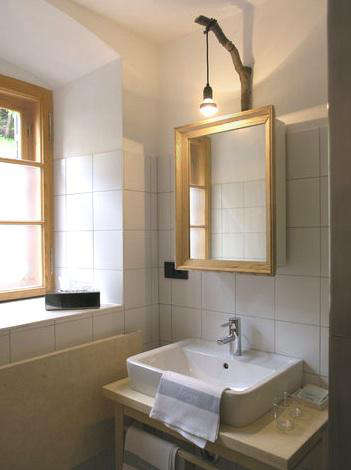
Some hotel bathrooms whisper luxury with marble, heated floors, and a showerhead the size of a dinner plate. Hotel Berge takes a quieter route. Its charm comes from restraint, texture, and the kind of clever design detail that makes you stop mid-toothbrush and think, “Wait, is that a branch holding the bathroom light?” Yes. Yes, it is. And somehow, it looks less like a craft project gone rogue and more like Alpine minimalism with a wink.
The idea behind the DIY branch bath light at Hotel Berge is beautifully simple: use a natural branch as a sculptural support for a bathroom light. It is part rustic lighting idea, part design-hotel magic trick, and part reminder that great interiors do not always need more stuff. Sometimes they need one honest object doing one job well. A branch, a bulb, a wall, and a little courage can outperform a showroom fixture with a 14-syllable Italian name.
This article explores what makes the branch bath light so appealing, how to adapt the look safely at home, and why this small lighting idea fits into a much larger trend: bathrooms that feel natural, personal, calm, and handmade without looking like a cabin swallowed a Pinterest board.
What Makes the Hotel Berge Branch Bath Light So Memorable?
Hotel Berge, or berge, is known for a pared-back design philosophy: keep what matters, remove what distracts, and let architecture, materials, and silence do the heavy lifting. That mindset is exactly why the branch bath light works. It is not decorative in the fussy sense. It is useful, sculptural, and slightly unexpected.
A typical bathroom light tries to disappear or sparkle. The branch bath light does neither. It says, “I came from a tree, I have a job, and I look fantastic doing it.” The branch acts as a natural armature, creating a visual line between wall, fixture, and mirror. It adds warmth to a room that could otherwise feel hard or cold because bathrooms are full of tile, glass, ceramic, and metal. Nature steps in and politely saves the day.
The genius is contrast. Bathrooms are controlled spaces: straight grout lines, precise mirrors, square sinks, sealed surfaces. A branch is irregular, organic, and imperfect. Put the two together and suddenly the room feels alive. The effect is similar to placing a wildflower in a clean glass vase. Nothing complicated, but the whole mood changes.
Why Branch Lighting Works So Well in Bathrooms
Branch lighting succeeds because it brings softness to a functional room. Bathrooms are often designed around hygiene and storage, which makes sense, but that can leave them feeling like tiny laboratories where toothpaste goes to be judged. A natural branch breaks that clinical feeling. It adds texture, shadow, and a handcrafted touch without demanding a major remodel.
It also works because bathroom lighting is naturally intimate. A bath light is not lighting a ballroom. It helps you wash your face, shave, apply makeup, brush your hair, or stare into the mirror and decide whether you are a morning person. Spoiler: probably not before coffee. Because the scale is small, a branch fixture can become a focal point without overwhelming the room.
The design also complements popular bathroom styles: rustic modern, Scandinavian, Japandi, farmhouse, cabin-inspired, organic contemporary, and minimalist interiors. It pairs especially well with plaster walls, limewash paint, handmade tile, stone sinks, unlacquered brass, matte black hardware, linen curtains, and wood vanities. In other words, it gets along with nearly everyone at the design dinner party.
The Safety Rule: Make It Beautiful, But Do Not Improvise With Electricity
Before we go further, let’s say the responsible part out loud: a DIY branch bath light should not mean DIY electrical risk. Bathrooms are damp environments. Steam, condensation, splashes, and electrical components require careful planning. The branch can be decorative or structural in appearance, but the actual lighting component should be a properly rated fixture installed according to local code by a qualified electrician.
For a safe version, treat the branch as a design sleeve, bracket, or visual supportnot as a homemade electrical device. Use a UL-listed or ETL-listed light fixture suitable for the bathroom location. In areas exposed to moisture but not direct spray, a damp-rated fixture is typically needed. In areas where water can splash or spray onto the fixture, such as inside a shower area, a wet-rated fixture is required. If your branch light sits near the vanity, it may be in a damp zone; if it is near a tub or shower, the rating matters even more.
Also remember that bathroom receptacles require GFCI protection in modern electrical practice. GFCI devices help reduce the risk of shock in areas where water and electricity may meet, which is exactly the sort of awkward social event nobody wants in a bathroom. When in doubt, ask a licensed electrician. The design goal is “charming boutique hotel,” not “mysterious buzzing sound behind the mirror.”
How to Recreate the Look Without Copying It Too Literally
The best way to borrow from Hotel Berge is to capture the spirit, not clone the exact detail. Your bathroom has its own ceiling height, mirror size, wall finish, plumbing layout, and humidity level. A branch bath light should feel like it belongs to your room, not like it parachuted in from a design blog wearing hiking boots.
Start With the Branch
Choose a dry, sturdy branch with an interesting shape and enough thickness to feel intentional. Avoid anything brittle, flaky, damp, insect-damaged, or resin-heavy. A smooth hardwood branch usually looks more refined than a fragile twig. Think sculptural line, not bird nest. If the branch has bark, decide whether the bark adds character or mess. Bark can shed over time, especially in humid rooms, so many homeowners prefer a cleaned, sanded, sealed branch.
The branch should be fully dried before use. Fresh wood can shrink, crack, and warp. It can also hold moisture, which is a poor match for a bathroom. Sealing the wood with a clear matte finish can help protect it from humidity while preserving the natural look. A matte finish is usually better than high gloss because the charm of the piece comes from its quiet texture, not from making it look like it has been dipped in hard candy.
Choose a Proper Light Source
LED lighting is the practical choice for most modern bathrooms. LEDs use far less energy than incandescent bulbs, last longer, and produce less wasted heat. That matters in a small bathroom, especially near wood. A low-heat LED bulb or integrated LED fixture is friendlier to both your power bill and your carefully chosen branch.
When selecting brightness, shop by lumens rather than watts. Lumens measure actual light output. A vanity area usually needs enough light for grooming, but not so much that your mirror turns into an interrogation scene. For a small powder room, a modest fixture may be enough. For a primary bathroom, combine the branch light with ceiling lighting, recessed lighting, or sconces so the room has layers.
Think About Color Temperature
Color temperature can make or break a bathroom. Too yellow and the room feels sleepy or dated. Too blue and suddenly you are brushing your teeth in a hospital hallway. A warm white around 2700K to 3000K often works beautifully for a relaxed bathroom, while 3000K can offer a balanced, flattering tone for vanity tasks. The key is consistency. Mixing one warm bulb with one cool bulb can make a bathroom look visually confused, like it got dressed in the dark.
Place the Light Where It Helps
Bathroom lighting should support the way you use the space. Side-mounted sconces near a mirror tend to reduce facial shadows better than a single overhead light. Above-mirror fixtures can work when side lighting is not possible, but they should be proportionate to the mirror and vanity. A branch light can be mounted horizontally above the mirror, angled from the side, or used as an accent near a sink, depending on the layout.
If the branch is too close to the mirror, it may cast odd shadows. If it is too high, it may become decorative but not useful. If it is too low, tall family members may develop a close personal relationship with it. Aim for a comfortable height that supports task lighting while keeping the branch safely out of traffic paths.
Design Lessons From Hotel Berge
The branch bath light is not just a cute object. It teaches several useful design lessons that apply to nearly any home.
Lesson One: One Strong Detail Beats Ten Weak Ones
A bathroom does not need a dozen rustic signs, five baskets, three faux plants, and a framed quote about soaking your troubles away. One authentic natural element can do more. A branch light becomes memorable because the surrounding design gives it room to breathe. Keep nearby details simple: a plain mirror, quiet wall color, natural towel, and minimal countertop clutter.
Lesson Two: Imperfection Creates Warmth
Modern bathrooms can become visually sterile when every surface is polished and every edge is perfect. A branch introduces asymmetry. It reminds the eye that nature does not care about factory precision, and that is exactly why it feels relaxing. This is especially effective in small bathrooms, where a little organic texture can make the whole room feel more layered.
Lesson Three: Materials Should Tell the Same Story
The branch light looks best when it is part of a broader material palette. Pair it with wood, stone, ceramic, plaster, linen, or aged metal. Avoid surrounding it with too many shiny synthetic finishes unless you want the branch to look like it accidentally wandered into a mall restroom. The more honest the materials around it, the more natural the fixture feels.
Best Bathroom Styles for a DIY Branch Bath Light
Rustic Minimalist
This is the most obvious match. Use white or warm neutral walls, a frameless or thin-framed mirror, a wood vanity, and a simple branch light. Keep the palette calm and let texture carry the design.
Modern Organic
For a more polished version, pair a cleaned branch with matte black or brushed brass hardware. Choose a globe bulb or frosted glass shade for softness. The look becomes modern but still earthy.
Scandinavian-Inspired
Use pale wood, white tile, soft gray walls, and a branch with a clean silhouette. This version feels bright, functional, and cozy without becoming overly rustic.
Mountain Cabin
Lean into stone, dark wood, woven towels, and warm light. The branch fixture feels completely at home here, as if it came in after a long hike and politely asked where to hang its coat.
Small Powder Room Drama
A powder room is a perfect place to experiment. Try a darker wall color, a sculptural mirror, and a branch light as the main character. Since powder rooms usually have less humidity than full baths with showers, the design may be easier to manage, though fixture rating and safe installation still matter.
Common Mistakes to Avoid
Using a Branch That Is Too Big
Scale matters. A massive branch over a tiny sink can look less like boutique design and more like the bathroom is slowly becoming a forest. Choose a branch that supports the fixture without dominating the room.
Ignoring Moisture
Bathrooms are not dry living rooms. Wood must be sealed, fixtures must be rated for their location, and ventilation should be adequate. If your bathroom stays steamy long after showers, improve ventilation before adding organic materials.
Choosing a Harsh Bulb
A bare clear bulb can create glare, especially near a mirror. Frosted bulbs, opaque shades, or diffused fixtures generally create a softer, more flattering glow. Your face deserves kind lighting. It has been through enough.
Overdecorating Around It
The branch is already expressive. Avoid adding too many competing rustic elements. A branch light plus a branch towel ladder plus branch shelves plus branch toothbrush holder may suggest you are gradually building a nest.
A Practical Design Plan for Homeowners
To adapt the Hotel Berge idea, begin with the mood rather than the hardware. Ask what you want the bathroom to feel like: quiet, natural, warm, playful, or spa-like. Then choose a branch shape that supports that feeling. A straight branch feels minimal. A curved branch feels softer. A forked branch feels sculptural and a bit wilder.
Next, decide whether the branch is purely decorative or visually integrated with a fixture. The safest and cleanest approach is usually to mount a certified bathroom light fixture to the wall or ceiling and use the branch as a decorative support nearby. This preserves the handmade look while keeping the electrical system conventional and serviceable.
Choose finishes carefully. If your faucets are polished chrome, a pale sanded branch can create crisp contrast. If your hardware is brass, a darker branch may feel warmer. If your bathroom already has a wood vanity, match the undertone rather than the exact color. Woods do not need to be identical; they need to feel like cousins, not strangers fighting at a reunion.
Finally, test the light quality before committing. Hold the bulb or fixture near the mirror at the expected height and check shadows. Look at the room in the morning and evening. Bathroom lighting has two jobs: help you function and make the space feel good. A branch light that looks beautiful but leaves your face in shadow is art, not vanity lighting.
Why This Idea Still Feels Fresh
The Hotel Berge branch bath light remains appealing because it resists trend fatigue. It is not dependent on a particular metal finish, tile pattern, or fashionable color. It is based on a timeless design move: bringing a raw natural material into a refined interior. That contrast has worked for centuries and will keep working long after today’s trendy bathroom finishes have entered the witness protection program.
It also reflects a larger shift in home design. People want spaces that feel personal, not showroom-perfect. A branch light cannot be exactly duplicated, because no two branches are identical. That uniqueness gives the bathroom character. In a world of mass-produced fixtures, a natural branch says, “This room has a story.”
Experience Notes: Living With a Branch Bath Light Idea
The most surprising thing about a branch-inspired bath light is how quickly it changes the emotional temperature of the room. I have seen small bathrooms where every practical choice was technically correctgood tile, decent mirror, clean sink, enough storageand yet the space felt flat. Add one organic lighting detail, and suddenly the bathroom has a pulse. It becomes a room someone thought about, not just a room someone ordered from a catalog.
In real homes, the best version of this idea usually starts with restraint. One homeowner I worked with loved the Hotel Berge concept but had a very compact guest bath. The first branch she chose was dramatic, twisted, and nearly three feet long. It looked amazing on the floor. On the wall, it looked like it was trying to escape. We scaled down to a slimmer branch with one gentle curve, paired it with a frosted globe fixture, and the whole room relaxed. The lesson was simple: the branch should support the design, not challenge the mirror to a duel.
Another important experience is that the finish matters more than people expect. A raw branch may look charming at first, but bathrooms are hardworking rooms. Steam rises, towels brush against walls, and dust finds every tiny crevice because dust apparently has a master key. Sanding and sealing the branch made cleaning easier and kept the wood from feeling fragile. A matte clear finish preserved the natural look without making it shiny. The branch still looked like a branch, just one that had learned table manners.
Light diffusion also makes a huge difference. A bare bulb can be beautiful in photos, but in daily life it can glare in the mirror. A frosted bulb or small opaque shade produces a softer glow and feels more forgiving during early mornings. This is especially important in bathrooms without natural light. The goal is not to blast the room with brightness. The goal is to layer light so the vanity is useful, the room feels calm, and nobody looks like they are being questioned by airport security.
The most successful branch bath light installations also respect the existing architecture. In an older home, the branch can highlight plaster walls, vintage tile, or a wood medicine cabinet. In a new home, it can soften sharp edges and builder-grade finishes. Even renters can borrow the idea in a non-wired way by using a sealed decorative branch near a plug-free, battery-powered, bathroom-suitable accent light placed safely away from water. The principle is flexible: natural texture plus gentle illumination equals instant atmosphere.
What I like most about the Hotel Berge branch light is that it gives people permission to look outside the lighting aisle. Good design is not always about buying a more expensive fixture. Sometimes it is about noticing a shape, a material, or a mood and asking how it could serve the room. That is the charm of this idea. It is humble, practical, and a little poetic. It reminds us that a bathroom can be more than a place to store shampoo. With one thoughtful detail, it can feel like a retreatminus the hotel bill and the tiny bottle of conditioner you can never quite squeeze properly.
Conclusion
The DIY branch bath light at Hotel Berge is a small design idea with a big lesson: natural materials can transform practical spaces when they are used with intention. A branch adds warmth, texture, and personality to the bathroom, while good lighting placement makes the room functional and flattering. The key is balance. Keep the electrical work safe and code-conscious, choose properly rated fixtures, use efficient LED lighting, and let the branch act as a sculptural accent rather than a risky homemade electrical experiment.
For homeowners, designers, and DIY lovers, this idea is worth studying because it is affordable in spirit, timeless in mood, and surprisingly adaptable. Whether your bathroom is a mountain-inspired retreat, a tiny powder room, or a modern space begging for warmth, a branch bath light can bring in character without clutter. Hotel Berge proves that memorable design does not always shout. Sometimes it glows quietly from a wall, held by a branch, looking effortlessly cool while the rest of us wonder why we did not think of it first.