If modern content creation had a patron saint, it might be the humble ring light: bright, circular, flattering, and just a little dramatic. Few tools have done more for tired faces on early Zoom calls, late-night livestreams, makeup tutorials, product demos, and close-up photography than the glowing halo that says, “Yes, I did put effort into this,” even when the effort was basically plugging something into USB and hoping for the best.
Ring lights are popular for a simple reason: they make lighting easier. Instead of forcing beginners to learn a full three-point setup on day one, a ring light gives them a fast path to softer, more even illumination. Put the camera or phone near the center, aim the light toward the subject, and suddenly shadows calm down, skin looks smoother, and the eyes get that bright circular catchlight that makes a face look more awake. It is not magic, but it is often close enough for the internet.
That said, ring lights are not just social-media accessories with good branding. They have legitimate uses in portrait work, beauty content, remote meetings, product demonstrations, and even macro photography. The trick is knowing what they do well, where they fall short, and how to choose one without accidentally buying a glowing plastic frisbee with trust issues.
What a Ring Light Actually Does
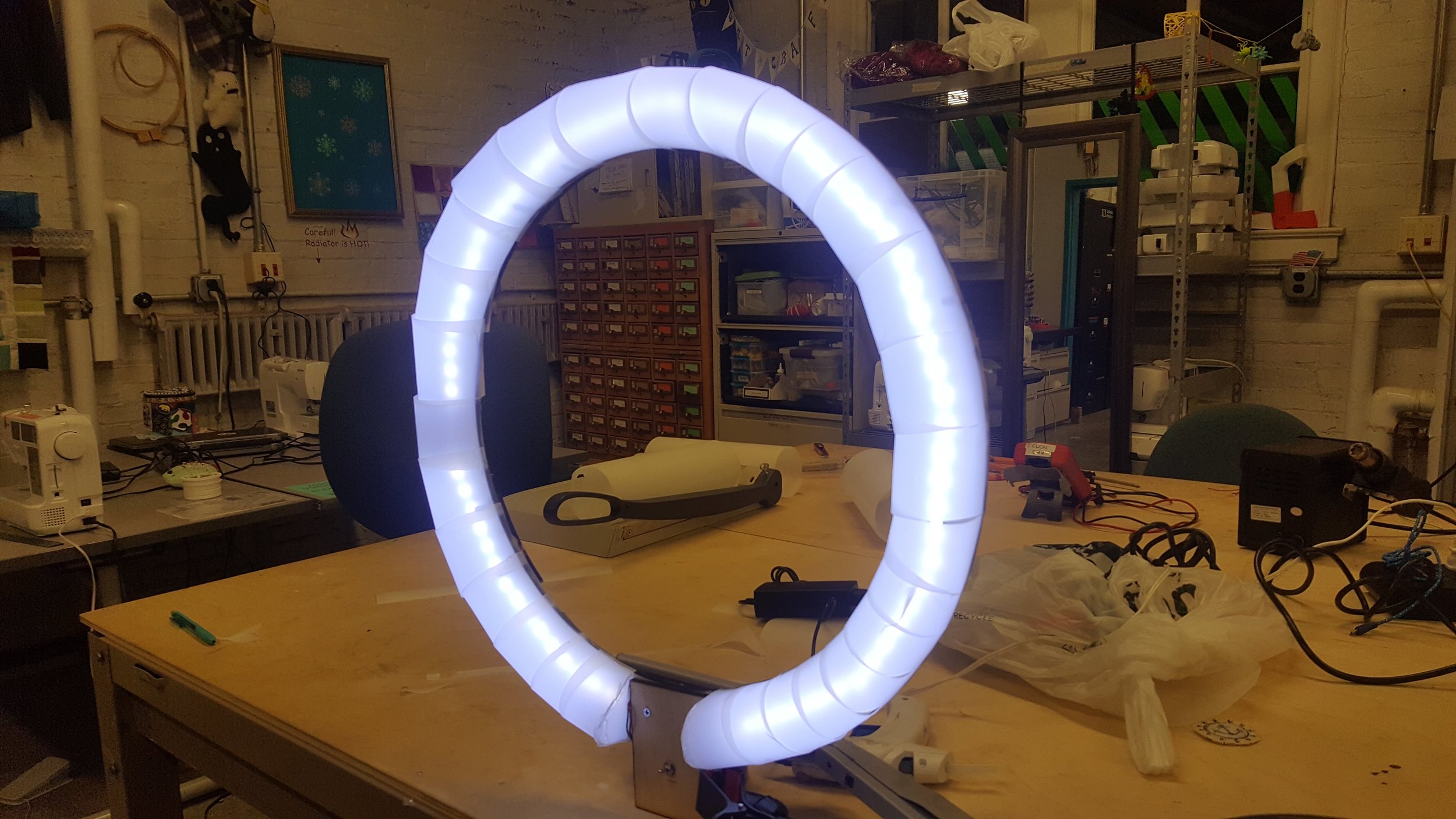
A ring light is exactly what it sounds like: a circular light source that produces direct, front-facing illumination. Because the subject is lit from nearly the same axis as the camera, shadows are reduced and details become easier to see. This is why ring lights are often praised for beauty shots, talking-head videos, tutorials, skincare content, and close-up work. They create a soft, even look that is flattering on faces and useful when you want clarity without a lot of fuss.
In practical terms, ring lights help with three things:
1. Softer facial lighting
Harsh overhead room lighting can make anyone look like they have not slept since the last fiscal quarter. A ring light brings the light source in front of the subject, reducing deep shadows under the eyes and nose.
2. Cleaner catchlights
Those bright reflections in the eyes are not just vanity. Catchlights make portraits and videos feel more alive. Ring lights create a very recognizable circular reflection that many creators love because it adds polish without complicated gear.
3. More predictable results
Natural light is lovely until the sun moves, a cloud shows up, or your apartment decides to become a cave at 4:17 p.m. A ring light gives you consistent output, which matters when you are filming, photographing, or hopping between meetings all week.
Why Ring Lights Became So Popular
Ring lights earned their fame by solving a very modern problem: people suddenly needed to look decent on camera, often in rooms never designed for it. Bedrooms became studios. Kitchen tables became office desks. A stack of books became a tripod. In that environment, ring lights exploded because they were intuitive, compact, and beginner-friendly.
For creators, the appeal was obvious. A ring light works well for makeup videos, tutorials, livestreams, unboxings, and product explainers because it lights the face evenly and does not take much time to set up. For remote workers, it offered a simple upgrade over terrible ceiling bulbs. For photographers, especially those working close-up, ring-style lighting had long been useful because it minimizes shadows around the lens axis.
And unlike more advanced studio systems, ring lights are less intimidating. Most people can understand brightness control, color temperature adjustment, and a phone mount. Nobody needs a semester-long lighting theory class just to stop looking haunted on a Tuesday call.
Where Ring Lights Shine Best
Beauty and skincare content
This is the ring light’s celebrity lane. When the goal is to show makeup texture, skincare application, or facial detail clearly, even frontal light is your friend. You want the audience focused on technique and color, not on dramatic cheek shadows that make a bronzer tutorial look like a film noir reboot.
Talking-head videos and livestreams
If you record commentary, classes, reaction videos, interviews, or short vertical content, a ring light can be a smart all-in-one solution. Many kits include a stand, phone holder, ball head, or wireless control, which makes them especially useful for solo creators.
Video calls and remote work
You do not need cinematic lighting to look professional in a meeting. A modest ring light positioned behind the camera can immediately improve visibility, reduce unflattering shadows, and help webcams perform better in dim rooms.
Macro and close-up photography
This is where ring lighting gets genuinely technical. Macro ring lights and ring flashes are used around the lens to illuminate subjects at very close distances, such as jewelry, flowers, insects, or product details. Because the light is near the lens axis, it can reduce the shadows that are otherwise hard to control in extreme close-ups.
Simple product demos
For creators showing small objects by hand, a ring light can deliver clean front light fast. It is especially helpful when you need to demonstrate a gadget, a beauty product, or a craft item without building a full studio setup.
How to Choose the Right Ring Light
Not all ring lights are created equal. Some are great for a desk and a webcam. Others are built for larger subjects, stronger output, and more flexible mounting. Before buying, think about what you are lighting, how far the light will be from the subject, and whether you need mobility or power.
Size matters more than people think
Small clip-on models can work for laptop calls or phone use, but they are limited. A larger ring light generally creates a softer look because the light source appears bigger relative to the subject. That means a bigger ring is usually better for flattering facial lighting, especially if the light is placed a little farther away.
As a rule of thumb:
- Small ring lights work for webcams, phones, and tight desk spaces.
- Mid-size ring lights are a solid choice for solo creators and tabletop setups.
- Larger bi-color ring lights are better when you want stronger output and a more polished studio feel.
Brightness control is not optional
A ring light with dimming control is far more useful than one that is simply “bright.” Different faces, rooms, skin tones, cameras, and times of day all need different light levels. Too dim and the camera struggles. Too bright and you get squinting, shiny skin, and the overall ambiance of being interrogated by your own content strategy.
Bi-color is a big upgrade
Many modern ring lights let you adjust color temperature, usually from warmer tones to cooler daylight-like tones. This matters because the wrong color can make your shot look odd compared with the room. If your space has warm lamps, a warmer setting may blend better. If you shoot in daylight, a cooler setting may look more natural. Matching the ambient environment creates a more believable, less “floating head in a blue cave” result.
Pay attention to color accuracy
If you create beauty, fashion, or product content, color quality matters. Better lights tend to advertise high CRI or TLCI ratings, which indicate more accurate color rendering. That is important when viewers need to see makeup tones, fabric shades, or product finishes that look believable on camera.
Mounting and included accessories matter
Some ring light kits are generous. Others give you the light and a stand that wobbles like a folding chair on a gravel driveway. Look for practical extras: a stable stand, phone mount, camera mount, power adapter, remote control, or app control. If you plan to use a heavier camera, check mounting limits before trusting your gear to a ring of LEDs and optimism.
How to Set Up a Ring Light So It Actually Looks Good
A ring light can be easy to use, but easy does not mean foolproof. Placement still matters.
For faces
Position the ring light slightly above eye level and aim it gently downward. This usually creates a more flattering shape than placing it too low. Keep the camera near the center opening or just behind the light so the illumination stays even.
For glasses
Ah, yes, the eternal enemy: reflections. If the ring shows up in glasses, raise the light a little higher, tilt it slightly, or move it off-axis just enough to reduce the reflection without losing the flattering effect.
For video calls
Use the ring light as your main front light and let the room do less work. A plain wall or tidy background helps, but the biggest upgrade is still usually lighting. Most webcams look dramatically better when they do not have to compensate for low light.
For product shots
Be careful. Ring lights can create circular reflections on shiny objects such as watches, packaging, glass, and metal. Sometimes that look is stylish. Sometimes it screams “I lit this with a giant donut.” For reflective products, you may need to change the angle or supplement with diffused side lighting.
For macro work
Close-up photography introduces a different set of challenges. The closer the lens gets, the harder it becomes to control shadows using normal lights. Ring flashes and macro ring lights help by delivering light around the lens. Still, even macro shooters often experiment with diffusion and angle because perfectly shadowless light can sometimes look too flat.
When a Ring Light Is Not the Best Choice
Ring lights are useful, but they are not the answer to every lighting problem ever invented.
If you want a more sculpted portrait with dimension and mood, an LED panel or softbox placed off to one side often works better. Ring lights can flatten facial features because the light comes from the front. That is great for clarity and beauty work, but less ideal when you want texture, drama, or a more cinematic look.
If you are lighting multiple people, a ring light may also feel limited. It is primarily built for a single subject. And if you need to shape light carefully around reflective products or larger sets, panel lights and softboxes usually provide more control.
In other words, a ring light is excellent at being a fast, flattering, solo-friendly tool. It is not trying to be a full studio. Frankly, that kind of honesty is refreshing.
Common Ring Light Mistakes
- Using it too bright: Brighter is not always better. Overlighting can flatten the image and make skin look shiny.
- Ignoring the room’s other light sources: Mixed color temperatures can make the shot look strange.
- Placing it too low: Up-lighting is rarely flattering unless your goal is “campfire ghost story.”
- Buying based only on price: Cheap kits can have unstable stands, weak mounts, and poor light quality.
- Assuming one light fixes everything: Background, framing, camera angle, and sound still matter.
Are Ring Lights Still Worth It?
Yes, especially for beginners, solo creators, remote workers, and anyone who wants better on-camera lighting without building a miniature film set. A good ring light remains one of the fastest ways to improve how you look on camera. It is practical, compact, approachable, and versatile enough to serve beauty content, video calls, tutorials, livestreams, and close-up photography.
The smartest way to think about it is this: a ring light is not a miracle device, but it is a reliable shortcut to cleaner, more flattering light. If your current setup relies on an overhead bulb, a prayer, and the pale glow of your laptop, that circular light may feel like a revelation.
So yes, let there be light rings. Just maybe also let there be dimmers, good stands, sensible color temperature settings, and a little restraint. Your viewers, your coworkers, and your retinas will thank you.
Real-World Experiences With Ring Lights
The funny thing about ring lights is that people often buy them for one reason and keep them for three others. Someone starts with a cheap clip-on model for video calls, then realizes it also helps with selfies, product listings, and late-night school presentations. Another person buys a larger bi-color kit for social content and suddenly becomes the unofficial family photographer because “your setup just makes everyone look healthier.” Ring lights have a sneaky way of becoming household infrastructure.
One of the most common experiences is the instant-before-and-after shock. You turn the light on, glance at the screen, and wonder why you spent two years looking like you were broadcasting from a witness protection basement. The difference is rarely subtle. Faces are clearer. Eye contact looks stronger. Skin tone becomes more even. The camera struggles less. Even people who do not care about gear notice the change right away.
But the learning curve is real. A lot of first-time users put the ring light directly in front of their face at maximum brightness and then wonder why they are squinting like they lost a staring contest with the sun. The better experience usually comes after small adjustments: lowering the brightness, raising the light slightly above eye level, warming the color temperature, and backing it up a little. Suddenly the effect looks less “breaking news spotlight” and more polished and natural.
Creators who wear glasses often go through a brief phase of ring-light betrayal. The very feature that makes the light attractive can also show up as a glowing circle in lenses. The solution is usually simple, but it feels deeply personal the first time it happens. A tiny tilt, a slightly higher position, or a minor shift off-center can rescue the shot. After that, people talk about reflections with the seriousness of engineers and the frustration of anyone who has ever tried to record one clean video before lunch.
Then there is the portability factor. A good ring light is often appreciated most when the room is terrible. Maybe you are in a hotel, a dorm, a spare bedroom, or a random corner of the house where the overhead bulb seems committed to making everyone look unwell. A ring light can turn an awkward space into a usable one fast. That matters more than many people expect, especially for remote workers, students, and creators who do not have a dedicated studio.
Product sellers and hobby photographers also have interesting experiences with ring lights. For simple demonstrations, handmade goods, and face-forward explaining, the light is wonderful. For reflective surfaces, however, the ring shape can become a visible design element whether you invited it or not. A glossy watch face, a piece of metal hardware, or a shiny cosmetic jar can suddenly feature a glowing halo reflection. Some users love that look. Others spend ten minutes moving the object by half an inch like they are defusing a bomb. Both reactions are valid.
Macro users tend to have the most technical love-hate relationship. They appreciate how ring lighting helps when the lens is extremely close to a subject, but they also learn quickly that shadowless does not always mean beautiful. Some discover that a little diffusion or a slight adjustment produces more texture and depth. That is part of the fun: the ring light gets you in the game quickly, then experience teaches you how to shape the result.
In the end, the experience of using a ring light is usually the same story told in different rooms: better visibility, faster setup, fewer bad camera moments, and the gradual realization that good lighting is not vanity. It is communication. People see you more clearly, and that changes everything.
Conclusion
Ring lights earned their place because they solve a very real problem with very little drama. They make faces brighter, videos cleaner, tutorials sharper, and close-up work easier to manage. The best ones give you control over brightness, color temperature, and mounting, while the smartest users know when to lean into the flattering look and when to switch to something more directional.
If you want a lighting tool that is approachable, effective, and versatile, the ring light still deserves its glow-up. It may not replace every other light in your kit, but for many people it is the tool that gets them from “I should probably improve my setup” to “Okay, this actually looks good.”