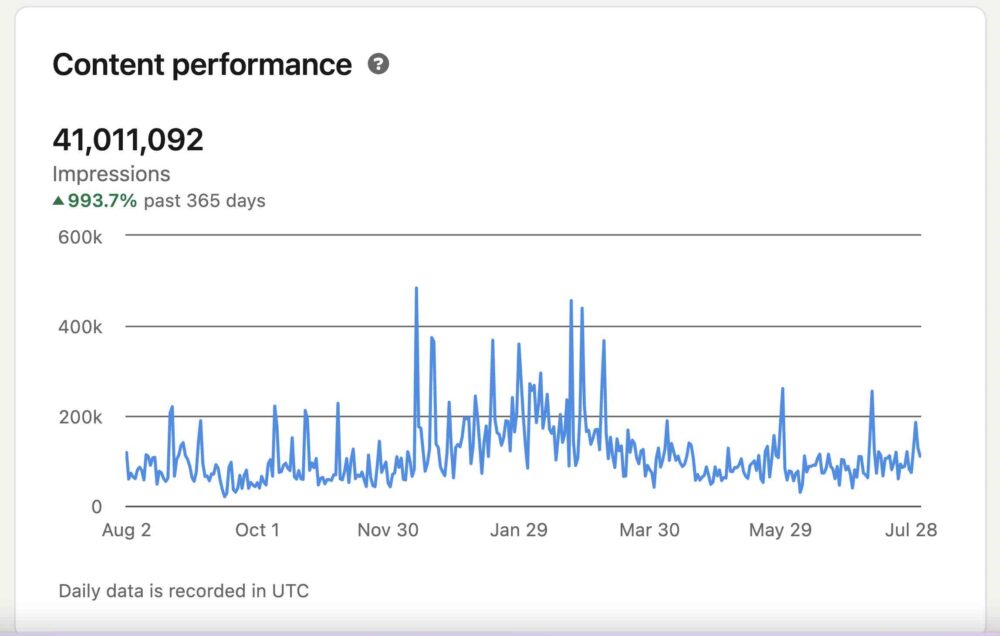
Some headlines sound like a humblebrag wearing designer sunglasses. This one does not even try to hide it. “Lead411: We’re The #4 Sales Influencer on LinkedIn” is bold, a little chesty, and exactly the kind of line that makes sales pros stop scrolling for a second and think, “Okay, now you have my attention. Show me the receipts.”
That is precisely why the headline works. It is not just about applause. It is about positioning. In a market crowded with sales intelligence platforms, prospecting tools, buyer-intent products, CRM enrichers, and enough “AI-powered pipeline acceleration” promises to make your coffee nervous, visibility matters. Lead411 used a sharp, memorable claim to signal something bigger than rank: relevance.
The smartest way to read the headline is not as a shiny trophy frozen in time, but as proof of a strategy that worked. Lead411 was saying it had earned enough attention, trust, and engagement on LinkedIn to break into the top tier of sales voices. In B2B, that is not fluff. That is distribution. That is brand gravity. That is the difference between “Who are these people?” and “I keep seeing them everywhere, maybe I should take a closer look.”
Why the “#4” headline mattered in the first place
When the claim appeared, it stood out because it did more than celebrate a vanity metric. It hinted at momentum. The message behind it was simple: in a noisy LinkedIn ecosystem, Lead411 was not just present, it was growing. That matters because sales influence on LinkedIn is rarely built on one viral post. It is usually built on repetition, relevance, and the slightly unglamorous discipline of showing up again tomorrow with something useful to say.
In other words, this was not a lucky lottery ticket dressed up as personal branding. It was a business result. The company had clearly figured out how to turn content into attention and attention into trust. And in B2B sales, trust travels faster than any cold email template with the phrase “quick question” in the subject line.
Even better, the statement came attached to a larger industry insight. Sales influence on LinkedIn is not only about who has the most followers. It is about who continues to grow, who keeps earning engagement, and who remains useful when the algorithm gets moody. That distinction has only become more important over time, especially as newer ranking approaches focus less on raw follower totals and more on follower growth and posting consistency.
Lead411 is not selling popularity. It is selling timing, data, and access.
A sales intelligence company with a practical pitch
Lead411 has been around since 2001, which in software years is somewhere between “battle-tested” and “old enough to remember when every website had a glossy button that said Click Here.” Longevity matters in sales tech because it suggests the company has survived more than one trend cycle, more than one platform change, and more than one wave of competitors promising to reinvent prospecting forever.
At its core, Lead411 positions itself as a B2B sales intelligence platform. The value proposition is straightforward: help sales and marketing teams find the right people faster, with verified contact information, growth signals, buyer-intent cues, and CRM-friendly workflows. In plain English, it wants to save reps from the soul-draining routine of hunting for a prospect, finding the wrong email, calling the wrong number, and then pretending that was “top-of-funnel activity.”
That practical angle is important to the company’s LinkedIn influence story. People do not keep following a sales brand just because it has swagger. They follow because the content keeps solving problems. Lead411’s product promise and its content strategy are naturally aligned: better targeting, cleaner data, stronger timing, smarter outreach.
Why that positioning fits LinkedIn perfectly
LinkedIn remains the natural habitat of B2B thought leadership. It is where marketers, SDRs, founders, RevOps leaders, recruiters, and revenue teams gather to compare notes, collect tactics, and occasionally pretend they “accidentally” created a framework with a three-letter acronym. For a company like Lead411, LinkedIn is not just a social platform. It is a live stage where expertise can be demonstrated in public.
That makes the company’s #4 headline more than a PR flex. It shows the brand understood something many sales tools still miss: if your ideal buyers spend time on LinkedIn, your content should not read like a brochure that escaped from a conference booth. It should sound like the best rep on your team sharing field-tested ideas, useful context, and honest takes on what actually works.
Why LinkedIn influence matters more than ever in modern sales
Thought leadership is now part of the sales motion
Modern B2B buyers do a huge amount of research before they ever reply to a rep. They read posts, skim comments, visit profiles, compare vendors, and quietly decide whether a company sounds credible long before a demo gets scheduled. That means thought leadership is no longer a decorative marketing activity. It is part of sales enablement.
Lead411’s rise as a recognized sales voice fits neatly into that shift. If buyers are evaluating not just products but also the people and perspectives behind them, then influence is not extra. It is a trust layer. A company that consistently teaches, explains, and comments intelligently on sales trends earns an advantage before the first outreach message is even sent.
And here is the kicker: social selling works best when it feels less like selling. Nobody wakes up excited to consume another self-congratulatory “10X your pipeline by lunchtime” post. Buyers respond to content that helps them think more clearly, act more confidently, or avoid expensive mistakes. The best LinkedIn sales influencers are not merely loud. They are useful.
Content has become pre-call credibility
Sales teams used to rely heavily on direct outreach to create first impressions. Now, a big chunk of the first impression is created before outreach ever happens. A prospect may see your CEO’s post, your head of sales in the comments, your brand page sharing tactics, and your product mentioned in a peer discussion. By the time your rep appears in the inbox, your company either feels familiar and credible or just another name in a crowded tab.
That is where Lead411’s LinkedIn presence becomes strategically interesting. The company did not just win attention for a day. It built a layer of pre-call familiarity. If you are a prospecting platform talking to people who live inside LinkedIn, credibility earned on LinkedIn has special weight. It is a little like a chef getting compliments from other chefs. Different room. Better signal.
What Lead411’s content strategy appears to understand
Consistency beats random bursts of genius
One of the most revealing details in Lead411’s own broader influencer work is that top-performing sales creators are usually active, consistent, and not waiting for inspiration to strike like a lightning bolt wearing loafers. The company’s later ranking updates also leaned into follower growth and posting patterns, which suggests an important lesson: influence is measured not only by size, but by movement.
That is a useful correction to the old idea that a giant follower count automatically means stronger impact. In practice, a smaller but growing audience can be more meaningful if it is more engaged, more current, and more aligned with the category. Lead411’s story supports the idea that momentum is often more valuable than bragging rights.
Educational content travels farther than product worship
Lead411’s topic footprint makes sense for LinkedIn. Sales teams care about prospecting efficiency, contact accuracy, CRM hygiene, intent data, warm leads, cold email performance, lead scoring, and workflow friction. These are not abstract branding topics. They are operational headaches. A company that repeatedly posts around those pain points has a clear lane.
That is the beauty of category-adjacent content. Instead of shouting “our product is amazing” from a digital rooftop, the smarter move is to publish insight that makes the buyer’s day easier. Explain how to identify a warm account. Break down why stale CRM data kills outreach. Compare buying signals. Discuss when a list should be enriched, segmented, or tossed into the sea. Once the audience sees you as helpful, the product pitch feels less like an interruption and more like the logical next step.
Product credibility and social credibility reinforce each other
Lead411’s brand story works because the product and the content do not live on separate planets. The company talks about verified contacts, intent cues, and CRM enrichment because those are central to what it sells. That gives the content a built-in seriousness. It is not commentary for commentary’s sake. It is commentary anchored in a commercial problem the company is actively trying to solve.
That alignment matters in a category where buyers are skeptical. Sales intelligence buyers know the market is crowded. They also know not every database is equally fresh, equally deep, or equally strong outside particular segments. So when a company earns influence in public, it helps close the credibility gap. The audience starts to assume there may be substance behind the posts.
The competitive angle makes the headline even more interesting
Lead411 operates in a market packed with well-known names. Review and comparison ecosystems routinely place it next to tools like ZoomInfo, Apollo.io, Lusha, RocketReach, UpLead, Demandbase, and LinkedIn Sales Navigator. That means the company is not competing in a sleepy niche where everyone politely takes turns. It is competing in one of the most aggressive corners of B2B revenue tech.
In that kind of market, influence can do what feature tables cannot. A comparison page may tell you who has broader coverage, more automation, or a different pricing model. But influence answers a different question: which company do buyers remember, trust, and talk about? The “#4 sales influencer” claim was powerful because it pushed Lead411 beyond feature parity and into mindshare.
Mindshare is underrated because it is hard to measure neatly in a spreadsheet. But it changes outcomes. It improves response rates. It warms up brand searches. It helps recruiting. It gives founders and sales leaders a stronger stage presence. It can even make category debates less punishing, because people begin the conversation already knowing your name.
What other brands should learn from Lead411’s example
1. Build around the buyer’s real workflow
Lead411’s content opportunity exists because it speaks to daily sales work: finding people, checking accuracy, using intent, keeping the CRM usable, and improving outreach. That is a smarter foundation than vague inspiration. Buyers reward content that fits into the actual rhythm of their job.
2. Do not treat LinkedIn like a corporate bulletin board
The companies that win on LinkedIn rarely sound like they copied and pasted a press release into the feed. They sound human, direct, and opinionated. Lead411’s headline itself proves the point. It had personality. It had edge. It sounded like someone who knows the room and wants to make the room react.
3. Let category expertise create demand before your reps do
Thought leadership is most valuable when it lowers resistance. A strong LinkedIn presence can make prospects more receptive to outreach because the brand already feels familiar. When buyers have seen useful posts from your team for months, your rep is no longer arriving as a stranger.
4. Treat influence as a business asset, not a vanity side quest
Follower counts are nice. Business outcomes are nicer. The real takeaway from Lead411’s story is not “go chase clout.” It is “earn enough authority that your content becomes part of your go-to-market engine.” That is a much more durable play.
The bigger truth behind “We’re The #4 Sales Influencer on LinkedIn”
The smartest reading of the headline is not literal chest-beating. It is strategic shorthand. Lead411 was announcing that it had become a meaningful voice in the sales conversation, and that influence came from repeated relevance, not random luck. In a market where trust is expensive and attention is slippery, that is not a minor achievement.
It also reveals something important about B2B brands in 2026 and beyond: the companies that win are not always the ones with the biggest budget or the loudest product page. Often, they are the ones that educate best, show up consistently, and build credibility in public while everyone else is still polishing their “revolutionary platform” tagline for the eleventh time.
Lead411’s #4 moment may have started as a ranking, but its lasting value is what it teaches. On LinkedIn, influence is not a cosmetic layer added after the business is built. It can become part of the business itself. And once that happens, every post does a little more than generate engagement. It quietly helps generate pipeline.
Additional : Real-World Experiences Behind Sales Influence on LinkedIn
There is also a very practical, human side to this story that makes Lead411’s headline more believable. Anyone who has spent time around sales teams knows that influence on LinkedIn rarely begins with glamour. It usually starts with awkward posts, low engagement, uncertainty about tone, and the classic internal debate: “Should we really post this, or will it look cringe?” The companies that break through are usually the ones that keep going anyway.
That is why Lead411’s position in the sales conversation feels less like a magic trick and more like the result of reps, marketers, and leaders learning what the audience actually responds to. In the real world, audiences do not reward perfection nearly as much as they reward clarity. A clean breakdown of cold outreach mistakes, a sharp opinion on buyer intent, or a practical explanation of why CRM data goes stale will almost always outperform polished corporate fluff. Sales professionals are busy. They want a post that helps them fix something before the next meeting, not a philosophical speech wrapped in buzzwords.
Another experience many revenue teams share is that LinkedIn influence starts compounding only after the content becomes recognizable. The first few months may feel like posting into the void. Then a pattern emerges. People begin to associate a brand with specific strengths. For Lead411, that lane is obvious: verified contact data, growth signals, prospecting efficiency, and smarter sales timing. Once a company keeps hitting the same useful themes without becoming repetitive, trust starts to stack. A buyer may not convert after one post, but after twenty helpful posts, the brand becomes familiar. Familiarity lowers friction.
There is also the reality that influence works best when it is distributed across people, not trapped inside a logo. Company pages matter, but human voices matter more. Founders, heads of sales, marketers, customer success leaders, and power users all add texture to the brand. That is one reason sales influence on LinkedIn feels more authentic than many other forms of digital marketing. You are not just seeing campaigns; you are seeing perspectives. Buyers notice that difference immediately.
One more field-tested lesson: influence does not replace product quality. It amplifies it. If the data is weak, the workflow clunky, or the results underwhelming, no amount of posting can hide that forever. But when the product solves a real problem, LinkedIn becomes an accelerator. Content opens the door, reputation keeps it open, and the product has to do the rest. That is the healthiest way to interpret Lead411’s success. The company did not simply talk loudly. It built a recognizable voice around a clear market need.
So the experience behind the headline is probably less “we won the internet” and more “we kept teaching, refining, posting, and aligning our message with what sales teams actually need.” That is encouraging for other brands. You do not need celebrity energy to matter on LinkedIn. You need consistency, a useful point of view, and the discipline to talk about the buyer’s problems more often than your own greatness. Funny enough, that is also what good selling has always looked like.