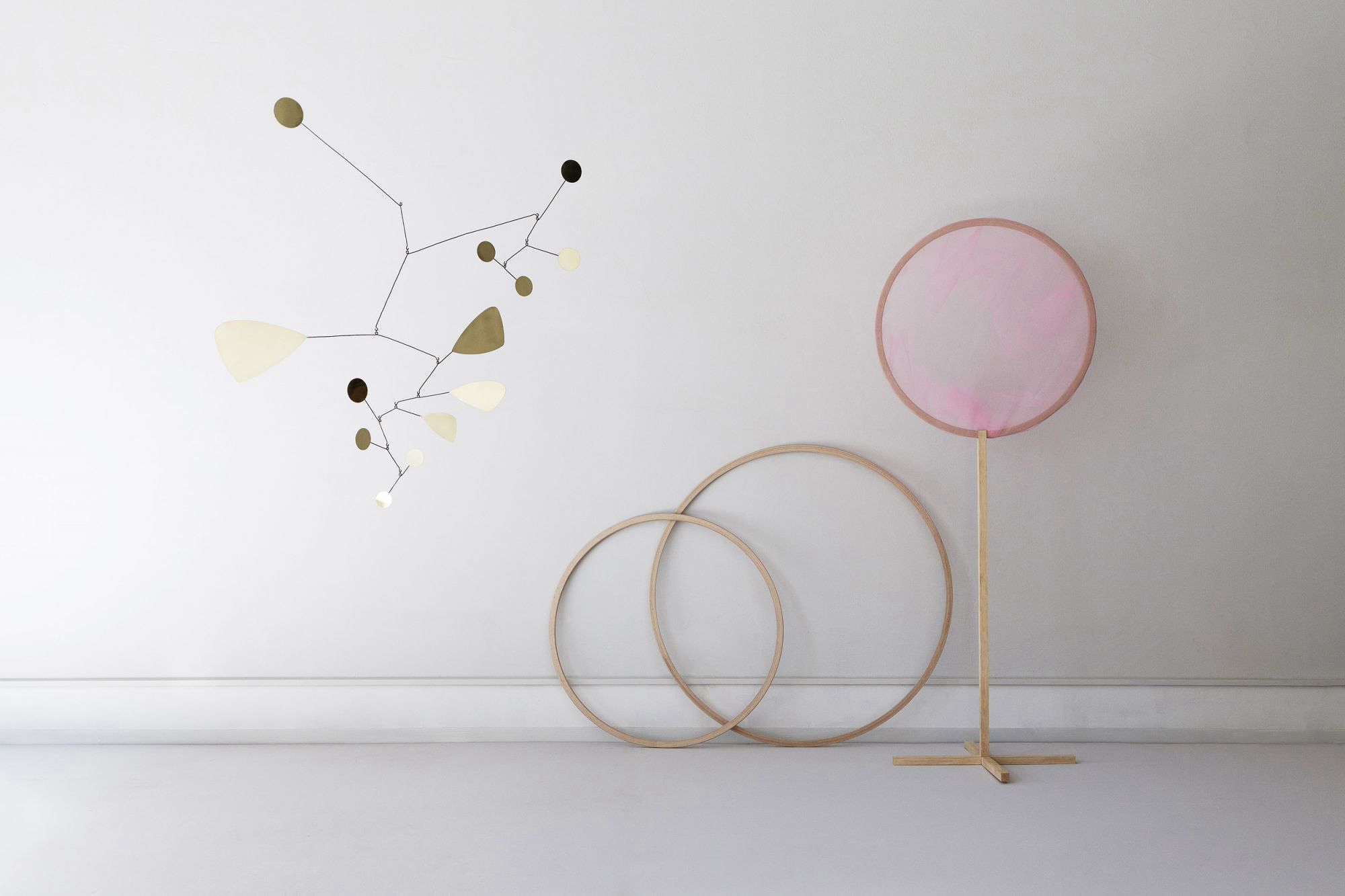
A blank ceiling is usually treated like the Switzerland of interior design: neutral, quiet, and determined not to get involved. The Lappalainen Brass Mobile changes that. Suspended overhead, this handmade kinetic sculpture turns unused air into part of the room, using balanced metal forms, warm brass, and gentle motion to create a focal point that never looks exactly the same twice.
Unlike a framed print, the mobile does not sit politely in one visual position. It rotates, pauses, catches light, throws shadows, and occasionally performs a tiny dance because someone walked past with a cup of coffee. That responsiveness is the source of its appeal. A Lappalainen brass mobile is not merely decoration; it is a quiet piece of moving architecture.
What Is a Lappalainen Brass Mobile?
A Handmade Hanging Sculpture
The Lappalainen Brass Mobile is a handcrafted hanging sculpture associated with the Germany-based Lappalainen studio. Retail and design references describe versions made from brass and iron, with individual forms connected to slender arms that rely on careful counterbalance. Different models use circles, dots, leaves, or more elaborate constellations of small brass elements. Dimensions vary by design and listing, so the name refers to a family of mobiles rather than one permanently fixed size.
More Than Brass-Colored Decor
The attraction is not simply that the object is gold-toned. Brass has visual depth. In bright daylight it can appear crisp and luminous; under warm evening lamps it becomes richer and more amber. Because the surface reflects light differently as the mobile turns, even a restrained design gains complexity without needing loud colors or a giant neon slogan telling guests to “Live, Laugh, Rotate.”
Why the Design Feels So Distinctive
Balance You Can Actually See
Most furniture hides its engineering. A table does not invite you to admire its negotiations with gravity unless one leg is short. A mobile does the opposite. Its structure makes balance visible. Large forms offset smaller clusters, rods distribute weight, and every connection affects the position of the whole sculpture.
This visible equilibrium gives the Lappalainen Brass Mobile a calm but alert character. It looks relaxed, yet every component is doing a job. The result is especially satisfying in rooms dominated by solid rectanglessofas, cabinets, windows, rugs, screens, and the suspiciously rectangular box containing the router. A mobile introduces curves, diagonals, negative space, and motion without adding visual bulk.
Movement Without Mechanical Noise
A traditional mobile responds to air currents rather than demanding a motor. Museum definitions describe mobiles as sculptures composed of balanced, separate parts that move, often in response to surrounding air. The most effective examples do not spin like carnival rides. They drift, reverse, and settle, allowing the viewer to notice time passing at a gentler pace.
Shadows Become Part of the Artwork
The sculpture itself is only half the composition. As brass shapes turn, their shadows stretch, overlap, and shrink across nearby walls or ceilings. Morning sun can make the piece look graphic and precise, while evening light creates softer silhouettes. In this sense, the mobile occupies more space than its measurements suggest. It decorates the air and borrows the surrounding surfaces for free.
The Modern Art Story Behind Hanging Mobiles
From Static Sculpture to Art in Motion
Hanging mobiles belong to the broader history of kinetic art, in which movement becomes an essential part of the work. Alexander Calder helped establish the modern mobile in the early 1930s after experimenting with abstraction, wire, sheet metal, engineering, and systems of counterbalance. Major American museums describe his mobiles as sculptures that brought motion, time, and changing relationships into three-dimensional art. Marcel Duchamp is widely credited with applying the term “mobile” to Calder’s moving constructions.
The Lappalainen Brass Mobile belongs to that design lineage without needing to impersonate a museum piece. Its metal shapes, suspended arms, and environmental movement recall the principles that made modern mobiles so influential: balance, unpredictability, open space, and the idea that sculpture can change as the viewer and the air move around it. Remodelista has specifically presented Lappalainen mobiles within a Calder-inspired design context.
Why the Idea Still Feels Contemporary
Design publications have repeatedly shown mobiles and hanging sculptures in adult living rooms, dining areas, bedrooms, studios, and gallery-like homesnot only nurseries. They are used to draw the eye upward, add movement and dimension, and turn empty ceiling space into a deliberate part of the composition.
How to Style a Lappalainen Brass Mobile
Choose a Location With Breathing Room
The best placement allows the mobile to move and be seen from more than one angle. Consider an open corner, a stair landing, the area beside a large window, or the center of a seating arrangement. Over a dining table, it can function like sculpture where a chandelier might normally go, provided lighting and clearance needs are already handled.
Pair Brass With the Right Materials
Brass is surprisingly flexible. It can warm up white plaster, concrete, pale oak, walnut, linen, marble, and matte-painted walls. It also works well with deep green, navy, charcoal, rust, and clay tones. American home-design coverage frequently pairs brass with natural materials and notes its compatibility with both warm and cool palettes.
Use Light Deliberately
Place the mobile where side light can graze its surfaces. Daylight from a nearby window produces changing reflections, while a directional lamp can emphasize shadows after sunset. Do not aim an extremely harsh spotlight directly at highly polished brass unless you enjoy being briefly interrogated by your own decor.
Installation: Let It Float, Not Fall
Confirm the Full Dimensions First
Product measurements for Lappalainen mobiles differ among models and older retail listings. Before choosing a location, confirm the exact width, height, hanging length, weight, and included hardware for the specific piece. A mobile that looks compact in a tightly cropped product photo may have an impressive wingspan once fully assembled.
Use Proper Ceiling Support
Install the mobile with hardware rated for the sculpture and the ceiling material. A fastener secured into a ceiling joist is often the most reassuring option; otherwise, use an appropriate rated anchor selected for the ceiling construction. When the structure, wiring, or mounting point is uncertain, hire a qualified installer. Beautiful kinetic art should move because of airflow, not because the drywall has filed for separation.
After hanging, gently test the sculpture’s entire range of motion. Make sure no element can strike a wall, light fixture, plant, door, or person. Keep it away from ceiling fans and strong HVAC vents, which may create excessive movement. Gentle circulation is enough.
Brass Patina, Cleaning, and Long-Term Care
Decide Whether You Want Shine or Patina
Some Lappalainen brass and copper mobiles are described as unlacquered and free of chemical surface treatment, meaning the metal can gradually develop a darker natural patina. That change is not automatically damage. Many owners value it because it gives the sculpture a softer, more individual finish. Others prefer the original polish. The important step is deciding which look you want before reaching for an acidic cleaner with the enthusiasm of a chemistry-show host.
Start With the Gentlest Care
For routine maintenance, remove dust carefully with a soft, dry microfiber cloth or a clean, soft brush. Support delicate arms rather than pulling against them. Avoid spraying cleaner directly onto the hanging sculpture, because droplets can collect at joints and overspray can reach walls, floors, or nearby furniture.
If deeper cleaning is necessary, first confirm whether the piece is solid brass, brass-plated, lacquered, or intentionally unlacquered. Cleaning methods that are acceptable for solid brass can harm plating or remove a desired patina. Home-care authorities consistently recommend identifying the finish, using gentle materials, testing an inconspicuous area, and drying metal thoroughly.
What to Check Before Buying
Model, Size, and Finish
Because the Lappalainen name appears across several forms and dimensions, identify the exact model. Ask for current photographs, overall measurements, hanging drop, materials, finish, condition, and whether the mobile has developed patina. Confirm whether the listed dimensions describe the sculpture at rest or its widest potential spread.
Included Hardware and Shipping Method
Find out what mounting hardware is included and whether it is suitable for your ceiling. For international orders, review packaging, insurance, duties, return terms, and what happens if a rod or brass element arrives bent. A mobile is light-looking but geometrically sensitive; a minor bend can affect balance.
Authenticity and Seller Information
Buy through the studio or a retailer that clearly identifies the maker and provides useful product details. Save the invoice, product description, care instructions, and correspondence. These records help with future maintenance, resale, insurance, or the inevitable moment when someone asks, “Where did you get that?” before taking fourteen photos of it.
Experience Notes: What Living With a Lappalainen Brass Mobile Feels Like
The First Day: Bigger in Space Than on Screen
A typical ownership experience begins with surprise. Product images flatten a mobile into a tidy arrangement of lines and shapes, but the real object occupies a volume of air. Once suspended, it has a front, back, side view, shadow view, and a mysterious angle that appears only while you are carrying laundry. The first practical lesson is that placement matters more than expected. A few inches can determine whether the mobile feels elegantly centered or oddly nervous.
After installation, people often spend several minutes watching it settle. Each arm seems to negotiate with the next. A small movement travels through the structure, slows, and then returns somewhere else. The effect is not dramatic, and that is precisely why it works. The mobile does not shout across the room. It quietly convinces the room to pay attention.
The First Week: The Room Starts to Feel Taller
As the novelty becomes part of daily life, the sculpture changes how the room is perceived. Empty overhead space begins to feel intentional. The eye travels upward, then follows the rods outward, making the ceiling seem more connected to the furniture below. In a compact apartment, this can create welcome vertical interest without adding another object to an already crowded floor plan.
The mobile also introduces a useful pause. During computer work, reading, or conversation, its motion offers a soft visual reset. You notice it when the heat turns on, when a door opens, or when a breeze reaches the window. These tiny environmental signals make the room feel less static. It is almost a weather station, except it gives no useful forecast and looks much better above a credenza.
Over Time: Light and Patina Personalize the Piece
Weeks and months reveal the most rewarding part of the experience: repetition without sameness. Winter sunlight may strike the brass at a low angle and throw long, sharp shadows. Summer light can make the forms brighter and the shadows shorter. At night, one nearby lamp may transform the sculpture into a second, larger composition on the wall.
If the brass is unlacquered, gradual patina adds another layer of change. Fingerprints, humidity, air exposure, and cleaning choices can influence the surface. Owners who appreciate natural aging may find the darker tone calmer and less reflective. Those who love a polished finish will need occasional careful maintenance. Neither approach is inherently superior; the best finish is the one that supports the room and the owner’s tolerance for polishing small suspended objects while questioning every life choice that led to that afternoon.
When Guests Notice It
A well-placed Lappalainen Brass Mobile often becomes a conversation starter because it does not fit neatly into the categories of lamp, picture, or furniture. Guests may initially ask whether it is moving on its own. The answerair currents and balanceusually leads to closer inspection. Unlike fragile tabletop decor, the mobile can command attention without inviting everyone to pick it up, which is a social advantage not to be underestimated.
The most successful experience comes when the piece feels integrated rather than staged. It should relate to the table, seating group, window, or architecture beneath it. When that relationship is right, the mobile no longer looks like an accessory added at the end. It feels as though the room always had a quiet current running through it and someone finally made that current visible.
The Lasting Impression
The Lappalainen Brass Mobile suits people who want art to interact with everyday life. It offers the warmth of brass, the discipline of careful craftsmanship, and the unpredictability of motion. It can soften minimalism, sharpen an eclectic interior, and transform neglected ceiling space into a genuine design feature.
Its greatest luxury is not shine or scale. It is attention. The sculpture rewards anyone willing to notice small changesthe angle of a leaf, the crossing of two shadows, the slow return to balance. In a home full of objects designed to beep, refresh, and demand immediate action, a mobile that simply drifts may be the smartest thing in the room.