A kitchen is where dinner happens, coffee rescues Monday morning, and somebody inevitably asks, “What’s for dinner?” while standing directly in front of a full refrigerator. A mudroom, meanwhile, is the heroic buffer zone between the outside world and your clean floors. Put them togetheror simply design them to work as a teamand you get one of the smartest home upgrades imaginable.
The best kitchen and mudroom ideas are not just pretty pictures of white cabinets and wicker baskets. They solve real-life problems: muddy shoes, school backpacks, grocery bags, dog leashes, sports gear, mail piles, lunch boxes, wet coats, and that mysterious single glove that appears every winter like a tiny knitted ghost. Whether you have a spacious back entry, a narrow hallway, a kitchen-adjacent nook, or just one wall near the garage door, the goal is the same: create a practical, attractive transition space that keeps daily chaos from marching straight into the heart of your home.
Below, we’ll explore kitchen mudroom ideas, small mudroom layouts, storage solutions, flooring options, color inspiration, family-friendly organization systems, and design details that make the space feel intentional instead of improvised. Because a mudroom should not look like a shoe store lost a fight.
Why Kitchen and Mudroom Design Works So Well Together
The kitchen is already a high-traffic command center. It’s where groceries land, lunch bags get packed, calendars are checked, and everyone somehow gathers even when there are perfectly good chairs elsewhere. A mudroom near the kitchen makes sense because it catches the mess before it reaches cooking, dining, and living areas.
In many American homes, the garage, side door, or back door opens close to the kitchen. That makes the area ideal for a mudroom drop zone. Instead of letting shoes, coats, keys, and backpacks scatter across counters and floors, you can create a designated landing area that supports everyday routines.
The Main Benefits
A well-planned kitchen mudroom combination can improve traffic flow, reduce clutter, protect floors, create storage for seasonal gear, and make mornings less frantic. It also adds visual polish. Built-in cabinets, a bench, hooks, tile flooring, and attractive baskets can make a utilitarian area feel like part of the home’s design story.
Think of it as the backstage crew for your household. The kitchen gets applause. The mudroom keeps the show from collapsing.
Start With a Practical Layout
Before buying baskets, hooks, or a bench that looks adorable online but may block the door in real life, study how your household enters and exits the home. Good mudroom design starts with movement.
Ask These Layout Questions
Where do people naturally drop bags? Which door gets used most often? Is there enough space to sit while removing shoes? Do groceries need a clear path to the kitchen? Can wet coats hang without dripping onto wood flooring? Is there room for pet supplies, cleaning tools, or sports equipment?
The best layout answers these questions without requiring everyone to become a professional organizer. If the system is too fussy, real life will ignore it. Real life is very committed to ignoring fussy systems.
Popular Kitchen Mudroom Layouts
The back-entry mudroom: This layout sits between the kitchen and back door or garage entrance. It works beautifully for families, pet owners, and anyone who prefers to unload groceries close to the kitchen.
The hallway mudroom: A narrow hallway can become a mini mudroom with wall hooks, slim shoe storage, a shallow bench, and overhead shelves.
The laundry-mudroom combo: If your laundry room is near the kitchen, it can pull double duty with cabinets, hampers, hooks, and a countertop for folding or organizing bags.
The kitchen wall drop zone: No separate room? No problem. A kitchen-adjacent wall can hold a bench, peg rail, floating shelf, baskets, and a message board.
Built-In Storage: The Gold Standard
Built-ins are popular for a reason. They look clean, maximize vertical space, and can be customized for your household. A built-in kitchen mudroom might include tall lockers, lower drawers, open cubbies, closed cabinets, hooks, and a bench.
Open Storage vs. Closed Storage
Open storage is convenient for daily-use items like jackets, backpacks, and dog leashes. Closed storage hides visual clutter such as seasonal gear, cleaning supplies, bulk paper towels, and the family collection of reusable tote bags that somehow multiplies in the dark.
The best mudroom storage usually combines both. Use open hooks for grab-and-go items and closed cabinets for anything that makes the space look messy. A few doors can make your home look calmer even when everyone inside is running late.
Individual Lockers or Cubbies
If multiple people use the space, assign each person a cubby or locker. This works especially well for kids because it gives them a clear place for backpacks, shoes, hats, and sports gear. Add labels if needed. Labels are basically tiny household managers that never complain.
Add a Bench That Works Hard
A mudroom bench is more than a place to sit. It creates a natural pause point for removing shoes, setting down groceries, helping children with boots, or convincing the dog that muddy paws are not a lifestyle brand.
Choose a bench with storage underneath if space allows. Open cubbies are great for shoes and baskets. Drawers hide clutter better. A lift-top bench can store seasonal items, though it may be less convenient for daily use if people leave bags on top.
Bench Size and Comfort
The bench should be deep enough to sit comfortably and long enough for your household’s needs. In a small space, even a compact bench can make a big difference. Add a performance-fabric cushion for comfort and durability. If the area sees wet coats, muddy boots, or enthusiastic pets, choose washable or stain-resistant materials.
Hooks Are Small but Mighty
Hooks are one of the simplest and most effective mudroom ideas. They are affordable, easy to install, and more practical than hangers for daily use. People are far more likely to toss a coat on a hook than carefully place it on a hanger after a long day.
Install hooks at different heights if children use the space. Lower hooks help kids manage their own belongings, which means fewer backpacks on the kitchen floor and fewer parental speeches that begin with, “How many times do I have to ask…”
What to Hang on Hooks
Use hooks for coats, bags, hats, dog leashes, umbrellas, reusable shopping bags, and lightweight sports gear. For a polished look, choose hardware that matches or complements your kitchen cabinet pulls, door handles, or lighting fixtures.
Smart Shoe Storage Ideas
Shoes are the unofficial villains of entryway organization. They spread, multiply, and position themselves exactly where you need to walk. A kitchen mudroom needs a shoe plan.
Best Shoe Storage Options
Shoe cubbies: Great for everyday shoes and children’s footwear.
Pull-out drawers: Ideal for hiding shoes while keeping them accessible.
Boot trays: Perfect for wet or muddy footwear.
Vertical shoe cabinets: Excellent for narrow spaces.
Open shelves: Useful for families who need quick access and easy cleanup.
Keep only the most-used shoes in the mudroom. Store off-season footwear elsewhere. If every pair of shoes you own lives by the door, the mudroom becomes less of a design feature and more of a footwear conference.
Choose Durable Flooring
Flooring matters in a kitchen mudroom because this area faces moisture, dirt, grit, foot traffic, and the occasional grocery bag leak. Choose materials that are easy to clean and tough enough for daily life.
Top Flooring Choices
Porcelain tile: Durable, water-resistant, and available in countless styles.
Ceramic tile: Practical and budget-friendly for many homes.
Luxury vinyl plank: Comfortable underfoot, moisture-resistant, and often easier to install than tile.
Brick or brick-look tile: Adds warmth and character, especially in farmhouse or traditional homes.
Natural stone: Beautiful and durable, though it may need sealing and more maintenance.
Patterned tile can define the mudroom area, especially if it connects directly to the kitchen. A herringbone, checkerboard, or geometric pattern adds personality without needing much decor.
Create a Family Command Center
A kitchen mudroom is the perfect place for a family command center because it sits where people actually pass through. Add a calendar, corkboard, chalkboard, whiteboard, mail sorter, charging station, and small tray for keys.
The key is restraint. A command center should not become a paper museum. Sort mail daily, recycle junk immediately, and give important documents one specific home. Otherwise, your beautiful drop zone will become a horizontal archive of expired coupons.
Helpful Command Center Features
Include a wall calendar for appointments, labeled folders for school papers, a charging drawer for devices, a small bowl for keys, and hooks for leashes or lanyards. If your mudroom is visible from the kitchen, use matching frames, coordinated baskets, and clean lines so the area feels stylish rather than cluttered.
Kitchen Storage That Supports the Mudroom
The kitchen side of the design matters too. If your mudroom connects to the kitchen, create nearby storage for items that bridge both spaces: lunch supplies, water bottles, reusable grocery bags, pet food, cleaning products, and pantry overflow.
Practical Kitchen Organization Ideas
Use pull-out shelves for deep cabinets, drawer dividers for food storage lids, vertical slots for baking sheets, and clear bins for snacks or lunch-packing supplies. A small cabinet near the mudroom can become a “leaving the house” station with sunscreen, wipes, hand sanitizer, sunglasses, and extra keys.
If you have an island near the entry path, keep its surface clear. A cluttered island acts like a magnet for backpacks, receipts, and random objects. A nearby mudroom drop zone gives those items a better place to land.
Small Kitchen Mudroom Ideas
You do not need a large home to enjoy mudroom function. Small mudroom ideas can work in apartments, townhouses, older homes, and compact kitchens.
Use Vertical Space
When floor space is limited, go up. Install wall hooks, peg rails, floating shelves, slim cabinets, or tall cubbies. A narrow wall can hold more than you think if it is planned well.
Turn a Closet Into a Mini Mudroom
Remove closet doors, add a bench, install hooks, and place baskets on upper shelves. Paint the interior a cheerful color or add wallpaper for personality. Suddenly, an ordinary closet becomes a functional entry nook.
Try a Hall Tree
A hall tree combines hooks, a bench, and shoe storage in one piece of furniture. It is a smart choice for renters or homeowners who do not want custom built-ins.
Use Slim Furniture
Choose narrow shoe cabinets, shallow benches, wall-mounted shelves, and compact baskets. In tight areas, every inch counts. Measure carefully before buying anything, because “it looked smaller online” is not a design strategy.
Color and Style Ideas
A mudroom can be practical and still look beautiful. In fact, because it is usually smaller than a kitchen, it is a great place to experiment with color, wallpaper, tile, or bold hardware.
Classic White and Wood
White cabinets with natural wood accents create a clean, timeless look. This style works especially well when the kitchen has white cabinetry or warm wood flooring.
Moody Built-Ins
Dark green, navy, charcoal, and deep brown cabinets can hide scuffs and add sophistication. Pair dark built-ins with brass hooks, patterned tile, or a light bench cushion for contrast.
Farmhouse Mudroom
Use shiplap, black hooks, wood benches, woven baskets, and brick-look flooring. Keep it warm and practical, not overly themed. A little farmhouse charm is lovely; a full barn reenactment may be unnecessary.
Modern Minimalist
Choose flat-front cabinets, simple hooks, hidden storage, neutral colors, and clean lines. This style works well for open-concept kitchens where the mudroom is visible.
Playful Family-Friendly Style
Add colorful lockers, patterned wallpaper, bright cushions, or labeled baskets. A mudroom is a wonderful place to be a little less serious. After all, this is where the rain boots live.
Lighting Makes a Big Difference
Mudrooms are often located near back doors, garages, or interior hallways where natural light may be limited. Good lighting makes the space safer, brighter, and more useful.
Use overhead lighting for general brightness, under-cabinet lighting for built-ins, and wall sconces for style. If your mudroom includes a mirror, place lighting nearby so people can do one last check before heading out into the world with cereal on their shirt.
Pet-Friendly Mudroom Ideas
If you have pets, a kitchen mudroom can become a lifesaver. Add leash hooks, a food storage cabinet, a water bowl station, a washable rug, and a towel basket for rainy walks.
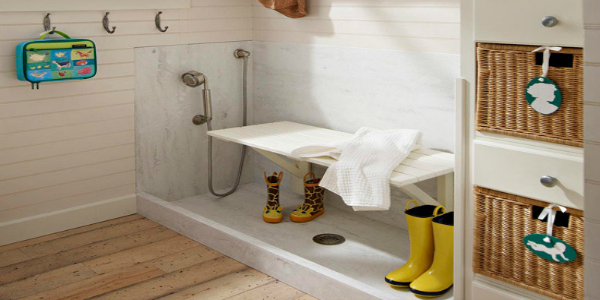
For larger renovation projects, consider a pet washing station with a handheld sprayer and tile surround. It can be especially useful for dogs, gardening cleanup, or rinsing muddy boots. Just be warned: your dog may not appreciate your excellent design choices.
Laundry and Mudroom Combo Ideas
A laundry-mudroom combination is one of the most efficient uses of space. Add cabinets above the washer and dryer, a countertop for folding, hooks for drying coats, hampers for sorting, and a bench for shoes.
If the laundry area is visible from the kitchen, use cabinet doors to hide supplies. Matching cabinet finishes between the kitchen and mudroom can create a cohesive look. Durable flooring is especially important here because laundry areas and muddy entryways both deal with moisture.
Budget-Friendly Kitchen and Mudroom Ideas
You do not need custom cabinetry to create a functional mudroom. Many upgrades are affordable and weekend-friendly.
Low-Cost Improvements
Install a row of hooks. Add a boot tray. Place baskets under a bench. Use peel-and-stick wallpaper behind open shelves. Add a washable runner. Repurpose a dresser for storage. Mount a peg rail. Paint existing cabinets. Use labels. Add a mirror. Replace basic hardware with something more stylish.
Small changes can have a big impact when they support real habits. The goal is not to create a showroom. The goal is to create a space that still looks decent on a Tuesday morning when everyone is searching for one missing shoe.
Common Mistakes to Avoid
Even beautiful mudrooms can fail if they do not match the household’s routines. Avoid these common design mistakes.
Not Enough Hooks
One hook per person is rarely enough. Plan for coats, bags, hats, and guests.
No Place to Sit
Without seating, shoes tend to travel deeper into the house. A bench encourages people to pause and remove footwear.
Ignoring Wet Items
Plan for umbrellas, raincoats, boots, and snow gear. Include trays, mats, and washable surfaces.
Too Much Open Storage
Open storage is convenient, but too much of it can look messy. Balance open hooks with closed cabinets or baskets.
Forgetting the Kitchen Connection
If the mudroom is near the kitchen, make sure the two spaces support each other. Leave room for grocery traffic, lunch prep, recycling, and everyday drop zones.
Experiences and Real-Life Lessons for Kitchen and Mudroom Ideas
One of the biggest lessons from real homes is that a mudroom must be designed for the way people actually behave, not the way we imagine they behave after watching a perfectly edited home tour. In theory, everyone neatly places shoes in matching baskets, hangs coats by color, and files mail immediately. In reality, someone drops a backpack in the doorway, the dog runs through with wet paws, and the grocery bags land wherever gravity wins.
That is why the best kitchen and mudroom ideas begin with observation. Spend a week noticing where clutter naturally gathers. If keys always end up on the kitchen counter, place a key tray or hook near that exact spot. If shoes pile beside the garage door, that is where shoe storage belongs. If children dump backpacks near the breakfast table, add hooks or cubbies nearby. A good system should feel almost effortless.
Another real-life lesson is that closed storage is your friend, but not everything should be hidden. Daily-use items need to be easy to grab. If kids have to open a cabinet, pull out a bin, remove a lid, and place shoes inside with museum-level care, the shoes will end up on the floor. Open cubbies, low hooks, and labeled baskets are more realistic for busy families. Save closed cabinets for seasonal gear, cleaning products, pet supplies, and the visual clutter you do not want greeting guests.
Durability also matters more than people expect. A mudroom is not the place for delicate finishes that panic at the sight of water. Choose flooring, paint, rugs, and fabrics that can handle dirt and moisture. Washable runners, semi-gloss or satin paint, performance cushions, and wipeable cabinet surfaces are practical choices. Beauty is wonderful, but beauty that cannot survive a muddy soccer cleat is going to have a short emotional lifespan.
Lighting is another detail homeowners often underestimate. A dark mudroom becomes a clutter cave. Good lighting makes the space easier to use and more inviting. Under-shelf lighting, a cheerful pendant, or even a brighter ceiling fixture can transform the area. If your mudroom connects to the kitchen, coordinated lighting also helps the spaces feel related rather than randomly stitched together.
Finally, leave room for flexibility. Household routines change. Kids grow. Sports seasons rotate. Pets arrive. Jobs shift. A mudroom with adjustable shelves, movable baskets, peg rails, and flexible hooks can evolve without requiring a full remodel. The most successful kitchen mudroom designs are not just beautiful on day one; they keep working year after year.
In the end, the perfect kitchen and mudroom combination is not about having the biggest space or the most expensive built-ins. It is about creating a hardworking transition zone that protects your kitchen, simplifies your routines, and gives every everyday item a logical place to live. When the mudroom does its job, the kitchen feels calmer, the floors stay cleaner, and mornings become slightly less dramatic. We cannot promise nobody will lose a shoe again, but at least you will know where it was supposed to be.
Conclusion
Kitchen and mudroom ideas work best when they combine smart storage, durable materials, thoughtful traffic flow, and a style that matches the rest of the home. Whether you have a full mudroom, a laundry-room combo, a hallway nook, or a small wall near the kitchen, the right design can make daily life feel smoother and more organized.
Start with the essentials: hooks, shoe storage, a bench, easy-to-clean flooring, and a drop zone for keys and bags. Then add personality through color, hardware, lighting, baskets, tile, or wallpaper. The result is a space that welcomes you home, catches the mess, and keeps your kitchen from becoming the family lost-and-found department.
Note: This article is an original, publish-ready synthesis based on current U.S. home design, organization, and remodeling guidance.