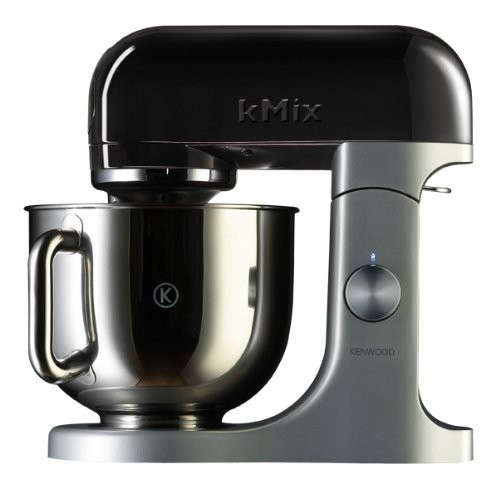
Some kitchen appliances are designed to disappear into a cabinet. The Kenwois not one of them. With its substantial metal body, polished mixing bowl, and countertop-friendly styling, this is a machine that looks as though it expects permanent residency next to the flour canister.
But a stand mixer cannot survive on good looks alone. Eventually, someone is going to ask it to whip egg whites, cream butter and sugar, knead a stubborn bread dough, or combine a cookie mixture with enough chocolate chips to frighten a lesser motor. The KMX54 was designed as an all-purpose baking workhorse for exactly these everyday jobs.
The KMX54 belongs to an earlier generation of Kenwood’s popular kMix family. Published specifications commonly identify it as a 500-watt stand mixer with a 5-liter bowl, electronic variable speed control, six main speed settings, and pulse or gentle-fold functionality. Its substantial aluminum construction and approximately 8.1-kilogram weight give it the reassuringly solid feel many bakers want from a countertop mixer. still worth considering when newer stand mixers advertise bigger motors, digital controls, and enough wattage to illuminate a small village? Let’s take a closer look.
Kenwood KMX54 Specifications at a Glance
| Feature | Kenwood KMX54 |
|---|---|
| Product type | Electric tilt-head stand mixer / kitchen machine |
| Motor power | 500 watts |
| Bowl capacity | 5 liters |
| Speed control | Electronic variable speed control with six main speeds |
| Special control | Pulse and gentle low-speed folding capability, depending on market description |
| Mixing system | Planetary mixing action |
| Body construction | Metal/aluminum construction |
| Approximate weight | 8.1 kg / 17.9 lb |
| Approximate dimensions | 361 x 223 x 349 mm |
| Typical bowl tools | K-beater, whisk, and dough hook |
| Typical additional accessories | Splash guard and spatula, depending on package |
| Electrical specification | Commonly sold as a 220-240V, 50Hz model |
One specification deserves immediate attention for North American readers: many surviving KMX54 listings describe the machine as a 220-240V appliance that is not intended for direct use on standard U.S. or Canadian 120V electrical systems. Buyers considering an imported or secondhand unit should verify the rating plate on the actual machine rather than assuming compatibility. A simple plug adapter does not change voltage. ign Made to Stay on the Counter
The appeal of the Kenwood KMX54 begins before the mixer even turns on. Its design sits somewhere between professional kitchen equipment and a piece of modern countertop furniture. The body has enough visual personality to avoid looking industrial, yet it does not resemble a plastic gadget that wandered away from the clearance aisle.
The KMX54 was offered in a dark finish often described as Peppercorn or black, giving it a restrained look that works particularly well in contemporary kitchens. More importantly, the metal construction contributes to stability. Stand mixers generate considerable movement when kneading dense dough or whipping at high speed, and a heavier base generally helps keep the machine planted on the work surface.
At roughly 8.1 kilograms, the KMX54 is not something most people will cheerfully lift from a low cabinet every Tuesday. That is both a disadvantage and a compliment. It takes up permanent counter space, but its weight helps it feel like real equipment rather than an appliance that might begin migrating toward the edge of the counter when the bread dough gets ambitious.
The 5-Liter Bowl Hits a Practical Sweet Spot
A 5-liter mixing bowl is one of the KMX54’s most useful features. It is large enough for family-size cake batters, batches of cookies, whipped cream, frosting, meringue, and everyday bread recipes without becoming comically oversized for ordinary home baking.
Capacity matters because a mixer that is too small becomes frustrating the moment flour starts climbing toward the rim. A mixer that is unnecessarily enormous, however, can struggle with tiny quantities and occupy a heroic amount of countertop space. Five liters sits in a practical middle ground, which is one reason similar bowl capacities remain common among modern premium stand mixers. Independent stand-mixer testing also consistently treats roughly five-quart or five-liter machines as a versatile size for general home baking. ndled stainless steel bowl also makes it easier to lift, rotate, and scrape out finished mixtures. Anyone who has attempted to pour sticky bread dough from a smooth bowl with flour-coated hands will appreciate the humble invention known as a handle.
Planetary Mixing: The Feature That Does the Real Work
The phrase planetary mixing action sounds as though the KMX54 should come with a telescope, but the principle is straightforward. The attached mixing tool rotates while traveling around the bowl, increasing its coverage of the ingredients.
This movement is important because effective mixing is not simply about spinning fast. The tool must repeatedly reach different areas of the bowl so ingredients are combined, aerated, or kneaded consistently. Well-designed planetary mixers reduce the amount of manual intervention required, although scraping the bowl occasionally is still good baking practice rather than an admission of defeat. ke batter, this means flour and butter are less likely to sit ignored along the bowl wall. For cookie dough, it helps distribute additions more evenly. For whipped mixtures, the repeated movement supports consistent aeration.
What the Main Attachments Are Actually For
The K-Beater: Your Everyday Workhorse
The signature K-beater is the tool most owners are likely to use most often. It handles general mixing jobs such as cake batter, cookie dough, mashed potatoes, buttercream, and the creaming of butter and sugar.
Think of it as the attachment for mixtures that need thorough combining but do not need the aggressive aeration of a wire whisk or the stretching action of a dough hook.
The Whisk: For Air, Volume, and Dramatic Desserts
The whisk is intended for jobs such as egg whites, whipped cream, meringues, and other light mixtures. A stand mixer is especially useful here because it can maintain a steady speed while you prepare the next ingredientor simply stand nearby pretending you always planned the recipe this carefully.
For best results, the bowl and whisk should be clean when whipping egg whites, since grease can interfere with foam formation. With cream, paying attention remains important. A powerful mixer can move from soft clouds to accidental butter faster than a distracted baker expects.
The Dough Hook: Let the Machine Do the Heavy Lifting
The dough hook is the attachment that makes stand-mixer ownership feel particularly luxurious. Bread dough can be developed by hand, but mechanical kneading saves effort and makes sticky or enriched doughs much easier to manage.
Stand mixers are commonly used for breads, pizza dough, rolls, and enriched recipes because the hook can work the dough repeatedly while the baker monitors texture and gluten development. Baking experts still recommend watching the dough rather than blindly following a timer, since flour type, hydration, temperature, and recipe size all affect kneading behavior. 500-Watt Motor Powerful Enough?
The KMX54’s 500-watt motor can appear modest beside newer kMix models rated around 1,000 watts. However, wattage alone does not provide a complete measurement of real mixing performance. Motor design, gearing, speed control, bowl geometry, tool shape, and the size of the recipe all influence how effectively a mixer performs.
For ordinary home baking, the KMX54 was designed to handle common tasks including cakes, cookies, whipping, and dough preparation. That does not mean users should treat it like a commercial spiral mixer. Repeatedly forcing an older household appliance through oversized batches of extremely stiff dough is a fine way to turn baking night into appliance-repair night.
For frequent large batches of low-hydration bread dough, a newer heavy-duty mixer may be the better choice. For mixed home use, however, the KMX54’s combination of substantial construction, planetary action, electronic speed management, and a 5-liter bowl remains more meaningful than comparing motor numbers in isolation.
Speed Control Makes the Mixer More Versatile
Variable speed is essential because different baking jobs require completely different treatment. Flour does not appreciate being introduced to maximum speed without warning. Neither does your kitchen.
The KMX54’s electronic speed control allows the user to begin gently before moving to higher settings. Low-speed operation is useful for initially incorporating dry ingredients, while higher settings suit whipping and aeration. The gentle folding capability associated with the kMix design is particularly useful for mixtures where preserving incorporated air matters.
This ability to move gradually through speeds improves control and can reduce the classic stand-mixer flour clouda phenomenon in which the baker, countertop, coffee machine, and possibly the family dog are all lightly dusted with all-purpose flour.
What Can You Make With the Kenwood KMX54?
The KMX54 is most useful as an everyday baking machine rather than a single-purpose appliance. Its core attachments cover a surprisingly broad range of recipes:
- Cakes and cupcakes
- Cookies and brownies
- Buttercream and other frostings
- Whipped cream
- Meringue and pavlova
- Pizza dough
- Sandwich bread and dinner rolls
- Enriched doughs
- Mashed potatoes
- Cheesecake fillings
The advantage is not simply that the machine can perform these jobs. It can perform them while leaving both of your hands available. That is valuable when a recipe requires gradual ingredient additions, when preparing several components at once, or when you are cleaning the spectacular mess created five minutes earlier.
Ease of Use and Everyday Practicality
The tilt-head format makes the bowl and attachments relatively easy to access. Lift the mixer head, install the correct tool, secure the bowl, lower the head, and select the required speed. It is an uncomplicated workflow, which is exactly what a frequently used appliance should offer.
A splash guard is another practical addition when included with the machine. It helps contain dry ingredients and liquid splashes while providing a route for adding ingredients. This is not the most exciting accessory in the box, but neither is a smoke detector until the day you need one.
The substantial body is easy to wipe down after use, while the removable bowl and tools simplify cleanup. Because cleaning guidance can vary by attachment material and production version, owners should follow the instructions for their specific KMX54 components rather than automatically placing every part in a dishwasher.
Potential Drawbacks to Consider
It Is a Large, Heavy Appliance
The KMX54 needs genuine countertop or storage space. Anyone working in a very small kitchen should measure the intended location, including the vertical clearance required to raise the mixer head.
The Model Is From an Older kMix Generation
Buyers comparing the KMX54 with current stand mixers should recognize that this is not the latest kMix design. Modern models may offer higher stated power, updated accessories, revised styling, newer warranties, and easier access to current replacement parts.
Voltage Compatibility Is a Serious Buying Issue
For U.S. and Canadian shoppers, the electrical rating may be the biggest concern. Common KMX54 listings specify 220-240V and explicitly warn against direct use on North American 120V power. Verify the exact unit before purchasing, especially when shopping through an importer or secondhand marketplace. Machines Require Extra Inspection
Because many KMX54 units now appear on the secondhand market, condition can matter more than the original specification sheet. Check the speed control, head-locking mechanism, power cord, bowl fit, attachment connection, unusual motor noises, and evidence of excessive movement under load.
Who Is the Kenwood KMX54 Best For?
The Kenwood KMX54 K-Mix Kitchen Machine Electric Stand Mixer makes the most sense for a baker who appreciates robust construction, straightforward controls, classic stand-mixer functionality, and the versatility of a 5-liter bowl.
It is especially appealing for:
- Regular cake and cookie bakers
- Home cooks who occasionally make bread and pizza dough
- People who prefer a solid metal-bodied appliance
- Buyers who find a well-maintained KMX54 at a sensible secondhand price
- Households with the correct 220-240V electrical supply
It is less compelling for someone who needs a compact mixer, frequently produces very large quantities of stiff dough, wants the latest smart features, or lives in a standard 120V household without appropriate electrical infrastructure.
How the KMX54 Fits Into Today’s Stand Mixer Market
The stand mixer market has changed significantly since the KMX54 appeared. Modern machines increasingly advertise higher wattages, integrated scales, timers, bowl lights, digital controls, and specialized accessories. Yet independent testing still tends to focus on the same fundamentals: stability, effective bowl coverage, well-designed attachments, intuitive speed control, capacity, and consistent performance. elps explain why an older machine such as the KMX54 can remain useful. It does not need an app to know that cookie dough requires mixing. It does not need Wi-Fi to whip cream. Its value comes from performing the basic jobs of a stand mixer with a practical bowl size and a sturdy physical design.
Newer kMix models have increased power ratings and updated features, but the basic formula remains recognizable: a 5-liter bowl, multiple speeds, planetary mixing, and dedicated tools for beating, whisking, and kneading. listic 500-Word Ownership Experience With the Kenwood KMX54
The best way to understand the KMX54 is to imagine how it fits into a normal week of home baking rather than a laboratory test full of stopwatches and clipboards.
On the first day, the most noticeable characteristic is likely to be the weight. This is not a mixer that feels eager to travel. Once positioned on the counter, however, that same heaviness becomes reassuring. The bowl locks into position, the K-beater is fitted, and a simple batch of chocolate-chip cookies becomes the first test.
Starting slowly matters. Butter and sugar combine without much drama, and the electronic speed control makes it easy to increase the pace as the mixture becomes lighter. The 5-liter bowl offers enough working room for a family-size batch without making the ingredients feel lost at the bottom of a metal canyon. Flour goes in graduallybecause experience teaches every baker that dumping it in before selecting a high speed is how kitchens acquire indoor weather systems.
The next challenge might be a pavlova. With the whisk installed, the machine becomes a more obvious labor saver. Instead of holding a hand mixer for several minutes, the baker can watch the egg whites develop while preparing sugar and other ingredients. This is where a stand mixer earns its counter space: not through a single spectacular trick, but by removing repetitive physical work from recipes that require patience.
Bread day provides a different experience. The dough hook takes over, and the machine begins pulling a shaggy mixture into something smoother and more elastic. The KMX54 feels at its best with sensible household quantities. It is still wise to stay nearby, observe the dough, and avoid assuming that every bread recipe should be mixed at maximum speed. A stand mixer is a tool, not an unattended bread robot with its own culinary judgment.
After several baking sessions, a routine develops. The K-beater becomes the default tool for cakes and cookies. The whisk is reserved for cream, meringue, and other airy mixtures. The dough hook comes out when kneading by hand sounds significantly less romantic than it did while reading the recipe.
The machine’s biggest everyday weakness is also obvious: it occupies space. Because it is heavy, storing it in a difficult cabinet may discourage frequent use. Owners who have enough counter room are more likely to enjoy it regularly. A stand mixer hidden behind three stockpots and an appliance nobody remembers buying can quickly become an expensive archaeological artifact.
Cleaning is generally straightforward when done immediately. The bowl is easier to deal with before batter dries into construction material, and a quick wipe of the mixer body prevents flour and frosting from accumulating around controls and joints. As with any older mixer, careful treatment and avoiding unreasonable loads are sensible habits.
Over time, the KMX54’s appeal is less about novelty and more about consistency. It can become the appliance pulled into service for birthday cakes, weekend pizza, holiday cookies, whipped cream, and the occasional ambitious loaf of bread. That is arguably the best compliment a kitchen machine can receive: eventually, it stops feeling like a special gadget and simply becomes part of how the kitchen works.
Final Verdict: Is the Kenwood KMX54 Still Worth Considering?
The Kenwood KMX54 K-Mix Kitchen Machine Electric Stand Mixer remains an interesting and capable machine for the right buyer. Its 500-watt motor, 5-liter bowl, planetary mixing system, electronic speed control, sturdy construction, and useful collection of core baking tools give it the fundamentals required for serious home baking.
Its age does matter. Buyers should compare the price and condition of a KMX54 with newer stand mixers, investigate replacement-part availability, and pay particularly close attention to voltage. A used bargain stops being a bargain when it cannot safely plug into the kitchen.
For households with compatible electricity and a well-maintained machine, however, the KMX54 can still deliver the qualities that matter most: stable mixing, useful capacity, hands-free operation, and enough versatility to move from buttercream to bread dough without requiring a degree in appliance engineering.
In a market full of increasingly complicated gadgets, there is something refreshingly direct about a mixer whose main promise is essentially, “Give me the bowl and step away from the dough.” For many home bakers, that is more than enough.