Note: This article is based on public reporting about the Laguna Beach/Victoria Beach incident, California coastal-access rules, and broader public beach access disputes in the United States.
When a Beach Day Turns Into a Property Line Debate
A relaxing beach day usually comes with a predictable soundtrack: waves crashing, kids laughing, someone opening a bag of chips too loudly, and at least one umbrella attempting to become a kite. What it should not include is a furious homeowner marching across the sand with rope, shouting that a public beach is private property.
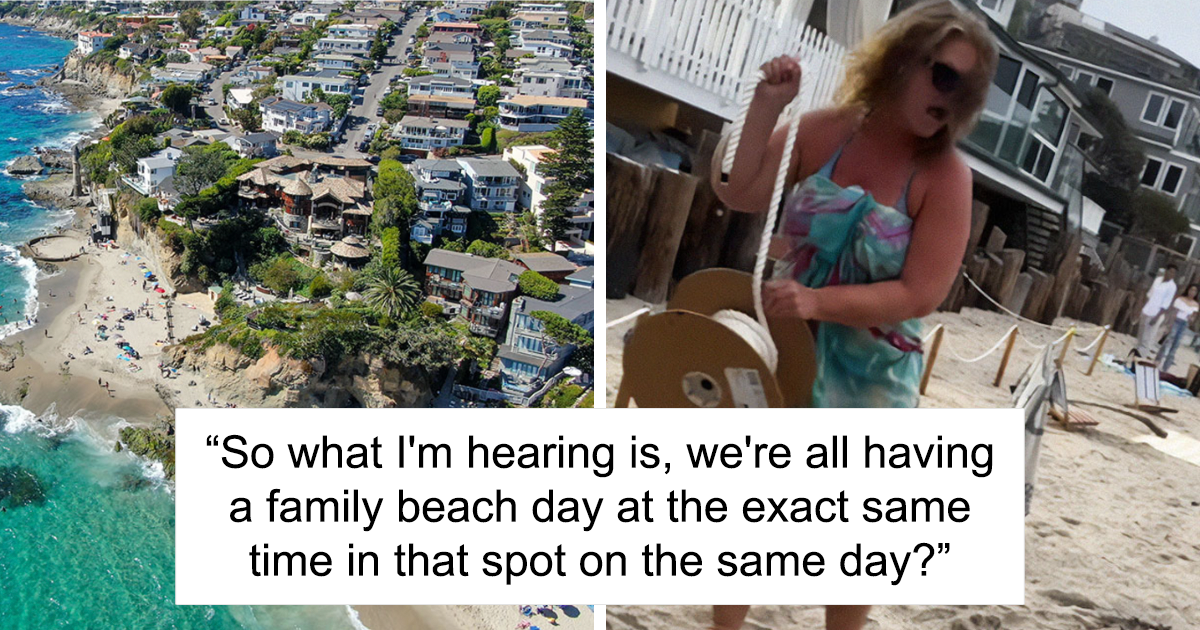
That is exactly why one viral Laguna Beach confrontation exploded across social media and earned the woman involved the very internet-ready nickname “Karen of the Week.” In the widely shared video, a beachfront homeowner is seen yelling at a visiting family and using rope to section off part of the sand near her home. The family said they were on a public beach. The homeowner insisted they were on her property. The internet, as the internet tends to do, grabbed popcorn, formed opinions, and then formed louder opinions.
But underneath the viral outrage is a real issue that matters far beyond one uncomfortable beach argument: Who actually owns the beach? And when does a homeowner’s private property end and the public’s right to enjoy the coast begin?
The Viral Laguna Beach Incident: What Happened?
The confrontation took place near Victoria Beach in Laguna Beach, California, a scenic coastal area known for oceanfront homes, dramatic cliffs, and the famous “Pirate Tower.” According to public reports, the family involved had been visiting from Oklahoma and was sitting on the sand when the homeowner confronted them.
The video shows the woman yelling, telling the beachgoers to move, and using white rope to mark off part of the beach. At one point, she appears to follow the family as they leave. The moment went viral because it had all the ingredients of a modern social media storm: a public space, an angry confrontation, a perceived abuse of privilege, and a very expensive beachfront backdrop.
The homeowner later told local media that the video did not show the entire situation and claimed she had asked the group to leave after the beach closed. The family reportedly said they were never on her property. That difference in perception is important, but it did not stop the clip from igniting a larger debate over California beach access laws.
Why Viewers Were So Outraged
People were not just upset because someone was yelling at a family. They were upset because the incident seemed to represent a familiar tension in coastal communities: wealthy property owners attempting to control spaces that the public has a legal right to use.
In California, the beach is not simply a luxury amenity for whoever can afford the house closest to the waves. The coastline is treated as a public resource, and public access has been protected for decades through state law. So when a homeowner appears to rope off sand and order people away, many viewers see more than rude behavior. They see a challenge to a public right.
Social media users quickly criticized the homeowner’s tone, the use of rope, and the assumption that owning beachfront property gives someone the right to control everything between their deck and the ocean. The nickname “Karen of the Week” stuck because the internet often uses “Karen” to describe someone viewed as entitled, demanding, or overstepping social boundaries. In this case, the label became shorthand for a bigger frustration: public beaches should not feel like private clubs.
Are California Beaches Public?
The short answer is yes, but with some legal nuance. In California, the public generally has the right to use beach areas below the mean high tide line. That means the land waterward of the average high tide mark is held for public use. It is not the private playground of the nearest mansion, hotel, or homeowners association.
The California Coastal Act, passed in 1976, is central to this principle. One of its major goals is to maximize public access to and along the coast while balancing safety, natural resource protection, and private property rights. In plain English: people should be able to reach and enjoy the shoreline, but they still need to respect legitimate private property boundaries and environmental rules.
This is where confusion begins. Dry sand above the mean high tide line may, in some cases, be privately owned. Wet sand is often a useful clue for beachgoers because it is usually below the high tide area, but it is not a perfect legal survey. Tide lines move. Beaches shift. Storms change the shape of the shoreline. A homeowner may own land near the beach, but that does not automatically mean they can block public access or create an unofficial private beach with rope, signs, chairs, cones, or vibes.
The Mean High Tide Line: The Beach’s Invisible Border
The phrase “mean high tide line” sounds like something a law professor would whisper to ruin a vacation, but it matters. It refers to the average high tide over a long period of time. In many coastal states, that line helps determine where public tidelands end and private uplands may begin.
In the Laguna Beach case, public discussion focused heavily on whether the family was below or above that line. But the Coastal Commission reportedly took issue with the homeowner’s attempt to rope off the beach and with the way beachgoers were confronted. Local authorities also said beach-related disputes should be handled through proper channels, not by shouting matches in the sand.
That distinction is useful for anyone visiting the coast. If a property owner believes someone is trespassing, the solution is not to chase people with rope like a villain in a beach-themed cartoon. The correct route is to contact local officials, park rangers, lifeguards, or the agency responsible for coastal access. Public beaches require public rules, not private temper tantrums.
Public Access Does Not Mean Public Chaos
It is also fair to acknowledge the other side of the coastal living debate. Beachfront residents often deal with noise, trash, blocked driveways, late-night visitors, and people who treat the shoreline like a disposable picnic table. Laguna Beach and other popular coastal towns have struggled with crowding, littering, and tension between residents and tourists.
That frustration is real. Nobody wants strangers leaving broken umbrellas, food wrappers, or mystery liquids near their home. But the existence of bad beach manners does not erase public access rights. The answer to litter is enforcement, cleanup, signage, education, and fines for actual violations. It is not turning public sand into a private kingdom.
Public beach access works best when both sides behave like adults. Visitors should pack out their trash, respect quiet hours, use legal access points, and avoid trespassing on private stairs, patios, or yards. Homeowners should understand that living near the ocean means living near a shared resource. The sea is not a gated community, no matter how spectacular the Zillow photos look.
Why Roping Off a Public Beach Can Become a Legal Problem
Ropes, fences, fake “private beach” signs, boulders, locked gates, and strategically placed lounge chairs may seem like small gestures, but they can have serious legal implications when they discourage public access. In California, coastal access obstruction can trigger enforcement from the California Coastal Commission.
Reports about the Laguna Beach incident said the homeowner received a notice of violation from the Coastal Commission and was ordered to stop blocking access. The homeowner also reportedly faced the possibility of daily fines if the violation continued. Whether a specific penalty is imposed depends on the facts, the agency’s process, and compliance, but the broader message is clear: the state takes public beach access seriously.
This is not an isolated issue. Malibu has seen long-running disputes over signs and barriers that make public beaches look private. Hotel Laguna also faced scrutiny after officials said beach setup practices created the impression of privatized sand. In Northern California, Martin’s Beach became a famous legal battle after public access was restricted by a billionaire property owner. These examples show that the Laguna Beach video was not just a one-off viral moment. It was part of a larger American conversation about wealth, shoreline access, and who gets to enjoy natural beauty.
The Social Media Effect: Helpful Watchdog or Digital Mob?
One reason this story spread so quickly is that social media has become a powerful tool for documenting public-space conflicts. A single phone video can turn a local argument into a national debate before the sunscreen dries.
That can be useful. Viral attention can push agencies to respond, educate the public, and remind people of their rights. In beach access disputes, videos can show whether someone is blocking a public path, putting up misleading signs, or intimidating visitors.
But viral outrage also has risks. A short clip may not show everything that happened before recording began. People can be misidentified, harassed, or judged without full context. That is why it is important to separate two things: the public behavior shown in a video and the full legal determination of what happened.
In this case, the behavior captured on camera was enough to spark widespread criticism. Still, the broader lesson should be bigger than one person becoming the internet’s villain of the week. The real issue is understanding public beach access and handling disputes without escalation.
What Beachgoers Should Know Before Visiting a Public Beach
Use Official Access Points
Whenever possible, enter the beach through public stairs, marked paths, parks, or city-managed access points. This reduces confusion and keeps you off private walkways, lawns, or decks.
Watch for Real Signs Versus Intimidation Signs
Some signs are legitimate. Others may be misleading. A sign saying “private property” near a beachfront home does not necessarily mean the wet sand or shoreline is private. If something looks questionable, check local access maps or ask a lifeguard, ranger, or city official.
Stay Respectful, Even When Someone Else Is Not
If a homeowner confronts you, avoid matching anger with anger. Record if necessary, calmly state that you believe you are on public beach property, and contact local authorities if the situation escalates.
Leave No Trace
The fastest way to weaken public sympathy for beach access is to treat the beach badly. Pack out trash, keep music at a reasonable volume, avoid disturbing wildlife, and respect closing hours.
What Homeowners Should Know Before Confronting Beachgoers
Beachfront property owners have rights, too. They can protect private patios, stairs, gardens, and structures. They can report trespassing, vandalism, littering, noise violations, and unsafe behavior. But they should not invent their own property boundaries or physically block the public from legally accessible areas.
If there is a genuine dispute, the smarter move is documentation and official reporting. Take photos, note the time, call local enforcement, and let trained officials handle it. Screaming at strangers on video is not a winning legal strategy. It is more like applying gasoline to a campfire and then wondering why the marshmallows exploded.
Why Public Beaches Matter
Public beaches are more than pretty places to tan, surf, or pretend you are reading a novel while actually people-watching. They are shared civic spaces. They give families, students, seniors, locals, tourists, surfers, anglers, and kids with plastic buckets access to nature without needing a private membership.
That matters because coastlines are increasingly expensive. In many beach towns, oceanfront property is available only to the very wealthy. If public access is slowly discouraged through intimidation, confusing signage, or unofficial barriers, the coast becomes accessible in theory but not in practice.
The Laguna Beach confrontation struck a nerve because it symbolized that fear. Viewers saw a family being pushed away from a shoreline that California law broadly protects for public use. Whether they had followed every boundary perfectly or not, the image of rope being pulled across the sand felt like a private claim over a public treasure.
Experience-Based Lessons From Public Beach Conflicts
Anyone who has spent enough time around popular beaches has seen smaller versions of this conflict. It may not always involve viral videos or dramatic shouting, but the same tension appears in quieter ways. A beachgoer hesitates at a narrow access path because a “private” sign looks official. A resident glares from a balcony as people set down towels near the water. A family wonders whether they are allowed to walk past a row of luxury homes because the path feels intentionally unwelcoming.
The best beach experiences usually happen when everyone understands the invisible social contract. Visitors arrive prepared, respect the neighborhood, and leave the sand cleaner than they found it. Residents accept that the view they enjoy is attached to a public coastline, not a personal moat. Officials make access clear with signs, maps, trash cans, restrooms, and enforcement that targets real problems instead of ordinary families trying to enjoy the ocean.
One useful lesson is to stay calm when challenged. Imagine sitting near the tide line with your towel, cooler, and one heroic sandwich that somehow contains half the beach. A homeowner walks over and says you are trespassing. The natural instinct may be to argue, especially if you believe you are right. But a calm response is more effective: “We entered through the public access point and believe this is public beach. We are happy to speak with a ranger or lifeguard.” That sentence does two things. It avoids escalation and moves the dispute toward someone with authority.
Another lesson is to plan before visiting beaches surrounded by private homes. Look up official public access points, parking rules, beach hours, and tide conditions. In places like Laguna Beach, Malibu, Cape Cod, the Hamptons, and parts of Florida, the boundary between public recreation and private land can be confusing. A few minutes of research can prevent a day of awkward confrontation.
For homeowners, the experience lesson is even simpler: tone matters. A polite request can solve a problem. A furious demand can become tomorrow’s headline. If visitors are truly trespassing, local authorities can help. If they are not trespassing, yelling only makes the homeowner look unreasonable. Beachfront residents often have legitimate concerns about trash, noise, safety, and privacy, but those concerns land better when communicated with basic decency.
There is also a cultural lesson. The beach has a way of flattening status. Shoes come off. Hair gets weird. Everyone is one rogue wave away from losing dignity. That shared vulnerability is part of the magic. A millionaire, a tourist, a surfer, and a kid building a lopsided sandcastle can all stand at the same shoreline and watch the same sunset. Public beach access protects that simple democratic pleasure.
The “Karen of the Week” incident became famous because it felt like someone tried to break that shared agreement. The outrage was not only about one angry homeowner. It was about the idea that natural beauty should not be quietly fenced off by wealth, confusion, or intimidation. A public beach belongs to the public, and the public should treat it like something worth defending.
Conclusion: The Beach Is Not a Backyard
The Laguna Beach “Karen of the Week” story may have started as a viral clip, but it continues to matter because it highlights a real and recurring issue: public access to America’s coastlines. In California, the law strongly protects the public’s right to reach and enjoy the shoreline, especially below the mean high tide line. Private property rights still matter, but they do not give homeowners permission to rope off public sand or intimidate beachgoers.
The best outcome from this kind of viral outrage is not simply dunking on one person online. It is better public understanding. Beachgoers should know their rights and responsibilities. Homeowners should know their limits. Cities should make access rules clear. And everyone should remember that the coast is more enjoyable when nobody treats the ocean like it came with their mortgage.