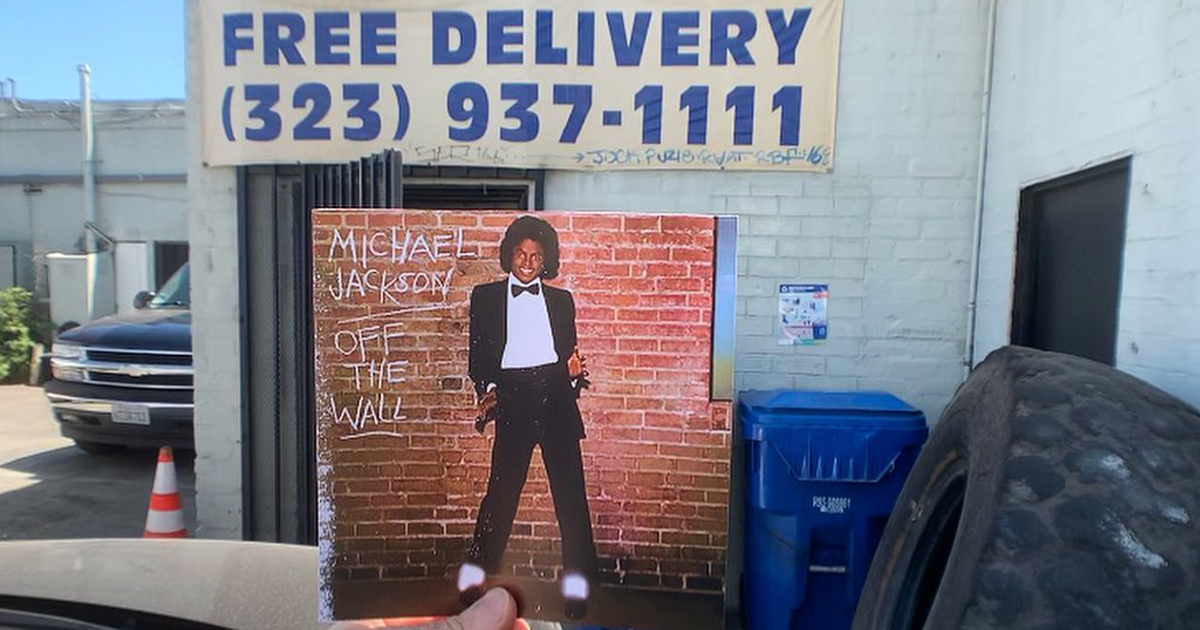
Most people walk past an old brick wall, a subway platform, or a slightly tired-looking apartment building without giving it a second glance. I look at the same place and wonder whether Bob Dylan, Madonna, Prince, Nirvana, or Michael Jackson once stood there while a photographer pressed the shutter.
That curiosity became the heart of my historical music photography project. I track down the exact locations of famous album covers, promotional portraits, video stills, and candid musician photographs. Then I return with a printed copy of the original image, hold it in front of the modern setting, and carefully align past and present in one frame.
The project began in 2010 with old family photographs before gradually shifting toward music history. Since then, the search has expanded to hundreds of locations. Finding them can require old interviews, contact sheets, tour schedules, maps, architectural clues, and the occasional marathon session on Google Street View that makes me question whether brick-pattern recognition is a legitimate personality trait.
Note: The numbered figures below are prepared as image positions for publishing. Insert the corresponding then-and-now photograph into each figure element.
Why Historical Music Photography Locations Matter
Music photographs are more than promotional material. They preserve clothing, architecture, neighborhoods, transportation, and attitudes that may disappear long before the songs do. A record can remain unchanged for decades, while the street pictured on its cover may be demolished, renovated, fenced off, or converted into a luxury apartment complex with a lobby that smells aggressively of eucalyptus.
Revisiting these places turns an ordinary neighborhood into an open-air music museum. It also gives proper attention to the photographers, designers, and art directors who helped shape how generations remember their favorite performers. Album artwork has long functioned as an essential visual extension of recorded music, creating images that can become nearly as recognizable as the songs themselves.
30 Remarkable Music Photography Locations Revisited
1. Madonna in New York City, 1983
Richard Corman photographed Madonna shortly before worldwide fame transformed her into a pop-culture force. Returning to the New York setting emphasizes how young and relatively unknown she was. The surrounding city looks ordinary; the woman in the original frame clearly had other plans.
2. Nirvana Outside GMT Studios, 1991
On August 17, 1991, Nirvana stepped outside GMT Studios while filming the video that would help change mainstream rock. The recreated scene contrasts the unremarkable studio surroundings with the enormous cultural impact waiting just a few months ahead.
3. John Sebastian at Woodstock, 1969
Henry Diltz captured John Sebastian surrounded by the wonderfully unplanned energy of Woodstock. Matching this photograph today means reconstructing a moment that originally depended on mud, music, youth, and several hundred thousand people who had apparently forgotten to pack sensible footwear.
4. Prince and the Purple Rain Cover
The motorcycle, purple lighting, theatrical smoke, flowers, and fire escape created one of the defining images of the 1980s. At the real location, the background feels less like a fantasy kingdom and more like a practical structure that once received an extraordinary amount of purple attention.
5. Led Zeppelin’s Physical Graffiti Buildings
The recognizable tenements at 96 and 98 St. Mark’s Place became the foundation of Peter Corriston’s die-cut album design. The photographed buildings were modified for the square composition, proving that even legendary rock architecture occasionally benefits from a little creative cropping.
6. John Lennon and Yoko Ono Near the Dakota
Bob Gruen’s photograph was taken only a short distance from the Dakota. Revisiting the location carries unavoidable emotional weight because Lennon was later killed nearby. The present-day alignment connects a relaxed personal moment with the tragedy that followed years later.
7. Green Day in New York City, 1994
This photograph may have been taken on the same day Green Day appeared on David Letterman. The urban background suits the band’s scrappy breakthrough period, when three musicians with deliberately messy hair were turning punk energy into extremely organized commercial success.
8. Bob Dylan Photographed by Richard Avedon
Avedon’s photograph catches Dylan at a point when his image was becoming inseparable from his music. Finding the correct location requires studying architectural proportions and camera height, because a few inches can separate a convincing alignment from Dylan appearing to float beside a window.
9. Debbie Harry at the 14th Street Subway Station
The subway makes an ideal Blondie background: gritty, stylish, public, and completely unimpressed by celebrity. Although signs and station details have changed, enough visual clues remain to reconnect Harry’s pose with the present platform.
10. Pink Floyd’s Wish You Were Here
The original scene was staged on a Warner Bros. backlot in Burbank using professional stunt performers. One man was genuinely set on fire while shaking hands, creating a visual metaphor for insincerity in the music business. Apparently, a disappointing contract meeting would have been too subtle.
11. Kurt Cobain, Courtney Love, and Frances Bean
This intimate family photograph is among the project’s most haunting recreations. The abandoned location does not feel like a glamorous rock landmark. It feels quiet, private, and fragile, reminding us that historically important photographs still contain real people rather than fictional characters.
12. Guns N’ Roses in West Hollywood, 1988
West Hollywood was a natural setting for Guns N’ Roses at their late-1980s peak. Matching the group’s position against the surviving background reconnects the neighborhood with the period when the Sunset Strip produced loud guitars, famous grudges, and impressive quantities of hairspray.
13. Nirvana at East River Park Amphitheater, 1989
The 1989 photograph shows Nirvana before the polished machinery of global fame arrived. The amphitheater’s recognizable shapes provide strong alignment points, while the young band illustrates why smaller, less-famous music photographs can be as revealing as major album covers.
14. The Beatles in Washington, D.C., 1964
After appearing on The Ed Sullivan Show, the Beatles traveled to Washington and performed their first full United States concert at the Washington Coliseum on February 11, 1964. Reconstructing that visit means standing at one of the starting points of American Beatlemania.
15. Beastie Boys on the Pacific Coast Highway
The Santa Monica setting combines concrete, coastline, and the casual physical comedy that followed the Beastie Boys almost everywhere. Parking-lot markings and the horizon make useful clues, although matching the Pacific Ocean’s mood is slightly harder to schedule.
16. Simon and Garfunkel at the Central Park Reservoir
The reservoir photograph has a restrained quality that suits the duo. Central Park has changed, but fences, waterlines, and the skyline preserve enough geometry to identify the position and restore the musicians to the landscape.
17. The Highway on Radiohead’s OK Computer
The roadway was photographed from a Hartford hotel overlooking the I-84 and I-91 interchange. In the finished artwork, the highway was bleached, layered, and distorted into a vision of technological anxiety. Visiting the room reveals that existential dread sometimes begins with a perfectly normal hotel window.
18. Snoop Dogg Photographed by Chi Modu
Chi Modu’s portraits helped define the visual language of 1990s hip-hop. Recreating one of his early Snoop Dogg images requires more than finding a wall or curb; it means understanding how a photographer used an everyday environment to communicate personality and place.
19. Eminem at His Childhood Home
The Detroit house became part of Eminem’s visual autobiography, appearing on album artwork before being demolished after years of deterioration. A modern recreation therefore becomes an image of absence, showing how an empty lot can carry as much cultural meaning as a surviving building.
20. The Who in Morningside Park, 1968
Art Kane knew how to arrange musicians within a city environment without making the result feel overly arranged. The park’s stonework and elevation remain valuable clues, while the band supplies the required dose of theatrical British chaos.
21. Woody Guthrie at McSorley’s Old Ale House
During a 1943 assignment, LIFE photographer Eric Schaal followed Guthrie through New York bars, streets, stoops, and subway cars. McSorley’s preserved interior makes this recreation especially effective; the furniture appears to have survived through sheer stubbornness and several million glasses of ale.
22. The Doors on the Venice Beach Boardwalk
Before the Doors became permanently associated with dark stages and leather pants, they were also a Los Angeles beach band. Henry Diltz’s photograph places them in the bright, public environment of Venice, where the architecture keeps changing but the atmosphere remains cheerfully unpredictable.
23. Eminem and Mister Cartoon Outside a Tattoo Shop
Storefront lettering, doorway proportions, and sidewalk details make this a satisfying alignment. The photograph also documents the connection between music, tattoo culture, street art, and the visual identities developed around major hip-hop performers.
24. Britney Spears at Paradise Cove
Matching a beach photograph presents an unusual problem: the buildings may remain, but tides are inconsiderate collaborators. When the waterline, pier, and hills align, the recreation reconnects Paradise Cove with the bright pop optimism of Spears’ early career.
25. Joan Jett on Hollywood Boulevard, 1977
The old theater at 6656 Hollywood Boulevard provided a wonderfully unpolished background. Joan Jett’s presence turns the location into a piece of punk history, while the modern streetscape demonstrates how thoroughly Hollywood can renovate a building without removing its ghosts.
26. Robert Plant Overlooking Sunset Boulevard
Plant’s enormous hair is nearly a landmark by itself, but the real clues are in the boulevard, rooftops, and distant terrain. The comparison shows how dramatically Los Angeles development can alter a view while leaving the hills stubbornly recognizable.
27. David Bowie Outside Tea & Sympathy
Bowie appears outside Tea & Sympathy in Greenwich Village looking both perfectly comfortable and suspiciously more stylish than the entire street. The restaurant frontage provides the anchor needed to place the original portrait precisely within modern New York.
28. Another Side of Madonna’s 1983 New York
A second Corman image adds context to Madonna’s pre-superstar world. Revisiting multiple photographs from one session reveals how the photographer used nearby streets, clothing, and natural confidence to build a visual story before a marketing department could hold a meeting about it.
29. Bob Dylan and Suze Rotolo on Jones Street
The couple walked through a cold, snowy Greenwich Village afternoon in February 1963. Don Hunstein’s frame transformed Jones Street into one of the world’s most visited album-cover locations. The street remains recognizable, although modern visitors generally arrive with warmer coats and considerably more camera equipment.
30. Michael Jackson’s Off the Wall Cover
The tuxedo, bright socks, broad smile, and brick wall introduced Jackson as an independent adult star. Creative director Mike Salisbury and photographer Stephen Harvey developed an image that connected Jackson with classic entertainers while establishing a distinctive identity of his own. The wall’s later transformation makes the aligned recreation even more valuable.
What Years of Tracking Music Photography Locations Have Taught Me
The most important lesson is that finding a historical music photography location is rarely as simple as searching for an address. Captions are often incomplete. Streets are renamed. Businesses close. Buildings lose fire escapes, windows, signs, decorative trim, and sometimes their entire existence. Even when an address is known, locating the original camera position may require another hour of walking in small circles while pretending not to alarm the residents.
I usually begin with the photograph itself. Street numbers are wonderful, but tiny background details are often more useful. I look for brick patterns, drainpipes, fence posts, window spacing, curb shapes, distant towers, hills, shadows, and reflections. A blurry sign behind a musician’s shoulder can solve a mystery that dozens of articles could not.
Old contact sheets are especially helpful because photographs taken immediately before or after the famous frame may reveal a wider view. Interviews with the original photographer can provide the neighborhood, date, weather, or reason for choosing the site. Tour schedules help establish where an artist was staying. Music-video production records can narrow a search to a particular studio or street.
Once I identify several possible locations, I pin them on a digital map and organize them into a practical route. In New York, that might mean grouping Lower Manhattan sites together before traveling uptown. In Los Angeles, poor planning can turn a productive photography day into a six-hour educational documentary about traffic.
I print each original image before leaving. Holding a physical print creates a connection that a digital overlay cannot quite reproduce. It also introduces several practical challenges. Wind treats paper like an invitation. Rain is worse. Bright sunlight can create glare. Curious pedestrians often stop to ask what I am doing, occasionally while standing directly in the shot.
Camera position matters enormously. A photograph taken from chest height cannot be matched by simply standing in approximately the right place. I may need to crouch, lean against a wall, stretch an arm above my head, or move backward into a position that appears designed to test my relationship with passing cyclists. The goal is not absolute digital perfection. It is to make the historical image feel as though it still belongs inside the present location.
The most satisfying discoveries are not always the most famous. Finding the location of a blockbuster album cover is exciting, but locating an obscure backstage portrait can feel more personal. The search allows forgotten photographers and overlooked moments to return to public view.
Some locations also demand sensitivity. A photograph involving a musician who died young can feel very different when viewed at the actual site. Family photographs of Kurt Cobain, streets connected with John Lennon, and vanished homes associated with difficult childhoods are not merely entertainment trivia. They represent lives shaped by success, loss, relationships, and circumstances that deserve respectful treatment.
Above all, this project has changed the way I experience cities. I no longer see a subway entrance as only a subway entrance or a brick wall as only a brick wall. Music history is layered across ordinary streets. The challenge is learning to notice it before another renovation, demolition crew, or luxury coffee shop removes the final clue.
The method is simple enough for anyone to try: choose an image, study every visible detail, research the photographer, confirm the date, inspect historical maps, and visit respectfully. You may not solve the mystery immediately. You may spend an embarrassing amount of time examining windows. But when the old photograph finally clicks into place against the modern background, the result feels like opening a small door through time.
Conclusion: The Streets Are Still Playing the Songs
Historical music photography locations remind us that cultural history does not exist only in museums or archives. It survives in apartment stoops, parks, hotel windows, beach parking lots, tattoo shops, subway stations, restaurants, and walls that thousands of people pass every day.
These 30 then-and-now music photographs bring together famous performers, visionary photographers, and changing American landscapes. Some locations remain almost untouched. Others have disappeared completely. In every case, aligning the original image with the modern environment gives the music a physical address and allows the past to briefly occupy the present again.
The next time you walk down an ordinary street, look carefully. That doorway might have framed a future superstar. That bench may have appeared inside a record sleeve. And that suspicious person crouching beside a trash can while holding a photograph may not be lost. They may simply be trying to place rock history at exactly the right angle.