Note: This is an original, publish-ready article based on verified public information about Craig Turner-Bullock’s Dogs of the World project, dog breed heritage, and global pet photography. No source links are included in the article body.
Some people collect fridge magnets when they travel. Craig Turner-Bullock collects unforgettable dog portraits. His long-running photography project, Dogs of the World, is a joyful, muddy-pawed love letter to canines, culture, landscapes, and the strange magic that happens when a dog stands exactly where it seems it has always belonged.
The idea sounds simple: photograph dog breeds in the countries, cities, and landscapes connected to their origins or cultural identity. In practice, it is anything but simple. Dogs are not statues. They blink, sniff, leap, sulk, chase suspicious leaves, and occasionally decide that the perfect historic backdrop is less interesting than a nearby sandwich. That unpredictability is part of what makes the project so alive.
For nearly a decade, Turner-Bullock traveled across continents to photograph more than 60 breeds in places tied to their history. The result is not just a pretty dog photography series. It is a visual atlas of how deeply dogs are woven into human life, from icy Alaskan trails and European villages to dramatic coastlines, ancient streets, and postcard-famous landmarks.
What Is The ‘Dogs Of The World’ Project?
Dogs of the World is a global dog photography project created by Craig Turner-Bullock, a New Zealand-based pet photographer known for colorful, expressive animal portraits. The project grew from a happy accident. During travels to places like New York, Paris, and London, he photographed breeds that seemed perfectly matched to their surroundings: an American pit bull terrier in New York, a French bulldog in Paris, and a corgi in London.
That spark became a much larger mission. Instead of photographing dogs only as pets, Turner-Bullock began photographing them as living pieces of cultural history. A breed is never just a cute face with excellent ears. It can represent climate, labor, migration, royalty, farm life, hunting traditions, mountain survival, companionship, and the very human habit of turning wolves into couch critics.
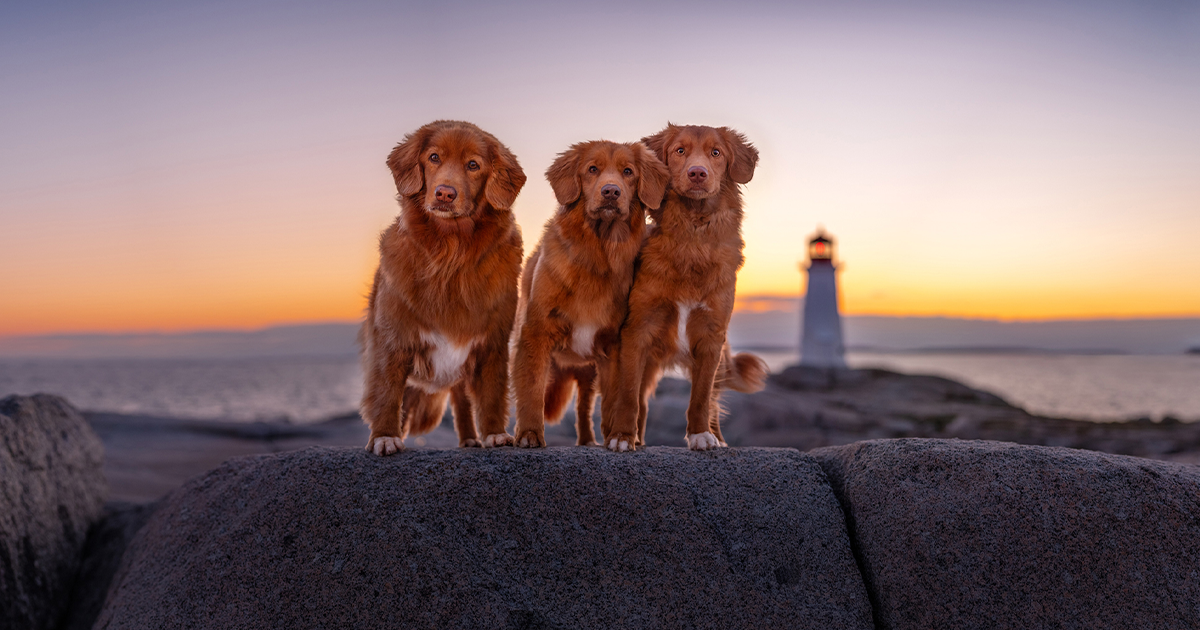
The project eventually expanded to include panoramic environmental portraits, candid close-ups, action shots, and detail images. Turner-Bullock has referred to some of the wider landscape portraits as “Dogoramas,” which is exactly the kind of word that makes you grin before you even see the picture.
Why Photograph Dog Breeds In Their Natural Homes?
Most dog portraits focus on personality. That is wonderful, because dogs have more personality than many committee meetings. But Dogs of the World adds another layer: place. When a breed is photographed in a landscape connected to its story, the image becomes part portrait, part travel diary, and part history lesson with whiskers.
Think of an Alaskan Malamute standing against ice and wilderness. The dog’s heavy coat, powerful body, and calm toughness suddenly make visual sense. Place the same dog in a studio with a pastel background, and it is still beautiful. Place it on a glacier, and it becomes a legend with paws.
That is the strength of this project. It invites viewers to see breed traits as more than decoration. Thick coats, long legs, compact bodies, strong jaws, curled tails, water-resistant fur, and herding instincts all developed for reasons. Some dogs were shaped by work. Some by weather. Some by status. Some by companionship. All of them, however, are shaped by their relationship with people.
12 Standout Scenes From A 60+ Breed Journey
The full project includes more than 60 breeds, but the 12-picture format gives readers a focused taste of the larger adventure. Each image works like a postcard from a canine homeland, except the postcard may drool slightly.
1. Alaskan Malamute In Alaska
An Alaskan Malamute photographed in Alaska feels almost too perfect, like nature signed the casting form herself. This breed’s strength, endurance, and Arctic heritage make icy landscapes a powerful setting. Against snow, glacier textures, and wide northern space, the Malamute looks less like a pet and more like a furry expedition leader who definitely packed snacks.
2. Great Pyrenees Near The Pyrenean Border
The Great Pyrenees is a guardian breed associated with mountainous regions between France and Spain. A sunrise portrait near the Pyrenean border can make the dog appear almost mythic: calm, watchful, and built for weather that makes humans reach for three jackets and a dramatic scarf.
3. French Bulldog In Paris
A French Bulldog in Paris is practically a tourism campaign with ears. Although the breed’s history includes influences beyond France, its association with Parisian urban life is strong. In front of elegant architecture or a recognizable landmark, the Frenchie brings comic charm to the city’s polished beauty.
4. Italian Greyhound In Venice
Few breeds look as naturally elegant as the Italian Greyhound. Photograph one in Venice, and the whole scene seems to whisper, “Yes, of course this dog has opinions about espresso.” The breed’s slim frame and refined profile pair beautifully with narrow lanes, stone bridges, and the old-world romance of the city.
5. Corgi In London
Corgis are famously associated with Queen Elizabeth II and British royal life, even though the breed’s roots are Welsh. This is where the project’s creative approach becomes interesting. It does not always treat “home” as a strict birthplace. Sometimes home is cultural memory, public imagination, and the place where a breed became iconic.
6. Chihuahua In Mexico
The Chihuahua may be tiny, but its cultural footprint is enormous. Photographing the breed in Mexico gives context to one of the world’s most recognizable small dogs. The contrast between a tiny body and a sweeping landscape can be delightful, especially when the dog appears fully convinced it owns the entire horizon.
7. Border Collie In Scotland
The Border Collie is closely tied to the border country between Scotland and England, where intelligence and herding ability were not cute bonuses but practical necessities. In a rugged rural setting, the breed’s alert expression and working-dog intensity become the center of the story.
8. Australian Shepherd In Australia
The Australian Shepherd has a more complicated origin story. The breed was developed in the United States, but its name reflects links to herding dogs associated with Australia. Photographing it in Australia is a creative nod to that naming history rather than a literal birthplace claim. It is a reminder that breed identity can be messy, migratory, and wonderfully human.
9. Icelandic Sheepdog In Iceland
An Icelandic Sheepdog on black volcanic sand or near basalt columns feels like a storybook illustration that learned to bark. The breed’s cheerful expression and hardy build suit Iceland’s dramatic terrain, where weather changes fast and every landscape looks ready for a Viking saga.
10. Spanish Water Dog In Spain
The Spanish Water Dog has a working background that includes herding, retrieving, and helping around water. A coastal Spanish setting gives the breed’s curly coat and lively energy a natural stage. It is the kind of portrait that makes viewers want to book a flight, adopt a dog, and immediately realize they have underestimated both commitments.
11. Lagotto Romagnolo In Italy
The Lagotto Romagnolo is an Italian breed known for its curly coat and truffle-hunting talent. In an Italian setting, especially one with old stone, water, or countryside texture, the breed carries both rustic charm and refined personality. It looks like a dog that could find truffles and judge your pasta technique.
12. Dandie Dinmont Terrier In Scotland
The Dandie Dinmont Terrier is rare, distinctive, and deeply tied to Scottish heritage. With its long body, large expressive eyes, and cloudlike topknot, it is one of those breeds that appears to have been designed by a novelist with a sense of humor. In a historic Scottish setting, it becomes both character and cultural artifact.
The Art Behind Great Dog Photography
Dog photography looks easy right up until you try it. Then the dog turns around, the light changes, a tourist walks into the frame, and your subject discovers a smell that apparently requires legal investigation.
Great pet photography depends on timing, patience, animal behavior knowledge, and technical skill. The photographer must manage composition, exposure, weather, safety, leash removal, background distractions, and the emotional comfort of the dog. Unlike human models, dogs cannot be bribed with coffee. They can, however, often be bribed with cheese.
Turner-Bullock’s work stands out because it balances polished artistry with genuine canine expression. The dogs do not look like props dropped into scenic places. They look like participants. Their posture, gaze, and movement help connect the viewer to the environment.
Why This Project Connects With Dog Lovers
Dog lovers already know that dogs are emotional time machines. A single look from a dog can remind us of childhood pets, road trips, family homes, muddy parks, and the exact sound of paws clicking across the kitchen floor at 6 a.m. because breakfast is apparently a constitutional right.
Dogs of the World taps into that feeling, but widens it. It suggests that our love for dogs is local and global at the same time. A dog may belong to one family, but breeds often belong to shared human history. They were shaped by farmers, hunters, sailors, shepherds, royals, city dwellers, and families who simply wanted loyal company.
The project also reminds us that dog breeds are incredibly diverse. According to major breed organizations, there are hundreds of known dog breeds around the world, with many recognized differently depending on registry and country. Some are globally famous, while others remain rare outside their homeland. This diversity is part of what makes the series so rich.
Dog Breeds Are Living History
Every breed carries clues. A sighthound’s long legs tell a story about speed and open land. A retriever’s soft mouth hints at sporting work. A livestock guardian’s size and patience point to centuries spent watching over flocks. A toy breed’s portable charm says, “I was built for laps, admiration, and possibly controlling the household.”
Modern dog breeds are shaped by selective breeding, official standards, and human preferences, but their stories often reach further back into regional work and companionship. That is why photographing dogs in meaningful places can feel so powerful. The image gives the viewer an instant bridge between form and function.
For readers, this kind of visual storytelling can also encourage more thoughtful dog ownership. Choosing a dog is not just about appearance. Breed background can influence exercise needs, grooming, behavior, health concerns, and training style. A dog bred for endurance may not thrive as a decorative pillow. A tiny companion breed may not appreciate being treated like a marathon partner. Matching lifestyle to breed matters.
A Travel Project With Mud, Magic, And Many Moving Parts
A project like this requires far more than booking flights and hoping the dog smiles. Each shoot involves research, local contacts, location scouting, weather planning, permissions, safety checks, and patient communication with dog owners. Then there is the dog, who may have a different artistic vision involving puddles.
Photographing in famous places can be especially tricky. Crowds, rules, lighting, and timing all matter. A sunrise shoot may offer soft light and fewer people, but it also asks everyone involved to wake up before the dog has fully approved the day. Mountain and coastal shoots bring their own challenges, from wind and rain to slippery paths and rapidly changing skies.
Still, those challenges are part of the reward. A studio portrait can be controlled. A global environmental portrait must be earned. When the right dog, light, landscape, and expression come together, the image feels spontaneous and inevitable at once.
What The 12 Pics Reveal About The Bigger 60+ Breed Story
The 12 featured images are not just a gallery of beautiful dogs. They are an invitation into a larger idea: dogs help us understand the world differently. Through them, a glacier becomes a Malamute’s stage. A royal city becomes a corgi’s cultural echo. A black beach becomes an Icelandic Sheepdog’s wild playground. A gondola, a castle, a mountain pass, or a city street becomes more memorable because a dog is standing there with perfect seriousness and possibly no idea how famous it looks.
That combination of sincerity and comedy is why dog photography works so well online. Dogs are dignified and ridiculous at the same time. They can look heroic one second and deeply confused by a hat the next. Turner-Bullock’s project respects both sides: the noble history of breeds and the everyday goofiness that makes dogs irresistible.
Experience Section: What A Journey Like This Feels Like Behind The Lens
Traveling the world to photograph dogs sounds like a dream job, and in many ways, it is. But the dream comes with early alarms, heavy gear, unpredictable weather, missed trains, muddy shoes, and the occasional dog who decides that “ancestral homeland” is less exciting than rolling in something mysterious. Behind every polished image is a small storm of planning and improvisation.
The first experience that defines a project like Dogs of the World is anticipation. Before the camera even comes out, the photographer has to imagine how a breed belongs to a place. What kind of landscape tells the truth? Should the dog be shown running, standing, resting, watching, or interacting with a person? A Great Pyrenees might need a quiet mountain mood. A French Bulldog might need urban sparkle. A Border Collie might need motion, focus, and open land. The best image begins long before the shutter clicks.
Then comes the meeting. Every dog has a different rhythm. Some trot in like celebrities arriving late to their own award show. Some need time to sniff the location, meet the photographer, and decide whether this person with the camera is trustworthy or merely underqualified for treat distribution. Building that trust matters. A relaxed dog gives better expressions, safer movement, and more honest images.
Weather becomes another character in the story. Wind can lift fur beautifully or turn a carefully planned portrait into a comedy sketch. Snow can make a scene magical while freezing fingers into decorative sticks. Bright sun can be harsh, rain can be miserable, and fog can either ruin visibility or transform an ordinary hill into a cinematic masterpiece. Outdoor dog photography teaches one lesson quickly: control is nice, but flexibility pays the bills.
There is also the emotional experience of seeing a breed in a meaningful place. When the setting fits, something clicks. The dog is no longer just posing; it seems connected to the land. A working breed in open country suddenly makes sense. A water dog by the coast looks like it has stepped back into its own origin story. These moments can feel surprisingly moving, even when the dog immediately follows them by sneezing on the lens.
Finally, there is the experience of returning home with memory cards full of more than photographs. Each image carries the story of the owner who helped, the local guide who found the location, the weather that almost ruined everything, the dog who surprised everyone, and the second when patience turned into magic. That is why a project like this lasts. It is not only about documenting breeds. It is about collecting encounters with animals, people, and places that prove the world is bigger, kinder, and much furrier than we remember on ordinary days.
Conclusion
Dogs of the World succeeds because it understands something every dog lover already feels: dogs are never just dogs. They are companions, workers, cultural symbols, family members, athletes, comedians, guardians, and walking history books with tails. By photographing more than 60 breeds in landscapes tied to their origins or identity, Craig Turner-Bullock created a project that is visually stunning and emotionally easy to love.
The 12 featured pictures offer only a glimpse of the larger journey, but they capture the heart of it. Each portrait celebrates the bond between breed and place, while reminding us that dogs connect people across borders, languages, and lifestyles. Whether standing on a glacier, posing in a city, or watching the sunrise over mountains, these dogs make the world feel both grander and friendlier.
In the end, the project is not just about travel photography, pet portraits, or breed history. It is about wonder. It is about looking at a dog and seeing not only a cute face, but a story shaped by geography, work, culture, and love. Also, probably treats. Always treats.