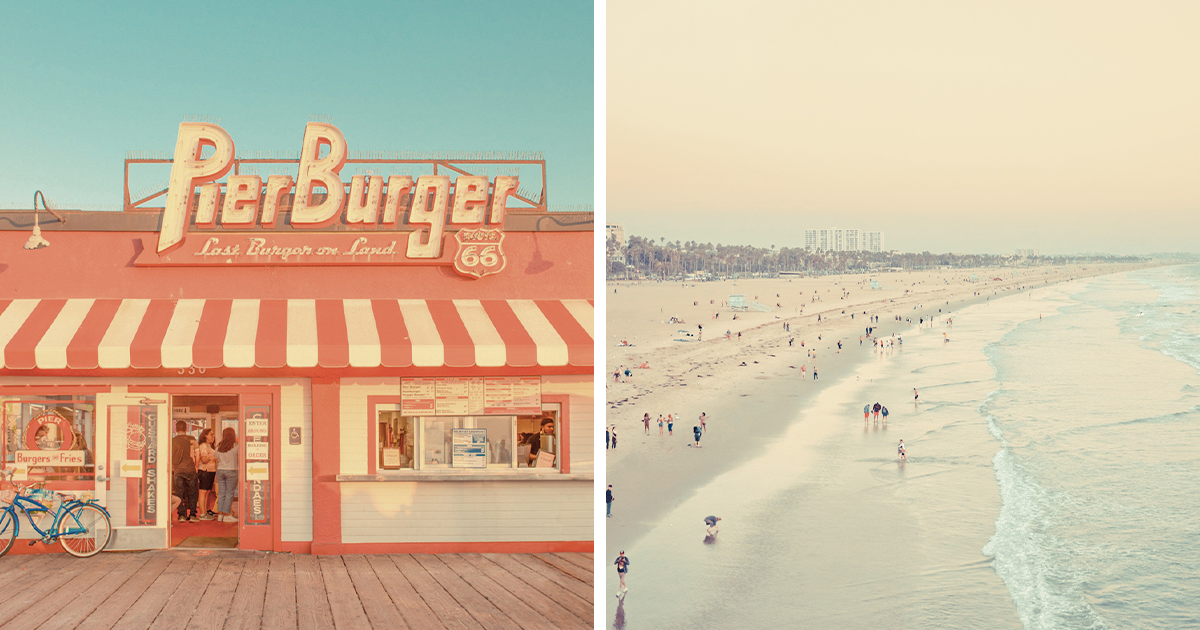
Some places politely ask to be photographed. Santa Monica Pier basically grabs your camera, turns itself toward the sunset, and says, “Use the wide lens, darling.” Set where Colorado Avenue meets the Pacific Ocean, this classic California landmark is one of those rare travel spots that looks almost too cinematic to be real: a glowing Ferris wheel, carnival lights, wooden pilings, salty air, beach cruisers, gulls with questionable manners, and a horizon that behaves like it has a full-time lighting director.
For this photo walk, I set out to capture dreamy pictures of Santa Monica Pier in Californianot just postcard snapshots, but the soft, colorful, slightly surreal moments that make the pier feel like a memory even while you are standing on it. The result: 13 pictures inspired by golden hour, neon reflections, ocean haze, historic details, and the strange joy of watching a roller coaster hover above the Pacific like it has rent to pay in the clouds.
Santa Monica Pier is more than a pretty backdrop. Opened in 1909, expanded with amusement attractions in the 1910s, nearly lost to demolition debates and storms, and later revived as a beloved public landmark, the pier carries a century of California beach culture in its wooden bones. Today, it is home to Pacific Park, the Pacific Wheel, the West Coaster, street performers, restaurants, fishing areas, souvenir stands, the historic Looff Hippodrome, and Heal the Bay Aquarium tucked below the carousel building. In other words, it is a photographer’s buffetand yes, I went back for seconds.
Why Santa Monica Pier Looks So Dreamy Through a Camera
The magic of Santa Monica Pier photography comes from contrast. The pier is playful but historic, crowded but peaceful, loud but somehow calming when the waves roll underneath. During the day, it feels cheerful and bright, all blue sky and carnival colors. Near sunset, the mood changes. The Pacific Wheel begins to glow. The water turns silver, then orange, then dark blue. The wooden structure becomes a silhouette. Suddenly every tourist holding a phone looks like a documentary filmmaker waiting for their big break.
That dreamlike effect is also helped by the pier’s layout. You can photograph it from the beach, from the deck, from the bluffs above Ocean Avenue, from the bike path, or from the far end facing back toward the city. Each angle tells a different story. From below, the pier looks old, textured, almost ship-like. From above, it becomes a colorful icon against the wide Pacific. From the sand at dusk, the Ferris wheel reflects on wet shoreline like a neon watercolor painting.
The 13 Dreamy Santa Monica Pier Pictures I Wanted to Capture
Since the best photo essays need rhythm, I treated these 13 shots like chapters in a small California story. Each one focuses on a different mood, detail, or experience around the pier.


A Quick History Behind the Beauty
The Santa Monica Pier did not become iconic by accident. The Municipal Pier opened in 1909, originally for practical city infrastructure rather than vacation glamour. A few years later, amusement pioneer Charles I. D. Looff and his son Arthur built the adjoining Pleasure Pier in 1916, adding entertainment, rides, and the Looff Hippodrome. That historic building still stands today and remains one of the pier’s most charming architectural features.
Pacific Park arrived in the 1990s and brought back the classic amusement-park energy that now defines the pier for many visitors. Its Pacific Wheel is especially famous: a solar-powered Ferris wheel that has become one of the most recognizable sights on the Southern California coast. The park also features the West Coaster, midway games, seaside food, and that unmistakable “I am on vacation even if I only drove twenty minutes” atmosphere.
The pier also has a dramatic survival story. In the 1970s, some plans called for removing it, but local preservation efforts helped save it. Then winter storms in the early 1980s damaged large sections of the structure, leading to major restoration work. That history gives the pier extra emotional weight. It is not just photogenic; it is resilient. Every glowing sunset shot rests on decades of community effort, repairs, preservation, and stubborn California optimism.
Best Time to Take Dreamy Pictures of Santa Monica Pier
Golden Hour
Golden hour is the obvious winner, and for good reason. The sun drops toward the Pacific, soft light hits the rides, and the entire scene takes on a warm, cinematic glow. For dreamy travel photography, arrive at least an hour before sunset. This gives you time to scout angles, find a clean foreground, and pretend you are calm while the sky changes every twelve seconds.
Blue Hour
Blue hour begins just after sunset, when the sky turns deep blue and the pier lights become more vivid. This is the best time for long-exposure shots of the Ferris wheel, ocean movement, and reflections on wet sand. Bring a tripod if you want crisp night images, or brace your camera against a railing if you enjoy living dangerously but artistically.
Early Morning
Morning is quieter and cleaner visually. The crowds are lighter, the beach feels spacious, and the pier has a calm side that many visitors miss. If you want soft pastel tones, minimal people, and peaceful documentary-style images, sunrise and early morning can be surprisingly rewarding.
Photography Tips for Santa Monica Pier
First, shoot from multiple levels. Start on the sand for dramatic silhouettes, move onto the pier for details and people, then head toward Ocean Avenue or the bluffs for wider establishing shots. The same Ferris wheel can look playful, romantic, historic, or futuristic depending on where you stand.
Second, watch your foreground. Wet sand, bike tracks, railings, beach grass, footprints, and reflections can all add depth. A simple photo of the Pacific Wheel becomes stronger when the foreground gives viewers a path into the image.
Third, include people when the scene needs scale. A couple walking below the pier, a child pointing at the carousel, a fisherman at the rail, or a cyclist passing through golden light can make the image feel alive. Santa Monica Pier is not a museum piece; it is a public stage, and the visitors are part of the performance.
Finally, do not ignore practical details. The pier is popular year-round, and parking near the beach can fill quickly during weekends, holidays, and sunset hours. If possible, walk from Downtown Santa Monica, use public transportation, rent a bike, or arrive early. Also check current ocean-water conditions before swimming near the pier, and follow local fish advisories if you plan to fish. Pretty water still deserves smart decisions.
What Makes Santa Monica Pier a Classic California Photo Location?
Santa Monica Pier works because it combines several visual identities at once. It is a beach destination, a historic landmark, an amusement park, a Route 66 symbol, a street-performance venue, and a sunset platform. Few places offer that much variety in such a compact walk.
For SEO travelers searching for things to do in Santa Monica, the pier checks nearly every box: ocean views, family-friendly rides, walkable food options, souvenir stops, nearby beach activities, bike paths, and easy access to Downtown Santa Monica. For photographers, it offers color, architecture, motion, history, reflections, people, wildlife, and weather. For everyone else, it offers funnel cake, which is arguably a valid cultural institution.
The Route 66 connection adds another layer. While the historic technical endpoint is more complicated than a single sign, the “End of the Trail” marker on the pier has become a beloved symbolic photo stop. It captures the feeling of finishing a long American road trip at the edge of the Pacific. Even if you arrived by rideshare, the sign still makes you feel like you crossed half the continent with a paper map and heroic snack discipline.
My 500-Word Experience: Chasing Dreamy Pier Light
I arrived at Santa Monica Pier with a camera, comfortable shoes, and the confidence of someone who had definitely underestimated the wind. The first thing I noticed was the sound: gulls overhead, wheels clicking, music from a performer near the walkway, and waves thumping below the boards like the ocean was knocking politely. The pier was busy, but not in a stressful way. It had that classic California mix of families, skaters, tourists, photographers, couples, and people holding snacks so large they required strategy.
I started near the entrance sign because it is impossible not to. The old Santa Monica Yacht Harbor lettering has a cheerful vintage look that instantly says, “Congratulations, you made it to the coast.” From there, I walked slowly toward Pacific Park, stopping every few steps because the light kept changing. The Ferris wheel looked completely different from one angle to the next. Straight on, it was symmetrical and iconic. From the side, it became layered with roller-coaster tracks, flags, food stands, and the ocean behind it.
My favorite moments happened closer to sunset. The entire pier softened. Faces turned warm, shadows stretched, and the Pacific started catching little strips of gold. I went down to the sand and photographed the pier from below, where the wooden pilings created repeating lines into the water. It felt quieter there, almost secret, even though the amusement park was glowing right above me. A wave rolled in, spread thin across the sand, and reflected the lights from the rides. That was the shot I had been waiting for: dreamy, colorful, slightly imperfect, and completely alive.
Later, during blue hour, I returned to the deck. The Pacific Wheel was brighter now, and the crowd had changed moods. Daytime visitors were leaving with sunburns and souvenirs; evening visitors were arriving for lights, food, and photos. I watched a family take turns posing by the Route 66 sign. A street musician played nearby. Someone laughed so hard they almost dropped their fries, which would have been tragic but visually compelling.
The best part about photographing Santa Monica Pier is that it does not ask you to choose between travel photography and storytelling. Every frame has a little narrative built in. A fisherman waiting. A kid staring up at the Ferris wheel. A couple walking barefoot by the water. A performer balancing an impossible routine. A neon reflection disappearing as soon as the next wave arrives. By the time I packed up, I had far more than 13 pictures. I had the feeling that the pier had performed a full show just for the cameraand maybe for anyone willing to slow down long enough to notice.
Conclusion: A Dreamy California Landmark Worth Photographing Again
I Took Dreamy Pictures Of Santa Monica Pier In California (13 Pics) is more than a photo title; it is an invitation to look closely at one of Southern California’s most beloved coastal landmarks. Santa Monica Pier is colorful, historic, crowded, nostalgic, and wildly photogenic. It has the rare ability to feel familiar even on a first visit, probably because it has appeared in so many travel dreams, movie scenes, postcards, and sunset plans.
Whether you come for Pacific Park, the Pacific Wheel, Route 66 nostalgia, beach views, street performers, or simple ocean air, bring a camera and give yourself time. The best pictures are not always the obvious ones. Sometimes they are under the pier, in a reflection, behind a food stand, beside a carousel horse, or in the split second when the sky turns lavender and everyone on the beach looks up at once.