Growing salad greens indoors sounds wonderfully wholesome until you remember that plants usually require sunlight, watering, space, fertilizer, and a gardener who does not forget they exist for four consecutive days. The Mini Gardyn system, officially known as the Gardyn Studio, promises to handle much of that work inside a compact vertical hydroponic garden.
I evaluated the Mini Gardyn as a practical household product rather than treating it like a futuristic kitchen ornament. I examined its setup, growing capacity, automation, maintenance requirements, harvest potential, operating experience, and long-term value using verified hands-on testing and current product documentation.
The result surprised me. The Mini Gardyn is not completely effortless, and it will not replace a grocery store with a leafy vegetable factory. However, it can grow an impressive amount of lettuce, herbs, flowers, and compact produce in an area barely larger than a houseplant.
What Is the Mini Gardyn System?
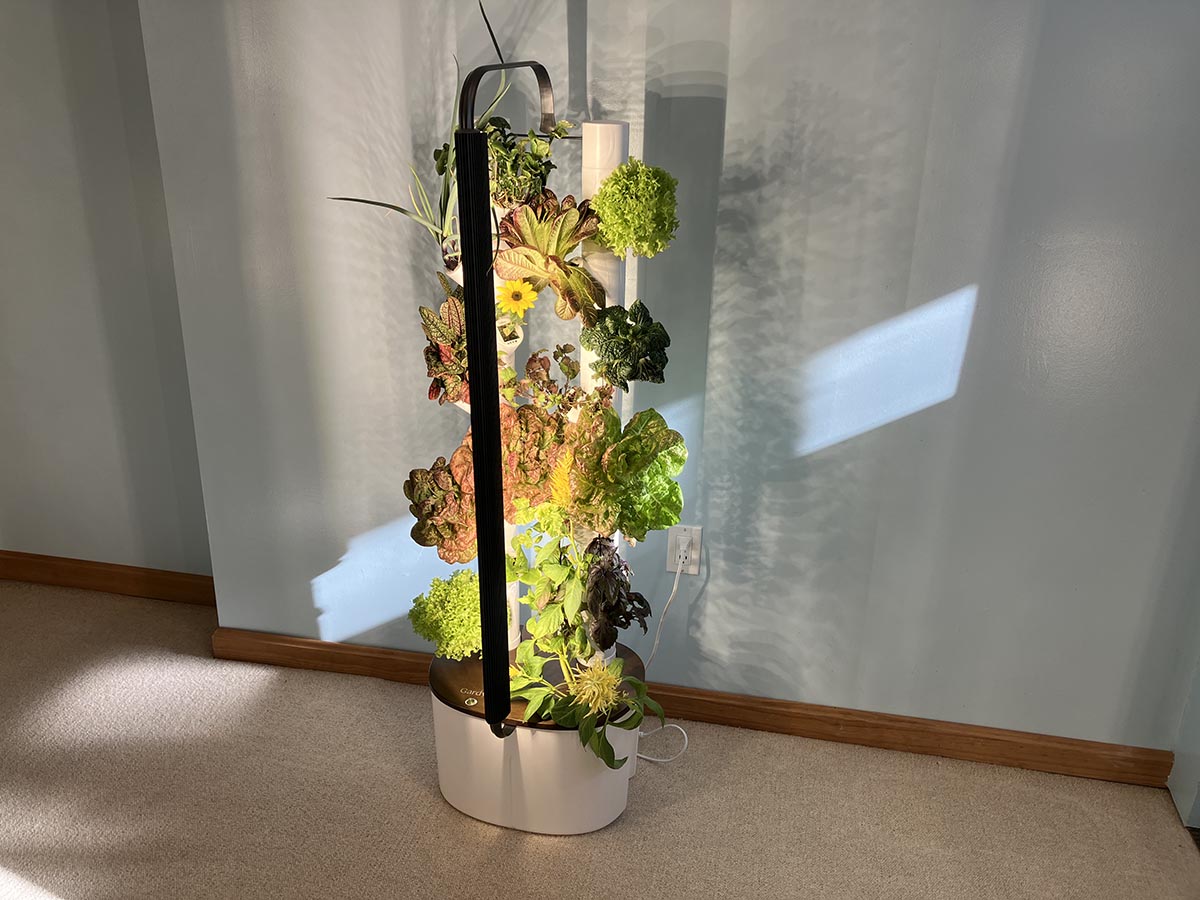
The Mini Gardyn is a compact indoor hydroponic garden designed for people who want fresh produce but lack a sunny yard, greenhouse, or willingness to battle squirrels. Instead of soil, plants grow in small seed-filled cubes placed inside vertical columns. Water and dissolved nutrients circulate from a reservoir through the roots.
The system accommodates up to 16 plants while occupying approximately 1.4 square feet of floor space. That makes it considerably more apartment-friendly than many traditional planters and larger vertical gardening systems.
A built-in LED light provides the energy plants need for photosynthesis. The pump handles irrigation, while the companion app manages watering and lighting schedules. Depending on the model and membership level, users may also receive camera-based plant monitoring, reminders, and guidance from Gardyn’s digital gardening assistant.
What Comes With the System?
A typical starter package includes the vertical growing columns, plant holders, LED grow light, water reservoir, pump, camera or monitoring hardware, plant food, and a selection of pre-seeded yCubes. The exact bundle can change, so buyers should review the current package before ordering.
The proprietary yCubes are convenient because the seeds and growing medium arrive prepared. You insert the cubes, fill the reservoir, connect the system, and wait for nature to perform its slow-motion magic trick.
Setting Up the Mini Gardyn
The setup is more involved than plugging in a countertop herb garden, but it is not especially difficult. The main components must be assembled correctly, the light bar secured, the plant columns connected, and the pump positioned inside the reservoir.
The system also needs access to an electrical outlet and a stable Wi-Fi connection for app features. Because the light is bright, placement deserves more thought than the small footprint might suggest. A dining area, living room corner, office, or spacious kitchen may work better than a bedroom unless you enjoy waking up inside what appears to be a very polite spaceship.
Initial Watering and Plant Food
New users should follow the startup instructions carefully. Newly installed seed cubes begin with plain water rather than a full dose of nutrients. Plant food is introduced after germination at the recommended concentration.
This detail matters. More fertilizer does not mean faster growth. It can stress young roots, create nutrient imbalance, and turn an exciting gardening experiment into an expensive lesson in restraint.
Pairing the App
The app is central to the experience. It can control the light schedule, manage irrigation, track plants, and deliver reminders. Basic automation remains useful even without paying for every optional service, although premium guidance and recurring plant shipments may require a membership.
Pairing can occasionally require patience, particularly when home networks use multiple frequency bands or strict security settings. Once connected, however, scheduled lighting and watering remove two of the most common reasons indoor plants fail.
My Mini Gardyn Test Criteria
Rather than judging the system by how photogenic it looked on day one, I evaluated it across several practical questions:
- Does the system make indoor gardening easier for beginners?
- Can 16 plants grow without becoming hopelessly crowded?
- How quickly can users expect visible growth and harvests?
- Are the automated features genuinely helpful?
- How much weekly and monthly maintenance is required?
- Does the harvest justify the price and ongoing costs?
The Mini Gardyn performed extremely well in convenience, space efficiency, and early plant growth. Its weaker areas were predictable: high upfront cost, bright lighting, proprietary supplies, and the need for regular pruning and cleaning.
Week-by-Week Growth: Where the Amazing Results Begin
Week 1: The Waiting Game
The first week is not dramatic. Seed cubes sit in their holders looking like tiny beige promises. Depending on the plant variety and environmental conditions, sprouts may appear within several days.
Basil, lettuce, arugula, and many leafy greens usually provide the quickest emotional reward. Their tiny green shoots make the system feel successful before it has produced enough food to garnish a sandwich.
Weeks 2 and 3: Visible Daily Progress
This is when the Mini Gardyn becomes genuinely entertaining. Under consistent LED lighting and automated irrigation, young plants can develop noticeably from one day to the next. Lettuce begins forming recognizable leaves, herbs produce stronger stems, and the vertical columns start looking like a garden rather than laboratory equipment.
Hydroponic plants receive water, oxygen, light, and mineral nutrients in a controlled environment. They do not need to spend energy developing extensive root systems to search through soil. That does not guarantee instant vegetables, but it helps explain why leafy greens often grow efficiently in indoor hydroponic systems.
Weeks 4 Through 6: The First Useful Harvest
Fast-growing greens may become harvestable within the first month or two. The best approach is usually to remove mature outer leaves while leaving the center of the plant intact. This “cut-and-come-again” technique allows lettuce and many herbs to continue producing.
The first substantial harvest is the moment the Mini Gardyn earns its confidence. Walking several feet to collect basil for pasta or lettuce for a sandwich feels surprisingly luxurious. There is no wilted plastic package hiding behind the milk, and no emergency grocery trip for three leaves of mint.
What Grew Best in the Mini Gardyn?
Lettuce and Salad Greens
Leaf lettuce is an excellent match for the compact system. It grows relatively quickly, responds well to repeated harvesting, and does not require pollination. Butterhead lettuce, romaine-style varieties, arugula, mustard greens, and compact kale can create a productive salad-focused garden.
Plant spacing still matters. Sixteen available sites do not necessarily mean every slot should hold a mature, full-sized plant simultaneously. Leaving strategic gaps can improve airflow and reduce competition for light.
Basil and Other Herbs
Basil is often one of the star performers. It grows quickly, smells wonderful, and can become aggressively enthusiastic. Regular pruning keeps it bushy and prevents it from blocking neighboring plants.
Parsley, cilantro, dill, chives, thyme, and mint may also work, although germination speed and final size vary. Mint deserves its own warning label. It is less of an herb and more of a tiny empire with territorial ambitions.
Flowers and Fruiting Plants
Compact flowers add color and can make the Mini Gardyn look more like living décor. Strawberries, small peppers, and dwarf tomatoes may also be possible, but fruiting plants generally require more time, space, pruning, and attention than leafy greens.
Some flowering crops may need manual pollination indoors. Gently shaking blossoms or transferring pollen with a small brush can substitute for the outdoor insects that normally handle this work without sending an invoice.
The Automation Actually Makes a Difference
The strongest feature is not that the Mini Gardyn grows plants without soil. Many indoor systems do that. Its real advantage is that watering and lighting happen consistently.
Indoor plants frequently suffer from irregular care. Owners water too much, water too little, move the plant between unsuitable windows, or suddenly remember it at 11:48 p.m. The Gardyn replaces that inconsistency with a schedule.
The camera and app guidance can add another layer of convenience. Reminders to prune, harvest, refill the reservoir, or inspect roots are useful for beginners who do not yet recognize what a crowded canopy or thirsty system looks like.
Automation does not eliminate gardening. It eliminates some of the guessing, which is arguably the less charming half of gardening anyway.
Maintenance: Easier, Not Effortless
Refilling the Reservoir
As plants mature, they consume more water. Users should check the reservoir regularly and top it off according to the recommended water-to-nutrient ratio. A fully established group of leafy plants can drink considerably faster than newly germinated seedlings.
The reservoir’s full capacity is approximately 4 gallons, although initial startup instructions may call for less water. Keeping a dedicated container nearby makes refilling easier and prevents creative journeys across the living room with an uncovered stockpot.
Pruning Leaves and Roots
Pruning is essential in a compact vertical garden. Large leaves can shade smaller plants, basil can invade neighboring spaces, and mature roots may become tangled inside the columns.
Regular harvesting improves airflow and keeps the garden productive. Root trimming may also be necessary when growth becomes excessive. The process is not difficult, but anyone expecting to insert seed pods and return six months later to a perfectly organized salad wall will be disappointed.
Cleaning the System
Hydroponic systems need periodic cleaning because nutrient deposits, algae, biofilm, and organic debris can accumulate in wet components. The reservoir should be refreshed on the recommended schedule, and the tank, plant holders, columns, and accessible surfaces should be inspected and cleaned.
Preventive care is much easier than rescuing a neglected system. Covering unused plant openings, removing dead leaves, maintaining the correct nutrient concentration, and following the manufacturer’s water-treatment guidance can reduce buildup.
The Mini Gardyn’s Biggest Advantages
- Excellent use of space: Sixteen plant sites fit into approximately 1.4 square feet.
- Year-round growing: Weather, poor outdoor soil, and short winter days become less relevant.
- Consistent care: Automated lights and irrigation reduce common beginner mistakes.
- Fast access to herbs and greens: Produce can be harvested moments before a meal.
- Attractive design: The vertical garden looks more intentional than a collection of mismatched nursery pots.
- Educational value: Children and adults can observe roots, germination, growth, pruning, and harvesting at close range.
The Drawbacks You Should Know Before Buying
The Upfront Price Is Significant
The Mini Gardyn costs considerably more than a basic countertop herb kit. Buyers are paying for vertical capacity, automated irrigation, integrated lighting, app controls, sensors, design, and convenience.
It should not be purchased solely as a fast money-saving device. The financial return depends on what you grow, how consistently you harvest, local produce prices, electricity costs, replacement supplies, and whether the system remains in regular use.
Optional Membership Costs Can Add Up
Some advanced guidance, plant shipments, and AI-assisted features may be tied to a recurring membership. The system can still provide useful automation without every premium feature, but shoppers should understand which functions are included before calculating the real cost of ownership.
The Grow Light Is Bright
Plants need substantial light, and the Mini Gardyn provides it. The resulting brightness can dominate a small room, especially early in the morning or after sunset. Scheduling the light during normal waking hours and positioning the garden away from televisions or sleeping areas can help.
Plants Can Become Crowded
Sixteen slots look wonderfully efficient until every plant decides to become successful at the same time. Thoughtful variety selection, pruning, and occasional empty spaces are necessary. A balanced mix of compact lettuces and herbs is usually easier to manage than filling every position with tomatoes, basil, and botanical optimism.
Does It Produce Enough Food to Matter?
The Mini Gardyn can provide meaningful amounts of fresh herbs and greens for one or two people, especially when planted with fast-growing, frequently harvested varieties. It is well suited to salad toppings, sandwich greens, garnishes, smoothies, herbs, and small side salads.
It is less realistic to expect the system to supply every vegetable a household eats. Sixteen compact plants are productive, but they remain sixteen plants. A family that consumes enormous salads every day may need the larger Gardyn model or multiple growing systems.
The greatest practical benefit may be reducing waste rather than eliminating grocery purchases. Instead of buying a large package of basil for one recipe and watching the remainder slowly become compost in the refrigerator, users can harvest only what they need.
Who Should Buy the Mini Gardyn?
The system is a strong choice for apartment residents, busy professionals, curious beginners, families with children, home cooks, and anyone living in a climate where outdoor growing is limited by heat, frost, shade, wildlife, or lack of space.
It is particularly appealing to people who value convenience and design more than unrestricted customization. The Gardyn ecosystem simplifies indoor growing, but experienced hydroponic gardeners may prefer a less proprietary system that offers greater control over seeds, nutrients, pumps, and operating schedules.
Who Should Skip It?
Budget-focused gardeners may achieve good results with a simpler hydroponic kit and separate grow lights. People who dislike apps, subscriptions, bright indoor lighting, or routine cleaning may also find the system frustrating.
It is not ideal for someone interested only in large tomatoes, cucumbers, melons, or other sprawling crops. The Mini Gardyn performs best when its limited vertical space is treated as a feature rather than challenged like a competitive sport.
500 More Words About the Real-World Mini Gardyn Experience
The most interesting part of evaluating the Mini Gardyn was realizing that its appeal extends beyond the amount of produce it grows. A bag of lettuce from the supermarket is inexpensive and requires no Wi-Fi pairing. The Gardyn experience is different because the food becomes part of the room and part of the daily routine.
Visible growth creates a small but persistent sense of progress. During the early stage, checking the plants feels almost silly. Yesterday’s sprout is only slightly larger today. A week later, however, the columns have transformed. Leaves overlap, roots reach into the system, and herbs release their fragrance when touched.
The garden also changes meal planning. Fresh basil encourages homemade pesto. Arugula ends up on pizza. Lettuce becomes a convenient addition to sandwiches because harvesting it is easier than opening a new plastic container and wondering whether the contents are still socially acceptable.
Another noticeable experience is how quickly successful plants demand attention. Automated watering can create the impression that the machine is doing everything, but healthy plants still need a human editor. Leaves must be harvested, crowded branches trimmed, and aggressive herbs reminded that they do not own the entire vertical column.
This is good news for people who want gardening without the most repetitive chores. The Mini Gardyn does not remove the enjoyable parts. Users still watch seeds germinate, smell herbs, shape plants, and gather produce. The automation mainly handles the tasks that are easy to forget.
The bright grow light requires adjustment. In a dark room, it can feel less like a tasteful garden and more like the sun has accepted a temporary position in household management. After the lighting schedule is aligned with normal daytime hours, it becomes less intrusive. The greenery also softens the appearance as plants mature and partially fill the illuminated space.
Noise is generally less important than light, but the pump is not completely imaginary. Its periodic operation may be noticeable in a silent room. Most users will probably stop paying attention to it, much as they ignore a refrigerator, air purifier, or the neighbor who closes every car door as though sealing a submarine.
The system’s compactness is both liberating and restrictive. It fits where a conventional indoor vegetable garden would not, but every plant choice affects its neighbors. A large basil plant can shade lettuce. A mature flower can block the camera. Long roots can tangle. Success requires occasional rearranging and pruning rather than complete neglect.
Cleaning is the least glamorous part of ownership. There is no inspirational lifestyle photograph of someone cheerfully wiping mineral residue from a water reservoir. Nevertheless, maintenance protects the pump, roots, and water quality. A regular routine is far easier than waiting until buildup becomes a science project with its own municipal government.
The ongoing cost of seed cubes, plant food, optional treatments, and membership services deserves consideration. Experienced gardeners can compare those expenses with open hydroponic systems that accept generic seeds and supplies. Beginners may decide that the convenience, instructions, and coordinated components are worth paying for.
The final real-world impression is that the Mini Gardyn makes food growing unusually approachable. It cannot guarantee that every seed will germinate or that pests will never appear. It cannot prevent a basil plant from behaving like an ambitious real estate developer. What it can do is create a controlled, attractive environment in which beginners have a much better chance of reaching harvest.
That is why the results feel amazing. The wonder is not simply that lettuce grows in water. Gardeners have understood hydroponics for a long time. The wonder is that a relatively compact appliance can make the process accessible inside an ordinary home, even for someone whose previous gardening strategy consisted mainly of apology.
Final Verdict: Is the Mini Gardyn Worth It?
The Mini Gardyn is one of the most polished ways to grow herbs and leafy greens indoors. Its compact footprint, 16 plant sites, automated lighting, scheduled watering, and app-based assistance address many of the obstacles that discourage beginners.
It still requires pruning, harvesting, refilling, cleaning, and sensible plant selection. It also carries a premium price and may involve recurring supply or membership expenses. Those limitations prevent it from being an automatic recommendation for every household.
For an apartment resident, home cook, busy beginner, or plant enthusiast who wants a productive indoor garden that doubles as living décor, the Mini Gardyn can be an excellent investment. It grows real food, encourages regular harvesting, and turns an unused corner into a small year-round garden.
The results are not magic. They are the product of controlled light, nutrient-rich water, reliable automation, and timely maintenance. Still, when the first bowl of greens comes from a structure occupying less floor space than a laundry basket, “amazing” feels like a perfectly reasonable description.