Knowing how to set a table properly is one of those small life skills that delivers an outsized reward. It makes Tuesday-night pasta feel more inviting, helps dinner-party guests understand what to expect, and prevents anyone from accidentally adopting a neighbor’s bread plate.
Fortunately, proper table setting is not a complicated collection of rules designed to expose the salad-fork impostors among us. The arrangement follows a practical system: place each item where it is easiest to use, and provide only what the meal requires. Once you understand that logic, you can confidently prepare a table for breakfast, brunch, a casual family dinner, or a formal multicourse celebration.
Why a Proper Table Setting Matters
A well-set dining table establishes the mood before the first dish arrives. Crisp napkins and carefully arranged plates suggest a special occasion, while colorful placemats and mismatched dishes create a relaxed, cheerful atmosphere.
More importantly, a proper place setting makes the meal comfortable. Guests can find their water, utensils, and napkin without performing a tabletop treasure hunt. The position of each utensil also hints at the order of the courses.
The goal is not rigid perfection. Good etiquette is based on consideration, and consideration means making people feel welcome. If an elaborate centerpiece blocks half the guests from view or five unused forks leave everyone nervous, the table may be technically impressive but practically unsuccessful.
The Basic Rules for Setting Any Table
Begin With the Menu
Before opening the silverware drawer, review the menu. Every plate, glass, and utensil should have a purpose. If soup is not being served, skip the soup spoon. If there is only one wine, one wineglass is enough. Your dining table is not a showroom, and guests do not need to meet the entire contents of your kitchen cabinet.
Center the Place Setting
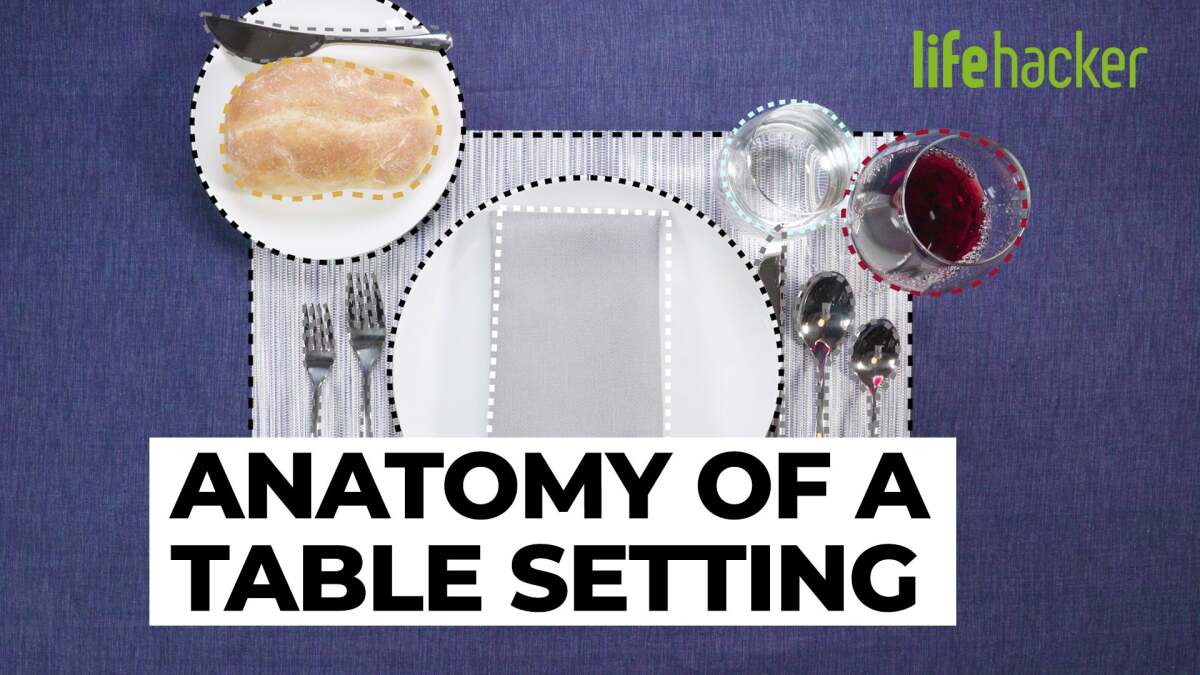
Position the dinner plate in front of each chair, usually about one inch from the edge of the table. Try to give every diner approximately 24 inches of personal space whenever the table permits. Align the bottoms of the plate and flatware to create a clean, orderly appearance.
Place Forks on the Left
Forks traditionally belong to the left of the plate. When more than one fork is needed, arrange them according to the order of use, working from the outside toward the plate. If salad is served before the entrée, the salad fork sits to the left of the dinner fork.
Put Knives and Spoons on the Right
Set the dinner knife immediately to the right of the plate, with its blade facing inward. This inward-facing blade is both traditional and visually neater. Place spoons to the right of the knives. As with forks, utensils required earlier in the meal sit farther from the plate.
Remember “Outside In”
The easiest formal table setting rule is also the most useful: diners use flatware from the outside in. For a meal beginning with soup, followed by salad and an entrée, the soup spoon and salad fork occupy the outermost positions. The dinner fork and knife remain closest to the plate.
Keep Bread Left and Drinks Right
The bread-and-butter plate goes above the forks on the upper left. Glassware belongs above the knives on the upper right, with the water glass closest to the plate.
Need a memory trick? Touch the tip of each index finger to its corresponding thumb. Your left hand resembles a lowercase “b” for bread, while your right resembles a lowercase “d” for drinks. It looks slightly silly under the table, but it may save you from buttering your neighbor’s roll.
Choose a Practical Napkin Position
A napkin can be placed to the left of the forks, beneath the forks in a basic setting, or centered on the plate or charger. Cloth napkins generally create a more polished look, but clean paper napkins are completely appropriate for informal meals. Accessibility matters more than complicated folding techniques.
How to Set an Everyday Table
An everyday table setting is ideal for breakfast, lunch, takeout night, and relaxed family dinners. It requires only the items needed to eat the food being served.
- Place the dinner plate in the center of the setting.
- Put one fork to the left of the plate.
- Place the dinner knife to the right, with its blade facing the plate.
- Add a spoon to the right of the knife when the menu requires one.
- Set the water glass above the knife.
- Place the napkin to the left or on the plate.
For sandwiches, pizza, or other foods normally eaten by hand, you may omit the knife and spoon. A thoughtful table setting should simplify the meal, not provide unnecessary equipment for tackling a grilled cheese sandwich.
How to Set a Casual or Informal Dinner Table
A casual table setting works well for weekend dinners, birthdays, holiday lunches, and friendly gatherings. Begin with the everyday arrangement, then add pieces that correspond to additional courses.
- Center the dinner plate on a placemat or directly on the table.
- Place the dinner fork to the left and a salad fork farther left if salad comes first.
- Position the dinner knife on the right, followed by a soup spoon when needed.
- Set the water glass above the knife and a wineglass slightly to its right.
- Place a bread plate above the forks if bread will be served.
- Put the napkin beneath the forks, beside them, or on the plate.
A salad plate or soup bowl may be stacked on the dinner plate for an attractive layered presentation. However, stacking every dish guests might possibly encounter can create a leaning tower of porcelain. Use only the dishes needed for the opening courses.
How to Set a Formal Dinner Table
A formal place setting is designed for a multicourse meal in which dishes are served and cleared separately. It may look elaborate, but it follows the same outside-in logic as a casual arrangement.
Plates and Charger
Place a charger, also called a service plate, in front of each chair. A charger is a large decorative plate that anchors the setting; food is not normally served directly on it. A first-course plate or soup bowl may sit on top. The charger is generally removed before the main course or along with the plate from the preceding course.
Formal Flatware Placement
Arrange forks on the left in the sequence they will be used. Place knives and spoons on the right, again working from the outside inward. An oyster fork is a notable exception: it is traditionally positioned on the right.
Dessert utensils may arrive with dessert or rest horizontally above the charger. When placed in advance, the dessert fork generally has its handle pointing left, while the dessert spoon above it has its handle pointing right.
Bread Plate and Butter Knife
Place the bread plate above the forks. Lay the butter knife across it, usually with the handle pointing right and the blade turned inward.
Formal Glassware
Position the water glass above the dinner knife. Arrange wineglasses nearby in the order they will be used. A common arrangement places the white-wine glass nearest the guest and the red-wine glass slightly higher or behind it. Dessert-wine glasses can be brought out with dessert instead of crowding the original setting.
Place Cards
Place cards are useful when guests may be uncertain where to sit or when the host has planned the seating to encourage conversation. Position each card above the plate or charger where it is easy to see.
Table Settings for Different Meals
Breakfast
For a simple breakfast, place a plate in the center, a fork on the left, and a knife on the right. Add a spoon if serving cereal, yogurt, or oatmeal. Position a juice glass above the knife and place the coffee cup and saucer to the upper right, with the cup handle facing right.
If toast is served, add a small plate to the upper left. A bowl can rest on the main plate when cereal or fruit is the first course.
Brunch
Brunch settings can be colorful and relaxed. Start with a basic place setting, then add the specific pieces required for the menu: a bowl for fruit, a small plate for pastries, a coffee cup, a water glass, and perhaps a flute or wineglass for a brunch cocktail.
Avoid automatically adding every possible beverage glass. Three drinks per person may be festive; six can make the table look as if the glassware cabinet has staged a rebellion.
Family-Style Meals
For family-style dining, leave sufficient room for shared platters, bowls, trivets, and serving utensils. Use a simple place setting so guests can comfortably pass food. Place a dedicated serving utensil with every shared dish, and protect the table from hot or dripping containers.
Buffet Meals
At a buffet, arrange items in the same sequence guests will need them. Begin with plates, followed by salads, entrées, sides, condiments, and bread. Wrapped flatware and napkins can go at the end so diners do not have to balance them while serving food.
Place beverages on a separate surface when possible. This reduces congestion and prevents guests seeking a refill from swimming upstream through the buffet line.
Outdoor Dining
Choose sturdy dinnerware, weighted napkins, and low decorations for an outdoor table. Keep food covered until serving, provide shade when possible, and avoid lightweight paper products on windy days. Flameless candles can add evening atmosphere without requiring the host to relight a taper every time the breeze clears its throat.
How to Decorate Without Sacrificing Comfort
The best tablescapes balance personality and practicality. Pick one unifying elementsuch as a seasonal color, natural material, or favorite set of dishesand build around it. Plates, linens, and glassware do not have to match perfectly. Coordinated colors and similar proportions can make mixed pieces feel collected rather than accidental.
Keep centerpieces low enough for guests to see across the table. Flowers, herbs, fruit, greenery, and candles are dependable choices. Avoid heavily scented flowers or candles that compete with the aroma of the meal.
Before guests arrive, sit in several chairs and inspect the table from their perspective. Confirm that decorations do not block faces, candles are stable, and everyone can reach shared items. A centerpiece should start conversations, not become an obstacle guests must peer around all evening.
Common Table-Setting Mistakes
- Setting unused utensils: Extra pieces create clutter and confusion. Match the setting to the menu.
- Turning knife blades outward: Dinner knife blades traditionally face the plate.
- Reversing bread and beverages: Bread belongs on the left; drinks belong on the right.
- Using towering centerpieces: Guests should be able to make eye contact without leaning sideways.
- Crowding diners: Reduce decorations or serving dishes before reducing personal space.
- Forgetting serving utensils: Every communal dish needs an appropriate spoon, fork, ladle, or set of tongs.
- Choosing style over function: An attractive arrangement should still allow guests to eat naturally and comfortably.
Practical Table-Setting Experiences and Lessons
Real meals have a useful habit of revealing which table-setting ideas work outside photographs. A place setting may look flawless from the doorway yet become inconvenient once guests sit down, bread baskets arrive, and someone needs room for a serving bowl.
The Holiday Table That Had Too Much of Everything
Consider a holiday host preparing a formal table for eight. Wanting the evening to feel memorable, the host sets chargers, three forks, three knives, two spoons, four glasses, bread plates, candles, place cards, floral arrangements, and several decorations at every seat. The result is beautiful for approximately thirty seconds.
Once serving platters arrive, there is nowhere to put them. Guests hesitate because they cannot tell which glasses belong to which place. Decorative pinecones begin migrating toward the windowsill, and the centerpiece is eventually moved to the floor so everyone can talk.
The lesson is simple: plan the table around the actual menu and serving method. If dinner will be served family-style, leave open space in the center. If only water and one wine are offered, set two glasses rather than four. Restraint often makes a table look more confident.
The Casual Dinner Saved by Mismatched Dishes
Another common situation begins with a host discovering that there are only five matching dinner plates for six guests. Buying a new set at the last minute is unnecessary. Alternating two coordinating plate styles can make the mismatch look intentional. Repeating one color in the napkins, flowers, or placemats ties the arrangement together.
This approach often produces a warmer table than rigidly matching dinnerware. Guests notice the personality rather than counting patterns. The practical experience here is that consistency does not require identical pieces. A shared color palette, material, or shape is usually enough.
The Brunch Where Guests Could Not Find the Coffee
A buffet brunch can become inefficient when plates, food, coffee, juice, and flatware occupy the same small table. Guests pause to prepare coffee while everyone behind them waits with an empty plate. Moving drinks to a separate station immediately improves the flow.
Place cups, sweeteners, spoons, and napkins near the coffee. Keep water and juice together on another tray if space permits. On the food table, position plates first and utensils last. The experience demonstrates that a successful buffet is arranged according to movement, not merely appearance.
The Centerpiece That Joined the Meal
Tall flowers look dramatic until diners begin moving their heads from side to side to maintain a conversation. A simple test prevents this problem: sit down before the event and look across the table. If the arrangement blocks another chair, shorten it, divide it among several small vases, or move it to a sideboard after guests arrive.
Low bud vases, short candles, and bowls of fruit usually provide color without creating a botanical privacy screen. They also leave more room for serving dishes and reduce the chance of leaves landing in the gravy.
The Weeknight Setting That Became a Habit
Table setting is not reserved for company. Families often find that placing plates, napkins, water glasses, and basic flatware on the table before an ordinary meal changes its rhythm. Everyone is less likely to wander away for a missing fork, and the meal feels more deliberate.
The arrangement does not need linen napkins or polished silver. Even a basic setting takes only a few minutes. Children can help, learning the fork-left and knife-right pattern through repetition. Over time, setting the table becomes less like ceremonial preparation and more like a familiar signal that the household is about to pause and eat together.
The Most Reliable Lesson
Across formal dinners, casual lunches, and crowded family celebrations, the most successful tables have one feature in common: they support the people using them. Guests have elbow room, the utensils correspond to the food, drinks are easy to reach, and decorations do not interfere with conversation.
Etiquette provides a useful framework, but hospitality gives the framework its purpose. A slightly crooked fork will not ruin dinner. An uncomfortable guest might. When choosing between decorative perfection and practical comfort, let comfort win every time.
Conclusion
Learning how to set a table properly is mostly a matter of following a few dependable patterns. Center the plate, keep forks on the left, place knives and spoons on the right, turn knife blades inward, and arrange multiple utensils from the outside in. Bread stays on the upper left, while water and other beverages belong on the upper right.
Build each place setting around the menu rather than an imaginary etiquette examination. Add special plates, glasses, and utensils only when they serve a purpose. Then use linens, candles, flowers, and color to express your style without sacrificing space or conversation.
Whether you are serving pancakes, pizza, Thanksgiving dinner, or an ambitious six-course feast, the best table is not necessarily the fanciest one. It is the table where guests immediately feel comfortable, considered, and ready to enjoy the meal.