Every Mac user eventually meets the spinning beach ball. It usually appears at the worst possible moment: during a video call, while editing a giant photo, or right after you confidently said, “This will only take a second.” When an app freezes and refuses to close like a tiny digital drama queen, knowing how to force quit an application on a Mac can save your time, your patience, and possibly your coffee mug from being squeezed too tightly.
The good news is that macOS gives you several built-in ways to close an unresponsive app. You do not need third-party software, secret developer powers, or a ceremonial chant over your keyboard. In most cases, you can force quit a Mac app with a simple keyboard shortcut, the Apple menu, the Dock, Activity Monitor, or Terminal.
Important note: Force quitting closes an app immediately. If the app has unsaved work, that work may be lost. Before you go full emergency-exit mode, try a normal quit first. If the app is truly frozen, then yes, it is time to show it the door.
What Does “Force Quit” Mean on a Mac?
On a Mac, quitting an app normally allows the app to wrap things up neatly. It may save preferences, close background tasks, sync files, or ask whether you want to save changes. Force Quit is different. It tells macOS to stop the app right away because the app is no longer responding properly.
Think of a normal quit as politely saying, “Please leave the room.” Force Quit is the building manager arriving with a clipboard and a very serious expression.
You should use Force Quit when an application is frozen, stuck on the spinning wheel, blocking your screen, consuming too much CPU or memory, or preventing your Mac from restarting. Common examples include a browser tab that crashes the whole browser, a creative app stuck while exporting, a game that refuses to close, or a video meeting app that decides your workday needs more suspense.
Before You Force Quit: Try a Normal Quit First
Before forcing an application to close, try quitting it normally. Click the app name in the menu bar and choose Quit, or press Command + Q. If the app responds, it may close safely and preserve your work.
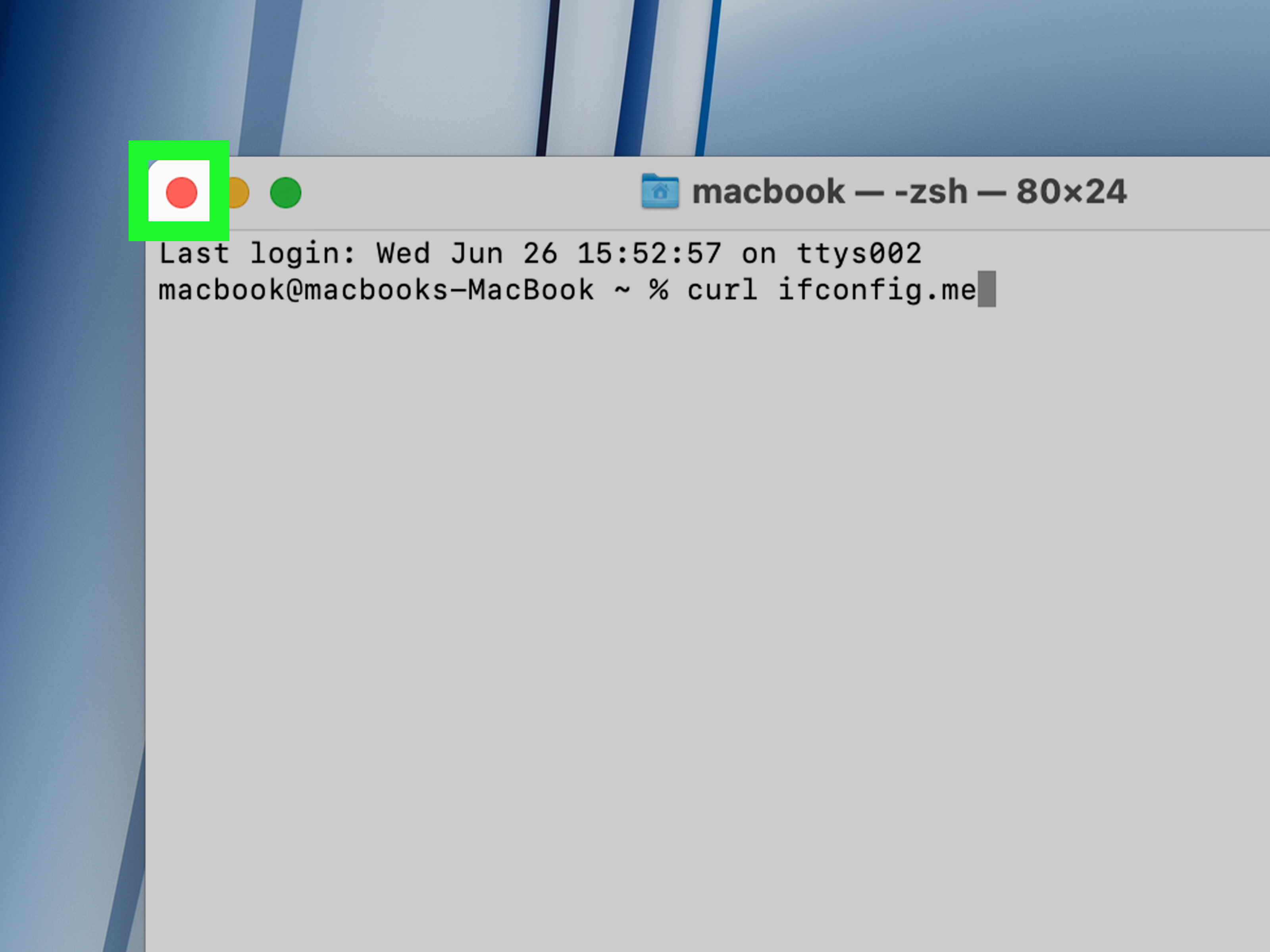
Also remember that clicking the red button in the top-left corner of a Mac window does not always quit the app. In many Mac applications, the red button only closes the current window. The app may still be running in the Dock with a small dot underneath its icon. This is one of those Mac behaviors that makes perfect sense after someone explains it, but until then feels like the computer is keeping secrets.
If Command + Q does nothing, menus do not respond, or the app continues spinning like it is auditioning for a tiny circus, move on to one of the methods below.
Method 1: Use the Option + Command + Esc Keyboard Shortcut
The fastest way to force quit an application on a Mac is the classic shortcut: Option + Command + Esc. Many people describe it as the Mac version of Control + Alt + Delete, although it is more direct because it opens the Force Quit Applications window immediately.
Steps
- Press Option + Command + Esc at the same time.
- The Force Quit Applications window will appear.
- Select the app that is not responding.
- Click Force Quit.
- Confirm the action if macOS asks you to.
This method is best when your cursor still moves but the app itself is frozen. It is also the easiest method to remember once your fingers learn the shortcut. After using it a few times, your hand will reach for it automatically whenever an app starts behaving like a toddler who missed nap time.
If the frozen app is the one currently active, it may already be highlighted in the Force Quit window. That makes the process even faster. Select, click, confirm, breathe.
Method 2: Force Quit from the Apple Menu
If you prefer using menus instead of keyboard shortcuts, use the Apple menu in the upper-left corner of the screen. This opens the same Force Quit Applications window, but it is easier for users who are still learning Mac keyboard commands.
Steps
- Click the Apple logo in the top-left corner of the screen.
- Choose Force Quit.
- Select the frozen app from the list.
- Click Force Quit.
- Confirm when prompted.
This method works well when the menu bar is still responsive. It is especially helpful for newer Mac users because everything is visible and clearly labeled. No memorizing shortcuts. No finger gymnastics. Just click the Apple logo and escort the frozen app out of the building.
There is also a handy variation. If the app in front is frozen but the menu bar still works, open the Apple menu and look for the option to force quit the current app. Depending on the situation and macOS behavior, holding modifier keys may reveal a more direct force quit option for the frontmost application.
Method 3: Force Quit from the Dock
The Dock is not just a pretty row of icons. It can also help you close apps that are stuck. This is one of the most convenient methods when you know exactly which app is causing the problem.
Steps
- Find the frozen app’s icon in the Dock.
- Right-click the icon. If you use a trackpad, click with two fingers. You can also hold Control and click.
- If you see Quit, hold the Option key.
- The menu option should change to Force Quit.
- Click Force Quit.
This method is quick and clean when an app is visible in the Dock. It is great for apps like Safari, Chrome, Photoshop, Word, Mail, Slack, Zoom, or any other program that has decided today is the day it becomes furniture.
One advantage of the Dock method is that you do not need to scroll through a list of open apps. You simply point at the troublemaker. The downside is that it may not help with background processes, helper apps, or system services that do not show a normal Dock icon. For those, Activity Monitor is your next best friend.
Method 4: Use Activity Monitor
Activity Monitor is the Mac equivalent of a task manager. It shows apps, background processes, CPU usage, memory use, energy impact, disk activity, and network activity. If your Mac is slow, hot, noisy, frozen, or acting like it is carrying a backpack full of bricks, Activity Monitor can help you find the culprit.
Steps
- Press Command + Space to open Spotlight Search.
- Type Activity Monitor and press Return.
- Look for the app or process that is not responding.
- Select it from the list.
- Click the Stop button, which looks like an octagon with an “X” inside it.
- Choose Quit first if you want to try the safer option.
- Choose Force Quit if the process does not close normally.
Activity Monitor is especially useful when the problem is not obvious. For example, your Mac may feel painfully slow even though no visible app looks frozen. In Activity Monitor, sort by CPU or Memory to see which process is consuming resources. A browser, video editor, cloud sync tool, or background helper may be working too hard behind the scenes.
Be careful when quitting unfamiliar processes. Some belong to macOS or to apps that rely on helper services. If you force quit a process used by another app, that app may behave oddly until you reopen it or restart your Mac. When in doubt, start with the app name you recognize. Do not go on a random process-killing spree. Activity Monitor is a tool, not a digital lawn mower.
Method 5: Use Terminal to Force Quit an App
Terminal is the most technical method, but it can be useful when other options do not work. It lets you close apps and processes with commands. If you are comfortable typing exact app names, this method is powerful and fast.
Using the killall Command
- Press Command + Space.
- Type Terminal and press Return.
- Type
killall AppName, replacingAppNamewith the name of the app. - Press Return.
For example, to close Safari, you can type:
To close Preview, you can type:
If a process is deeply stuck, advanced users sometimes use a stronger termination signal, such as:
Use that stronger command only when necessary. It is more abrupt and gives the app no chance to clean up before closing. For everyday users, the Force Quit window and Activity Monitor are safer and easier. Terminal is the emergency wrench in the toolbox: useful, but not something you wave around near delicate furniture.
What If Force Quit Does Not Work?
If a frozen app will not close through any method, try restarting your Mac. Click the Apple menu and choose Restart. If your Mac is still responsive enough, save work in other apps before restarting.
If the whole Mac is frozen and you cannot restart from the Apple menu, press and hold the power button until the Mac turns off. On Mac laptops with Touch ID, the Touch ID button is also the power button. Wait a few seconds, then press the power button again to turn the Mac back on.
This should be a last resort because it can cause unsaved changes to disappear. Still, when the entire system is frozen, a forced shutdown may be the only way to recover control.
How to Force Quit Finder
Finder is the app that manages your desktop, files, folders, external drives, and many basic Mac navigation tasks. If Finder freezes, the Mac can feel broken even when the rest of the system is still running.
To relaunch Finder, press Option + Command + Esc, select Finder, and click Relaunch. You can also hold Option, right-click the Finder icon in the Dock, and choose Relaunch. Relaunching Finder often fixes frozen file windows, stuck desktop icons, or external drive views that refuse to update.
When Should You Force Quit an App?
You should force quit an app when it is clearly not responding and normal quitting fails. A short pause does not always mean an app is frozen. Large files, slow network connections, heavy exports, and software updates can make an app look stuck for a little while. Give it a moment before pulling the plug.
Force Quit makes sense when the app has been unresponsive for more than a minute, the spinning beach ball does not stop, menus will not open, clicks do nothing, the app blocks your workflow, or the Mac becomes unusually slow because one process is using too much CPU or memory.
If the same app freezes repeatedly, Force Quit is only a temporary fix. The deeper solution may be updating the app, updating macOS, clearing cache, disabling extensions, checking available storage, restarting the Mac more often, or reinstalling the problem app.
Why Apps Freeze on a Mac
Mac apps can freeze for many reasons. Sometimes the app itself has a bug. Sometimes it is waiting for a network response that never arrives. Sometimes a browser tab is overloaded with scripts, videos, ads, and enough tracking code to make your laptop question its life choices.
Other common causes include low memory, low disk space, outdated software, incompatible plug-ins, corrupt preference files, external drive problems, printer issues, cloud sync conflicts, or a file that is too large for the app to handle smoothly.
Creative apps, web browsers, games, video editors, and office suites are frequent freeze candidates because they handle heavy files and multiple background tasks. That does not mean the app is bad. It means modern apps are doing a lot. Sometimes too much. Even the best software occasionally trips over its own shoelaces.
Tips to Prevent Apps from Freezing Again
Keep macOS and Apps Updated
Software updates often include bug fixes, performance improvements, and compatibility patches. If an app freezes regularly, check for updates in the App Store or from the developer’s website.
Restart Your Mac Regularly
Many Mac users leave their computers running for weeks. That is convenient, but a restart can clear temporary issues, reset background processes, and free system resources. Your Mac deserves a fresh start occasionally. So do you, but that is a different article.
Watch Memory and Storage
If your Mac is low on memory or storage, apps are more likely to slow down or freeze. Keep some free disk space available and close apps you are not using. Activity Monitor can help you identify memory-heavy applications.
Be Careful with Browser Extensions
Browser extensions can cause slowdowns, crashes, and strange behavior. If Safari, Chrome, Firefox, or Edge freezes often, disable unnecessary extensions and test again.
Check External Devices
Printers, USB hubs, external drives, audio interfaces, and other accessories can sometimes cause apps to hang. If the freezing happens during printing, importing, exporting, or file transfer, disconnect nonessential accessories and test the app again.
Quick Comparison: Which Force Quit Method Should You Use?
| Method | Best For | Difficulty |
|---|---|---|
| Option + Command + Esc | Fastest way to close a frozen app | Easy |
| Apple Menu | Users who prefer visible menu options | Easy |
| Dock | Apps with visible Dock icons | Easy |
| Activity Monitor | Finding hidden or resource-heavy processes | Moderate |
| Terminal | Advanced troubleshooting | Advanced |
Common Mistakes to Avoid
One common mistake is force quitting too quickly. If an app is saving, exporting, syncing, or loading a large file, interrupting it may cause lost progress or file problems. Give it a short chance to recover before forcing it closed.
Another mistake is assuming the red close button quits the app. On macOS, many apps continue running after you close their windows. Use Command + Q when you want to quit properly.
A third mistake is force quitting random processes in Activity Monitor. Some background processes are important. If you do not recognize a process, research it before closing it, or restart the Mac instead of guessing.
Real-World Experience: What Usually Works Best
In everyday Mac use, the fastest solution is usually the keyboard shortcut. When an app freezes during normal work, Option + Command + Esc is the method most people end up using again and again. It is quick, built into macOS, and easy to perform even when the frozen app is covering the screen. For example, if a browser stops responding because one tab is overloaded, the shortcut opens the Force Quit window without requiring you to click through the frozen browser interface.
The Dock method is excellent when the app is still visible and the rest of the Mac feels normal. It feels casual, almost like saying, “Nice try, app, but we are done here.” Right-click, hold Option, choose Force Quit, and move on. This is especially convenient for communication apps, music apps, or browsers that are stuck but not freezing the whole system.
Activity Monitor becomes the hero when the problem is not obvious. Maybe your MacBook fan is suddenly loud, the battery is draining fast, or everything feels slow even though no app looks frozen. In that situation, Activity Monitor gives you clues. Sorting by CPU or memory can reveal a runaway process. Sometimes the visible app is not the real problem; a helper process, extension, or background service may be the one chewing through resources like it found an all-you-can-eat buffet.
Terminal is useful, but most users do not need it often. It is best for people who are comfortable with command-line tools or who need to close a process quickly by name. The important thing is accuracy. Typing the wrong process name may do nothing, while using stronger commands without understanding them can close something important. Terminal is powerful, but it does not smile and ask, “Are you absolutely sure?” as warmly as a regular Mac dialog box.
One practical habit is to pause before force quitting and ask three questions: Is the app still doing something? Is my work saved? Is this app the actual problem? If the answer is yes, no, and maybe, slow down. If the answer is no, yes, and definitely, force quit with confidence.
Another useful habit is reopening the app carefully after a force quit. Many apps offer to restore previous windows or recover unsaved files. Accept recovery options when they appear, then save your work immediately. If the app freezes again right away, do not keep repeating the same loop forever. Restart your Mac, update the app, check storage, or remove recently added plug-ins.
The best Mac troubleshooting approach is not panic-clicking every button within reach. It is moving from gentle to firm: normal quit, Force Quit window, Dock, Activity Monitor, Terminal, restart, and finally forced shutdown only if the system is completely stuck. That order solves most frozen app problems without turning a small software hiccup into a larger headache.
Conclusion
Learning how to force quit an application on a Mac is one of those small skills that becomes surprisingly valuable. Most of the time, the Option + Command + Esc shortcut is the fastest fix. The Apple menu and Dock are simple alternatives. Activity Monitor gives you more control when the problem is hiding in the background. Terminal is there for advanced users who want direct command-line power.
Force Quit is not something you should use every five minutes, but it is exactly what you need when an app freezes and refuses to leave politely. Try a normal quit first, save your work often, and use the right method for the situation. The next time the spinning beach ball appears, you will know what to doand your Mac will have one less chance to test your emotional maturity.