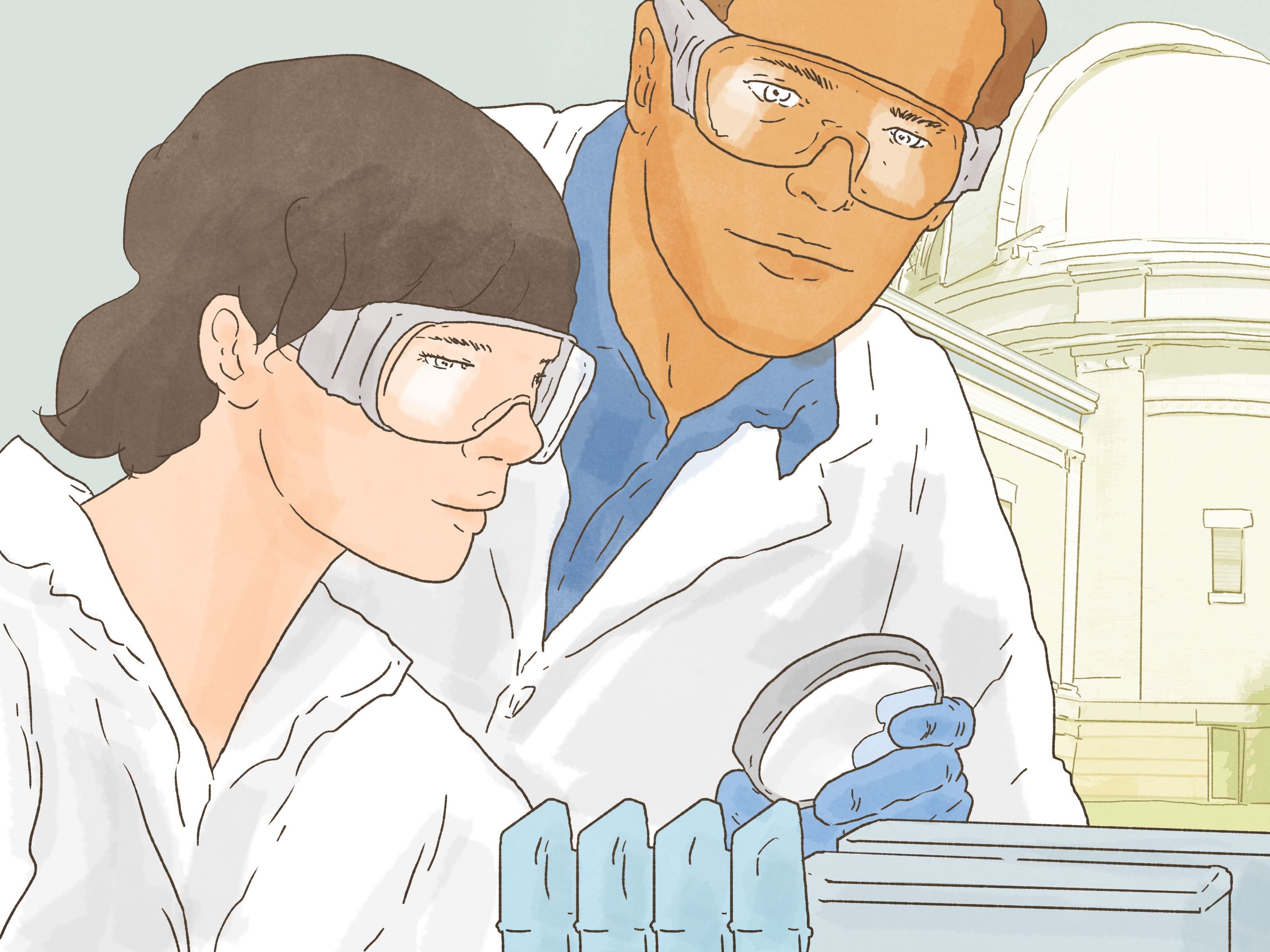
Note: This article is written for students, career changers, and curious humans who look at the night sky and think, “Beautiful… but also, can I get paid to understand that?” The short answer is yes. The longer answer involves math, physics, programming, research, patience, and occasionally explaining to relatives that astrology and astrophysics are not the same thing.
Astrophysics is the branch of science that uses physics to understand the universe. Astrophysicists study stars, galaxies, black holes, exoplanets, dark matter, cosmic radiation, supernovae, and the beginning and evolution of the cosmos. In plain English, they ask enormous questions with tiny equations, massive datasets, and computers that quietly judge your code.
Becoming an astrophysicist is not a weekend project. It usually requires years of formal education, research experience, and advanced technical training. But the path is not mysterious. Once you understand the stepswhat to study, which skills to build, how graduate school works, and what jobs existyou can make smart decisions early instead of wandering through college like a lost satellite.
What Does an Astrophysicist Do?
An astrophysicist studies the physical laws behind objects and events in space. Some focus on theory, building mathematical models of how the universe works. Others are observers, collecting and analyzing data from telescopes, satellites, detectors, and space missions. Many do both, because modern astrophysics loves a multitasker.
Daily work may include writing code, cleaning messy data, reading scientific papers, building simulations, analyzing telescope images, preparing grant proposals, teaching, mentoring students, presenting at conferences, and writing research papers. An astrophysicist may not spend every night dramatically staring through a telescope. In fact, much of the job happens in front of a computer. The telescope gets the glamorous Instagram shot; Python does the laundry.
How Long Does It Take to Become an Astrophysicist?
For research and university-level academic roles, the typical path is long but clear. Most aspiring astrophysicists complete a bachelor’s degree, then a Ph.D. in astronomy, astrophysics, physics, or a closely related field. After the Ph.D., many researchers take one or more postdoctoral positions before applying for permanent jobs at universities, observatories, laboratories, museums, space agencies, or private companies.
- Bachelor’s degree: usually 4 years
- Research experience: ideally begins during undergraduate study
- Ph.D. program: often 5–7 years, depending on the program and research project
- Postdoctoral research: commonly 2–3 years per appointment
- Permanent research or faculty role: often after significant publication and project experience
That sounds intense because it is. But not everyone with an astrophysics background must become a professor. Many graduates build careers in data science, aerospace, software engineering, science communication, education, finance, defense, policy, observatory operations, and technical consulting.
Step 1: Build a Strong Foundation in High School
If you are still in high school, focus on math and science. Take the most rigorous courses available to you in physics, calculus, computer science, chemistry, and statistics. If your school offers astronomy, wonderful. If not, do not panic. Astrophysics is built more on physics and mathematics than on memorizing constellation names, though knowing Orion is still a nice party trick.
Good preparation also includes writing and communication. Scientists do not simply discover things; they must explain them clearly. A brilliant idea trapped in a confusing paper is like a telescope with the lens cap on.
Helpful High School Activities
- Join a science club, robotics team, coding club, or astronomy club.
- Learn basic programming in Python.
- Practice reading popular science books and beginner-friendly research summaries.
- Visit planetariums, observatories, museums, or public telescope nights.
- Enter science fairs or independent research competitions if available.
Step 2: Choose the Right College Major
The most common undergraduate majors for future astrophysicists are physics, astronomy, astrophysics, mathematics, or engineering physics. If your college offers an astrophysics major, great. If it does not, a physics major with astronomy electives is often excellent preparation for graduate school.
Do not choose a program only because the course catalog sounds cosmic and shiny. Look for strong physics training, access to research, supportive faculty, computational coursework, and opportunities to work with real data. A beautiful campus observatory is nice, but a professor who lets undergraduates help with research can be even more valuable.
Core College Courses to Expect
- Classical mechanics
- Electricity and magnetism
- Quantum mechanics
- Thermodynamics and statistical mechanics
- Calculus, linear algebra, and differential equations
- Statistics and data analysis
- Computer programming
- Astrophysics, cosmology, stellar physics, or planetary science electives
A double major or minor in physics, mathematics, computer science, or data science can be helpful, especially if you want flexibility after graduation. Astrophysics is intellectually beautiful, but the job market rewards people who can model, code, analyze, explain, and solve practical problems.
Step 3: Learn Programming Early
Modern astrophysics runs on code. Telescopes and satellites produce massive datasets, and researchers need programming skills to process images, simulate systems, analyze signals, and test models. Python is the most common starting point because it is widely used in scientific computing. You may also encounter C++, Fortran, Julia, SQL, MATLAB, R, or specialized astronomy software.
Start simple. Learn how to import data, clean it, graph it, fit a model, and explain what the result means. Then move toward scientific libraries such as NumPy, SciPy, pandas, Matplotlib, Astropy, and machine learning tools. No, you do not need to become a Silicon Valley wizard overnight. But if your code can survive contact with real data, you are already ahead.
Step 4: Get Research Experience
Research experience is one of the most important parts of becoming an astrophysicist. Graduate admissions committees want evidence that you understand what research actually feels like. Spoiler: it feels like curiosity, frustration, debugging, tiny breakthroughs, and occasionally whispering “please work” to a laptop.
Start by asking professors whether they work with undergraduate students. You might help classify galaxies, analyze telescope images, model stellar atmospheres, study exoplanet transits, process radio data, or test simulations. The first project does not have to be Nobel-level. It only needs to teach you how science is done.
Where to Find Research Opportunities
- University astronomy or physics departments
- Summer undergraduate research programs
- NSF Research Experiences for Undergraduates programs
- NASA internships and Pathways opportunities
- Observatories, planetariums, museums, and labs
- Faculty-led independent study projects
When applying for research programs, highlight your coursework, coding projects, curiosity, persistence, and willingness to learn. You do not need to know everything. In fact, research exists because nobody knows everything yet. That is the whole business model.
Step 5: Prepare for Graduate School
If your goal is to become a professional research astrophysicist, a Ph.D. is usually the key credential. Graduate programs typically expect strong grades in physics and math, research experience, letters of recommendation, a clear statement of purpose, and evidence that you can handle independent work.
When choosing programs, look beyond rankings. Search for faculty whose research genuinely interests you. If you love black holes, do not apply only to programs where everyone studies planetary atmospheres unless you are ready for a plot twist. Review recent publications, student outcomes, funding packages, advising culture, and whether students seem supported rather than academically marinated.
What Happens in an Astrophysics Ph.D. Program?
Most Ph.D. students begin with advanced coursework and then move into original research. They may work as teaching assistants or research assistants, attend seminars, publish papers, present at conferences, and write a dissertation. A dissertation is not just a very long essay. It is an original contribution to knowledge, which is a fancy way of saying you must find something new enough that the universe did not already put it in the answer key.
Graduate school can be funded through assistantships, fellowships, or grants, but funding varies by institution and situation. Always read the details carefully. Ask current students about stipends, health insurance, teaching load, cost of living, advisor availability, and department culture.
Step 6: Build the Right Skills
Astrophysics requires a blend of technical and human skills. The technical side gets you into the data. The human side keeps collaborations from turning into academic meteor showers.
Technical Skills
- Physics knowledge: mechanics, electromagnetism, thermodynamics, quantum mechanics, relativity, and statistical physics.
- Mathematics: calculus, linear algebra, probability, statistics, differential equations, and numerical methods.
- Programming: Python, scientific computing, data visualization, simulation, and version control.
- Data analysis: cleaning datasets, uncertainty analysis, model fitting, and interpreting results.
- Research methods: literature reviews, hypothesis testing, reproducibility, and scientific writing.
Soft Skills
- Communication: explaining complex ideas to specialists, students, funders, and the public.
- Collaboration: working with teams across universities, observatories, and countries.
- Patience: research rarely moves at movie-trailer speed.
- Creativity: solving problems when the first method fails, and the second method fails more dramatically.
- Self-discipline: managing long projects with unclear endings.
Career Paths for Astrophysicists
The classic image of an astrophysicist is a university professor. That path exists, but it is only one option. Astrophysics training is powerful because it combines advanced quantitative reasoning, programming, statistics, technical writing, and problem-solving. Those skills travel well.
Common Career Options
- University professor: conducts research, teaches, advises students, and applies for funding.
- Research scientist: works at a university, observatory, national laboratory, space agency, or research institute.
- Data scientist: uses modeling and analysis skills in technology, finance, healthcare, climate, or business.
- Aerospace scientist or engineer: supports missions, instruments, satellites, or space systems.
- Science communicator: writes, produces, teaches, or creates public science content.
- Policy or program specialist: supports science funding, government programs, or nonprofit science initiatives.
- Teacher or educator: brings physics and astronomy into classrooms, museums, planetariums, or outreach programs.
For bachelor’s degree holders, immediate astrophysicist research roles are limited, but entry-level technical jobs are possible. Graduates may become research assistants, lab technicians, observatory assistants, analysts, software developers, or educators. Many use these roles as stepping stones to graduate school.
How Much Do Astrophysicists Earn?
Astrophysicist salaries vary widely by job title, degree level, employer, location, and experience. Federal laboratories, aerospace companies, and private-sector technical roles may pay differently from colleges or museums. University faculty salaries also vary by institution and rank.
Because “astrophysicist” can fall under broader categories such as astronomer, physicist, research scientist, or professor, salary comparisons are not always perfect. Still, the field generally rewards advanced education and strong technical skills. People who combine astrophysics with programming, statistics, machine learning, instrumentation, or aerospace knowledge often have more career flexibility.
Is Becoming an Astrophysicist Hard?
Yes. That is the honest answer. Astrophysics is challenging because it requires deep math, abstract physics, careful research habits, and the emotional resilience to spend three days finding a missing comma in code. It is also competitive, especially for permanent academic positions.
But hard does not mean impossible. Students succeed when they build skills gradually, seek mentors, join research groups, ask questions early, and treat setbacks as part of the process. The universe is under no obligation to be easy, but it is generous with mysteries.
Practical Tips for Future Astrophysicists
- Start coding now. Even one small data project can help you understand scientific analysis.
- Take math seriously. Math is the grammar of astrophysics.
- Find mentors. Professors, graduate students, and researchers can help you avoid common mistakes.
- Do research early. It helps you decide whether you actually enjoy the work.
- Read scientific papers slowly. Nobody understands every paper on the first pass. Nobody. Not even the person nodding confidently in seminar.
- Build communication skills. Clear writing and speaking can separate good scientists from great ones.
- Keep career options open. Astrophysics skills can lead to many excellent careers beyond academia.
Real-World Experiences: What the Journey Feels Like
The path to becoming an astrophysicist is not just a checklist of degrees. It is an experience, and like most meaningful experiences, it is both inspiring and occasionally ridiculous. In the beginning, many students are drawn in by wonder. They remember seeing Saturn’s rings through a small telescope, watching a space documentary, or reading about black holes and thinking, “Wait, reality is allowed to do that?” That first spark matters. It gives you energy when the coursework becomes difficult.
Then comes the humbling phase. In college, even strong students may hit a class that makes them question their life choices. Quantum mechanics can feel like the universe switched languages without warning. Electromagnetism may look elegant in the textbook and then turn into a jungle gym of vector calculus on the exam. This is normal. Struggling does not mean you are not cut out for astrophysics. It means you have reached the part where real learning begins.
Research introduces a different kind of challenge. Classes have homework problems with known answers. Research often does not. A student might spend weeks trying to reduce telescope data, only to discover that the signal is noisy, the calibration is wrong, or the original assumption was too optimistic. At first, this can feel like failure. Later, it becomes part of the craft. Astrophysicists learn to ask better questions, document their work, test carefully, and stay calm when the data says, “Interesting theory, but no.”
Another major experience is learning how collaborative science really is. Popular culture often imagines scientists as lone geniuses scribbling equations on windows. Real astrophysics is more social. You may work with an advisor, graduate students, instrument specialists, software developers, statisticians, and international collaborators. You will give talks, receive feedback, rewrite drafts, and learn that “just one small revision” can mean anything from fixing a typo to rebuilding an entire analysis pipeline.
The best moments are unforgettable. Your first plot that actually makes sense. Your first conference poster. Your first time seeing your name on a paper. Your first successful observing run, even if it happens at 3 a.m. while you are powered by vending-machine snacks and stubbornness. These moments remind you why the long path is worth it.
The experience also teaches flexibility. Some students begin wanting to become professors and later discover they love coding, aerospace, teaching, data science, science writing, or policy. That is not failure. That is career evolution. Astrophysics gives you a toolkit, and the toolkit can build more than one kind of future. The goal is not to follow a single perfect path. The goal is to keep learning, keep building useful skills, and keep your curiosity alive without letting it eat your sleep schedule for breakfast.
Conclusion
Becoming an astrophysicist takes commitment, but the route is understandable: study physics and math, learn programming, gain research experience, pursue graduate training if research is your goal, and build communication skills along the way. The field rewards curiosity, patience, precision, and creativity. It also rewards people who can adapt, because not every astrophysics career looks the same.
If you dream of studying galaxies, black holes, stars, or the earliest moments of the universe, start with the next practical step. Take the physics class. Write the Python script. Email the professor. Apply for the summer research program. Read the paper, even if it fights back. The universe is large, but every astrophysicist begins with one small, determined question.