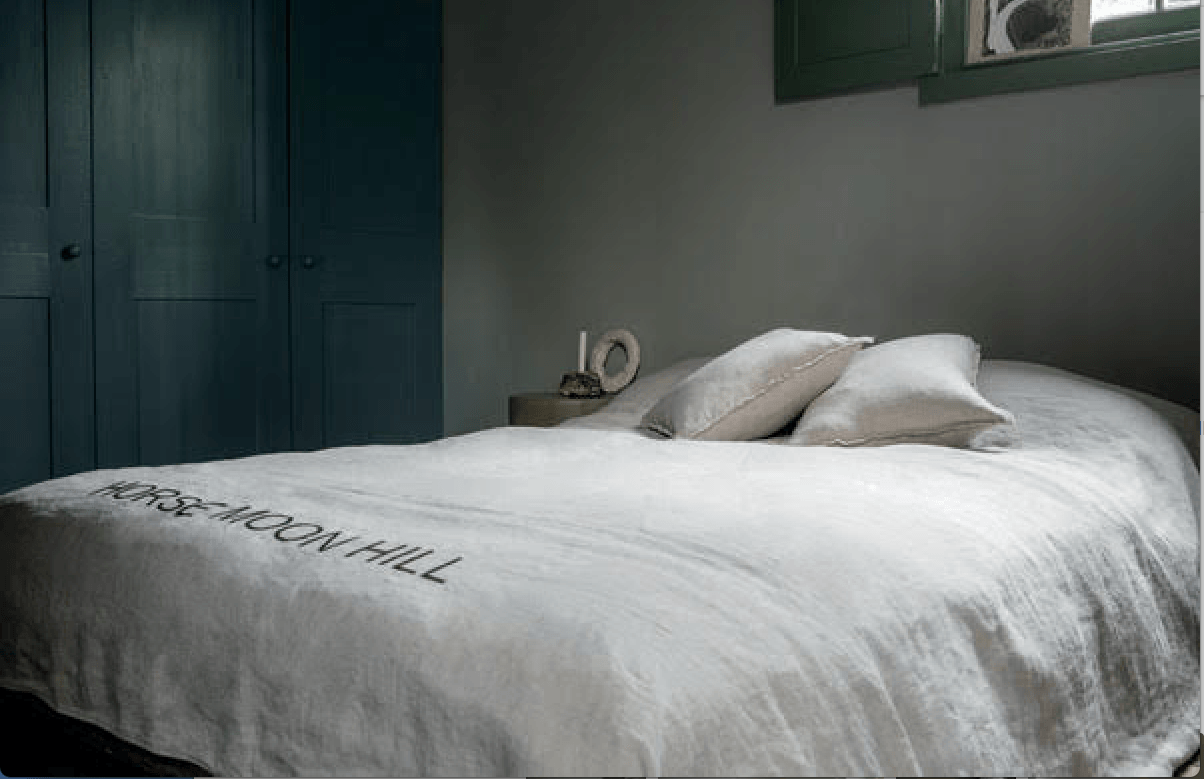
Some bedding wants to be invisible: white, smooth, polite, and so wrinkle-free it looks like it has a personal assistant. Then there is Horse, Moon, Hill, the artfully frayed linen collection by British designer Faye Toogood for Italian linen house Once Milano. This is bedding with a campfire story. It has landscape in its seams, folklore in its embroidery, and just enough beautiful roughness to make a freshly made bed look like it belongs in a very tasteful cottage where someone definitely reads poetry before breakfast.
The collection draws from the mythic image of the White Horse carved into English hillsides, especially the ancient chalk figures associated with places such as Uffington and Westbury. Instead of turning that inspiration into something overly literal, Toogood and Once Milano translate it into soft, earthy linens: duvet covers, sheets, pillowcases, throws, cushions, robes, and related home textiles. The result is not “theme bedding.” There are no cartoon horses galloping across the duvet. Thank goodness. Instead, the collection feels symbolic, tactile, and quietly dramatic.
For design lovers, Faye Toogood linens are interesting because they sit at the intersection of art, craft, fashion, and interiors. For homeowners, they are appealing because they bring atmosphere without shouting. For anyone who has ever looked at a perfectly ironed bed and thought, “Lovely, but do I need to apply for permission to nap here?” these frayed linen bedding pieces offer a more relaxed answer.
What Is the Horse, Moon, Hill Collection?
Horse, Moon, Hill is a collaboration between Faye Toogood and Once Milano, built around bedding and limited-edition quilt work inspired by English landscape, pagan hill carvings, and the enduring legend of the White Horse. The name itself reads like a tiny poem: three simple nouns, each loaded with visual weight. A horse suggests movement and myth. A moon brings shadow, ritual, and night. A hill anchors the story in land, slope, chalk, and memory.
The collection includes Italian linen bedding and home pieces in an earthy palette: chalky whites, browns, raw neutrals, and natural tones. These colors are not glossy showroom colors. They feel pulled from soil, stone, horsehair, moonlight, and unbleached cloth. That is exactly the point. Toogood’s work often begins with humble materials and elemental forms, and Once Milano’s linen expertise gives those ideas a practical domestic life.
One of the most memorable details is the intentionally unfinished or frayed edge. In another context, a fray might look like a laundry accident. Here, it is the design’s wink. It softens the geometry, emphasizes the hand, and prevents the bedding from feeling too precious. The linen looks lived-in before you live in it, which is a small miracle for anyone who owns a bed, a dog, a child, or a habit of eating toast where they absolutely should not.
Faye Toogood’s Design Language: Sculptural, Earthy, and Human
Faye Toogood is known for working across furniture, sculpture, interiors, fashion, and installations. Her practice often blurs the line between functional object and artwork. That matters here because Horse, Moon, Hill bedding does not behave like a standard textile collection that starts with a market trend and ends with a seasonal color card. It feels more like a sculptural idea that wandered into the bedroom, took off its boots, and decided to stay.
Toogood’s best-known pieces, including the rounded Roly-Poly chair and the Spade chair, show her interest in strong silhouettes and primitive forms. She often draws on the English countryside, ancient stones, hand-built models, and tactile experimentation. Those qualities appear in this linen collection too, but in a quieter way. Instead of a chunky chair leg or a sculptural seat, the gesture becomes a raw edge, an embroidered word, a quilted motif, or a blanket folded at the end of a bed.
Why the White Horse Motif Works
The White Horse is a perfect Toogood subject because it is both graphic and mysterious. The ancient chalk figures cut into English hills are bold when seen from above and strangely elusive when seen up close. They belong to the land, but they also feel symbolic, almost dreamlike. A horse is recognizable, yet in hill-carving form it becomes abstract: curve, line, body, mark.
That translation from symbol to abstraction is what gives Faye Toogood for Once Milano its sophistication. The collection is not trying to decorate a bedroom with a storybook horse. It is trying to capture the feeling of a mark on a hill, the drama of chalk against grass, the passing of moonlight over a rural landscape, and the imperfect beauty of hand-touched cloth.
Once Milano: Linen With Italian Ease
Once Milano is an Italian brand known for refined linen products for the home, including bedding, table linens, towels, throws, and loungewear. The company’s approach is rooted in craftsmanship, fine materials, and a relaxed form of luxury. That makes it a natural partner for Toogood. The brand understands linen not as a stiff status symbol but as a material that becomes more interesting with use.
Linen is one of those fabrics that refuses to fake perfection. It wrinkles. It shifts. It softens over time. It looks best when allowed to breathe. In other words, linen has boundaries and a personality, which makes it the cat of the textile world. Once Milano leans into that personality through garment-dyed tones, tactile surfaces, and understated finishing. In Horse, Moon, Hill, that understated attitude keeps the collection grounded.
The Beauty of Frayed Linen Edges
The frayed edge is more than decoration. It gives the bedding a sense of movement and suggests that the piece has been cut, handled, and made by real hands. In a design culture full of sealed, polished, digitally perfect surfaces, fraying can feel refreshingly rebellious. It says: this object is finished, but not frozen.
Frayed linen also works beautifully in interiors because it bridges rustic and modern styles. In a minimalist bedroom, it adds softness. In a farmhouse-inspired space, it adds refinement. In a city apartment, it adds a faint whisper of countryside without requiring anyone to install a decorative wagon wheel, which is generally wise.
Color Palette: Chalk, Earth, Moonlight, and Raw Linen
The collection’s color palette is one of its biggest strengths. The shades are grounded in nature: brown, raw, white, and natural tones that nod to Oxfordshire landscapes and ancient chalk markings. These colors do not chase novelty. They are calm, durable, and easy to layer.
A chalky white duvet can brighten a room without feeling cold. A brown throw can add weight and depth to pale bedding. Natural linen pillowcases can soften a darker bed frame. Raw linen tones can make a bedroom feel curated without looking over-arranged. The palette is quiet, but it is not boring. Think of it as the interior design equivalent of someone who speaks softly and somehow gets the best table at the restaurant.
How to Style the Collection at Home
To style Once Milano linen bedding, avoid making everything too perfect. Let the duvet fall naturally. Fold a throw loosely at the foot of the bed. Mix raw linen pillowcases with white sheets. Add a clay lamp, a wooden stool, a woven basket, or a stoneware vase. The goal is not messiness; it is ease.
If your room is modern, let the frayed linen create contrast against clean walls and simple furniture. If your space is traditional, use the collection to bring in a contemporary edge. If your bedroom already has a lot of pattern, keep the palette restrained. The genius of Horse, Moon, Hill is that it adds narrative through texture rather than visual noise.
Why Linen Is Still a Luxury Material
Linen has been used for centuries because it is strong, breathable, absorbent, and comfortable. It performs especially well in bedding because it helps regulate temperature and becomes softer over time. Unlike synthetic fabrics that can feel slick or overly processed, linen has a dry, natural hand. It feels honest.
That honesty is central to the appeal of designer linen bedding. A high-quality linen duvet cover does not need heavy ornament. Its value is in the fiber, weave, dye, drape, and touch. Add Toogood’s storytelling and Once Milano’s craftsmanship, and the material becomes something closer to functional art.
Wrinkles Are Not the Enemy
One important note for linen newcomers: wrinkles are part of the charm. Linen is supposed to relax. Trying to force it into hotel-sheet smoothness is like asking a folk singer to perform in a tuxedo while holding a laser pointer. Possible, maybe, but spiritually incorrect.
With Horse, Moon, Hill, the wrinkles, frays, and folds contribute to the overall atmosphere. They make the bedding feel alive. That lived-in surface is exactly what allows the collection to feel luxurious without feeling uptight.
From Limited-Edition Quilts to Everyday Bedding
The collection grew out of a more art-focused presentation of limited-edition appliqued and hand-painted quilts. These quilts function like textile artworks, carrying the landscape theme in a more collectible form. The broader bedding range then extends that visual language into daily life. This is an important move: it takes an art object and translates its mood into objects people can actually use.
That translation is one reason the collaboration feels successful. A limited quilt may belong on a wall, a bed, or in a serious collector’s home. A duvet cover, pillowcase, or throw brings the same design vocabulary into a more accessible routine. You do not have to live in a gallery to appreciate a beautiful sheet. You just need a bed and an opinion about texture.
Who Is This Collection For?
Horse, Moon, Hill by Faye Toogood for Once Milano is ideal for people who like interiors with depth but dislike obvious decoration. It suits homeowners who prefer natural materials, earthy palettes, quiet luxury, handmade details, and objects with a story. It also appeals to fans of collectible design who want their bedrooms to feel as considered as their living rooms.
This is not bedding for someone who wants shiny satin glamour or bright seasonal prints. It is bedding for someone who wants the room to feel calm, tactile, slightly poetic, and a little windswept. It belongs in spaces where books are stacked on the floor, ceramics are chosen carefully, and the word “taupe” is used with confidence.
SEO Design Analysis: Why Horse, Moon, Hill Still Feels Relevant
In today’s interior design conversation, several trends continue to overlap: quiet luxury, natural materials, artisanal craft, earthy minimalism, and heritage-inspired storytelling. Horse, Moon, Hill linens fit neatly into all of these without feeling trendy. That is a difficult balance. Many products designed around “heritage” can become costume-like. Many minimalist products can feel soulless. This collection avoids both traps by staying tactile and symbolic.
The frayed edge gives it craft. The White Horse myth gives it history. The linen gives it usefulness. The earthy palette gives it longevity. And Faye Toogood’s name gives it design-world credibility. Together, those elements make the collection more than attractive bedding. They make it a small case study in how textiles can carry narrative without becoming theatrical.
Care and Practical Use: Living With Frayed Linen
High-quality linen is durable, but it appreciates thoughtful care. Wash with mild detergent, avoid harsh bleach, and let the fabric dry naturally when possible. A low tumble dry can be used depending on care instructions, but over-drying may make linen feel stiff. Remove it while slightly damp and let it finish drying flat or on the bed for a relaxed look.
Because the edges are intentionally frayed, treat them with respect rather than fear. Do not yank loose threads dramatically like you are defusing a bomb in an action movie. Trim only if needed, and let the natural edge remain part of the design. Over time, the linen should soften and settle, developing the kind of texture that makes new bedding look slightly jealous.
Experiences and Styling Notes: Living With the Horse, Moon, Hill Mood
Living with a collection like Horse, Moon, Hill is less about creating a perfect bedroom and more about creating a room that feels emotionally complete. The experience begins with touch. Linen has a way of changing the pace of a space. Cotton can be crisp and efficient; silk can be glamorous and slippery; linen feels grounded. When you pull a linen duvet across a bed, it does not snap into place like a uniform. It settles. That one small difference changes the mood of the room.
In a bedroom inspired by this collection, the bed should feel like the central landscape. Start with a neutral fitted sheet, then layer a duvet in chalk white, raw linen, or brown. Add pillowcases in a slightly different shade so the bed does not look like it came shrink-wrapped from a catalog. A doubled throw at the end gives weight and creates that casual, folded-over look designers seem to achieve effortlessly, usually after moving the same blanket fourteen times.
The best surrounding materials are simple: oak, ash, plaster, stone, ceramic, wool, and iron. A bedside table does not need to match the bed frame. In fact, a little irregularity helps. A sculptural lamp, a handmade cup, or a small bowl for jewelry can echo Toogood’s interest in objects that feel both useful and artistic. Keep the palette close to land and sky: cream, brown, clay, charcoal, oatmeal, soft gray, and muted green. If the room needs contrast, add black in a thin line, such as a metal reading lamp or picture frame.
The emotional experience of this style is also important. Horse, Moon, Hill does not create a bedroom that says, “Do not touch anything.” It says, “Come in, sleep well, and maybe dream about ancient hills.” That matters because bedrooms should not feel like display cases. The frayed edges make the linen forgiving. The natural wrinkles make real life look intentional. Even if the morning includes a rushed coffee, a missing sock, and a pillow that has somehow migrated to the floor, the bed still looks atmospheric rather than chaotic.
This is also a useful lesson for broader interior design. A room does not need many decorative objects if the main materials are expressive. One textured duvet, one substantial throw, and two honest pillowcases can do more than a dozen trendy accessories. The collection encourages restraint, but not emptiness. It proves that minimalism can have folklore, softness, and humor. After all, bedding inspired by ancient hill carvings is still bedding. It must survive naps, laundry day, and the occasional dramatic flop after a long Tuesday.
For anyone trying to recreate the mood without buying every piece, focus on the principles: natural linen, imperfect edges, earthy colors, symbolic artwork, and relaxed layering. Add one landscape-inspired print or a small abstract drawing near the bed. Choose a rug with texture rather than pattern. Let daylight hit the fabric. At night, use warm lighting so the linen takes on a moonlit softness. The goal is not to copy a showroom; it is to create a room that feels touched by land, story, and hand.
Conclusion
Horse, Moon, Hill: Artfully Frayed Linens by Faye Toogood for Once Milano is a thoughtful collaboration that proves bedding can be both practical and poetic. Inspired by the White Horse myth, ancient English hill carvings, and the rugged softness of landscape, the collection transforms Italian linen into something quietly cinematic. Its frayed edges, earthy palette, and tactile surfaces make it ideal for interiors that value craft over gloss and atmosphere over decoration.
What makes the collection memorable is not just its beauty, but its restraint. It does not explain itself too loudly. It lets linen, color, edge, and myth do the work. In a world full of bedding that promises hotel perfection, Horse, Moon, Hill offers something more human: a bed that looks beautiful, feels relaxed, and carries a story older than the alarm clock waiting on your nightstand.
Note: This article synthesizes real product, brand, design-publication, retail, and museum-context information into original web-ready editorial content. Source links are intentionally omitted for clean publication formatting.