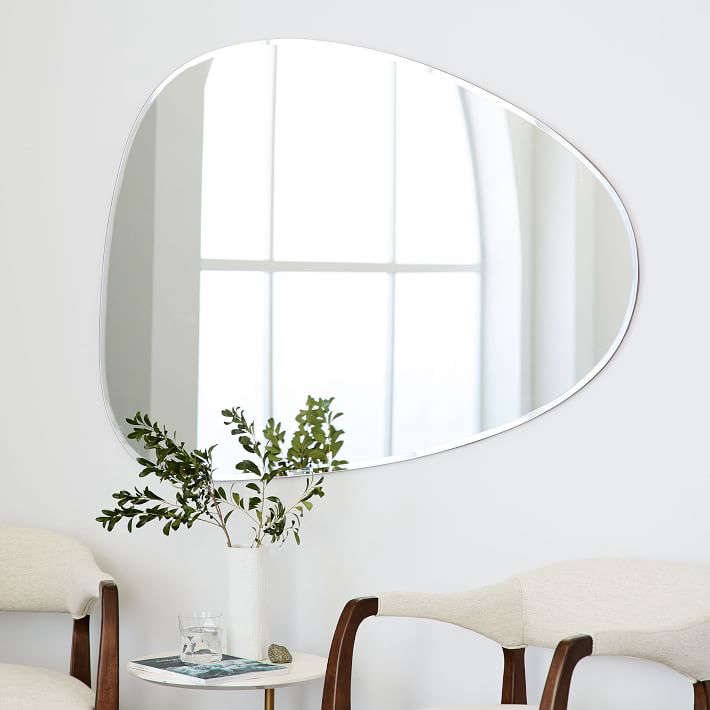
Some home décor pieces quietly do their job. A plain rectangular mirror, for example, reflects your face, your hallway, and occasionally the panic of realizing your shirt has been inside out since breakfast. But an asymmetrical decorative mirror? That one shows up with personality. It reflects light, expands a room, softens hard edges, and says, “Yes, I am technically functional, but I also went to art school.”
Asymmetrical decorative mirrorsalso called irregular mirrors, organic mirrors, blob mirrors, pond mirrors, wavy mirrors, or freeform mirrorshave become a favorite design shortcut for people who want a room to feel more curated without repainting, renovating, or purchasing a sofa that requires a financing plan. Their uneven silhouettes bring movement to a wall, making them especially useful in modern, minimalist, boho, mid-century, Scandinavian, Japandi, and eclectic interiors.
The best part is the “high/low” range. You can spend several hundred dollars on a sculptural wood-framed mirror that looks like it escaped from a boutique hotel lobby, or you can find a budget-friendly irregular wall mirror that delivers a similar organic mood for under $150. The trick is knowing what you are paying for, where to place it, and when the bargain version is brilliantor when it looks like a melted picture frame after a long afternoon in July.
What Is an Asymmetrical Decorative Mirror?
An asymmetrical decorative mirror has a shape that is intentionally uneven. Unlike a round, oval, square, or rectangular mirror, it does not mirror itself perfectly from side to side. One edge may curve outward, another may dip inward, and the overall silhouette often resembles a pond, pebble, cloud, shell, puddle, or abstract sculpture.
This lack of perfect symmetry is exactly the point. Traditional mirrors create order. Asymmetrical mirrors create rhythm. They break up predictable lines, add softness to boxy rooms, and help a space look designed rather than simply furnished. In a room full of straight furniture legs, square tiles, flat cabinet doors, and right angles, an irregular mirror works like visual jazz. It gives the eye somewhere fun to land.
Why Asymmetrical Mirrors Are Having a Moment
Home design has been slowly moving away from overly rigid minimalism and toward spaces that feel warmer, more personal, and more collected. Curves, vintage-inspired accents, sculptural furniture, natural materials, and expressive wall décor are all part of that shift. Asymmetrical mirrors fit beautifully into this mood because they feel modern without being cold.
They also solve a common decorating problem: empty walls that need something useful but not boring. Artwork is wonderful, but it can be hard to choose. A mirror feels safer because it reflects the room rather than introducing a new color palette. An irregular mirror adds enough artistic shape to behave like wall art, while still serving a practical purpose in an entryway, bedroom, bathroom, hallway, or living room.
High vs. Low: What Are You Really Paying For?
The price gap in asymmetrical decorative mirrors can be dramatic. A small mass-market mirror might cost less than dinner for two, while a handmade, oversized, carved, or designer version may cost as much as a weekend getaway. Both can be good choices, but they are not always good for the same reason.
The High-End Look
High-end asymmetrical mirrors usually earn their price through materials, scale, craftsmanship, and finish. Look for solid wood frames, carved edges, brass details, antiqued glass, hand-applied finishes, natural teak, burl wood, bone inlay, rattan, sculptural metal, or custom dimensions. These mirrors tend to feel substantial on the wall. They are less “cute accessory” and more “architectural feature.”
A designer irregular mirror can make a room feel layered and expensive even when the rest of the furniture is simple. For example, a large carved wood mirror above a console table can become the anchor of an entryway. A brass freeform mirror over a marble vanity can make a bathroom feel like a boutique spa. An oversized organic floor mirror can turn a bedroom corner into a stylish dressing area, assuming you do not immediately cover the corner with laundry. We are all trying our best.
The Low-Cost Win
Budget asymmetrical mirrors have improved a lot. Today, you can find irregular wall mirrors with aluminum alloy frames, pine wood frames, frameless edges, LED features, and multiple finishes at accessible prices. Many are available in black, gold, silver, natural wood, or warm brass tones. Some can hang vertically or horizontally, which is extremely helpful when your wall has opinions.
The low version is ideal for renters, first apartments, guest bathrooms, dorm-inspired bedroom upgrades, small entryways, and trend testing. If you are not sure whether you love the wavy mirror look, start with a lower-cost piece. Let it live in your space for a month. If you find yourself admiring it every time you walk by, that is your sign to consider investing in a larger or higher-quality version later.
High/Low Comparison: Where to Spend and Where to Save
| Feature | High-End Mirror | Budget Mirror | Best Choice |
|---|---|---|---|
| Frame Material | Solid wood, brass, teak, burl, carved finishes | Aluminum alloy, MDF, pine, plastic-look metal | Spend if the mirror is a focal point |
| Glass Quality | Clearer reflection, heavier glass, sometimes beveled or antiqued | Good for everyday use, but may be thinner | Spend for bathrooms and full-length mirrors |
| Size | Oversized and dramatic | Often smaller, though large affordable options exist | Save for small accent walls |
| Hardware | Stronger hanging systems, better weight support | Basic hooks or included mounting hardware | Spend if hanging above furniture or in busy areas |
| Style Longevity | More timeless if materials are natural and refined | Great for trends and quick refreshes | Save if you change décor often |
Best Rooms for Asymmetrical Decorative Mirrors
Entryway
The entryway may be the best place to start. An asymmetrical mirror above a narrow console table creates instant personality and gives you one final chance to check your hair before becoming a public citizen. In small or dark entryways, a mirror also helps bounce light around and makes the area feel more open.
For a polished look, pair the mirror with a lamp, a shallow bowl for keys, a small stack of books, and one organic element such as branches, greenery, or a ceramic vase. Because the mirror shape is already irregular, keep the styling below it simple. Otherwise, the entryway can start looking like a design store had a very enthusiastic sneeze.
Bathroom
A bathroom is a smart place to use an irregular mirror because most bathrooms are full of hard lines: tile grids, rectangular vanities, square drawers, and straight shower glass. A wavy or freeform mirror instantly softens the space. It can also modernize a basic vanity without replacing cabinets, counters, or fixtures.
For bathrooms, pay close attention to size and lighting. The mirror should be wide enough for practical use but not so oversized that it crowds sconces, medicine cabinets, or tile borders. If two people use the vanity every morning, choose function first. A mirror that looks gorgeous but only reflects one eyebrow at a time will not improve domestic harmony.
Living Room
In a living room, an asymmetrical mirror can act like a piece of abstract art. Hang one above a fireplace, sofa, sideboard, or bar cabinet. It can reflect a window, a favorite painting, a plant, or a beautiful light fixture. Before hanging, check what the mirror will reflect from normal seating height. A mirror that doubles the view of your best lamp is great. A mirror that beautifully frames the cluttered corner where everyone drops backpacks is less poetic.
Bedroom
In bedrooms, organic mirrors work well above dressers, beside closets, or as full-length floor mirrors. A soft, irregular shape can make the room feel calmer and less rigid. For restful design, avoid placing a highly reflective mirror directly opposite the bed if it bothers you at night. Some people love the extra depth; others wake up at 2 a.m., see movement, and briefly believe their laundry chair has become sentient.
Hallway
A hallway is often narrow, dim, and ignored. A slim asymmetrical mirror can bring light and motion to the wall without taking up floor space. In a long hallway, consider a vertical irregular mirror to draw the eye upward. In a short hallway, a wider organic shape can make the area feel more intentional.
How to Choose the Right Size
Scale matters more with asymmetrical mirrors than with standard mirrors because the shape does not have predictable edges. As a general rule, a mirror above a console, dresser, sofa, or mantel should usually be around two-thirds the width of the furniture beneath it. That does not have to be exact, especially with an organic shape, but the mirror should feel related to the furniture rather than randomly hovering nearby like a confused moon.
For small accent spaces, a mirror between 20 and 30 inches wide can work well. For entryways, vanities, and dressers, 30 to 45 inches often feels more substantial. For full-length use, look for a mirror tall enough to reflect your whole outfit without forcing you into an accidental yoga pose. Oversized asymmetrical floor mirrors can be dramatic, but measure your wall and ceiling height carefully before buying.
Frame or Frameless?
Frameless asymmetrical mirrors feel clean, modern, and slightly futuristic. They are excellent in minimalist bathrooms, small apartments, and contemporary bedrooms. Because there is no frame, the shape becomes the star. The downside is that frameless mirrors can sometimes feel less warm, especially in rooms that already have a lot of glass, metal, or cool-toned surfaces.
Wood-framed asymmetrical mirrors feel warmer and more grounded. Natural wood, acacia, teak, pine, and burl finishes work well with mid-century, organic modern, rustic, boho, and Japandi interiors. Metal frames in brass, gold, black, or silver can feel sleek and versatile. Brass and gold lean warmer and more decorative, while black feels graphic and modern.
How to Style an Asymmetrical Mirror Without Overdoing It
Because an irregular mirror already has visual movement, the surrounding décor should support it rather than compete with it. Think of the mirror as the lead singer. The vase, lamp, books, and tray are the backup vocals. Important, yes. But nobody came to hear the triangle solo.
Under a mirror, use objects with varied heights. Try a tall lamp on one side, a low bowl or tray on the other, and a medium-height vase in between. The asymmetrical shape of the mirror allows the styling below it to be slightly off-center. In fact, forcing perfect symmetry underneath an irregular mirror can look stiff. Let one side breathe.
If the mirror is above a sofa or mantel, keep nearby artwork minimal. If the mirror is part of a gallery wall, mix it with simple frames, line drawings, small paintings, or sculptural wall pieces. Avoid placing several wavy, scalloped, or irregular items too close together unless you are intentionally creating a playful maximalist look.
High-End Examples: When the Splurge Makes Sense
A splurge makes the most sense when the mirror is large, frequently used, or central to the room. An entryway mirror that guests see first, a bathroom vanity mirror used daily, or a living room mirror above the fireplace can justify a better frame, heavier glass, and stronger hardware.
Look for details that are hard to fake: carved wood edges, real brass tone rather than yellow paint, natural grain variation, beveled glass, artisan joinery, and a back that feels sturdy. If you are shopping vintage, inspect the silvering, frame joints, hanging wire, and any signs of warping. A little patina can be charming. A mirror that looks like it survived a haunted estate sale and still has unfinished business may need professional attention.
Budget Examples: When the Save Is Smarter
Saving makes sense when you need a quick style update, are decorating a rental, or want to try the trend without commitment. Affordable irregular mirrors from big-box retailers can be surprisingly stylish, especially in small and medium sizes. Many offer the same organic silhouette seen in designer versions, just with simpler materials and lighter construction.
Budget mirrors are especially useful in powder rooms, guest bedrooms, apartment entryways, and kids’ rooms. They also work well for seasonal styling. For example, a small gold irregular mirror can warm up a dark hallway in winter, while a natural wood version can make a summer entryway feel breezy and relaxed.
Common Mistakes to Avoid
Hanging It Too High
The most common mistake is hanging a mirror too high. A mirror should connect visually to the furniture below it. If it floats too far above a console or mantel, the wall feels awkward. Leave enough breathing room, but keep the composition united.
Ignoring the Reflection
A mirror is not just something you look at; it is something that looks back at your room. Before installing it, hold it up and check the reflection. Try to reflect light, art, greenery, a window, or an attractive architectural detail. Avoid reflecting clutter, trash cans, blank ceilings, or the mysterious pile of cords that lives behind the television.
Choosing the Wrong Shape for the Room
Not every irregular mirror has the same personality. A soft pond shape feels calming. A jagged abstract shape feels edgy. A scalloped mirror feels romantic or vintage-inspired. A wavy frame feels playful and retro. Choose a shape that matches the room’s mood rather than grabbing the first trendy mirror your algorithm waves at you.
Forgetting About Weight
Mirrors are heavier than they look, and asymmetrical frames can distribute weight unevenly. Always use proper anchors, follow the manufacturer’s instructions, and consider professional installation for large pieces. Gravity is not impressed by your aesthetic vision.
Materials That Look Expensive
Natural materials tend to elevate asymmetrical mirrors. Wood is the easiest win because it adds warmth and texture. Burl wood feels vintage and luxurious. Teak feels organic and sculptural. Rattan and cane frames create a coastal or bohemian look. Brass and antique gold finishes add elegance, especially in bathrooms and entryways. Black metal gives a cleaner, more architectural feel.
If you are shopping on a budget, look for finishes that are matte or softly brushed rather than overly shiny. Very glossy faux gold can look inexpensive under bright light. A slightly aged brass, champagne gold, or satin black finish is usually more forgiving.
Asymmetrical Mirrors and Different Design Styles
Organic Modern
Pair a pond-shaped mirror with light wood furniture, boucle seating, linen curtains, stoneware vases, and neutral colors. The result feels calm, warm, and expensive without screaming for attention.
Mid-Century Modern
Choose a wood-framed asymmetrical mirror with a walnut or acacia finish. Style it with tapered legs, warm leather, brass lighting, and abstract art. The irregular shape updates the classic mid-century look so it does not feel like a museum display from 1962.
Boho and Eclectic
Try a rattan, carved, scalloped, or wavy mirror with layered textiles, plants, vintage pieces, and handmade ceramics. This is where asymmetry can get playful. Just keep one or two elements calmer so the room does not become a personality contest.
Minimalist
Use a frameless or thin-framed irregular mirror against a simple wall. Let the shape do the work. This approach adds interest without clutter, which is basically the minimalist version of telling a joke.
Buying Checklist
- Measure first: Check wall width, furniture width, and ceiling height.
- Check orientation: Some mirrors hang vertically, horizontally, or both.
- Review hardware: Make sure the mounting system matches the mirror’s weight.
- Inspect the finish: Look for smooth edges, even coating, and realistic texture.
- Think about reflection: Plan what the mirror will reflect before installing it.
- Match the mood: Choose soft curves for calm rooms and bolder shapes for statement spaces.
- Balance high and low: Splurge on focal points, save on trend-driven accents.
Experience Notes: Living With Asymmetrical Decorative Mirrors
The first thing you notice after adding an asymmetrical decorative mirror is that the room seems less predictable. A standard mirror often blends into the background, especially if it is rectangular and framed in a safe finish. An irregular mirror, however, changes the wall immediately. It creates a little visual pause. People walk in, glance at it, and understand that something intentional happened thereeven if the rest of the room is still negotiating with a laundry basket.
In an entryway, the experience is especially rewarding. A small foyer can feel flat when it only has a console table and a lamp. Add a pond-shaped mirror above it, and suddenly the setup feels designed. The curved edges soften the narrowness of the space, while the reflection adds brightness. It also gives guests a useful place to check themselves when they arrive, which is polite design. Nobody wants to discover spinach in their teeth after an entire dinner party.
In bathrooms, the impact can be even bigger. Many builder-grade bathrooms rely on huge frameless rectangles that are practical but not exactly charming. Swapping that out for a shaped mirror can make the same vanity look custom. A gold or brass irregular mirror warms up white tile. A black-framed asymmetrical mirror sharpens a modern bathroom. A wood-framed version makes the space feel more natural and spa-like. The best bathroom mirrors, though, still need to function. A beautiful mirror that is too small for daily grooming becomes décor with commitment issues.
One useful lesson is that asymmetrical mirrors are easiest to style when you stop trying to center everything perfectly. With a normal rectangle, the instinct is to align lamp, vase, tray, and mirror in a neat little parade. With an irregular mirror, a slightly off-center arrangement usually looks better. Place a lamp on the wider side of the mirror, then balance it with a lower object on the other side. The goal is not perfect symmetry; it is visual weight. Once you understand that, styling becomes much more relaxed.
Another experience-based tip: budget mirrors can look excellent if you choose the right finish and hang them well. The biggest giveaway is not always the frame material; it is poor placement. A low-cost mirror hung at the right height, reflecting a pretty window or lamp, can look far more expensive than a designer mirror hung too high over a cluttered table. Installation is part of the design. Measure, use the right anchors, and do not trust a tiny nail with a mirror that weighs more than your dog.
Lighting also changes everything. An asymmetrical mirror near a window can double the feeling of daylight in a room. At night, placing a lamp nearby makes the mirror glow softly and turns the wall into a feature. This is why these mirrors work so well in apartments and small homes. They create atmosphere without consuming floor space, which is ideal when every square foot already has a job, a side hustle, and emotional baggage.
The final lesson is that the trend is more flexible than it seems. You do not have to live in a perfectly styled neutral home to use an organic mirror. It can work with vintage furniture, modern furniture, colorful walls, quiet rooms, playful rooms, and even traditional spaces that need a small shake-up. The key is choosing the right version. Soft wood for warmth, thin black metal for modern contrast, brass for polish, frameless glass for minimalism, and wavy frames for personality. In short, an asymmetrical decorative mirror is one of the easiest high/low upgrades in home décor: useful, stylish, and just weird enough to be interesting.
Conclusion
Asymmetrical decorative mirrors are more than a passing trend. They are practical wall décor with personality, offering light, depth, movement, and style in one relatively simple piece. The high-end versions bring craftsmanship, natural materials, and long-term impact. The low-cost versions make the look accessible, renter-friendly, and easy to experiment with. Whether you choose a carved wood statement mirror or a budget-friendly irregular wall mirror, the goal is the same: create a room that feels less flat, more personal, and a little more alive.
The smartest approach is to match the investment to the role. Splurge when the mirror is large, central, or used every day. Save when you are testing a trend, decorating a secondary space, or refreshing a room on a budget. Either way, measure carefully, hang thoughtfully, and check the reflection before committing. A mirror should flatter the room, not accidentally immortalize your recycling bin.