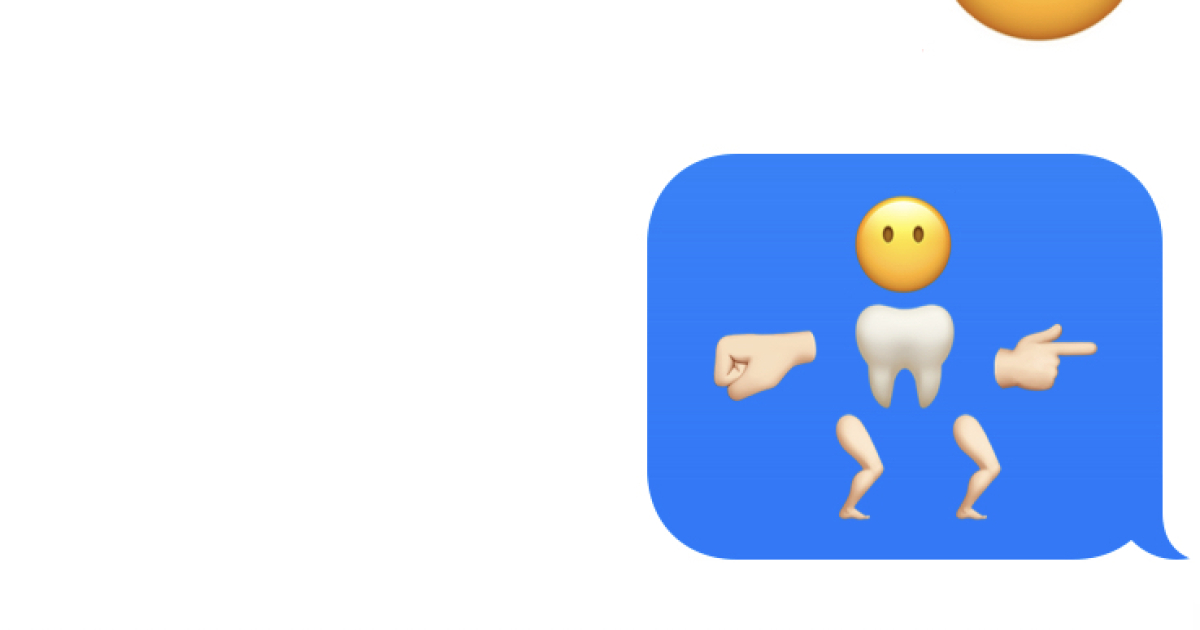
Most people use emojis as punctuation with better outfits. A laughing face softens a joke, a red heart adds warmth, and a strategically placed thumbs-up ends a conversation without anyone having to type “Sounds good.” But those tiny symbols can do much more than decorate a text message. Arrange them carefully, and they become cats, landscapes, portraits, food, movie scenes, miniature comics, and wonderfully unnecessary masterpieces.
The challenge is simple: make something out of emojis and show everyone what you created. You do not need expensive software, formal art training, or the ability to paint a realistic horse. You need only an emoji keyboard, a little patience, and a willingness to accept that your first “horse” may look suspiciously like a confused refrigerator.
Emoji art works because it combines visual storytelling with the playful language of the internet. Each symbol already carries a recognizable idea, emotion, color, or shape. When several symbols are placed together, their meanings begin to interact. A moon above a row of buildings becomes a nighttime skyline. A crown beside a frog becomes royalty. A sequence involving a cookie, an open mouth, and an empty plate becomes a complete three-act drama.
What Is Emoji Art?
Emoji art is any picture, pattern, character, scene, or story created primarily with emojis. Some designs use only a few symbols in a single line. Others rely on dozens of rows and careful spacing to produce images that resemble pixel art, mosaics, or old-fashioned text drawings.
Unlike emoticons, which are assembled from keyboard characters such as colons, parentheses, and dashes, emojis are individual pictorial characters. Merriam-Webster and Dictionary.com distinguish the modern emoji from the older emoticon, while noting that both help people express emotion, attitude, and information in electronic communication.
The word “emoji” comes from Japanese terms meaning “picture” and “character.” The Museum of Modern Art preserves Shigetaka Kurita’s influential set of 176 pixelated designs created for NTT DOCOMO in 1999. Those early icons were built on a tiny grid, making their connection to modern pixel art especially easy to see.
Today, the Unicode Consortium maintains technical standards that allow emoji characters and sequences to function across modern devices. The artwork is not always identical on every platform, however. Apple, Google, Microsoft, Samsung, and other vendors may draw the same character differently, which means your cheerful emoji masterpiece can occasionally undergo an unauthorized costume change.
Why Making Pictures With Emojis Is So Much Fun
Every Symbol Brings Its Own Meaning
A traditional pixel is simply a unit of color. An emoji is a unit of color with emotional baggage. A red square can fill part of a background, but a red heart can also suggest affection, passion, health, romance, or someone enthusiastically approving a pizza.
This built-in meaning gives emoji artwork two layers. Viewers first recognize the larger image and then notice the smaller symbols used to construct it. A tree made from broccoli emojis is still a tree, but it is also a joke about how broccoli looks like a miniature tree. That second discovery is often where the fun lives.
The Limitations Encourage Creativity
Emoji art does not offer perfect control. You cannot freely resize one symbol, rotate another by seven degrees, or ask the avocado emoji to stop looking so pleased with itself. You must work with the shapes that already exist.
Those restrictions force creative substitutions. Clouds can become sheep. Blue circles can become bubbles. Brown squares can build a cabin. Rows of flames can represent hair, sunlight, danger, excitement, or an honest review of your cooking.
Google’s Emoji Kitchen takes this remixing instinct even further by allowing users to combine selected emojis into new stickers. Google describes the keyboard as a canvas for expression, reinforcing the idea that emojis are not limited to literal, one-symbol-at-a-time communication.
Emoji Art Is Naturally Social
The best creations invite a reaction. People guess the subject, point out clever details, suggest improvements, or reply with their own designs. A simple challenge can quickly become a collaborative gallery filled with animals, flags, fictional characters, landscapes, and scenes that become funnier the longer you inspect them.
The Library of Congress includes emoji-related communication within its documentation of web culture and digital vernacular. This recognizes a larger truth: playful symbols, memes, GIFs, and other informal creations are part of how online communities develop a shared language.
How to Make Emoji Art Step by Step
1. Choose a Recognizable Subject
Begin with something that has a clear outline. Hearts, flowers, houses, trees, faces, fish, rockets, and simple animals are easier than crowded scenes. Your first project does not need to be an emoji recreation of the ceiling of the Sistine Chapel. Michelangelo had scaffolding, assistants, and several years. You have a phone battery at 14 percent.
Try writing your subject in one sentence: “a cat sitting beneath the moon” or “a small campfire surrounded by trees.” That sentence tells you which objects deserve the most attention.
2. Build the Silhouette First
Ignore tiny details during the first draft. Concentrate on the external shape. For a heart, create two rounded upper sections and a narrowing point. For a tree, establish the canopy and trunk. For a face, decide where the edges, eyes, and mouth should sit.
Large geometric emojis are useful building blocks:
- Colored squares and circles can create backgrounds, borders, and shadows.
- Hearts work well for petals, wings, decorative patterns, and obviously hearts.
- Stars, sparkles, and moons add atmosphere.
- Plants, food, and animal emojis provide texture and visual jokes.
- Faces can become characters or repeat to form larger patterns.
3. Limit Your Emoji Palette
Using every symbol on the keyboard may feel ambitious, but the result can resemble a digital junk drawer. Choose a small set of repeating emojis. Repetition makes the larger design easier to understand and gives it a consistent texture.
For example, a sunset might use only red circles, orange squares, yellow squares, blue squares, and black buildings. A flower could use two heart colors, a yellow circle, and green leaves. Once the basic picture is readable, add one or two surprising symbols as details.
4. Use Spacing as Part of the Design
Spaces are invisible pixels. They control alignment, proportion, and negative space. A single missing space can turn a symmetrical butterfly into a butterfly that appears to have encountered a strong crosswind.
Create the artwork in a notes app or plain-text editor before posting it. Use line breaks carefully, and avoid proportional fonts when possible. A monospaced display gives every character similar horizontal space, reducing the chance that your design will lean dramatically to one side.
5. Test the Design on More Than One Screen
Emoji width and appearance can change across operating systems, browsers, applications, and fonts. A design that looks perfectly aligned on a desktop may shift when viewed on a phone. Some emoji sequences can also appear as one combined image on one platform and as several separate characters on another.
Unicode provides standardized character definitions, but vendors create their own visual interpretations. Emojipedia documents these platform variations, and Microsoft notes that emojis supply gestures, facial expressions, and other nonverbal context that plain text may lack.
Before sharing a complicated piece, send it to yourself or preview it in the application where it will appear. When perfection is impossible, aim for recognizable chaos.
Easy Emoji Art Examples to Try
A Tiny Flower
This beginner design uses hearts as petals, a yellow circle as the center, green squares as the stem, and leaves near the base. Change the petal colors to create different varieties.
A Campfire Scene
The scene is not complicated, yet it suggests a location, time, mood, and probably at least one person who forgot the marshmallows.
A Suspiciously Confident Cat
Experiment with different eye emojis to change the expression. Heart eyes create an affectionate cat. Angry eyes create a cat after you moved its food bowl two inches to the left.
A One-Line Emoji Story
😐 ➡️ 🍕 ➡️ 😋 ➡️ 😴
Emoji stories are ideal when alignment is difficult. Use three to seven symbols to show a beginning, action, and result. Try a vacation disaster, a Monday morning, a pet’s daily routine, or the emotional journey of opening the refrigerator three times and discovering that no new food has appeared.
Creative Emoji Challenge Ideas
Once you understand the basics, give yourself a more specific assignment. Constraints make the challenge easier to begin and more entertaining to compare.
- Use only food emojis: Build a person, animal, vehicle, or famous landmark entirely from ingredients.
- Create a movie scene: Let others guess the title without using words.
- Make an emoji self-portrait: Include your hairstyle, favorite outfit, hobby, or permanently raised eyebrow.
- Design an imaginary creature: Combine animals, plants, weather, and objects into one glorious biological mistake.
- Show your day: Turn breakfast, commuting, work, exercise, and bedtime into a miniature visual diary.
- Re-create famous art: Translate a recognizable painting into an emoji mosaic rather than copying the original literally.
- Build a seasonal scene: Try a snowy village, beach holiday, haunted house, spring garden, or chaotic family dinner.
Emoji have already appeared in gallery projects and ambitious adaptations of existing works. WIRED documented exhibitions in which artists treated emojis as creative material for sculpture, painting, performance, and large-scale reinterpretations. The important idea is not that every emoji arrangement belongs in a museum. It is that familiar digital symbols can be rearranged to produce unfamiliar meanings.
Make Your Emoji Art Accessible
A large emoji picture can be entertaining visually but exhausting when read aloud by assistive technology. A screen reader may announce every symbol individually, turning a simple heart made from 40 red hearts into an unexpectedly long audio performance.
The World Wide Web Consortium recommends providing equivalent text alternatives for meaningful emojis, emoticons, and ASCII art. For web publishing, a grouped design can be assigned an image role and a concise accessible label. Apple also encourages testing digital content with VoiceOver so creators can understand how it sounds to people who are blind or have low vision.
When posting emoji art, include a short description such as “A smiling cat built from yellow squares beneath a crescent moon.” Do not describe every individual block unless those details matter. The goal is to communicate the artwork’s subject and purpose, not to make someone listen to an inventory report from the world’s most emotional warehouse.
Common Emoji Art Mistakes
Making the Design Too Large
A giant picture may break on narrow screens or require endless scrolling. Start small enough that viewers can understand the whole composition at once.
Using Too Many Unique Symbols
A limited palette creates unity. Too many unrelated emojis compete for attention and make the larger image difficult to recognize.
Depending on Color Alone
Two similarly shaped emojis may become difficult to distinguish for people with color-vision differences. Combine color with shape, position, and contrast.
Forgetting the Caption
A caption can explain the challenge without spoiling the answer. Try “My favorite animal in emoji form” or “Guess the movie before reading the comments.” A clear prompt encourages participation instead of leaving viewers to wonder why you posted 73 eggplants in the shape of a sailboat.
Trying to Make the First Draft Perfect
Emoji art is closer to arranging tiles than sketching with a pencil. Improvement usually happens through moving, replacing, and deleting symbols. Save several versions and compare them. The awkward first attempt often reveals which features matter most.
Our Experience Taking the Emoji Art Challenge
To understand why this activity is so addictive, we tried it with one simple rule: create something recognizable without explaining it first. The opening attempt was supposed to be a dog. It contained brown circles, triangular ears, two large eyes, and a red tongue. Unfortunately, the final creature looked less like a dog and more like a baked potato experiencing a medical emergency.
That failure immediately taught us the first lesson: recognizable features matter more than realism. We reduced the head, widened the ears, changed the eyes, and added paws. Suddenly, viewers guessed “dog” within seconds. Nobody identified the breed, but considering the original potato situation, this counted as a dramatic artistic triumph.
The second project was a sunset over the ocean. We began with blue squares for water, orange and yellow blocks for the sky, a circle for the sun, and tiny sailboats near the horizon. This design was visually cleaner, but the repeated blue squares created too much noise. Replacing several rows with blank space gave the image room to breathe. Negative space turned out to be just as important as the emojis themselves.
The sunset also demonstrated how much emotion can come from a few symbols. The same composition felt peaceful with a setting sun and small sailboat. Replacing the boat with a shark fin changed the genre immediately. Adding a swimmer transformed it into a thriller. Adding a second shark transformed it into a film whose main character had made several questionable vacation decisions.
For the third experiment, we created an emoji-only story. A character woke up late, missed a bus, ran through rain, arrived at work, and discovered it was Saturday. The entire narrative required fewer than 20 symbols. Viewers understood most of it, although one person interpreted the final celebration emoji as emotional collapse. Both readings were reasonable.
The most enjoyable part was watching other people modify the ideas. Someone added lightning to the storm. Another person turned the dog into a lion. A third replaced the sailboat with a pirate ship and built an entire battle scene around it. The original designs stopped being finished products and became invitations.
We also learned that emoji art rewards different kinds of creativity. Some participants cared about symmetry and technical precision. Others ignored alignment and focused on jokes. One person constructed an impressive flower garden. Another used vegetables to make a portrait of a coworker. The portrait was not especially flattering, but the strategic use of the eggplant demonstrated undeniable confidence.
The challenge became easier once we stopped asking, “Can this look perfect?” and started asking, “What is the minimum information needed for someone to recognize it?” Two ears, eyes, a nose, and whiskers may be enough for a cat. A triangular roof, door, and windows may be enough for a house. A crown placed above almost anything will persuade viewers that the subject has recently inherited a kingdom.
Most importantly, making emoji pictures felt refreshingly low-stakes. There was no expensive material to waste and no blank canvas demanding greatness. Mistakes disappeared with a tap. Strange ideas could be tested immediately. Every imperfect result had the potential to become a joke, a puzzle, or the foundation for a better version.
That is the real appeal of “Hey Pandas, Make Something Out Of Emojis And Show Us.” It turns a familiar keyboard into a shared box of art supplies. Everyone receives roughly the same symbols, yet no two people arrange them in exactly the same way. The results can be clever, beautiful, ridiculous, or all three before breakfast.
Conclusion: Your Emoji Keyboard Is Now an Art Studio
Emoji art proves that creativity does not require complicated tools. A handful of symbols can produce a landscape, character, joke, puzzle, portrait, or complete story. Start with a simple shape, repeat a limited selection of emojis, use spacing carefully, and test the finished design before sharing it.
Do not worry when your first masterpiece looks confusing. Move a few symbols, simplify the silhouette, and try again. Even the failed versions can make people laugh, which is more than many serious artworks accomplish while wearing expensive frames.
So open your emoji keyboard, choose a subject, and build something unexpected. Make a dinosaur from fruit, a castle from desserts, a celebrity from vegetables, or an entire dramatic romance involving only weather symbols. Then show everyone what you made and let the guessing begin.
Note: Emoji designs and alignment may appear differently depending on the device, operating system, browser, font, and application used to view the artwork.