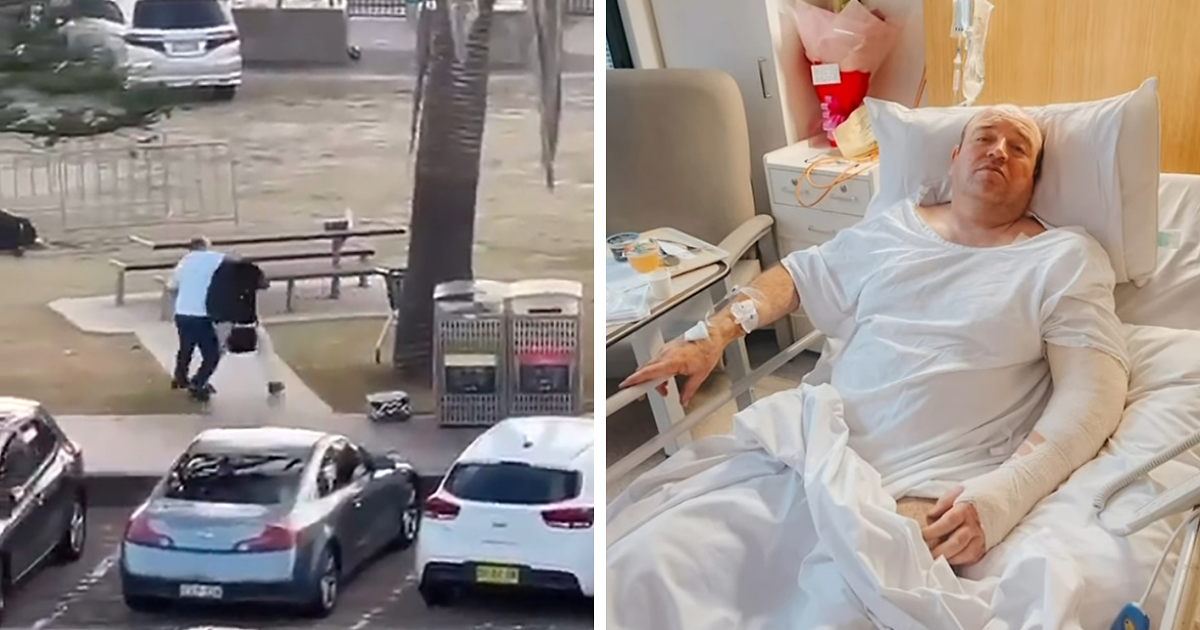
The story of Ahmed al Ahmed, the man widely praised as the Bondi Beach hero after confronting an attacker during the December 2025 Hanukkah celebration shooting in Sydney, has continued to move people around the world. His act of courage was captured in footage that spread quickly online, but the emotional update from his hospital room reminded everyone that heroism does not end when the camera stops rolling.
According to reports from major news outlets, Ahmed suffered serious injuries while helping stop one of the attackers. His former migration lawyer, Sam Issa, later described the hospital visit in heartbreaking terms, saying Ahmed was in significant pain and facing a difficult recovery. The detail that stayed with many readers was simple: the man being celebrated as a national hero was also a father, a shop owner, a son, and a patient trying to heal from a traumatic event.
This article looks at the latest known updates on Ahmed al Ahmed, why his actions resonated so deeply, how officials and communities responded, and what this moment says about bravery, unity, and the very human cost behind viral hero stories.
Who Is Ahmed al Ahmed, The Bondi Beach Hero?
Ahmed al Ahmed is a Syrian-born Australian man who became known internationally after he intervened during the Bondi Beach attack on December 14, 2025. Reports described him as a father of two and a small business owner living in Sydney. Before that day, he was not a public figure. He was, in the most ordinary and important sense, a regular person going about life.
That ordinary background is part of why the story touched so many people. The phrase “Bondi Beach hero” can sound almost cinematic, as if someone stepped out of a movie trailer with dramatic music and perfect lighting. Real life, of course, is messier. Ahmed did not have a script. He had seconds. He saw danger, heard panic, and made a choice that many officials later credited with saving lives.
Footage shared by news organizations showed him approaching one of the attackers and wrestling away a firearm. Authorities and political leaders praised his actions, with Australian Prime Minister Anthony Albanese and New South Wales Premier Chris Minns among those who publicly recognized him. For many Australians, Ahmed became a symbol of courage across religious, cultural, and political lines.
The Heartbreaking Hospital Update
The hospital update brought a sobering turn to the public admiration. Sam Issa, who had previously helped Ahmed with migration matters, visited him and spoke about the seriousness of his injuries. Reports said Ahmed had suffered multiple wounds and required complex medical care, including surgeries involving nerve damage.
The word “hero” can sometimes make people forget the word “hurt.” But in Ahmed’s case, both were true at the same time. He was praised by strangers, visited by leaders, and supported by donations from around the world. Yet he was also dealing with pain, uncertainty, and the long road of physical recovery.
People magazine reported that Ahmed was recovering after a complex operation and preparing for additional surgery. Later updates said he had been released from hospital, though his recovery remained ongoing. Some reports noted nerve damage and the possibility that full function in his hand or arm might take a long time to return. The details were painful, but they also helped the public understand that the cost of his intervention was not symbolic. It was personal, physical, and lasting.
What Happened At Bondi Beach?
The attack took place during a public Hanukkah celebration near Bondi Beach in Sydney. Families, children, religious leaders, and community members had gathered for what should have been a joyful evening. Instead, the event became the site of a deadly attack that Australian authorities described as antisemitic and terrorism-related.
Major outlets reported that 15 people were killed and many others were wounded. The attack shocked Australia and drew international attention because Bondi Beach is one of the country’s most recognizable public spaces. It is usually associated with sunshine, surfing, tourists, coastal walks, and the kind of beachside chaos that involves towels, sunscreen, and someone inevitably losing a flip-flop. Suddenly, it was linked with grief.
Authorities later investigated possible extremist inspiration and security failures, while families of victims called for stronger action against antisemitism. The story quickly became larger than one location. It became a national conversation about hate, public safety, emergency response, and how communities protect one another without turning fear into division.
Why Ahmed’s Actions Resonated Worldwide
There are many reasons Ahmed al Ahmed’s story spread so widely. First, his act was direct and visible. In an age where people often debate events through fragments of video, this was one of those rare moments where viewers could immediately understand the stakes: a person moved toward danger to protect others.
Second, Ahmed’s identity carried powerful symbolism. He is a Muslim man who acted to help protect Jewish people at a Hanukkah event. In a time when extremists try to divide communities, that fact mattered. It did not erase the grief of the victims or solve the bigger social problems behind the attack, but it offered a human counterpoint to hatred. His action said, without needing a speechwriter: your life matters to me.
Third, his humility struck people. In interviews after the attack, Ahmed did not seem eager to become a celebrity. He spoke about wanting to save lives and feeling sorrow for those lost. That humility made the public reaction even stronger. People tend to recognize sincerity when they see it, even through the noisy fog machine of social media.
Public Support And Donations
After the attack, fundraising campaigns for Ahmed’s recovery drew huge support. Reports said tens of thousands of people donated, raising millions of Australian dollars. One widely reported campaign attracted donations from ordinary people as well as high-profile figures.
This response showed how quickly communities can mobilize when a story touches a nerve. Some donors likely gave because they admired Ahmed’s bravery. Others may have given because they wanted to send a message of unity. Many probably gave because they saw a father and worker facing a long recovery after risking his life for strangers.
Online giving is not a perfect solution to trauma, medical needs, or public violence. It can be messy, emotional, and sometimes driven by viral momentum. But in Ahmed’s case, the donations became a visible way for people to say thank you. When words felt too small, people reached for the button marked “donate.” The internet has many problems, but occasionally it remembers how to be useful.
Official Visits And National Recognition
Australian leaders visited Ahmed in hospital and praised him publicly. Prime Minister Anthony Albanese called him a true Australian hero, while New South Wales Premier Chris Minns said his actions saved lives. These official responses mattered because they framed Ahmed’s bravery as part of a larger national identity: not one based on background or religion, but on protecting others.
That message became especially important after an attack targeting the Jewish community. In moments of collective grief, public language can either inflame fear or reinforce solidarity. The praise for Ahmed helped highlight the difference between the attackers’ hatred and the response of citizens who ran to help, gave first aid, sheltered people, donated blood, or supported grieving families.
It is also worth noting that Ahmed was not the only person described as heroic. Reports recognized other civilians, first responders, lifesavers, and victims who acted bravely during the crisis. A healthy public memory should make room for all of them. Heroism is not a trophy with one nameplate. Sometimes it is a crowded room, and everyone inside deserves to be remembered.
The Human Cost Behind A Viral Moment
Viral hero stories can flatten people. A few seconds of footage become a headline, the headline becomes a nickname, and the nickname becomes a symbol. But Ahmed’s hospital update reminds us that symbols still need pain medicine, family support, physical therapy, privacy, and time.
His recovery may involve more than physical healing. Anyone who experiences or witnesses a terrifying public attack can face emotional aftershocks. Survivors may deal with anxiety, sleep disruption, grief, survivor’s guilt, or the strange pressure of being praised when they are still processing what happened. Public admiration can be comforting, but it can also be heavy.
That is why coverage of Ahmed should be respectful. It is possible to honor his courage without turning his suffering into entertainment. It is possible to discuss the attack without repeating graphic details. And it is possible to admire his actions while still reminding readers that ordinary people should follow emergency guidance, seek safety, and alert authorities whenever possible.
What The Bondi Beach Attack Revealed About Community
The Bondi Beach attack exposed the cruelty of antisemitic violence, but it also revealed the strength of community response. Jewish families mourned. Muslim, Christian, secular, and other Australians expressed solidarity. Leaders condemned the attack. Strangers donated money and blood. Artists painted murals. People who had never met Ahmed learned his name and hoped he would heal.
This does not erase the pain. Nothing should. The victims are not footnotes in a hero story; they are central to the tragedy. Families lost loved ones, and survivors carry memories that cannot be undone. But community response matters because it shapes what happens after the worst day. It decides whether fear hardens into suspicion or grief becomes a reason to stand closer together.
Ahmed’s story became powerful because it sat at the crossroads of those choices. He did not ask who needed saving. He did not stop to calculate identity, politics, or public reaction. He acted because people were in danger. That kind of moral clarity is rare enough to feel almost startling.
Why The Lawyer’s Hospital Visit Hit So Hard
The hospital details shared by Sam Issa hit readers hard because they turned a viral clip into a bedside reality. Suddenly the story was not only about the second when Ahmed confronted an attacker. It was about the hours afterward: doctors, surgeries, pain, family worry, and the possibility of long-term injury.
That shift matters for journalism and for readers. When people share clips online, they often focus on the most dramatic frame. But the real story continues in quieter places: hospital rooms, rehabilitation appointments, family kitchens, closed shops, memorial services, and legal hearings. The consequences of public violence do not end with a headline.
Issa’s comments also helped explain Ahmed’s character. Reports said Ahmed was humble and not interested in attention. He reportedly felt gratitude toward Australia and acted out of a basic human responsibility. Whether readers encountered him through a news report, a video, or a fundraiser, that humility became part of why the update felt so emotional.
Lessons From Ahmed al Ahmed’s Story
1. Courage Can Be Ordinary Before It Is Extraordinary
Ahmed was not famous before Bondi. That is the point. Courage often comes from ordinary people who do not wake up expecting history to knock on the door. They are parents, shop owners, students, workers, neighbors, and beachgoers. Then something happens, and their values become visible.
2. Unity Is Not A Slogan
After an attack rooted in hate, unity cannot be a decorative word tossed into a speech like parsley on a restaurant plate. It has to mean something. In this case, unity looked like a Muslim man protecting Jewish celebrants, Australians donating across backgrounds, and public leaders refusing to let extremists define the country’s future.
3. Survivors Need Long-Term Support
The attention around Ahmed was intense, but recovery is rarely quick. Medical care, emotional support, financial stability, family privacy, and community patience all matter. A hero may trend for a week, but healing can take months or years.
4. Responsible Media Coverage Matters
Stories like this should be handled with care. The goal is not to sensationalize the attack or replay trauma for clicks. The goal is to inform, remember, and analyze. Readers deserve facts. Victims deserve dignity. Survivors deserve compassion. Search engines may like keywords, but humans need decency first.
Related Experiences And Reflections: What This Story Teaches Us In Real Life
One experience many people can relate to after reading about Ahmed al Ahmed is the feeling of asking, “What would I do?” It is a natural question, but it should be approached carefully. Most people are not trained for extreme danger, and no article should encourage readers to run toward violence. In real emergencies, the safest response is usually to move away from danger, help others reach safety when possible, call emergency services, and follow official instructions.
Still, Ahmed’s story offers meaningful everyday lessons that do not require anyone to become an action hero. The first is awareness. In public places, awareness does not mean paranoia. It means noticing exits, staying calm when crowds shift suddenly, and keeping family or friends together at large events. Think of it like carrying sunscreen to the beach: not dramatic, not glamorous, but very useful when the day changes quickly.
The second lesson is community care. After traumatic events, people often want to help but do not know how. Practical support can be powerful. Donating to verified funds, giving blood when local services request it, checking on affected friends, avoiding rumor-sharing, and supporting interfaith solidarity events are all meaningful actions. Not every form of courage happens in a dramatic second. Some of it happens quietly, through consistency.
The third lesson is responsible sharing. When shocking footage appears online, many people instinctively repost it. But survivors and victims’ families may be harmed by repeated exposure. A better approach is to share verified reporting, avoid graphic material, and focus on ways to support those affected. The internet does not need everyone to become a breaking-news broadcaster with a shaky Wi-Fi connection and too much confidence.
The fourth lesson is emotional honesty. Stories like this can make readers feel grief, anger, admiration, confusion, or helplessness. Those reactions are normal. Young readers especially may need reassurance that the world is not only made of frightening headlines. The same story that shows violence also shows people helping, protecting, donating, comforting, and refusing hate. That balance matters.
The fifth lesson is that heroism should not become pressure. Ahmed’s courage was extraordinary, but ordinary people are not failures for choosing safety. A society should not depend on civilians to stop attackers. It should invest in prevention, emergency planning, community trust, and support for targeted groups. Honoring Ahmed means praising what he did while also working toward a world where fewer people are placed in such impossible moments.
Finally, his story teaches that identity can be a bridge. In a time when many loud voices try to divide people by religion, nationality, or background, Ahmed’s action cut through the noise. A Muslim Australian helped protect Jewish Australians. That fact does not need decoration. It is already powerful. It is the kind of real-life example that makes hatred look small, frightened, and morally bankrupt.
Conclusion
The heartbreaking update on Bondi Beach hero Ahmed al Ahmed is not only about injuries, surgeries, or a lawyer’s emotional hospital visit. It is about the cost of courage and the responsibility of the public to remember the full human story. Ahmed’s actions during the Bondi Beach attack inspired millions, but his recovery reminds us that heroes are not headlines. They are people.
As Australia continues to mourn the victims and examine the failures that allowed the attack to happen, Ahmed’s story stands as a rare point of light in a dark chapter. His bravery did not erase the tragedy, but it did show what humanity can look like when hatred arrives armed with fear. It looks like someone choosing to protect strangers. It looks like communities refusing to be divided. It looks like a hospital room where a wounded man, praised by the world, still needs time to heal.
That is the real update: the hero is human, the recovery is difficult, and the meaning of his courage continues to grow.