Note: This article is written in standard American English for web publishing and is based on publicly reported information about GarfieldEATS, the official Garfield-themed restaurant concept that became both a food-business curiosity and an internet legend.
Some restaurant ideas arrive quietly. Others stroll into the room wearing a bright orange cat suit, holding a pan of lasagna, and daring the internet not to stare. GarfieldEATS, the Garfield-themed restaurant built around everyone’s favorite Monday-hating, lasagna-loving comic-strip cat, belonged firmly in the second category.
It was not just a restaurant. It was a brand experiment, a delivery app, a cartoon shrine, a fast-casual concept, a meme factory, and, depending on whom you asked, either a bold new direction in character dining or a giant orange fever dream with marinara sauce. The restaurant served Garfield-shaped pizza, lasagna, themed drinks, and enough orange branding to make a traffic cone feel underdressed.
But behind the jokes, viral screenshots, and “wait, this is real?” reactions, GarfieldEATS also became a surprisingly useful case study in modern restaurant struggles. It had a recognizable intellectual property, a famous character, a passionate founder, media attention, novelty appeal, and a menu tied directly to the cartoon’s most iconic food. Still, the concept had a hard time turning internet attention into lasting restaurant stability.
That is where the story gets interesting. GarfieldEATS proves that a famous character can get people through the digital door, but it cannot automatically solve rent, food costs, customer reviews, pandemic disruption, operational pressure, or the harsh reality that people eventually ask, “Yes, but is the lasagna good?”
What Was GarfieldEATS?
GarfieldEATS was an officially licensed Garfield-themed food concept founded by entrepreneur Nathen Mazri. The idea blended a restaurant, a delivery app, and a cartoon entertainment experience. Instead of being a traditional sit-down restaurant with waiters, menus, and the usual “Would you like fries with that?” rhythm, GarfieldEATS leaned into mobile ordering and digital engagement.
The brand promoted itself as a quick mobile restaurant concept. Customers could order through an app or website, and the storefront experience included screens, tablets, Garfield visuals, and plenty of character-heavy branding. It was designed to feel less like a plain pizza shop and more like stepping into Garfield’s appetite.
The menu made the theme impossible to miss. There were Garfield-shaped pizzas, lasagna inspired by the cartoon cat’s legendary obsession, “Garfuccino” coffee drinks, smoothies, and branded desserts. The packaging was also part of the pitch, with an emphasis on playful presentation and reusable or “repurposeful” boxes.
In theory, the concept had all the ingredients for viral success: a globally recognized character, comfort food, mobile ordering, nostalgia, and a design so loud that nobody could accuse it of being boring. In practice, the restaurant discovered that being unforgettable is not the same as being easy to operate.
Why A Garfield Restaurant Made Sense On Paper
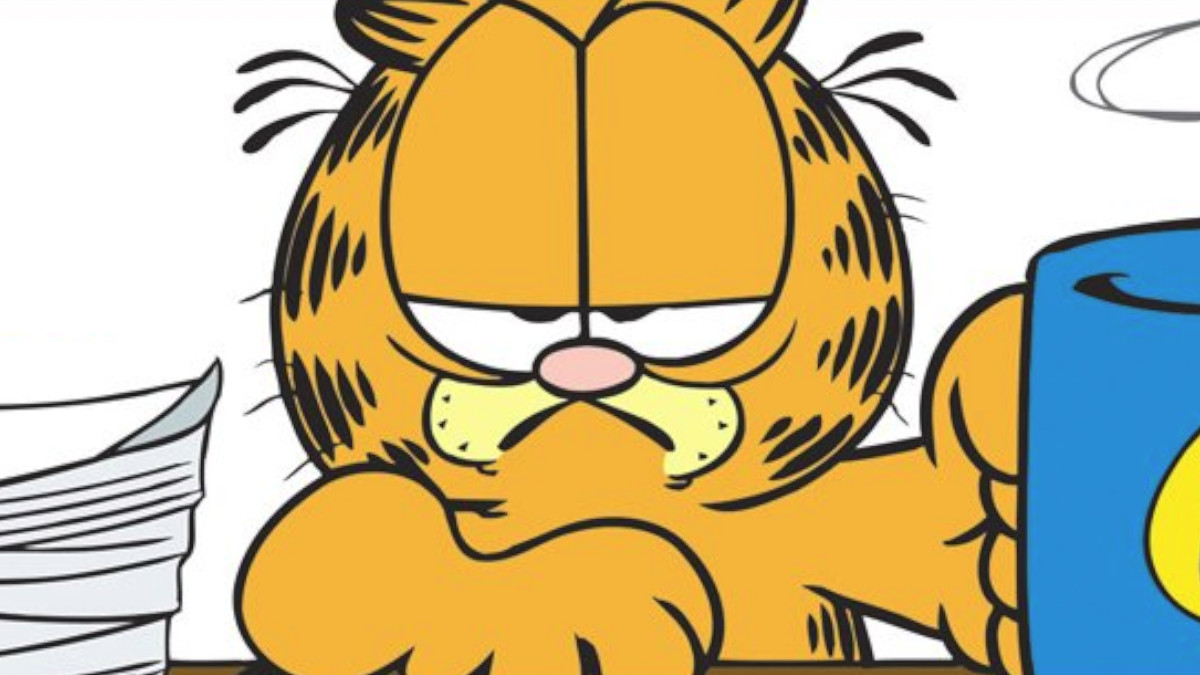
At first glance, a Garfield-themed restaurant sounds like something invented during a 2 a.m. group chat. But from a branding perspective, the concept was not random. Garfield is one of the most recognizable comic-strip characters in the world. Created by Jim Davis, the character debuted in 1978 and became famous for laziness, sarcasm, Monday-hating, and a deep emotional commitment to lasagna.
That last trait matters. Many fictional characters are famous, but not all are naturally connected to a food product. Garfield is. You do not have to spend millions explaining why Garfield and lasagna belong together. The joke has been baked into the character for decades. If Snoopy had an aviation-themed café, people would understand. If Garfield has a lasagna restaurant, the brand logic is already sitting at the table, napkin tucked in.
Garfield also benefits from cross-generational recognition. Older readers remember the newspaper comics. Millennials and Gen Z encountered Garfield through cartoons, merchandise, memes, and internet remixes. That gives the brand a wide awareness base, even among people who may not actively follow the comic today.
For a food entrepreneur, that kind of built-in recognition is tempting. A regular lasagna shop has to fight for attention. A Garfield lasagna shop gets headlines simply by existing. The problem, of course, is that attention is only the appetizer.
The Toronto Storefront Became A Viral Curiosity
GarfieldEATS gained major attention when it opened in Toronto, where the storefront became a local curiosity almost immediately. The exterior was bright, cartoon-heavy, and impossible to miss. People stopped to take photos. Food writers visited. Online communities debated whether the whole thing was genius, absurd, or both.
The restaurant had the kind of visual identity that social media loves. Orange walls, Garfield’s face, novelty menu items, and a founder willing to speak passionately about the concept all created a perfect storm for internet discussion. Even people who had no intention of ordering a Garfield-shaped pizza could not resist reading about it.
That fascination came with a downside. Viral attention can be generous, but it is rarely gentle. GarfieldEATS became the subject of jokes, reaction videos, forum threads, reviews, and long-form internet analysis. The restaurant was discussed not only as a place to eat, but as a piece of modern pop-culture weirdness.
For some brands, that level of attention is a dream. For a restaurant, it can be complicated. Restaurants are judged on food, cleanliness, service, pricing, speed, atmosphere, and consistency. A meme can bring people in once. A good operating model has to bring them back.
The Menu: Lasagna, Pizza, Garfuccinos, And A Lot Of Orange Energy
The GarfieldEATS menu leaned hard into character association. Lasagna was the obvious star because Garfield without lasagna is like a keyboard without the letter “E”technically possible, but emotionally wrong. The restaurant promoted different lasagna options, including its Big Cow Lasagna, which later became central to the brand’s e-commerce pivot.
Then there were the Garfield-shaped pizzas. From a marketing standpoint, this was the kind of item built for photos. A pizza shaped like Garfield’s head is not trying to quietly compete with your neighborhood coal-fired pie. It is trying to make you say, “Hold on, I need to send this to three friends.”
The drinks also embraced the theme, especially the Garfuccino. The name alone sounds like something Garfield would order before taking a five-hour nap on Jon’s newspaper. Whether customers loved or questioned the menu, the items were designed to be talked about.
That is both the magic and risk of novelty food. A themed dish must do two jobs at once: entertain the eye and satisfy the appetite. If the visual joke lands but the flavor does not, customers may enjoy the story more than the meal. And restaurants, unfortunately, cannot pay rent in screenshots.
Why The Restaurant Had A Hard Time
1. Novelty Does Not Guarantee Repeat Customers
Novelty can create a rush of first-time interest. People may visit because the idea is strange, nostalgic, or funny. But repeat business depends on stronger fundamentals: value, flavor, convenience, service, and habit.
A Garfield-themed restaurant faces a special challenge. Customers may come once because they want the experience, but the second visit requires a different reason. Is it the best lasagna nearby? Is the pizza convenient and fairly priced? Is the app easy to use? Does the food travel well? Does the brand still feel charming after the joke is no longer new?
That transition from “viral attraction” to “daily dining option” is difficult. Many themed restaurants struggle here. The first visit is entertainment. The second visit is a consumer decision.
2. Reviews Can Hit Hard
GarfieldEATS also faced mixed online reactions. Some people were fascinated by the concept; others criticized the food, branding, app experience, or overall execution. In the restaurant world, reviews are not background noise. They influence foot traffic, search visibility, trust, and delivery orders.
For a young restaurant, early negative reviews can be especially damaging. A well-established local favorite may survive a few bad nights. A new concept built on curiosity has less room for error. If the first wave of visitors posts skeptical reactions, the next wave may arrive expecting a punchline rather than a meal.
The founder publicly criticized unfair or irrelevant reviews, arguing that not every negative rating came from real customers. That is a familiar frustration for many small business owners. Still, the broader lesson is clear: a restaurant built for the internet also has to survive the internet.
3. The Concept Was Operationally Complicated
A simple restaurant can be hard enough. GarfieldEATS was not simple. It involved licensing, branded food, a mobile-ordering model, themed packaging, entertainment elements, social media storytelling, merchandise, delivery, and a storefront experience. Each piece added complexity.
Licensing a famous character can be powerful, but it also creates boundaries. The brand must protect the character’s image. Menu items, visuals, promotional language, and expansion plans may involve approvals or restrictions. That can slow down decisions that independent restaurants usually make quickly.
Meanwhile, the app-based ordering model was ambitious. In 2018 and 2019, mobile ordering was already growing, but a restaurant asking people to engage through its own digital ecosystem had to compete with the convenience of established delivery platforms. Customers like novelty, but they love convenience even more.
4. Rent And Real Estate Pressure Were Real
Restaurant rent is the villain in many food-business stories, and GarfieldEATS was no exception. The Toronto location eventually closed after disputes involving the landlord and rent. Public statements around the closure framed the issue as part of a broader clash between traditional brick-and-mortar costs and a changing digital economy.
That argument may sound dramatic, but the business pressure behind it is very real. A themed restaurant needs enough sales volume to cover rent, labor, ingredients, packaging, licensing-related costs, technology, marketing, maintenance, and unexpected expenses. If traffic is inconsistent, fixed costs become heavy fast.
Even a famous cartoon cat cannot nap his way out of a commercial lease.
5. The Pandemic Made Everything Worse
GarfieldEATS also operated during one of the worst periods in modern restaurant history. The COVID-19 pandemic devastated food businesses across North America. Dining restrictions, reduced foot traffic, staff disruptions, delivery challenges, customer uncertainty, and changing spending habits pushed many restaurants into survival mode.
For a concept that depended partly on the experience of visiting a bizarre, highly visual storefront, the pandemic created an especially awkward problem. The restaurant’s weird charm worked best when people could see it, photograph it, and step inside the orange universe. Lockdowns and restrictions made that far harder.
Delivery and e-commerce helped some restaurants survive, but not every concept transfers smoothly to a box at someone’s doorstep. A Garfield-shaped pizza might be funny in person; after a bumpy delivery ride, it has to compete with every regular pizza in town.
The Pivot To Frozen Lasagna
After the storefront closed, GarfieldEATS continued in a different form by emphasizing e-commerce and frozen Big Cow Lasagna. That pivot made sense. If Garfield is tied to one food, it is lasagna. A frozen lasagna product is easier to scale than a full restaurant, at least in theory. It reduces the need for a large customer-facing dining space and turns the brand into something people can store, heat, and eat at home.
Frozen food also fits the Garfield personality. Garfield is not exactly the patron saint of farm-to-table punctuality. He is a comfort-food icon. A freezer full of lasagna sounds like something he would consider responsible adult planning.
But retail food has its own challenges. Grocery distribution, packaging, shelf space, pricing, manufacturing consistency, and consumer trust are all difficult. A branded frozen lasagna must compete not just with restaurants, but with supermarket staples and private-label products. The Garfield name can attract attention, but the product still has to earn a place in the freezer.
What GarfieldEATS Teaches About Themed Restaurants
Themed restaurants can be powerful because they sell more than food. They sell atmosphere, memory, identity, and the chance to participate in a story. That is why character cafés, movie-themed pop-ups, and immersive dining experiences keep appearing. People do not always want dinner. Sometimes they want dinner with a plot.
GarfieldEATS understood that better than most. It was not shy. It did not whisper the theme. It shouted it in orange. That confidence made the brand memorable, and memorability is valuable in a crowded food market.
However, the restaurant also shows the limits of theme-first dining. A theme can create awareness, but operations create longevity. Customers may forgive a strange concept more easily than they forgive slow service, confusing ordering, inconsistent food, or high prices. The more unusual the idea, the stronger the basics need to be.
A restaurant based on a famous character has to serve two audiences at once. Fans want the character treated with affection. Diners want food that feels worth the money. Internet spectators want entertainment. Landlords want rent. Delivery customers want the order hot. Search engines want accurate information. That is a crowded table, even before Garfield sits down and steals the lasagna.
Why The Internet Still Remembers GarfieldEATS
Many restaurants close without becoming legends. GarfieldEATS stayed in public memory because it was unusually specific. It was not just “a themed restaurant.” It was an official Garfield-themed mobile restaurant with Garfield-shaped pizza, Garfuccinos, founder drama, internet jokes, landlord disputes, frozen lasagna ambitions, and a slogan that sounded like both a marketing line and a plea from a hungry cartoon cat.
That combination made it irresistible to online culture. The internet loves stories that blur the line between business plan and performance art. GarfieldEATS often felt like both. People debated whether it was brilliant, misguided, misunderstood, or simply too strange to ignore.
There is also something oddly sincere about the whole saga. Beneath the memes was a founder clearly devoted to the concept. The restaurant may have been mocked, but it was not lazy. It tried to build a new kind of branded food experience around a character whose personality is famously lazy. That contradiction alone is comedy gold.
Could A Garfield-Themed Restaurant Work Today?
Yes, but it would need a sharper model. A modern Garfield restaurant could succeed as a limited-time pop-up, a smaller dessert-and-lasagna café, a delivery-only comfort-food brand, or a grocery product line with clever packaging. The concept is not doomed. Garfield plus lasagna remains one of the most obvious food-brand pairings in pop culture.
The key would be restraint. Instead of trying to be an app, restaurant, entertainment platform, merchandise shop, and global movement all at once, a revived Garfield food concept might focus on doing a few things extremely well. Great lasagna. Fun packaging. Easy ordering. Strong quality control. Occasional limited-edition Garfield items. A photo-friendly experience that does not overwhelm the food.
In other words, let Garfield be Garfield: simple, funny, hungry, and allergic to unnecessary effort.
Experience Section: What It Feels Like To Encounter A Restaurant Like GarfieldEATS
There is a particular feeling that happens when you first discover a place like GarfieldEATS. It begins with disbelief. You see a photo of a Garfield-shaped pizza or a bright orange storefront and assume it must be a parody. Then you look closer and realize, no, this is real. Someone got the rights, built the brand, opened the doors, and invited the public to eat lasagna under the watchful eyes of a sarcastic cartoon cat.
That moment is powerful because it breaks the routine of ordinary dining. Most restaurants ask predictable questions. Do you want tacos, sushi, burgers, noodles, or salad? GarfieldEATS asked a more chaotic question: do you want to eat dinner inside a licensed Garfield universe where the coffee has a pun name and the pizza may resemble a cat’s face?
For many customers, the experience would begin before ordering. You would probably take out your phone. Not necessarily because you are hungry, but because the place demands documentation. A Garfield restaurant is not something you casually mention later. It is something you prove. “Look,” you tell your friends, “this exists.”
That is the first strength of a theme restaurant: it creates a memory before the food arrives. The walls, colors, menu names, packaging, and general weirdness all become part of the meal. Even if the food is only decent, the story can make the visit feel worthwhile. You are not just eating pizza. You are participating in a tiny pop-culture event.
But then the second part of the experience arrives: the actual meal. This is where novelty has to pass the fork test. A funny menu name can make someone smile, but it cannot season the sauce. A famous character can make packaging collectible, but it cannot fix a lukewarm delivery order. A restaurant experience becomes memorable for the right reasons only when the food supports the concept.
That tension is what makes GarfieldEATS so fascinating. People wanted it to be strange, but they also wanted it to work. They wanted the absurdity of Garfield-shaped pizza and the comfort of a satisfying meal. The restaurant had to be both joke and dinner. That is harder than it sounds.
Imagine walking in with a friend. One of you is excited because you loved Garfield as a kid. The other is skeptical but curious. You order lasagna because, obviously, that is the sacred choice. You maybe try the Garfuccino because the name has already done half its job. While waiting, you look around and wonder whether the whole thing is brilliant branding or a very expensive dare.
Then comes the food. If it is good, the restaurant becomes a delightful surprise. If it is average, the experience becomes a story. If it is bad, the internet gains another anecdote. That is the danger of building a restaurant where every customer arrives ready to react. Ordinary restaurants can have quiet failures. A Garfield restaurant fails in orange.
Still, there is something admirable about the attempt. Most food businesses are cautious because caution is safer. GarfieldEATS was not cautious. It was loud, specific, and deeply committed to its own oddball identity. In a world full of beige branding and interchangeable fast-casual bowls, there is a strange charm in a restaurant that says, “Here is lasagna, here is a cartoon cat, and yes, we are completely serious.”
The best way to understand GarfieldEATS may be as an experience that was bigger than its menu. It was a restaurant, but it was also a reminder that food culture is emotional, visual, nostalgic, and occasionally ridiculous. People do not remember it only because of what it served. They remember it because it made them feel surprised. And in modern dining, surprise is rare enough to matter.
Conclusion
GarfieldEATS existed, struggled, closed its storefront, and somehow became more memorable than many restaurants that operated for decades. Its story is funny, messy, ambitious, and oddly educational. It shows how a beloved character can create instant awareness, but also how difficult it is to turn attention into a sustainable food business.
The Garfield-themed restaurant had the right mascot for comfort food, a menu built for social media, and a founder determined to make the concept bigger than a simple pizza shop. But it also faced tough reviews, operational complexity, rent disputes, pandemic-era disruption, and the unforgiving math of restaurant survival.
In the end, GarfieldEATS may be remembered less as a failed restaurant and more as a pop-culture experiment that almost made too much sense. Garfield loves lasagna. People love nostalgia. The internet loves weird businesses. Put them together and you get a story that refuses to disappear.
Would Garfield approve? Probably, as long as someone saved him the last piece of lasagna and did not ask him to work on a Monday.