Note: This article is based on real reporting and community discussion about Stranger of Paradise: Final Fantasy Origin, its PC performance problems, and the fan-made workaround that turned detailed hair and fur assets into the funniest performance villain in recent RPG history.
When the Real Final Boss Is Hair
In most Final Fantasy games, the biggest threat is a godlike villain, a meteor, a corrupted crystal, a long-haired swordsman with unresolved workplace energy, or a man shouting about Chaos like he misplaced his car keys in a dungeon. In Stranger of Paradise: Final Fantasy Origin, however, PC players discovered an unexpected enemy hiding in plain sight: hair.
Yes, hair. Beautiful, dramatic, high-resolution, physics-loving, frame-rate-devouring hair. The kind of hair that says, “I have emotional depth,” while your gaming PC says, “I have dropped to 12 frames per second and would like to lie down.”
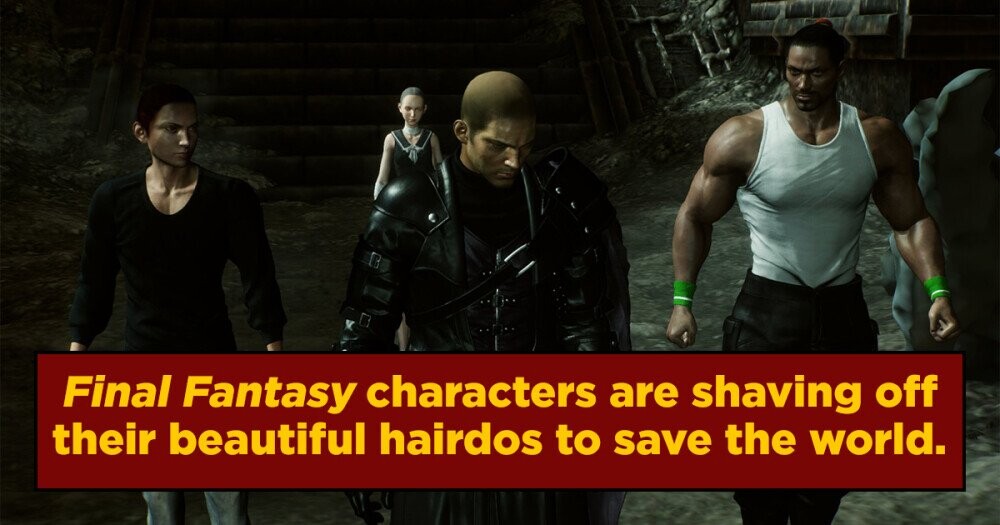
The headline sounds like a joke because, frankly, it is one of those gaming stories that arrived already wearing a party hat: ‘Final Fantasy’ fans fix game by shaving the heads of every character. But underneath the comedy is a very real example of how PC players, modders, and performance tinkerers often become unpaid detectives when a major game launches with technical issues.
The game in question is not every Final Fantasy title, but Stranger of Paradise: Final Fantasy Origin, the action RPG developed in collaboration between Square Enix and Team Ninja. The game is a loud, strange, combat-heavy reimagining of the original Final Fantasy mythology, starring Jack Garland and his allies as they chase Chaos with the determination of someone who has never heard of a quiet indoor voice.
Players expected monsters, loot, jobs, boss fights, and melodrama. What they did not expect was that some of the most performance-heavy assets would be character hair, fur, and flashy visual effects. Naturally, the community responded in the most practical and ridiculous way possible: remove the hair. All of it. Welcome to the bald and the beautiful.
What Actually Happened With the Bald Final Fantasy Mod?
After Stranger of Paradise: Final Fantasy Origin arrived on PC, many players reported unstable performance, frame drops, frame pacing problems, and sudden slowdowns during combat or cutscenes. Some users with strong hardware still struggled to maintain smooth gameplay, which made the issue especially frustrating. When a game runs poorly on an older machine, players may blame the hardware. When it stumbles on powerful rigs, the community pulls out a magnifying glass.
That is exactly what happened. Modders and performance-focused players began testing different visual elements to identify what was causing the biggest frame-rate drops. They found that certain character details, including hair, fur coats, and intense particle effects, could hurt performance dramatically. In some cases, the closer the camera was to these assets, the worse the performance became. That is not just a bad hair day. That is a bad hair benchmark.
One workaround involved using shader toggles through tools such as Special K, a PC gaming utility known for helping users analyze, fix, and adjust performance-related behavior in games. By disabling or reducing demanding visual elements, players could claw back frames and improve stability. The catch? Characters could look bald, stripped down, or visually incomplete. It was less “premium next-gen fantasy” and more “everyone joined the same emergency military barber program.”
Gaming outlets quickly picked up the story because it had everything the internet loves: a famous franchise, a troubled PC port, a strange technical explanation, and a fix so visually absurd that it could only come from the modding community. A normal patch note might say, “Improved asset optimization.” The fan version said, “We removed everyone’s hair and now the game breathes again.”
Why Hair Can Be Surprisingly Expensive in Games
To someone outside game development, blaming hair for performance issues may sound ridiculous. After all, it is just hair. But in modern 3D games, hair can be a tiny nightmare made of thousands of rendering decisions.
Hair may involve complex textures, transparency, shadows, physics, animation, lighting, and layered geometry. Fur can be even trickier, especially if it is designed to look thick, soft, or reactive under changing light. When a game engine has to render detailed hair on multiple characters during a cutscene, then add particles, post-processing, combat effects, and high-resolution environments, the graphics pipeline can begin to sweat like a black mage wearing plate armor.
Many games solve this through careful optimization. Developers may use simpler hair models at a distance, swap in lower-detail assets, reduce transparency costs, bake lighting, or create performance-friendly versions of complex objects. When these systems are not tuned well, a small visual feature can consume a large amount of GPU or memory resources.
That appears to be what made the Stranger of Paradise situation so funny and frustrating. The game did not look like the most visually advanced PC release of its generation, yet some players reported performance issues that felt out of proportion to what was on screen. When hair and fur became suspects, the story instantly became gaming folklore. Players were no longer just fighting Chaos. They were fighting shampoo.
Stranger of Paradise Was Already Built for Memes
The bald mod story landed especially well because Stranger of Paradise: Final Fantasy Origin was already one of the most meme-ready entries in the franchise. From its early trailers, the game became known for Jack’s intense desire to “kill Chaos.” The marketing leaned into grim fantasy, angry dialogue, leather jackets, and a tone that seemed both completely sincere and accidentally hilarious.
That does not mean the game was bad. In fact, many players praised its combat, job system, boss encounters, and Team Ninja-style action design. The game’s best moments are fast, aggressive, and satisfying. It blends loot-driven progression with real-time combat and classic Final Fantasy references. For players who enjoy experimentation, the job system offers plenty of room to build, break, and rebuild your character.
But the game’s personality is unusual. It is dramatic, messy, loud, and oddly lovable. It contains the kind of dialogue that makes players laugh, then keep playing for another four hours. So when the PC community discovered that shaving characters could improve performance, the story did not feel out of place. It felt like the game had simply evolved into its final meme form.
Why Fans Often Fix What Developers Miss
The bald Final Fantasy workaround also highlights a bigger trend in PC gaming: fans often become the first responders for technical problems. When a game launches with stutters, poor ultrawide support, broken frame pacing, missing graphics options, or strange performance bottlenecks, modders frequently step in before official patches arrive.
This does not mean modders can replace professional developers. Game development is difficult, and PC optimization is especially complicated because hardware combinations vary wildly. One player may have an older CPU and a newer GPU. Another may have plenty of memory but outdated drivers. Someone else may be running overlays, capture software, custom resolutions, or background apps that behave like tiny gremlins.
Still, PC communities are incredibly good at pattern recognition. If enough players compare settings, share screenshots, test asset behavior, and report frame-rate changes, they can often locate problems quickly. In this case, fans noticed that performance could tank around certain visual assets. Then they experimented. Then someone made the nuclear grooming decision.
The result was not a perfect solution. Removing hair is not exactly the elegant optimization strategy anyone dreams of. It is more of a “the ship is sinking, throw the decorative furniture overboard” approach. But it worked well enough for some players to prove a point: the issue was not imaginary, and certain assets were putting unusual pressure on performance.
The Trade-Off: Better FPS, Less Fabulousness
The bald workaround raised an important question: how much visual quality are players willing to sacrifice for smoother gameplay?
For some, the answer is simple. Frame rate comes first. If removing hair, lowering reflections, reducing resolution scaling, or turning off particles makes combat more responsive, they will do it without hesitation. These players treat graphics settings like a toolbox. Shadows? Lower them. Motion blur? Gone. Hair? Say hello to the clippers.
For others, the visual trade-off is too much. Final Fantasy has always been famous for style. Hair is practically part of the franchise’s cultural identity. Cloud Strife’s spikes, Sephiroth’s silver waterfall, Lightning’s pink sweep, Noctis’s royal bedheadthis series has never met a dramatic hairstyle it did not want to render at full emotional volume.
So when a workaround makes everyone bald, it is both useful and deeply cursed. The game may run better, but the fantasy fashion show has left the building. The characters look less like legendary warriors and more like they are about to explain the benefits of a strict dungeon gym routine.
That is what makes the story so memorable. It is not just a technical fix. It is a visual punchline. Players had to choose between smooth combat and majestic anime hair. Somewhere, a stylist in Midgar shed a single tear.
What This Says About PC Ports
The incident also sparked broader discussion about the quality of PC ports. PC players are used to tweaking settings, but they also expect a game to scale properly across hardware. When a title requires unusually heavy sacrifices to run smoothly, frustration builds fast.
A strong PC port should offer clear graphics options, stable performance, good shader handling, responsive controls, flexible resolution support, and predictable frame pacing. Players do not expect every machine to run every game at ultra settings. They do expect low, medium, and high settings to behave sensibly.
With Stranger of Paradise, reports suggested that the game could be demanding in ways that felt inconsistent. Some players saw frame drops during finishing moves. Others noticed that resolution scaling, screen space reflections, particles, or character details could hit performance hard. The bald workaround became the symbol of a larger issue: the game needed better optimization, not just stronger PCs.
That distinction matters. Optimization is not about making a game ugly. It is about making visual ambition efficient. A well-optimized game can look great and run well because assets, shaders, effects, and memory use are carefully managed. A poorly optimized game may ask a graphics card to perform heroic labor for results that do not justify the cost.
How the Modding Community Turned a Problem Into a Punchline
One reason this story spread so widely is that it shows the playful side of technical problem-solving. Modding communities can be serious, precise, and deeply knowledgeable. They can also be extremely funny. Give them a frame-rate problem caused by hair, and they will not merely explain it. They will shave the cast and post screenshots.
This is the internet at its best: collaborative troubleshooting wrapped in absurd comedy. Players tested. Others confirmed. Writers covered it. Memes appeared. Suddenly, a niche performance issue became a headline that even people who had never played Stranger of Paradise could understand.
The humor also made the technical issue easier to discuss. “The game has inefficient character asset rendering under certain conditions” is accurate but not exactly snackable. “Fans fixed Final Fantasy by making everyone bald” is unforgettable. It turns a dry performance problem into a story with personality.
Specific Examples: Hair, Fur, Soul Bursts, and Chaos
The most commonly discussed culprits included hair and fur assets, particularly when characters with detailed styling or fuzzy clothing appeared close to the camera. Players also pointed to Soul Burst effects, which are the flashy finishing moves that crystallize enemies in combat. These effects are visually important because they make the game feel crunchy, dramatic, and rewarding. Unfortunately, they could also coincide with frame drops for some players.
That combination created a strange problem. The most exciting moments in combat were also the moments where performance could become least stable. Imagine landing a perfect finishing move, expecting a burst of satisfaction, and instead watching your frame rate fall down the stairs carrying groceries. Not ideal.
Some players tried more conventional fixes first: lowering resolution scaling, reducing reflections, capping the frame rate at 60 FPS, turning down visual effects, or restarting the game when performance degraded. Those are normal PC troubleshooting steps. The bald workaround became famous because it was both more dramatic and more visually obvious.
In a way, the mod functioned like a diagnostic tool. It showed that certain assets were expensive enough to affect gameplay. Even if players did not want to use the workaround permanently, it helped prove that the problem had a concrete source.
Why This Story Still Matters
Years later, the bald Final Fantasy story remains relevant because it captures three truths about modern gaming. First, visual fidelity is not free. Every strand of hair, fur texture, lighting pass, and particle explosion has a cost. Second, PC players notice when performance does not match the visuals. Third, modders will always find the funniest possible way to expose a technical problem.
It also reminds publishers that PC audiences care deeply about options. Players want the ability to tune a game without resorting to unofficial fixes that make characters look like they lost a bet with a barber. A simple “hair quality” setting, better asset scaling, or more granular effect controls can make a big difference.
For fans, the story is a badge of honor. It says, “We loved this strange game enough to troubleshoot it, roast it, and keep playing.” That is the complicated beauty of fandom. Players can criticize a game, meme it into oblivion, and still recommend it to a friend with the warning, “It is weird, but the combat is great.”
Player Experience: Choosing Frames Over Follicles
The experience of dealing with this kind of performance issue is familiar to many PC gamers. You launch a new game with optimism. You adjust the settings with the confidence of a person who has watched three benchmark videos and now considers themselves an engineer. You start playing. The opening runs fine. The combat feels good. The music swells. Then a character with luxury shampoo enters the scene, and your frame rate begins writing its farewell letter.
At first, you blame the usual suspects. Maybe the resolution is too high. Maybe the shadows are too dramatic. Maybe your graphics driver woke up grumpy. You lower a few settings. The game improves slightly, then dips again during a cutscene or a finishing move. You open forums. You search Reddit. You discover that other players are having the same issue, which is comforting in the way a group power outage is comforting: at least it is not just your house.
Then you find the community fix. Someone has tested the game deeply enough to identify hair and fur as performance hogs. Another player has built shader toggles. A third person has posted screenshots of a once-stylish character now looking like they are preparing for a swimming competition. You laugh, because what else can you do? This is PC gaming. Sometimes the path to stability runs through a digital barbershop.
Trying a workaround like this can feel oddly satisfying. Not because bald characters are automatically better, but because the game suddenly responds. The input feels cleaner. Combat becomes easier to read. The frame rate stops collapsing every time the camera gets near a fur collar. You begin to understand why some players happily trade visual polish for consistency. Smooth gameplay can change the entire mood of an action RPG.
Of course, there is also a downside. The atmosphere takes a hit. Character designs lose part of their identity. Dramatic scenes become unintentionally funny. A serious villain monologue lands differently when everyone on screen looks like they joined the same monastery five minutes before the cutscene. If Final Fantasy is partly about style, removing hair feels like removing a musical instrument from the orchestra.
Still, this is the kind of experience that makes PC gaming memorable. Console players often get a fixed version of a game: it runs how it runs. PC players get a puzzle box. Sometimes that puzzle box contains sliders, drivers, mods, ini files, overlays, and one deeply cursed solution involving universal baldness. It can be annoying, but it can also be empowering. You are not just playing the game; you are negotiating with it.
The best part is the shared humor. Players do not merely complain; they document, test, exaggerate, and turn the whole thing into a community event. The bald mod became more than a workaround because it gave everyone a single image that explained the problem instantly. Hair was expensive. Frames were precious. Chaos could wait. The clippers had work to do.
For anyone who has ever lowered shadows to medium, turned off motion blur, disabled reflections, or sacrificed visual flair to keep a game playable, this story hits home. It is absurd, but it is also practical. A good frame rate can be the difference between a boss fight feeling fair and feeling like you are battling through a slideshow. If the price of victory is a cast full of shiny heads, some players will pay it with a smile.
Conclusion: A Hairless Victory for Final Fantasy Fans
The story of Final Fantasy fans shaving every character’s head to improve performance is funny because it sounds fake, but it is also revealing because it points to real issues in PC game optimization. Stranger of Paradise: Final Fantasy Origin offered energetic combat, bold style, and a gloriously strange tone, yet its PC performance problems pushed players to investigate the smallest details. What they found was both technical and hilarious: hair and fur could be surprisingly costly.
The bald workaround was not a perfect fix, and it was never a substitute for proper developer-side optimization. But it became a perfect gaming story. It showed how resourceful modders can be, how quickly communities can diagnose problems, and how humor can turn frustration into folklore. In a series famous for dramatic hairstyles, fans temporarily defeated performance issues by removing the very thing Final Fantasy characters hold most sacred.
In the end, this was more than a joke about bald heroes. It was a reminder that performance matters, players are clever, and PC gaming will always find new ways to be both brilliant and ridiculous. Sometimes you defeat Chaos with a sword. Sometimes you defeat it with shader toggles. And sometimes, apparently, you defeat it by giving everyone the cleanest scalp in Cornelia.