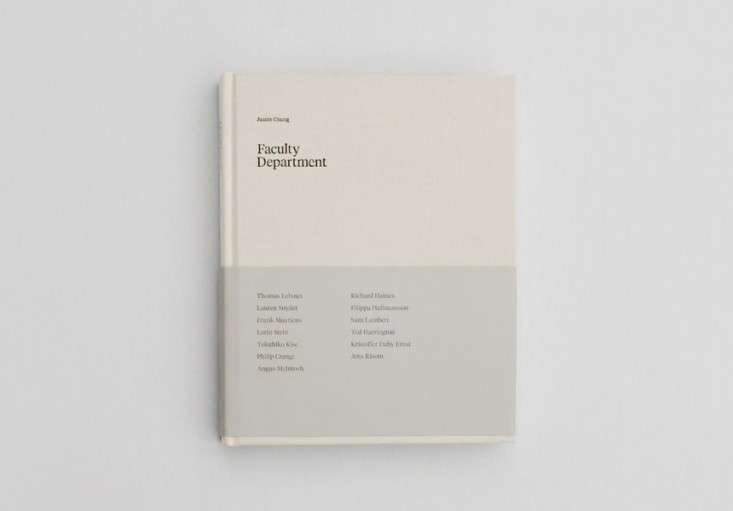
Faculty Department: Inaugural Issue is the kind of publication that makes a coffee table feel underdressed. Created by photographer Justin Chung, the first volume combines documentary photography, personal essays, interior details, and thoughtful design to explore how creative people live and work. Rather than asking successful individuals for five productivity hacks and a suspiciously perfect morning routine, the book pays attention to quieter evidence: a crowded desk, a familiar chair, a shelf of worn books, a favorite tool, or the dog casually supervising the entire operation.
Published as a substantial hardcover rather than a disposable magazine, the inaugural issue introduces 13 noteworthy individuals from creative fields around the world. Its subjects include designers, illustrators, editors, craftspeople, entrepreneurs, and furniture makers. Together, their stories form a visual study of creativity as a daily practice rather than a dramatic lightning bolt delivered by the universe at 3:17 a.m.
What Is the Faculty Department Inaugural Issue?
Faculty Department began as Justin Chung’s personal photography project examining the lives, environments, and working habits of creative individuals. Volume 1 was published in December 2014 and later distributed through powerHouse Books. The publication contains 265 pages, measures approximately 7.5 by 9.5 inches, uses Smyth-sewn hardcover construction, and was printed by Oddi Printing in Iceland. Five writersSean Hotchkiss, Lucy Brook, Jonathan Evans, Kevin Burrows, and Chris Wallacecontributed to its profiles.
Calling it a magazine is technically accurate, but emotionally inadequate. This is not something designed to be skimmed in a dentist’s waiting room while pretending not to hear the drill. It is a carefully constructed photography book with the editorial variety of a magazine and the physical permanence of a collectible volume.
The central idea is simple: creative work becomes more understandable when readers can see the life surrounding it. Instead of presenting polished final products in isolation, Chung photographs the rooms, tools, routines, and personal objects that support the work. The result is less like a conventional celebrity profile and more like being quietly invited into someone’s home while they explain why a particular battered table matters.
Why Is It Called Faculty Department?
The title sounds as though readers may be tested at the end, but its academic language is intentional. Before becoming a photographer, Chung studied on a pre-med track. Studio Faculty, the design studio responsible for the publication’s visual identity, explained that Chung viewed the people he photographed as members of a personal “faculty”teachers, mentors, and creative examples from whom he could learn.
The publication therefore approaches artists, designers, and entrepreneurs almost as research subjects, though without making them complete a 40-page consent form in triplicate. Chung applies observation, curiosity, and careful documentation to each profile. The academic concept also shaped the typography, organization, editing, and overall visual tone of the book.
This interpretation gives the title an appealing double meaning. A faculty can be a group of teachers, but it can also refer to a natural ability or power. The people featured in Volume 1 demonstrate both meanings: they possess developed creative faculties, and their experiences become informal lessons for the reader.
Who Appears in Faculty Department Volume 1?
The inaugural issue includes 13 profiles spanning fashion, food, publishing, illustration, furniture, retail, jewelry, and independent creative work. The featured individuals are:
- Sam Lambert of Art Comes First
- Angus McIntosh of Ennis McIntosh
- Ted Harrington of Terrapin Stationers
- Lorin Stein of The Paris Review
- Jewelry designer Philip Crangi of Giles & Brother
- Kristoffer Dahy Ernst of Double Projects
- Furniture designer Jens Risom
- Thomas Lehoux of Belleville Brûlerie
- Filippa Hallstensson of Gant Rugger
- Tokuhiko Kise of TRUCK Furniture
- Lauren Snyder of The Primary Essentials
- Fashion illustrator Richard Haines
- Frank Muytjens, then a designer at J.Crew
The mix is significant. Instead of organizing the book around one profession, city, or commercial trend, Chung connects people through their devotion to craft. A furniture maker in Osaka may have little in common with a New York fashion illustrator on paper. Once readers see their workshops, routines, references, and well-used tools, however, shared values begin to emerge: patience, repetition, independence, curiosity, and respect for materials.
Creative Spaces Become Part of the Biography
Traditional profiles often treat a subject’s surroundings as decoration. In Faculty Department, the surroundings frequently tell half the story. Remodelista’s presentation of the book highlighted Lauren Snyder’s Brooklyn kitchen, Kristoffer Dahy Ernst’s Copenhagen living room, Frank Muytjens’ bookshelf, Richard Haines’ desk, and Tokuhiko Kise’s TRUCK Furniture studio in Osaka. These are not random establishing shots. They show how taste and work gradually leave fingerprints on a room.
A bookshelf can reveal intellectual influences. A desk can show whether someone embraces order, chaos, or the popular creative compromise known as “organized chaos.” A kitchen may demonstrate hospitality and ritual. A workshop exposes the physical reality behind objects that otherwise appear effortless in a store or magazine.
Small Objects Carry Large Stories
The profile of Lauren Snyder illustrates the publication’s interest in everyday objects. Snyder built The Primary Essentials around useful, carefully selected goods such as handmade mugs, painted spoons, textiles, and other domestic items. Her story considers how people define themselves partly through the objects they keep nearby.
That idea could become painfully pretentious in the wrong hands. Fortunately, the book keeps returning to practical human behavior. People do form attachments to objects. A chipped cup may outlast three smartphones because it carries a memory, fits the hand perfectly, and never demands a software update. By photographing such items in context, Chung turns product-like imagery into personal evidence.
Justin Chung’s Approach to Visual Storytelling
Chung’s photography is intimate without becoming intrusive. His subjects are shown working, relaxing, moving through familiar rooms, or simply pausing. The images often feel observational rather than aggressively staged. Even when a composition is clearly deliberate, it preserves the impression that life was already happening before the camera arrived.
The project originated after Chung spent several weeks in Paris in 2012 photographing people working in creative fields. He became interested not only in what they produced but also in the structures surrounding their work. After moving to New York to pursue commercial fashion photography and portraiture, he continued meeting people whose routines, spaces, and independent careers fascinated him. That curiosity developed into the first volume.
In later interviews, Chung described photography as a tool for sharing personal connections and celebrating people’s individual journeys outside purely commercial assignments. He was especially drawn to the practical question of how independent creative people earn a living, organize their days, and support one another.
This gives the photographs warmth. They are not visual trophies collected to prove access. They are parts of ongoing relationships. The book’s subjects are presented as people who can teach something through the way they live, not merely through the reputation attached to their names.
Book Design That Supports the Editorial Concept
The physical design of the inaugural issue is central to its identity. Studio Faculty began by developing moodboards, keywords, and an academic visual language. The studio selected Tiempos, a contemporary serif typeface designed by Kris Sowersby, for both the body text and the publication’s wordmark. Its familiar literary character gave the pages a sincere, scholarly quality without making them look as though they required footnotes on every sandwich.
The design team chose Munken Lynx paper for its natural white shade and tactile, uncoated surface. This stock helped preserve warmth in Chung’s photographs while reinforcing the book’s understated character. Hundreds of images were reviewed and edited into focused visual sequences, with Chung spending time at the Vancouver studio to finalize individual stories.
The team then traveled to Iceland for the press check, overseeing the production process at Oddi Printing. The linen cover, durable binding, careful typography, and substantial page count communicate that the object is meant to be kept. Studio Faculty later described Volume 1 as its first long-form publication and an educational experience covering branding, design, production, printing, and fulfillment.
Why Material Choices Matter
Digital publishing makes stories widely available, searchable, and easy to update. A hardcover photo publication offers something different: pace. Paper introduces friction in a useful way. Readers cannot instantly open 14 tabs, forget why they opened 11 of them, and accidentally spend 20 minutes watching a raccoon wash grapes.
The size, texture, binding, and sequence of a physical book guide attention. Images can face one another across a spread. Blank space creates pauses. Turning a page becomes part of the edit. The inaugural issue demonstrates how independent publishing can make production choices that reinforce editorial meaning rather than merely contain it.
Why the Inaugural Issue Still Feels Relevant
The creative economy has changed significantly since the first volume appeared, but its central questions remain useful. How do people build careers outside traditional structures? What habits support meaningful work? How does a room influence thought? Which personal relationships become professional communities? How can creative independence survive contact with rent?
Modern audiences receive a steady stream of studio tours, “day in my life” videos, and carefully arranged desk photographs. Faculty Department anticipated that appetite but offered a slower and more editorially disciplined version of it. Its stories are not built around instant transformation or motivational shouting. They suggest that creative lives develop gradually through routines, friendships, places, failures, and choices that may initially appear unremarkable.
The book also arrived during renewed interest in independent print. A self-published hardcover could function simultaneously as a portfolio, magazine, cultural document, and design object. The first volume eventually sold out, strengthening its reputation as a collectible publication rather than a temporary periodical.
What Faculty Department Teaches Creative Professionals
Study the Process, Not Only the Finished Work
A beautiful chair, garment, illustration, or magazine page tells readers what was made. The working environment reveals something about how it became possible. Creative professionals can learn more by examining schedules, tools, references, collaborators, and recurring decisionsnot simply applauding the final image on social media and whispering, “Well, that looks expensive.”
Let Personal Curiosity Guide Editorial Direction
Chung’s project grew from genuine interest in the people around him. That personal foundation gives the publication consistency even though the subjects work in different industries and countries. Editors and photographers do not always need a trendy category. A clear question can be enough to connect diverse stories.
Edit Until Every Detail Has a Job
Studio Faculty’s process involved reducing hundreds of photographs into tight, coherent sequences. Strong visual storytelling requires exclusion as much as inclusion. The photographer may love six nearly identical images, but the reader probably does not need to meet all six cousins.
Treat Production as Part of the Message
Typography, paper, cover material, dimensions, binding, and printing location are not neutral decisions. They influence how a publication feels and how readers behave around it. The inaugural issue succeeds because its material form matches its patient editorial approach.
Build Through Relationships
Chung has explained that the people featured in the project influenced his own development. That makes Faculty Department more than a collection of profiles. It is also a map of creative relationships. Independent careers can appear solitary from the outside, but they are usually supported by informal networks of collaborators, clients, friends, mentors, printers, editors, and people willing to answer an unusually specific email at midnight.
A Balanced Critical View of Faculty Department Volume 1
The inaugural issue’s greatest strength is its coherence. Photography, writing, subject selection, and book design all support the same idea: everyday life contains valuable lessons about creative work. Its restraint also distinguishes it from louder publications filled with oversized headlines and breathless declarations that a particular lamp will “change everything.” It will not. It is a lamp. Please remain calm.
However, readers should understand that this is a highly curated vision of creativity. Chung’s subjects tend to occupy visually appealing worlds connected to fashion, design, publishing, retail, food, and craft. Their spaces are photographed through a sensitive aesthetic lens. The book is documentary in spirit, but it is not an unfiltered survey of every kind of working life.
The original $75 price also placed the publication in the premium art-book category. Its limited availability and sold-out status can make it difficult to obtain. Readers primarily interested in practical career advice may find its lessons indirect. Faculty Department prefers suggestion to instruction; it shows a workbench rather than handing over a seven-step business plan.
For its intended audience, that is largely the point. The publication invites interpretation. It trusts readers to notice, compare, and form their own conclusions.
Who Should Read the Faculty Department Inaugural Issue?
The first volume is especially appealing to photographers, art directors, graphic designers, architects, stylists, independent publishers, furniture enthusiasts, creative entrepreneurs, and anyone interested in how personal environments shape professional practice.
It can also reward readers who enjoy interior photography but want more than decorating advice. The rooms in this book are valuable because people use them. Shelves bend under actual books. Work surfaces show evidence of work. Objects appear connected to habits rather than dropped into place five minutes before a photo shoot by someone carrying an emergency basket of decorative lemons.
Collectors of independent magazines and photo books may appreciate the publication as a carefully produced artifact. Readers interested in creative careers may value its understated message: meaningful work rarely emerges from a single secret. It grows from accumulated choices.
The Reading Experience: Spending Time With the Inaugural Issue
Experiencing Faculty Department is different from quickly reading a conventional profile online. The book encourages a slower rhythm from the moment it is picked up. Its hardcover construction has physical weight, and that weight quietly changes expectations. This does not feel like content waiting to be consumed between notifications. It feels like an object asking for a clear table, decent light, and perhaps a drink that will not leave a sticky ring on the linen cover.
A reader may initially focus on the photographs. The rooms invite visual investigation: books stacked horizontally, fabrics draped over furniture, tools positioned within reach, artwork leaning rather than hanging, and objects whose importance is never loudly announced. After several pages, small patterns become noticeable. Creative identity appears less dependent on dramatic decoration than on repeated use. The most interesting object is often not the most expensive one. It is the item that has become completely integrated into the owner’s routine.
The experience becomes richer when the essays and images are allowed to interact. Reading a subject’s thoughts before returning to a photograph can change the meaning of a room. What first appeared to be a stylish interior may begin to look like a system: a chair placed for morning light, a shelf arranged according to immediate usefulness, or a table large enough to accommodate both work and conversation.
One of the strongest emotional effects is recognition. Most readers will not share the subjects’ careers, homes, or collections, but they may recognize the attachment to a particular tool, notebook, jacket, mug, or corner of a room. These modest connections prevent the publication from becoming a parade of unattainable creative lifestyles. The visual standards may be high, but the underlying behaviors are familiar.
The geographical movement between New York, Copenhagen, Osaka, Paris, and other creative centers also gives the volume the feeling of an extended studio visit. Yet the transitions are not presented like a travel checklist. Location matters because it shapes materials, architecture, routines, and community. A furniture workshop in Osaka communicates something different from a Brooklyn retail space, although both reveal close attention to utility and atmosphere.
Another notable part of the experience is how rarely the publication appears to be in a hurry. Many modern profiles begin by explaining why a person is important before the reader has had time to become curious. Faculty Department allows importance to emerge through observation. It assumes that seeing where someone sits, what they collect, and how they approach a task may be more revealing than another paragraph of professional superlatives.
After spending time with the book, readers may begin looking differently at their own environments. A desk stops being a neutral platform and becomes a record of priorities. An overcrowded shelf may signal inspiration, procrastination, or both performing an impressive duet. A daily walk, a familiar meal, or a conversation with a colleague may suddenly seem like part of the creative process rather than time spent away from it.
That shift in attention may be the inaugural issue’s most lasting experience. It does not simply introduce 13 creative individuals. It encourages readers to become better observers of the ordinary structures behind meaningful work. The publication suggests that inspiration is not always waiting in a distant city or glamorous studio. Sometimes it is already sitting nearby, partially hidden under three unopened envelopes and a charging cable nobody can identify.
Conclusion
Faculty Department: Inaugural Issue succeeds because it treats creativity as a lived condition rather than a polished performance. Justin Chung’s photographs, the contributing writers’ profiles, and Studio Faculty’s disciplined design create a publication that is intimate, tactile, and quietly educational.
Its 13 stories demonstrate that work and life cannot always be separated into neat compartments. Taste influences environment; environment influences routine; routine influences output. By documenting this chain without reducing it to a motivational formula, the book offers readers something more durable than productivity advice: a method of paying attention.
The inaugural volume remains a compelling example of visual storytelling and independent publishing. It asks readers to study the people they admirenot to copy every possession or habit, but to understand the values beneath them. That is a useful lesson for photographers, designers, writers, and anyone whose creative process currently resembles a browser with 63 open tabs.
Note: This is an independent editorial analysis synthesized from official project records, publisher information, design documentation, interviews, bookseller records, and coverage from Faculty Department, Justin Chung Studio, Studio Faculty, powerHouse Books, Remodelista, MAEKAN, Hypebeast, Amazon, ThriftBooks, Goodreads, Five Elements Home, and AllBookstores.