Living with geographic atrophy can feel like trying to read a recipe while someone slowly lowers the dimmer switch. The words may still be there. The faces may still be familiar. The kitchen may still smell like coffee and toast. But the center of the picture becomes less dependable, and everyday life starts asking for new tricks.
Geographic atrophy, often shortened to GA, is an advanced form of dry age-related macular degeneration. It affects the macula, the part of the retina responsible for sharp central vision. That means tasks like reading a menu, spotting a pill label, recognizing a neighbor, checking a phone, or driving can become frustrating. The good news is that “frustrating” does not mean “finished.” Many people with GA continue to build routines, protect independence, enjoy hobbies, and collect small daily wins that deserve more applause than they usually get.
What Geographic Atrophy Changes in Daily Life
Geographic atrophy does not usually erase the whole visual world at once. Instead, it tends to affect the central field of vision, which is the part used for fine detail. A person may see the outline of a room but miss the number on a microwave. They may notice someone walking toward them but struggle to identify the face. They may see a book on the table but lose letters in the middle of a sentence, as if tiny pieces of the page decided to take a vacation.
These changes can create challenges in three major areas: safety, independence, and confidence. Safety becomes important because low contrast, poor lighting, clutter, and uneven floors can increase the risk of bumps or falls. Independence may feel threatened when everyday tasks require more time or help. Confidence can take a hit when a person worries about making mistakes, asking for assistance, or appearing less capable than they are.
The key is not to pretend GA is easy. It is not. The key is to build a life that works with the vision that remains. That often includes low-vision rehabilitation, brighter task lighting, magnification tools, phone accessibility settings, organized home systems, emotional support, regular eye care, and honest conversations with family members.
Daily Challenges With Geographic Atrophy
Reading Becomes a Workout
Reading is one of the first daily activities many people notice changing. Books, bills, medication labels, food packaging, mail, recipes, and restaurant menus all depend on central vision. With GA, letters may blur, disappear, bend, or appear washed out. Small print becomes especially rude. It sits there looking innocent while causing five minutes of detective work.
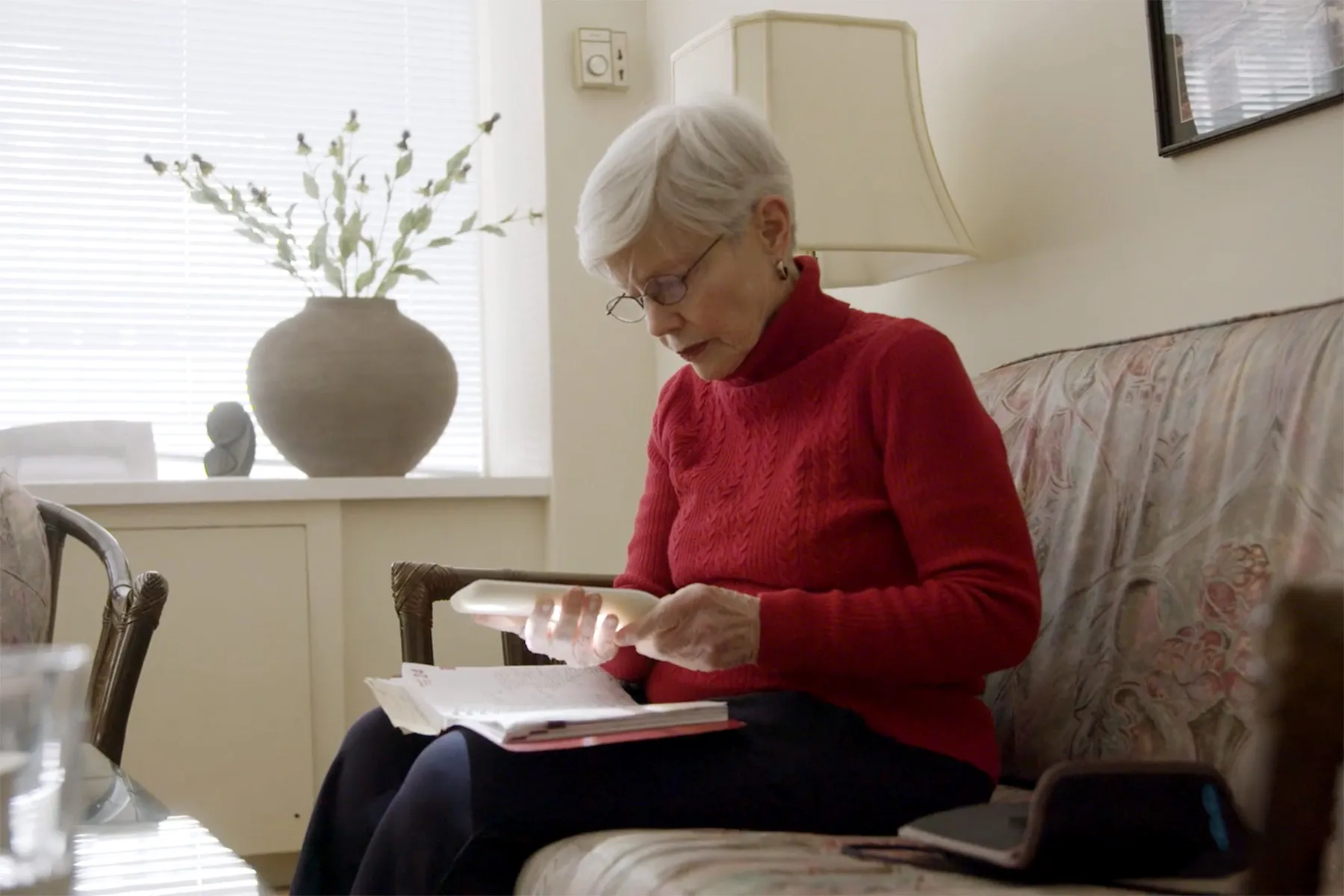
A practical solution is to stop treating reading as one task and start treating it as a system. Large-print books, e-readers, screen magnification, audiobooks, text-to-speech tools, handheld magnifiers, stand magnifiers, and good lighting can all help. Some people prefer a tablet because they can enlarge text, increase contrast, and use voice features. Others like simple tools, such as a bold black marker for labeling household items.
Recognizing Faces Can Feel Awkward
One of the most emotional challenges of geographic atrophy is difficulty recognizing faces. This can create uncomfortable moments in public. A friend waves from across the grocery store, and the person with GA may not respond because the face is unclear. The friend may think they were ignored. Meanwhile, the person with GA is thinking, “Was that Linda, Susan, or a very cheerful stranger near the bananas?”
This is where communication becomes a daily win. Telling close friends and family, “I may not recognize you right away, so please say your name,” can reduce awkwardness. It is not a weakness; it is a practical social shortcut. People who care usually appreciate knowing how to help.
Lighting Turns Into a Big Deal
Many people with GA need brighter, more even lighting. Dim restaurants, shadowy hallways, low-contrast stairs, and glare from windows can make navigation harder. Good lighting is not just decorative. It is a safety tool, a reading tool, and a mood tool.
Helpful upgrades may include adjustable task lamps, motion-sensor night lights, brighter bulbs in key areas, anti-glare window coverings, and high-contrast tape on stairs or appliance controls. The goal is not to turn the home into an airport runway. The goal is to make important details easier to detect.
Driving May Need Honest Reassessment
Driving is often one of the hardest subjects because it is tied to freedom. GA can make it difficult to read signs, detect pedestrians, judge distance, see in low light, or react quickly. A person may still feel comfortable in familiar areas during the day but struggle at night, in rain, or on busy roads.
The safest approach is to talk openly with an eye care professional about vision, legal driving requirements, and real-world driving comfort. Some people limit driving to daytime local routes. Others transition to rides from family, community transportation, rideshare services, delivery options, or paratransit programs. Giving up or reducing driving can feel like a loss, but planning alternatives early can protect independence instead of suddenly removing it.
Medication and Food Labels Become Sneaky
Small labels are a daily challenge that deserve more respect. A spice jar, shampoo bottle, prescription label, or frozen meal instruction can become a puzzle. This is not just inconvenient; with medication, it can affect safety.
Useful strategies include large-print medication lists, talking prescription labels, pill organizers, color-coded stickers, bold labels, smartphone magnifier apps, and asking the pharmacy about accessible packaging. In the kitchen, people may use tactile dots, rubber bands, large-print labels, or separate bins for similar items. Nobody wants to season oatmeal with garlic powder at 7 a.m. Organization is vision care with a sense of humor.
Daily Wins With Geographic Atrophy
Win 1: Learning to Use Remaining Vision Better
Low-vision rehabilitation can be life-changing because it focuses on function. It does not cure geographic atrophy or bring back lost retinal cells. Instead, it helps people use their remaining vision more effectively. A low-vision specialist may recommend magnifiers, lighting changes, contrast techniques, eccentric viewing strategies, electronic devices, orientation and mobility training, or home modifications.
A daily win may be reading a birthday card with a video magnifier, cooking safely with high-contrast measuring cups, or using a phone’s voice assistant to send a message. These wins may look small from the outside, but from the inside they can feel like getting a piece of normal life back.
Win 2: Making the Home Easier to Navigate
A GA-friendly home is not necessarily expensive or complicated. Often, it starts with simple changes: remove loose rugs, clear walkways, improve lighting, label important controls, organize frequently used items, and create consistent locations for keys, glasses, medication, chargers, and remote controls.
Contrast is especially helpful. A dark mug on a light countertop is easier to see than a white mug on a white counter. A brightly colored cutting board can help show light-colored foods. High-contrast tape can make stair edges or appliance buttons easier to identify. The goal is to make the environment do more of the work.
Win 3: Using Technology Without Becoming a Tech Wizard
Assistive technology does not have to mean complicated gadgets with manuals the size of a sandwich. Many helpful tools are already built into smartphones, tablets, and computers. Users can enlarge text, increase contrast, use voice commands, turn on screen readers, dictate messages, scan documents, identify products, or listen to books and articles.
For some people, the biggest win is learning one feature at a time. This week: enlarge text. Next week: use voice-to-text. The week after: try an audiobook app. Progress does not need to be dramatic. It needs to be usable.
Win 4: Keeping Social Life Alive
Vision loss can make people withdraw, especially when public places feel unpredictable. But isolation can make the emotional burden heavier. Staying socially connected is part of living well with geographic atrophy.
Helpful steps include choosing well-lit meeting places, asking friends to identify themselves, sitting where glare is reduced, using transportation support, joining low-vision groups, or scheduling phone and video calls. Social life may need adjustments, but it does not need to disappear. A good friend will not mind saying, “It’s Mark, and I’m waving from your left.”
Win 5: Building a Better Care Team
Geographic atrophy is best managed with a team approach. This may include an ophthalmologist, retina specialist, optometrist, low-vision rehabilitation specialist, occupational therapist, primary care clinician, pharmacist, family members, and community support organizations.
People with GA should ask clear questions during appointments: How is my GA progressing? Am I a candidate for treatment? What symptoms should I report quickly? Could low-vision rehabilitation help me? Are my supplements or medications appropriate for my situation? What changes should I make at home? Good questions turn appointments from quick checkups into useful planning sessions.
Treatment, Monitoring, and Realistic Hope
In recent years, treatment options for geographic atrophy have changed. FDA-approved medicines are available for some people with GA secondary to age-related macular degeneration. These treatments are given by injection into the eye by a qualified specialist and are designed to slow the growth of GA lesions. They are not a cure, and they do not restore vision already lost, but they may help slow progression in eligible patients.
Treatment decisions are personal. They depend on eye health, GA location, progression, risks, benefits, schedule, cost, and patient preference. Some people may choose treatment. Others may focus on monitoring and rehabilitation. The important point is that people with GA should not assume there is “nothing to do.” There may be medical, practical, and lifestyle steps worth discussing.
Regular eye exams are also important because people with AMD can develop wet AMD, which may require urgent treatment. New distortion, sudden vision changes, new dark spots, flashes, floaters, or a sudden drop in vision should be reported promptly to an eye care professional.
Practical Daily Strategies That Make Life Easier
Create a Morning Vision Routine
Mornings can be easier when the environment is predictable. Keep glasses, magnifiers, phone, medication, and lighting controls in the same place. Use large-print calendars or voice reminders. Prepare clothing in good light. Place high-contrast labels on important bottles and containers. A calm routine reduces the number of visual decisions required before coffee has performed its daily miracle.
Use the “One Home, One Spot” Rule
Losing items is more common when vision is unreliable. The “one home, one spot” rule means every important item has a consistent location. Keys go in one tray. Medication stays in one organizer. The remote lives in one basket. Reading tools stay beside one chair. This simple system can prevent daily frustration.
Make Meals More Manageable
Cooking with GA can be safer with contrast and organization. Use cutting boards that contrast with the food. Choose measuring cups with large markings. Put tactile dots on stove controls. Use timers with loud alerts. Store similar foods in separate bins. Consider pre-cut ingredients when needed. The win is not cooking like a television chef; the win is making food safely and confidently.
Protect Energy, Not Just Vision
Living with low vision can be tiring because the brain works harder to interpret incomplete information. People with GA may benefit from planning demanding visual tasks during their best time of day, taking breaks, reducing clutter, and asking for help before exhaustion sets in. Rest is not laziness. It is maintenance.
Emotional Challenges Are Real, Too
Geographic atrophy affects more than the eyes. It can affect identity, confidence, independence, relationships, and mood. A person may grieve the loss of easy reading, spontaneous driving, or recognizing faces across a room. They may feel embarrassed asking for help or angry when simple tasks take longer.
These reactions are human. Emotional support can include counseling, peer groups, low-vision support communities, family education, and honest conversations. Family members can help by asking what kind of support is useful rather than taking over everything. Independence grows best when help is respectful, not bossy.
A strong support phrase is: “Would you like help, or would you like me to give you time?” Sometimes the person wants assistance. Sometimes they want dignity, patience, and a minute to finish the task their own way.
For Caregivers: How to Help Without Hovering
Caregivers play an important role, but the best help is usually collaborative. Instead of rearranging the entire kitchen overnight, ask what is hardest. Instead of saying, “You can’t do that,” try, “How can we make this safer?” Instead of assuming technology is too hard, learn one accessibility feature together.
Useful caregiver actions include improving lighting, reducing trip hazards, labeling items, driving to appointments, taking notes during medical visits, helping compare low-vision tools, and encouraging social connection. The goal is not to wrap the person in bubble wrap. The goal is to support a life that still has choice, humor, and momentum.
Extra Experiences: Daily Wins and Challenges With Geographic Atrophy
Imagine a typical day with geographic atrophy. The morning begins with a familiar challenge: reading the medication bottle. The print is small, the bathroom light is not quite bright enough, and the label seems to have been designed by someone with microscope-level vision. A daily win appears when the person reaches for a pill organizer filled earlier in the week, with large labels and a simple morning-evening layout. No guessing. No stress. The day starts with confidence.
At breakfast, another challenge arrives. The coffee maker has tiny buttons, the milk carton looks suspiciously similar to the juice carton, and the newspaper headline is readable only if held at just the right angle. But there are wins here, too. A tactile dot on the coffee button helps. A bold black label on the milk carton helps. A tablet reads the news aloud while breakfast happens. The person may not read the paper the old way, but the morning ritual survives in a new form.
Later, there may be a trip to the grocery store. Grocery shopping with GA can feel like a scavenger hunt where the clues are printed in six-point font. Aisle signs, price tags, coupons, and product labels can blur together. The challenge is real, especially in bright stores with glare or crowded shelves. A practical win is using a shopping list organized by aisle, asking a store employee for help, using a phone magnifier, or choosing familiar products with recognizable shapes and colors. Another win is shopping at a quieter time of day, when there is less pressure and fewer carts performing surprise attacks.
Social moments bring their own mix of wins and challenges. A person with GA may hear a cheerful “hello” but not know who is speaking. That can feel embarrassing. A simple strategy changes the experience: friends and relatives learn to say their names when approaching. “Hi, it’s Karen, I’m by the door” is a small sentence with a big impact. It removes the guessing game and protects connection.
In the afternoon, hobbies may need adjustment. Sewing, reading, gardening, puzzles, painting, cooking, or watching television may not work the same way. But different does not mean gone. Large-print patterns, audiobooks, brighter lamps, raised garden beds, high-contrast tools, voice-controlled timers, and larger screens can keep favorite activities alive. One person might switch from paperback novels to audiobooks and discover they can “read” while walking. Another might use a video magnifier to keep writing holiday cards. These are not tiny victories. They are proof that adaptation is creative, not depressing.
Evenings can be more difficult because low light and fatigue make vision tasks harder. The daily challenge may be moving safely through the house, preparing dinner, or reading a television guide. The win may be motion-sensor lights, clear walkways, a talking clock, meal prep containers, or a voice assistant that answers questions without requiring a screen. A home that supports low vision quietly gives independence back throughout the day.
The biggest experience many people describe is learning patience with themselves. Geographic atrophy can make once-simple tasks feel slow, and that slowness can be irritating. But speed is not the only measure of success. Buttoning a shirt independently is a win. Sending a text by voice is a win. Asking for a menu in large print is a win. Laughing after mistaking the shampoo bottle for body wash is also a win, provided the hair survives the experiment.
Daily life with geographic atrophy is a balance of planning, problem-solving, and emotional resilience. Some days are hard. Some days are surprisingly smooth. The most powerful shift is moving from “I cannot do this anymore” to “How can I do this differently?” That question opens the door to tools, support, routines, and confidence. GA changes the way a person sees the world, but with the right strategies, it does not have to erase purpose, personality, or joy.
Conclusion
Daily wins and challenges with geographic atrophy often live side by side. A person may struggle to read a label but succeed with a magnifier. They may stop driving at night but gain confidence using planned transportation. They may miss a familiar face across the room but enjoy a conversation once the person introduces themselves. Geographic atrophy changes daily life, but it does not remove the possibility of independence, humor, connection, and meaningful routines.
The best approach combines medical care, low-vision rehabilitation, home safety, assistive technology, emotional support, and practical problem-solving. Progress may look like brighter lamps, larger text, clearer labels, safer walkways, better questions at appointments, or simply less frustration at the end of the day. With GA, every useful adaptation is a win worth counting.