Some movies do not merely entertain us; they unlock a tiny, snack-covered door in the brain and let our younger selves run wild again. One minute we are responsible adults comparing insurance quotes, and the next we are cheering for a flying bicycle, wishing our toys had secret meetings, or wondering whether ruby slippers come in our size. That is the magic of classic movies that still make us feel like a kid: they bring back wonder without asking us to give up wisdom.
These films last because they understand childhood better than a toy aisle on a Saturday morning. They know that kids are brave, dramatic, curious, stubborn, loyal, and occasionally convinced that a blanket fort is a legally recognized country. The best nostalgic movies do not talk down to young viewers. Instead, they trust them with big feelings: fear, friendship, loneliness, adventure, imagination, and the thrilling idea that ordinary people can stumble into extraordinary worlds.
From golden-age musicals to 1980s adventure movies, from animated Disney classics to family comedies watched every holiday season, these timeless films still sparkle because they carry emotional truth under the popcorn butter. Let us step back into the glow of the television, the hum of the VHS player, the smell of microwaved snacks, and the glorious belief that anything could happen before bedtime.
Why Classic Movies Make Us Feel Young Again
Classic childhood movies work because they combine three powerful ingredients: simplicity, surprise, and sincerity. Their stories are usually easy to follow, but never shallow. A child gets lost and finds courage. A group of friends discovers treasure. A toy learns jealousy is less useful than loyalty. A homesick girl realizes that home is not just a place, but a feeling stitched together by love, memory, and maybe a small dog with excellent timing.
Another reason these movies endure is sensory memory. We do not only remember the plot of a film like The Wizard of Oz or Home Alone; we remember where we sat, who laughed beside us, which scene scared us, and how old we were when we first believed movie magic was basically real. Nostalgia turns cinema into a time machine, minus the risk of accidentally becoming your own grandfather.
The Wizard of Oz: The Yellow Brick Road Never Closes
Released in 1939, The Wizard of Oz remains one of the greatest family films ever made because it captures the oldest childhood fantasy: what if the world became colorful the moment we opened the right door? Dorothy Gale’s journey from Kansas to Oz is filled with witches, singing travelers, flying monkeys, and one of cinema’s most famous lessons: sometimes the thing we are searching for has been with us all along.
The movie’s bright Technicolor fantasy, unforgettable songs, and lovable companions make it endlessly rewatchable. The Scarecrow, Tin Man, and Cowardly Lion are not just funny sidekicks; they are childhood insecurities in costume. Who among us has not wanted more brains, more heart, or more courage? The film reassures viewers that growing up is not about becoming fearless. It is about walking forward even when the road is strange, glittery, and occasionally full of suspicious poppies.
E.T. the Extra-Terrestrial: Childhood Loneliness With a Glowing Finger
Steven Spielberg’s E.T. the Extra-Terrestrial is one of those rare movies that understands children as emotional experts. Elliott does not befriend E.T. because the alien is cute, though the waddling certainly helps. He connects with him because both are lonely, misunderstood, and trying to make sense of a world run by adults who use too many keys and not enough imagination.
The bicycle flight across the moon is famous for a reason. It visualizes the impossible dream of childhood: escape, friendship, and freedom all in one perfect image. The movie makes us feel young because it remembers how seriously kids take love. When Elliott says goodbye, the pain feels enormous. Childhood may be full of toys and candy, but it is also full of first heartbreaks, and E.T. treats those feelings with respect.
The Goonies: Treasure Maps, Booby Traps, and Friendship
The Goonies is basically what happens when childhood imagination gets a production budget. A group of misfit kids discovers an old treasure map and launches into an underground adventure involving pirates, traps, criminals, and enough shouting to power a small city. It is chaotic, funny, messy, and full of the kind of friendship that feels possible only before adulthood starts scheduling everything in calendar apps.
The movie still works because it celebrates kids who are not polished heroes. They are loud, anxious, weird, loyal, and constantly one bad decision away from disaster. In other words, they are believable. The Goonies reminds us that childhood adventure often begins with boredom, a basement, and one friend who says, “What could go wrong?” Historically speaking, plenty could go wrong. Cinematically speaking, that is the entire point.
Back to the Future: The Coolest Homework Assignment Ever
Back to the Future turns time travel into a coming-of-age comedy with a lightning bolt attached. Marty McFly is a teenager with a guitar, a skateboard, and a deeply inconvenient relationship with the space-time continuum. When he accidentally travels from 1985 to 1955, he must repair his parents’ romance before he erases himself from existence. No pressure, Marty. Just save your family, your future, and possibly rock and roll.
The reason this classic movie still makes us feel like a kid is that it transforms history into a playground. The film asks a wonderfully childish question: what were our parents like before they became parents? That curiosity is universal. Kids often imagine adults as finished products, but Back to the Future reveals that everyone was once awkward, hopeful, insecure, and in need of a little courage. Also, a DeLorean with gull-wing doors remains one of cinema’s finest arguments for impractical transportation.
The Princess Bride: A Bedtime Story With Sword Fights
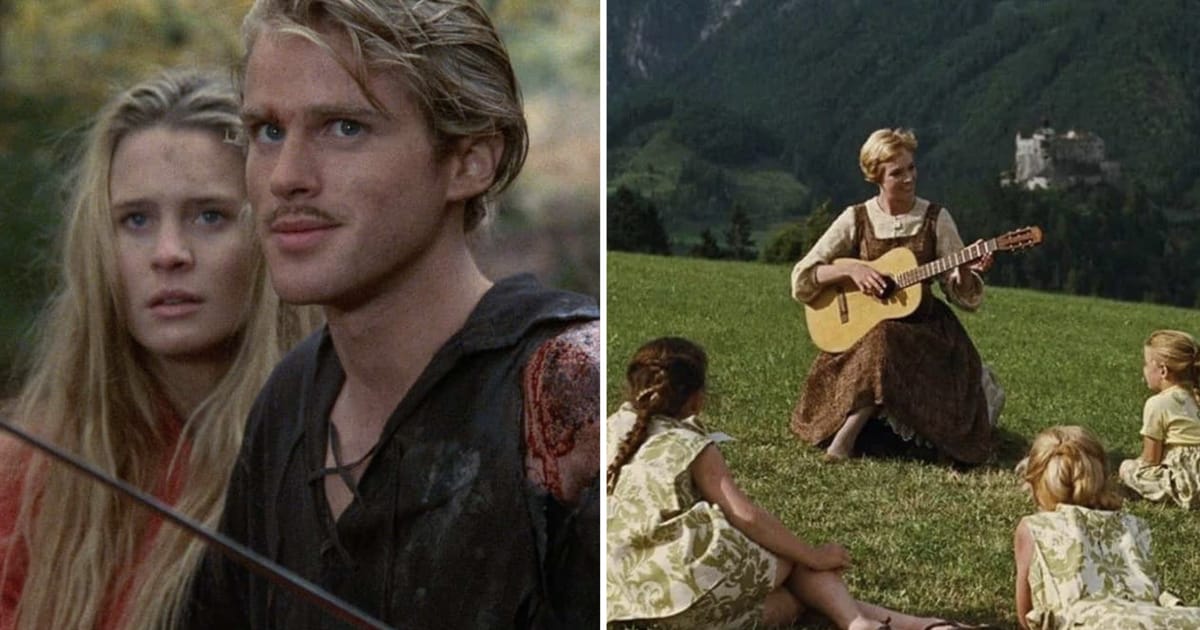
The Princess Bride feels like a fairy tale told by someone who loves fairy tales but refuses to let them become boring. It has true love, pirates, giants, revenge, rodents of unusual size, and dialogue so quotable it should come with its own storage shelf. The framing devicea grandfather reading to his sick grandsonturns the movie into a celebration of storytelling itself.
What makes it timeless is its balance. It is romantic without being mushy, funny without being cynical, and adventurous without losing its heart. For kids, it is a thrilling fantasy. For adults, it is a witty reminder that stories can connect generations. A child may first watch it for sword fights; an adult may return for the tenderness hidden between the jokes. Either way, “As you wish” still lands like a tiny emotional ambush.
Home Alone: The Ultimate Kid Power Fantasy
Home Alone may be a Christmas movie, a slapstick comedy, and a home-security warning all at once, but at its core it is the ultimate kid fantasy: what if adults disappeared and you got the house to yourself? Kevin McCallister eats junk food, watches forbidden movies, talks tough in the mirror, and then defends his home with traps that would make a licensed contractor faint.
The movie stays beloved because it understands both sides of childhood independence. Kevin wants freedom, but he also wants family. He loves being alone until loneliness sets in. That emotional pivot gives the film depth beneath the pratfalls. Yes, we laugh when the burglars take paint cans to the face, but we remember the quiet church scene and the reunion at the end. The movie says growing up means learning you can be brave on your own while still needing people who know exactly how annoying you are and love you anyway.
Toy Story: When Toys Became Feelings
Toy Story changed animation history as the first feature-length computer-animated film, but its emotional power comes from something much older than technology: the secret life of toys. Every child has wondered what happens after the bedroom door closes. Pixar answered with a buddy comedy about jealousy, identity, friendship, and the horror of being replaced by a shiny new space ranger with built-in confidence.
Woody and Buzz Lightyear are funny because they are toys acting like dramatic adults. They are moving because their fears are deeply human. Woody worries he is no longer loved. Buzz must accept that he is not exactly who he thought he was. These are big ideas wrapped in plastic boots and catchphrases. The movie makes adults feel like kids because it revives the sacred seriousness of play. A toy is never just a toy when imagination gives it a soul.
The Lion King: Big Emotions in a Big Circle
Disney’s The Lion King is one of the most emotionally powerful animated classics because it gives children a grand story about responsibility, grief, identity, and courage without hiding behind fluff. Simba begins as a playful cub who cannot wait to be king, then discovers that growing up is far more complicated than singing near a waterfall with your friends.
The film’s music, visuals, and mythic structure make it unforgettable. The opening sunrise still feels enormous, as if the whole world has taken a deep breath. Scar remains one of Disney’s sharpest villains, partly because he is theatrical enough to make betrayal come with excellent lighting. Yet the heart of the movie is Simba’s journey back to himself. For anyone who has ever run from responsibility, doubted their worth, or wished a wise cloud would offer life advice, The Lion King still roars.
Mary Poppins: Practical Magic With a Spoonful of Sugar
Mary Poppins is a childhood classic because it makes the ordinary world behave beautifully badly. Sidewalk paintings become portals, chimney sweeps dance across rooftops, and cleaning a room turns into a musical event. Julie Andrews gives Mary a perfect mix of warmth and mystery. She is kind, but not cuddly; magical, but never interested in explaining herself. Honestly, respect.
The film’s lasting charm comes from the way it treats imagination as a corrective force. The Banks family does not simply need a nanny; they need to rediscover joy, attention, and connection. Children understand this instantly. Adults may need a flying umbrella to remind them. Mary Poppins makes us feel young because it suggests that magic is not an escape from life. It is a way of noticing life again.
Willy Wonka & the Chocolate Factory: Sweet, Strange, and Slightly Terrifying
Willy Wonka & the Chocolate Factory is colorful, musical, and deliciously odd. It also contains enough moral consequences to make every child reconsider gum-related decisions. Gene Wilder’s Wonka is charming and unsettling, a candy genius who behaves like he knows the universe is a joke and refuses to explain the punchline.
The movie taps into a childhood dream as old as dessert: unlimited sweets, secret rooms, and a golden ticket out of ordinary life. But beneath the sugar rush is a lesson about character. Charlie Bucket wins not because he is flashy, rich, or loud, but because he remains kind. That message still matters. In a world full of Veruca-level entitlement, Charlie’s humility feels like the real golden ticket.
Star Wars: A New Hope: The Backyard Becomes a Galaxy
Star Wars: A New Hope turned science fiction into modern myth. For kids, it offers everything: lasers, droids, starships, princesses, villains, mentors, monsters, and the idea that a bored farm boy can become part of something cosmic. Luke Skywalker’s longing for adventure is one of the purest childhood emotions ever filmed. He looks at the twin suns and feels what many kids feel staring out a bedroom window: there must be more than this.
The movie still makes us feel young because it invites play. After seeing it, a flashlight is no longer a flashlight; it is a lightsaber. A laundry basket is not a basket; it is an escape pod. A breathing problem may briefly become a Darth Vader impression, much to the concern of everyone nearby. Star Wars endures because it transforms imagination into a galaxy big enough for everyone.
The Sandlot: Summer, Baseball, and Legendary Beasts
The Sandlot is one of the great movies about childhood friendship because it captures the mythology kids build around ordinary places. A neighborhood baseball field becomes a kingdom. A lost ball becomes a crisis. A dog behind a fence becomes “The Beast,” a creature inflated by rumor until it seems roughly the size of a dinosaur with better sprint speed.
The film is not really about baseball; it is about belonging. Scotty Smalls wants friends, confidence, and a place in the group. By the end, he has gained all three. The movie reminds adults of summers that seemed endless, when the rules were simple: show up, play hard, talk big, go home dirty, repeat tomorrow. It is childhood preserved in dust, sunlight, and one immortal line: “You’re killing me, Smalls!”
Matilda: Small Kids, Big Brains, Bigger Justice
Matilda speaks to every child who has ever felt underestimated. Based on Roald Dahl’s story, the film follows a brilliant girl surrounded by selfish adults, cruel authority, and a school principal who treats discipline like an Olympic throwing event. Matilda’s intelligence and telekinetic powers are fun, but the emotional core is her desire to be seen and loved.
The movie is empowering because it understands that children often recognize unfairness clearly. Matilda does not become special because of magic; the magic simply visualizes the strength she already has. Her friendship with Miss Honey offers the warmth missing from her home life, and the ending delivers the satisfying justice kids crave. Sometimes the small person in the room is the strongest one there.
What These Timeless Movies Have in Common
Although these classic movies differ in genre, decade, and style, they share several qualities that explain their lasting appeal. First, they respect childhood imagination. Whether the story involves Oz, outer space, living toys, buried treasure, or a suspiciously injury-resistant pair of burglars, each film treats wonder as something meaningful.
Second, they pair adventure with emotional truth. The spectacle matters, but so do the feelings underneath it. Dorothy wants home. Elliott wants connection. Kevin wants family. Simba wants courage. Woody wants to be loved. Marty wants his future back, which is understandable because fading from a photograph is not ideal for self-esteem.
Third, these movies invite repeat viewing. Children return for excitement and jokes. Adults return for craft, memory, and the bittersweet realization that the films have not changed, but we have. That is the real power of nostalgic family movies: they allow us to meet our younger selves without embarrassment. We can laugh, cry, quote the lines, and admit that yes, the flying monkeys were absolutely too much.
How to Rewatch Classic Movies Like a Kid
If you want to feel the full magic again, do not treat these films like background noise. Make rewatching them an event. Turn off the phone, make popcorn, dim the lights, and let the movie set the pace. Watch with someone younger if possible; children notice details adults miss, mostly because adults are busy wondering whether the mortgage payment cleared.
It also helps to rewatch without irony. Modern viewers sometimes protect themselves with sarcasm, but classic movies reward sincerity. Let the songs be big. Let the villains be theatrical. Let the happy endings work. Childhood wonder requires a little cooperation. You do not have to believe a nanny can fly forever; you only have to believe it for two hours.
Personal Experiences: Why These Movies Still Feel Like Home
There is a particular kind of memory that belongs only to movies watched in childhood. It is not clean or organized. It arrives in flashes: the blue glow of a television in a dark room, the soft argument over who gets the best seat on the couch, the bowl of popcorn that somehow becomes empty before the opening credits finish. Classic movies that still make us feel like a kid are powerful because they are tangled with the lives we were living when we first saw them.
Think about the first time a movie made the world feel bigger. Maybe it was Star Wars, when space stopped being a science textbook word and became a place full of smugglers, rebels, and glowing swords. Maybe it was The Wizard of Oz, when black-and-white life suddenly burst into color. Maybe it was Toy Story, when the toys on your bedroom floor seemed suspiciously still afterward. You may have gone to sleep that night half-convinced they were waiting for you to close your eyes before holding a staff meeting.
These films also remind us of how intensely children feel everything. As adults, we sometimes describe a movie as “cute” or “fun.” As kids, we experienced movies like weather. A scary scene was a storm. A happy ending was sunlight. A heroic moment could rearrange the whole day. When E.T. pointed toward home, when Simba saw his father in the clouds, when Kevin hugged his mother, those moments did not feel like scenes. They felt like emotional events.
Rewatching classic childhood movies as an adult can be surprisingly moving because we notice new things. We may return to Home Alone for the booby traps and realize it is also about loneliness and forgiveness. We may revisit The Lion King and understand that Simba’s journey is not just about bravery, but about facing grief. We may watch The Princess Bride and appreciate how the grandfather and grandson quietly become closer through a story. The movies grow with us, which is why they never become trapped in the past.
There is also comfort in their predictability. Life changes, people move away, technology evolves, and snacks become mysteriously expensive. But Dorothy still follows the Yellow Brick Road. Marty still needs 1.21 gigawatts. Charlie still finds the golden ticket. The Sandlot kids still play under summer skies. These stories wait for us exactly where we left them, like old friends who do not mind that we forgot to call for a decade.
Sharing these movies with a new generation creates another layer of joy. Watching a child react to the same moments you loved years ago feels like passing along a secret map. You know when the laugh is coming. You know when the gasp will happen. You know which scene may require reassurance, a snack refill, or both. In that moment, the movie is not just entertainment. It becomes a bridge between childhoods.
That is why classic movies still matter. They keep alive the part of us that believed stories could change the temperature of a room. They remind us that imagination is not something we outgrow; it is something we misplace and occasionally find again under a pile of responsibilities. Pressing play on one of these films is a small act of recovery. For a little while, we are not late, tired, overbooked adults. We are kids again, wide-eyed and barefoot, waiting for the adventure to begin.
Conclusion
Classic movies that still make us feel like a kid are more than nostalgic entertainment. They are emotional landmarks. They taught us courage through lions and farm girls, friendship through toys and treasure hunters, imagination through aliens and space rebels, and family through holiday chaos and bedtime stories. Their special effects may age, their fashions may look delightfully questionable, and their technology may belong in a museum, but their emotional truth remains fresh.
The best classic family movies remind us that childhood is not a place we permanently leave behind. It is a lens we can pick up again whenever we need wonder, comfort, laughter, or a reminder that adventure often begins with curiosity. So rewatch the films that raised your imagination. Quote the lines. Sing the songs. Laugh at the jokes you know by heart. Somewhere inside every grown-up is a kid waiting for the lights to dim and the story to start.
Note: This article is written in original American English for web publication and is based on widely documented film history, cultural reception, and real classic movie examples.