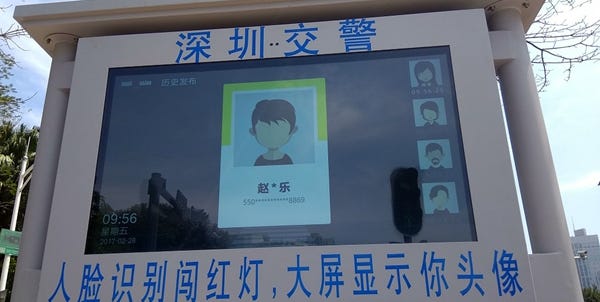
There are plenty of ways to learn you have broken a traffic rule. A whistle. A wave from a police officer. Maybe an embarrassing honk from the car you nearly inconvenienced. In parts of China, however, officials have experimented with a much more futuristic option: a camera spots you, software identifies you, a giant screen may shame you, and a message with a fine could land on your phone before you even finish pretending you “totally thought the light had changed.”
That is the idea behind the headline-grabbing reports out of Shenzhen, where officials explored a system that would use facial recognition and artificial intelligence to identify jaywalkers and send them an instant text-style notification or mobile message with a fine. On the surface, it sounds like a traffic-enforcement upgrade. In reality, it opens a much bigger conversation about surveillance, privacy, accuracy, and the increasingly blurry line between public safety and public monitoring.
This is why the story of China’s facial recognition system is not really about jaywalking at all. Jaywalking is simply the gateway behavior, the small everyday infraction that makes a larger system easier to normalize. Once a city can identify you for crossing the street at the wrong time, the question becomes obvious: what else can it identify you for, and what happens when the software gets it wrong?
How the Jaywalker-by-Text System Was Supposed to Work
The Shenzhen model combined several ingredients that, on their own, may sound practical. First came high-resolution cameras at busy intersections. Then came facial recognition software linked to a government database. Add artificial intelligence to process the image, match the face, and verify the identity. Finally, connect that enforcement system to mobile carriers or digital platforms such as WeChat and Weibo, and suddenly a city can turn a red-light violation into a near-instant digital citation.
Earlier versions of the system were already doing something less subtle and more theatrical: publicly displaying the faces, names, and partial identification details of jaywalkers on large LED screens near intersections. The next step was to skip the polite delay and send the penalty straight to the offender’s phone. It was bureaucracy with Wi-Fi, plus a side of social embarrassment.
Officials and technology vendors pitched the idea as a practical solution to a stubborn problem. In many Chinese cities, jaywalking has long been treated as a daily nuisance rather than a rare offense. From the perspective of local authorities, cameras do not get tired, distracted, or stuck at another corner. They are always watching, always recording, and, in theory, always “objective.” That last word deserves a giant asterisk, but we will get there.
Why Jaywalking Became the Perfect Test Case
Governments often introduce powerful technology in places where the public is most likely to shrug and say, “Well, I guess that makes sense.” Catching violent criminals with facial recognition sounds like a dramatic law-and-order pitch, but it also raises immediate civil-liberties concerns. Catching jaywalkers sounds boring, almost harmless. And boring systems are often the easiest ones to normalize.
That is part of what made the Shenzhen case so revealing. Authorities were not just trying to identify dangerous suspects. They were applying advanced surveillance tools to minor, everyday conduct. The message was clear: facial recognition was no longer just for airports, police dragnets, or high-security facilities. It was moving into routine city life, where ordinary pedestrians could become data points simply for taking a shortcut across the road.
Other cities had already experimented with similar tactics. In Jinan, for example, officials used facial recognition and public display screens to identify jaywalkers, and reports said pedestrians could face a small fine or other corrective measures. Supporters pointed to declining violations as proof that the system worked. Critics saw something else: not just traffic enforcement, but behavioral engineering through cameras, databases, and humiliation.
Public Safety or Public Shaming?
The public-facing LED screens are what turned this story from “smart city innovation” into “well, that escalated quickly.” Traditional traffic enforcement punishes you. These systems also perform you. They transform a violation into a public spectacle, using shame as a policy tool.
That matters because the punishment is not limited to a financial penalty. It becomes reputational. Your face may appear on a giant screen. Your name may be shown. Part of your ID number may be displayed. In some reported cases, photos and names have also been posted online. Suddenly, a pedestrian violation becomes a small civic scarlet letter.
To be fair, public shaming is not exactly new. Cities everywhere have tried weird deterrents, from aggressive signage to anti-jaywalking campaigns that sound like they were brainstormed by a sleep-deprived marketing team. But facial recognition supercharges public shaming because it automates it. No police officer needs to know you. No one has to manually look you up. The camera does the noticing, the software does the naming, and the screen does the scolding.
That efficiency is precisely what fascinates local officials and alarms privacy advocates. When surveillance becomes automated, punishment scales fast. What used to require manpower now requires infrastructure. And infrastructure tends to expand once someone has paid for it.
The Broader Surveillance Context in China
The jaywalking system did not appear in a vacuum. It emerged during a period when facial recognition was spreading across Chinese public life with remarkable speed. Reports from U.S. and international outlets described the technology being used in train stations, airports, apartment complexes, hotels, payment systems, and policing tools such as smart glasses. Chinese firms including SenseTime, Megvii, and other computer vision companies became major players in a booming surveillance ecosystem.
That wider context changes how the jaywalker story should be read. This was never just about crossing the street. It was about building a society in which identification could happen instantly and invisibly across many everyday settings. In one place, it might speed up airport check-in. In another, it might verify a payment. At a crosswalk, it might turn your bad timing into a fine. At a far more serious level, critics warned, the same logic could be applied to tracking petitioners, dissidents, and ethnic minorities.
There is also a common misunderstanding worth clearing up. Western coverage often lumps every Chinese surveillance story into one giant “social credit” machine, as though one master score is hovering over every citizen like a video-game health bar. The reality is messier. Some local systems are fragmented, some penalties are tied to specific blacklists or enforcement databases, and many programs operate separately. That does not make the surveillance less concerning. It just means the truth is more bureaucratic than science fiction. Think less one evil supercomputer, more an ever-growing stack of databases that occasionally decide to ruin your day.
What the Technology Gets Wrong
Facial recognition is often sold as frictionless, accurate, and neutral. Real life, unfortunately, keeps showing up and ruining the sales pitch. One of the most memorable reported cases involved a prominent Chinese businesswoman whose face was displayed as a jaywalker even though she had not crossed the street at all. The system had apparently picked up her image from an advertisement on the side of a passing bus. That is not a tiny glitch. That is the sort of mistake that makes “the camera never lies” sound like a joke with legal consequences.
False positives matter in any context, but they are especially troubling in automated enforcement. A mistaken parking ticket is annoying. A mistaken facial-recognition match can expose a person’s identity in public, attach a social stigma, and potentially trigger fines or bureaucratic hassles before a human being has taken a second look. Once a system is wired for speed, due process can become an afterthought.
And accuracy is not the only concern. Security is another. Investigations into Chinese surveillance databases have shown how much sensitive information these systems can hold, including names, ID numbers, locations, and movement records. That creates a second layer of risk: even if the software identifies the right person, what happens if the data itself is exposed, misused, or insufficiently protected?
Convenience Is the Sales Pitch. Control Is the Story.
One reason facial recognition has spread so quickly is that it can be marketed as convenience. No passwords. No tickets. No cards. No waiting. Just your face. That makes the technology easy to accept in low-friction situations such as payments, hotel check-ins, or building access. The problem is that convenience and control can ride in the same car.
When the same identification logic is used for law enforcement, urban management, and consumer services, a city starts to function like one giant identity checkpoint. Supporters see efficiency. Critics see normalization. And both are right in their own way. The system works precisely because it becomes ordinary.
This is where the jaywalking example becomes so revealing. It shows how governments can introduce intrusive tools through small civic annoyances rather than dramatic emergencies. Nobody needs a dystopian speech. They just need a traffic problem, a camera contract, and a promise that the whole thing will make streets safer and citizens more “civilized.”
China’s Own Privacy Backlash Tells You Something
Even in China, where facial recognition became widespread far earlier than in many other countries, privacy concerns did not disappear. Over time, public unease grew around the use of face scanning in hotels, residential compounds, and other everyday settings. Chinese courts and regulators later began pushing back on some commercial uses of the technology, and more recent rules have emphasized consent and the need for alternatives in certain non-law-enforcement situations.
That does not mean China abandoned facial recognition. Far from it. But it does show that even a country famous for rapidly adopting surveillance tech has had to confront the political and social costs of treating faces like universal ID cards. When a government that embraced the technology at scale starts acknowledging privacy concerns, that is not a footnote. That is a clue.
Why the Story Still Matters Far Beyond China
The real significance of “Chinese facial recognition system would fine jaywalkers by text” is that it offers a preview of how automated enforcement can evolve anywhere. Start with a camera. Add AI. Link it to an identity database. Connect it to payment tools or government records. Then expand from major crimes to minor infractions because that is where the resistance is lowest. The blueprint is portable.
In other words, this is not just a China story. It is a warning about what happens when cities adopt the logic that every public action can be measured, identified, and nudged by software. Today it is jaywalking. Tomorrow it could be fare evasion, littering, unauthorized parking, or something much more politically sensitive. Once identification infrastructure is in place, the menu tends to grow.
That is why debates over facial recognition cannot stop at the question of whether the technology is “useful.” Of course it can be useful. The bigger questions are who controls it, what safeguards exist, how errors are corrected, what data is retained, and whether citizens are being quietly trained to accept permanent traceability as the price of modern life.
Experiences Related to “Chinese Facial Recognition System Would Fine Jaywalkers By Text”
What makes this topic especially striking is not just the hardware or the software, but the human experience around it. Reported accounts from Chinese cities show that facial recognition changes the emotional texture of ordinary life. Crossing the street is no longer just crossing the street. It becomes a moment in which you might be scanned, matched, displayed, and contacted, sometimes within minutes.
One widely discussed reported experience came from Shenzhen, where a writer described being stopped after jaywalking, photographed, identified almost instantly, and handed a citation with a QR code for payment through WeChat. The striking detail was not merely the fine itself. It was the speed. What used to be a forgettable pedestrian mistake turned into an encounter with a system that already seemed to know who she was before the conversation had properly started. The effect was less “you broke a rule” and more “the city recognized you.” That is a very different feeling.
In Jinan and other cities that experimented with public display boards, the experience was more theatrical. Imagine glancing up at a traffic screen and seeing not an advertisement or the weather, but the face of someone who crossed too early. That sort of enforcement does not just punish the offender. It sends a message to every bystander: the cameras are active, the database is connected, and your anonymity in public space is thinner than you thought. Even if you never receive a fine, you still absorb the lesson.
Then there is the experience of error, which may be the most unsettling of all. When a businesswoman’s face was wrongly flagged from an advertisement on a bus, the episode exposed the fragility behind the confident marketing language. For the person misidentified, the problem is not abstract. It is immediate and personal. Your reputation can be dragged into a public display because software mistook a printed face for a real body. That is not futuristic elegance. That is algorithmic slapstick with consequences.
There is also the quieter experience reported by many observers of life in highly monitored cities: the awareness that cameras are not merely recording events after the fact, but actively participating in governance. In that environment, a crosswalk camera is not just a passive witness. It is part of a live enforcement network. The result can be a low-grade sense of being managed rather than merely observed. Some people may welcome that if it means cleaner, safer, more orderly streets. Others experience it as ambient pressure, a reminder that convenience and compliance now travel together.
Perhaps the oddest part is how quickly such systems can become normal. What seems shocking in a headline can fade into routine in daily life. People adapt. They change routes, wait for the light, avoid public embarrassment, and keep moving. That may be exactly the point. The genius of automated enforcement is that it does not need dramatic crackdowns. It works by making constant identification feel ordinary. And once that feeling settles in, the technology has already won half the argument.
Final Thoughts
The story behind China’s jaywalker-by-text system is a lesson in how advanced surveillance often enters public life wearing a practical disguise. It promises safer intersections, smoother enforcement, and modern efficiency. And sometimes it may deliver those things. But it also turns ordinary behavior into machine-readable data, shifts punishment from private correction to public exposure, and leaves citizens to trust that the software is accurate, secure, and fair.
That is a lot of trust to place in a camera at a crosswalk. Especially when the crosswalk is only the beginning.