Some mornings arrive politely. Others kick open the bedroom door, spill coffee on your schedule, and ask why nobody packed lunch. That is exactly why a reliable make-ahead egg sandwich recipe deserves a permanent spot in your breakfast routine. Warm eggs, melty cheese, toasted bread, and a freezer-friendly plan can turn chaotic weekdays into something that looks suspiciously like adulthood.
This recipe for make-ahead egg and cheese sandwiches is built for real life. It uses simple ingredients, bakes the eggs in one pan, assembles neatly, freezes beautifully, and reheats without turning into a sad rubber puck. The result is a hot breakfast sandwich that tastes homemade because it is homemade, not because a drive-thru speaker called you “boss” at 7:12 a.m.
The best part? You can make a batch on Sunday and enjoy quick breakfast sandwiches all week. This guide covers the exact ingredients, step-by-step method, freezer tips, reheating instructions, flavor variations, and practical experience-based advice to help you make egg and cheese sandwiches that actually survive meal prep.
Why This Is the Best Make-Ahead Egg Sandwich Recipe
A great make-ahead breakfast sandwich needs to do three things well: taste good on day one, reheat well on day three, and not collapse into breakfast confetti when you take the first bite. This recipe checks all three boxes.
Instead of cooking eggs one at a time in a skillet, the eggs are baked in a 9-by-13-inch pan. This creates a soft, sliceable egg layer that fits perfectly on English muffins, biscuits, bagels, croissants, or sandwich rolls. Baking the eggs also keeps the texture consistent, which matters when you are making several sandwiches at once.
The cheese goes directly on the warm egg so it melts gently, helping the sandwich hold together. Toasted bread adds structure, while optional add-ins like spinach, ham, bacon, sausage, peppers, or hot sauce let you customize the batch without making breakfast feel like homework.
Ingredients for Make-Ahead Egg and Cheese Sandwiches
This recipe makes 8 hearty breakfast sandwiches. You can double it if your freezer has room and your family treats breakfast like a competitive sport.
Main Ingredients
- 10 large eggs
- 1/2 cup whole milk, half-and-half, or cottage cheese blended smooth
- 1 teaspoon kosher salt
- 1/2 teaspoon black pepper
- 1/2 teaspoon garlic powder
- 1 tablespoon unsalted butter or olive oil, for greasing the pan
- 8 English muffins, split and toasted
- 8 slices cheddar, American, Swiss, Monterey Jack, or pepper Jack cheese
- 2 tablespoons chopped chives or green onions, optional
Optional Add-Ins
- 8 slices cooked bacon
- 8 cooked sausage patties
- 8 slices deli ham
- 1 cup baby spinach, roughly chopped
- 1/2 cup sautéed mushrooms
- 1/2 cup roasted red peppers, patted dry
- Hot sauce, pesto, or chipotle mayo for serving
For the most freezer-friendly egg sandwich, avoid watery vegetables unless you cook them first. Raw tomatoes, fresh cucumbers, and wet greens can release moisture during reheating. Save those for fresh toppings after the sandwich is hot.
How to Make Egg and Cheese Sandwiches Ahead of Time
Step 1: Prepare the Pan
Preheat the oven to 350°F. Grease a 9-by-13-inch baking dish with butter or olive oil. For easier cleanup, line the pan with parchment paper, leaving a little overhang on the sides. This makes it easy to lift the baked eggs out in one piece.
Step 2: Whisk the Eggs
In a large bowl, whisk together the eggs, milk, salt, pepper, garlic powder, and chives if using. Whisk until the mixture looks smooth and evenly yellow. You do not need to whip it into a soufflé; breakfast is not asking for drama.
Step 3: Bake the Egg Layer
Pour the egg mixture into the prepared pan. Bake for 18 to 24 minutes, or until the eggs are set in the center and reach 160°F. The top should look firm but still tender. Avoid overbaking, because dry eggs are the villain of every reheated breakfast sandwich.
Step 4: Cool and Slice
Let the egg slab cool for 10 minutes. Lift it from the pan and cut it into 8 equal squares or rounds. If you are using English muffins, squares are easiest and taste exactly as good as circles. Nobody has ever rejected breakfast because the egg had corners.
Step 5: Toast the Bread
Toast the English muffins until lightly golden. This step is important because toasted bread holds up better in the refrigerator or freezer. Soft, untoasted bread can become chewy after reheating.
Step 6: Assemble the Sandwiches
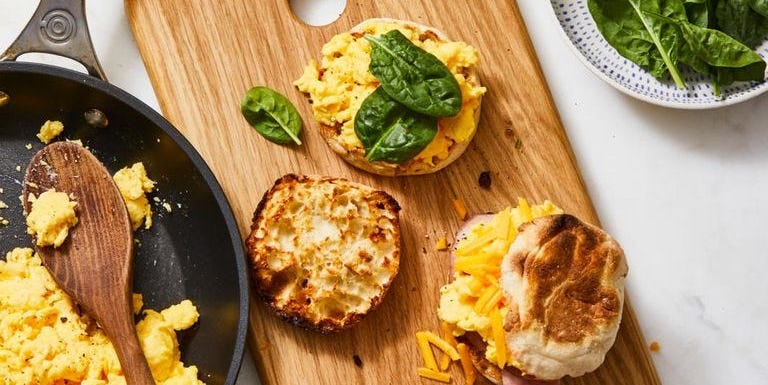
Place one egg portion on the bottom half of each muffin. Add a slice of cheese. Add bacon, sausage, ham, spinach, or vegetables if desired. Finish with the top half of the muffin.
Step 7: Wrap for Storage
For refrigerator storage, wrap each sandwich in parchment paper or foil and place them in an airtight container. For freezer storage, wrap each sandwich in parchment paper, then foil, and place them in a freezer-safe bag. Label the bag with the date so you do not rediscover mystery breakfast in three months and pretend it is “rustic.”
How Long Do Make-Ahead Egg Sandwiches Last?
Make-ahead egg sandwiches can be stored in the refrigerator for 3 to 4 days. For longer storage, freeze them for best quality within 1 to 2 months. Frozen leftovers can remain safe longer when kept continuously frozen, but flavor and texture are best when the sandwiches are eaten sooner rather than later.
Always cool the sandwiches before wrapping and storing. Trapping steam inside the wrapper creates moisture, and moisture is what makes bread soggy. Let the ingredients cool just enough so they are no longer hot, then wrap tightly.
How to Reheat Egg and Cheese Sandwiches
Microwave Method
Remove any foil before microwaving. Wrap the sandwich in a damp paper towel and microwave on 50% power for 1 minute if refrigerated, or 2 to 3 minutes if frozen, flipping halfway through. Then microwave in 20-second bursts until hot in the center. The damp towel creates gentle steam and helps keep the bread from drying out.
Oven Method
For the best texture, reheat sandwiches in a 350°F oven. Wrap the sandwich in foil and bake for 15 to 20 minutes if refrigerated or 25 to 30 minutes if frozen. Open the foil during the last few minutes if you want the bread slightly crisp.
Air Fryer Method
For a crispier sandwich, reheat in an air fryer at 325°F for 6 to 8 minutes from the refrigerator or 10 to 14 minutes from frozen. If the outside browns too quickly, wrap the sandwich loosely in foil for the first half of reheating.
Best Bread for Make-Ahead Breakfast Sandwiches
English muffins are the classic choice because they are sturdy, toast well, and have enough texture to handle freezing. Bagels are excellent for bigger appetites. Croissants taste luxurious but are more delicate, so they are best for refrigerator storage rather than long freezer storage. Biscuits are buttery and comforting, but they can crumble if overbaked or overheated.
If you want the most reliable make-ahead egg sandwich, choose English muffins. If you want the most indulgent version, choose croissants. If you want the sandwich that says “I have a big meeting and need emotional support,” choose a biscuit with sausage and cheddar.
Cheese Options That Melt Beautifully
Cheddar gives the sandwich sharp flavor. American cheese melts smoothly and gives a classic diner-style texture. Swiss adds a mild nuttiness, while pepper Jack brings gentle heat. Monterey Jack is creamy and kid-friendly. Provolone works well with ham, spinach, and roasted peppers.
For best results, use sliced cheese rather than shredded cheese. Slices create an even layer and help glue the sandwich together. This is breakfast engineering, and yes, cheese is structural support.
Flavor Variations
Classic Bacon, Egg, and Cheese
Add one slice of cheddar and one or two slices of cooked bacon to each sandwich. This version is salty, crisp, familiar, and basically the breakfast equivalent of a favorite hoodie.
Sausage Egg and Cheese
Add cooked sausage patties and American cheese. This is the heartiest option and works especially well with English muffins or biscuits.
Spinach and Swiss Egg Sandwich
Add chopped spinach to the egg mixture before baking, then top each sandwich with Swiss cheese. For extra flavor, add a thin layer of Dijon mustard after reheating.
Southwest Egg and Cheese Sandwich
Add diced green chiles, pepper Jack cheese, and a pinch of smoked paprika to the eggs. Serve with salsa after reheating, not before freezing, to avoid soggy bread.
Ham, Egg, and Cheddar
Layer thin ham with sharp cheddar. This variation is simple, freezer-friendly, and great for kids or anyone who thinks breakfast should not require a personality test.
Tips for the Best Make-Ahead Egg Sandwiches
First, do not skip the cooling step. Hot eggs and hot bread create steam, which turns into sogginess. Second, toast the bread lightly before assembly. Third, avoid overcooking the eggs. Baked eggs continue to firm up slightly as they cool, so pull them from the oven when just set.
Fourth, add sauces after reheating whenever possible. Mayo, salsa, ketchup, pesto, and hot sauce taste better fresh and help restore moisture. Fifth, wrap sandwiches individually so you can grab one at a time without wrestling the entire freezer bag like it owes you money.
Common Mistakes to Avoid
Using Too Much Milk
A little dairy makes the eggs tender. Too much makes them watery. Stick with 1/2 cup dairy for 10 eggs.
Freezing Wet Ingredients
Fresh tomatoes, watery greens, and heavy sauces can make the bread soggy. Add them after reheating instead.
Overheating in the Microwave
Full-power microwaving can make eggs rubbery. Use 50% power and heat gradually. Your patience will be rewarded with eggs that taste like breakfast, not a kitchen sponge.
Forgetting to Label the Bag
Date your sandwiches before freezing. Future you deserves clarity, not freezer archaeology.
What to Serve with Egg and Cheese Sandwiches
These sandwiches are filling on their own, but they pair well with fruit, yogurt, roasted potatoes, a smoothie, or a simple green salad if you are eating one for lunch. For a brunch spread, serve them with hash browns, fresh berries, coffee, orange juice, and a small bowl of hot sauce packets for dramatic flair.
Nutrition and Meal Prep Benefits
Egg and cheese sandwiches are satisfying because they combine protein, fat, and carbohydrates in one easy meal. Eggs provide high-quality protein, while cheese adds richness and flavor. Choosing whole-grain English muffins can add fiber, and vegetables like spinach or peppers can boost color and nutrients.
Compared with buying breakfast every morning, homemade make-ahead breakfast sandwiches are usually more budget-friendly and customizable. You control the bread, cheese, protein, sodium, vegetables, and portion size. You also control whether breakfast happens before or after your inbox starts yelling.
Experience Notes: What I Learned Making Make-Ahead Egg Sandwiches
The first lesson of make-ahead egg sandwiches is that the bread matters more than most people think. A soft roll may taste wonderful fresh, but after freezing and reheating it can become chewy or damp. English muffins consistently perform the best because their texture gives steam somewhere to go. Bagels also work well, especially for hungry mornings, but they need a little extra reheating time because they are thicker.
The second lesson is that baked eggs are much easier than skillet eggs when you are meal prepping. Cooking eight separate egg patties sounds charming until you are standing at the stove wondering why breakfast has become a part-time job. A single baked egg layer saves time and creates even portions. It also makes cleanup easier, especially if you use parchment paper.
The third lesson is that cheese placement matters. Put the cheese directly against the warm egg, not on the outside near the bread. When the sandwich reheats, the cheese melts into the egg and helps hold everything together. If you add meat, place it between the cheese and bread or beneath the egg. This creates layers that reheat evenly and makes each bite more balanced.
The fourth lesson is to keep sauces separate. Hot sauce, chipotle mayo, pesto, and salsa are all fantastic, but they are better added after reheating. When frozen inside the sandwich, sauces can soak into the bread or separate. A small container of sauce in the fridge gives you more flavor control and prevents the dreaded soggy-bottom situation.
The fifth lesson is that microwave reheating is convenient, but the oven or air fryer gives better texture. On busy weekdays, the microwave is absolutely fine, especially with a damp paper towel. But if you have a few extra minutes, the oven brings back the toasted edges and makes the sandwich taste closer to freshly made. The air fryer is the fastest route to a crisp exterior, though you should watch closely so the bread does not get too dark.
The sixth lesson is to build variety into the batch. Make four classic cheddar sandwiches, two with spinach and Swiss, and two with sausage and pepper Jack. That way, breakfast does not feel repetitive by Thursday. You can mark the wrapper with a simple code, such as “C” for cheddar or “S” for sausage. It is a small step, but it makes weekday mornings feel slightly more organized, which is sometimes all we can ask from civilization.
Finally, the best make-ahead egg sandwich recipe is the one you will actually eat. Do not overcomplicate it. Use bread you like, cheese that melts well, eggs cooked gently, and fillings that make you excited to open the freezer. A homemade egg and cheese sandwich should make your morning easier, not require a culinary degree and a motivational speech.
Conclusion
This make-ahead egg sandwich recipe is the kind of breakfast solution that feels simple because it is simple. Bake the eggs, toast the bread, add cheese, wrap, chill or freeze, and reheat when life gets loud. With the right storage and reheating method, you can enjoy hot egg and cheese sandwiches all week without sacrificing flavor or texture.
Whether you prefer classic bacon, hearty sausage, sharp cheddar, spinach and Swiss, or a spicy pepper Jack version, this recipe gives you a flexible base for quick breakfast meal prep. It is budget-friendly, freezer-friendly, family-friendly, and far more satisfying than skipping breakfast while holding coffee like it is a life raft.