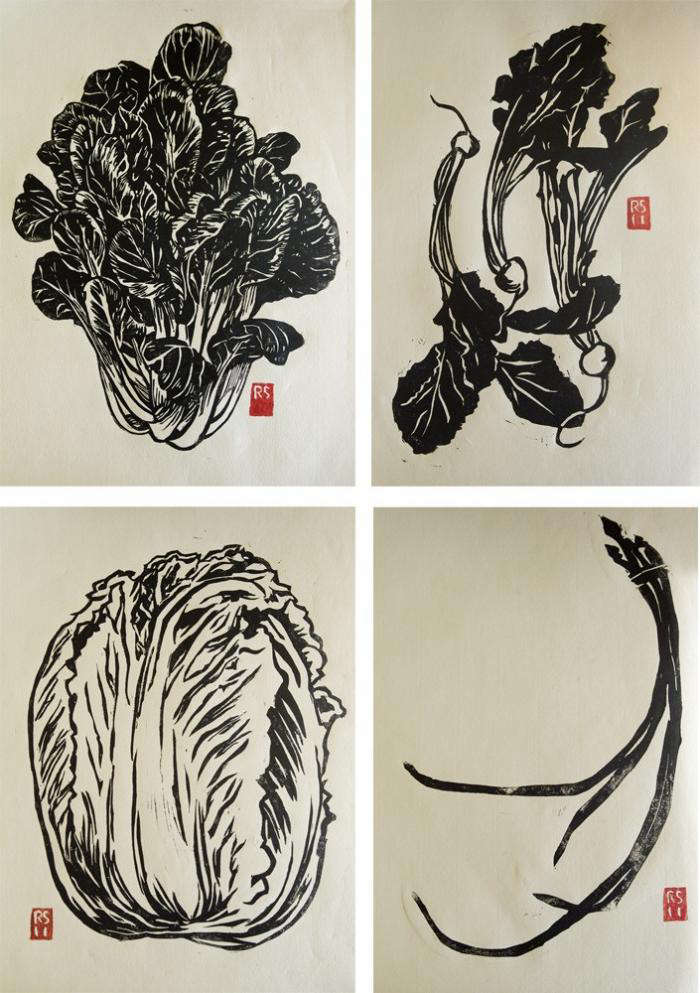
An Asian Vegetable Set Hand-printed Block Print sounds simple at first: vegetables, paper, ink, done. But like a perfectly seasoned stir-fry, the magic is in the layering. This kind of artwork brings together botanical illustration, Asian culinary culture, traditional relief printing, and modern home styling in one charming package. It is not just wall décor for people who own a wok and feel superior about their scallion storage system. It is a celebration of shape, texture, craft, and food memory.
Imagine a set of hand-printed images featuring bok choy, daikon, Asian eggplant, bitter melon, gai lan, napa cabbage, kabocha squash, or long beans. Each vegetable has its own personality. Bok choy stands upright like it has excellent posture. Daikon is calm, pale, and quietly confident. Bitter melon looks like it has opinions. Asian eggplant brings elegance with its long purple form. When these vegetables are carved into a block and printed by hand, they become more than ingredients. They become design objects with cultural warmth and visual rhythm.
In the world of SEO-friendly home décor, phrases like Asian vegetable art print, hand block print, botanical kitchen wall art, and vegetable block print set are useful because they describe exactly what many people are searching for: meaningful artwork that looks beautiful without feeling mass-produced. A hand-printed block print has the rare ability to feel both old and fresh, humble and refined, rustic and gallery-worthy. That is a lot of work for a radish, but daikon has always been an overachiever.
What Is an Asian Vegetable Set Hand-printed Block Print?
An Asian vegetable set hand-printed block print is usually a series of handmade prints created using a relief printing technique. The artist carves a design into a block, applies ink to the raised surface, and presses the block onto paper or fabric. The carved-away areas stay blank, while the inked raised areas form the final image. Because each impression is made by hand, every print carries tiny variations. A slightly uneven edge, a richer patch of ink, or a gentle shift in texture gives the piece its soul.
The subject matterAsian vegetablesadds a distinctive layer of meaning. These crops are closely tied to home cooking, markets, regional cuisines, family recipes, and seasonal eating across East Asia, Southeast Asia, and South Asia. In the United States, vegetables such as bok choy, daikon, Asian eggplant, edamame, kabocha squash, Chinese broccoli, and leafy Asian greens have become increasingly familiar in farmers markets, specialty groceries, restaurants, and home kitchens. Turning them into art feels natural because they are already sculptural. A bunch of baby bok choy on a cutting board is basically still life painting before dinner interrupts.
A set format also matters. Instead of one lonely print, a group of three, four, six, or eight prints creates rhythm. The viewer notices similarities and differences: the curve of eggplant beside the roundness of kabocha, the vertical lines of scallions beside the broad leaves of napa cabbage. Together, the prints feel like a visual pantryorganized, useful, and much prettier than the actual vegetable drawer in most refrigerators.
The Beauty of Hand Block Printing
A Craft Built on Pressure, Patience, and Imperfection
Block printing belongs to the larger family of relief printmaking. In relief printing, the image is raised above the carved surface, much like a stamp. The artist inks the raised parts and transfers the image to paper. This process can be done with wood, linoleum, rubber, or other carveable materials. Traditional woodblock methods have a long history in Asia, especially in China and Japan, where carved blocks were used for texts, images, books, and eventually highly refined art prints.
What makes a hand block print appealing is the visible touch of the maker. Digital prints can be clean and attractive, but they often have a smooth sameness. A hand-printed piece has character. Ink may pool in a vein of the carved leaf. The paper may catch pressure differently from one corner to another. The result feels alive. In a vegetable-themed print, those irregularities are not flaws. They echo the actual produce. No two bok choy leaves grow exactly alike, and no two impressions need to be identical either.
Why the Handmade Look Works So Well for Vegetables
Vegetables are full of graphic possibilities. Long beans create elegant lines. Daikon offers clean negative space. Bitter melon brings bumpy texture. Lotus root, if included, gives the artist a pattern of natural circles that looks almost modernist. Napa cabbage has layered leaves that can be simplified into bold shapes, while kabocha squash offers weight, curves, and a handsome ribbed form.
Block printing reduces these vegetables to their strongest visual features. The technique rewards bold outlines, balanced composition, and confident contrast. A hand-printed Asian vegetable set can therefore feel both botanical and abstract. It nods to scientific illustration but does not need to behave like a textbook. It can be playful, elegant, minimalist, rustic, or colorful depending on the artist’s style.
Why Asian Vegetables Make Great Botanical Wall Art
Botanical art has traditionally helped people observe plants closely. Before photography became practical for scientific documentation, illustration could show important details clearly: a leaf, root, flower, fruit, seed, or cross-section all in one carefully arranged image. Vegetable art borrows that same spirit of attention. It asks us to look again at everyday ingredients we often chop too quickly to appreciate.
Asian vegetables are especially rich subjects because they vary dramatically in shape, color, and culinary role. Bok choy has glossy green leaves and pale stalks. Chinese broccoli has slim stems and small flower buds. Daikon can be long, white, and understated. Asian eggplant is often slender and glossy, with shades ranging from deep purple to lavender. Kabocha has a dense, rounded shape with dark green skin. Bitter melon looks almost prehistoric, which is part of its charm. Put these forms together, and you get a wall display that feels lively without needing loud colors.
There is also emotional resonance. For many people, these vegetables are tied to memories of family kitchens, neighborhood markets, Lunar New Year meals, summer gardens, restaurant dinners, or weekend grocery runs where someone’s parent carefully inspected every leaf like a detective solving a cabbage mystery. A print set can quietly honor those memories without becoming sentimental or overly themed.
Design Styles for an Asian Vegetable Block Print Set
Minimalist Black Ink
A black-and-white hand block print is timeless. It works well in modern kitchens, breakfast nooks, home offices, and dining rooms because it does not compete with other colors. Strong black outlines on warm white paper can make vegetables look architectural. This style is especially effective for long beans, scallions, lotus root, daikon, and leafy greens.
Earthy Natural Colors
Muted green, clay, charcoal, indigo, mustard, or eggplant purple can create a softer and more organic feeling. These tones pair beautifully with wood shelves, ceramic dishes, linen curtains, rattan baskets, and stone countertops. If the goal is warm Asian kitchen décor rather than stark gallery minimalism, earthy colors are a smart choice.
Vintage Market-Inspired Prints
Some sets borrow the feeling of old seed packets, farmers market signs, or antique botanical plates. These may include vegetable names, small labels, or simple borders. A vintage-inspired Asian vegetable art print works particularly well in farmhouse kitchens, eclectic apartments, cafés, and restaurants that want a handmade atmosphere without looking like they raided a museum gift shop during a power outage.
Contemporary Graphic Sets
A modern version might use simplified vegetable silhouettes, bold spacing, and limited colors. This style suits urban apartments and clean interiors. It is also highly giftable because it does not require the recipient to have a specific décor style. A good contemporary print set says, “I have taste,” without shouting, “I rearrange my spice drawer alphabetically.”
Where to Display Asian Vegetable Hand-printed Art
The obvious place is the kitchen, but that is only the beginning. A small set above a breakfast table can make a room feel warmer and more personal. A row of framed prints near open shelving can soften the practical look of cookware and storage jars. In a dining room, a larger grid of vegetable prints creates conversation without overwhelming the space.
Restaurants, noodle shops, dumpling bars, tea houses, and farm-to-table cafés can also use this kind of artwork to build atmosphere. Unlike generic food posters, hand block prints feel specific and crafted. They communicate freshness, care, and a respect for ingredients. That message is useful for any food business that wants customers to feel they are eating something thoughtfully prepared, not merely assembled under fluorescent lighting by a very tired blender.
Outside the kitchen, these prints can work in a hallway, pantry, studio, garden room, or home office. Food-themed art often performs best when it is slightly unexpected. A daikon print in a reading corner? Surprisingly chic. A bitter melon print near a desk? Possibly motivational. It reminds you that beauty and bitterness can coexist, which is also a decent summary of email.
How to Choose the Best Print Set
Look for Real Hand-printing Details
If you are buying a hand-printed block print set, read the description carefully. Terms such as “hand-pulled,” “hand-printed,” “linocut,” “woodcut,” “relief print,” or “block printed by hand” suggest a traditional process. A reproduction of a block print can still be attractive, but it is not the same thing as an original hand-pulled impression.
Check the Paper and Ink
Quality paper makes a major difference. Cotton rag paper, handmade paper, mulberry paper, or archival printmaking paper can give the artwork depth and durability. Water-based inks often create a softer, more organic look, while oil-based inks may produce rich, dense color. Neither is automatically better; the right choice depends on the artist’s method and the finish you prefer.
Consider the Vegetable Selection
A balanced set usually mixes shapes. For example, a four-print set might include bok choy, daikon, Asian eggplant, and kabocha. A six-print set could add lotus root and long beans. A larger set might include bitter melon, napa cabbage, Chinese broccoli, scallions, edamame, or shiitake mushrooms if the artist expands beyond vegetables. The strongest sets feel cohesive while giving each subject room to breathe.
Think About Size and Framing
Small prints work well in sets because they can be arranged in grids, rows, or salon-style clusters. Standard sizes such as 8×10, 11×14, and 12×16 inches are easier to frame. If the paper has deckled edges or visible handmade texture, floating the print in a frame can highlight its craft quality. For a cleaner look, use a mat with a simple wood, black, white, or brass frame.
Care Tips for Hand-printed Block Prints
Because handmade prints are physical objects made of paper and ink, they deserve thoughtful care. Keep them away from direct sunlight, especially in bright kitchens with large windows. Light can fade pigments over time. Use UV-protective glass or acrylic if the print will hang in a sunny room. Avoid placing prints directly above a stove, sink, or kettle where steam, grease, and heat can become uninvited guests.
Humidity is another concern. Kitchens are busy environments, and paper does not love moisture. Frame the print properly, avoid damp walls, and use acid-free mats or backing materials when possible. If you rotate seasonal artwork, store unframed prints flat in archival sleeves or folders. A little care can keep a hand-printed vegetable set looking crisp for years.
Why This Print Set Makes a Thoughtful Gift
An Asian Vegetable Set Hand-printed Block Print makes a memorable gift because it is personal without being too personal. It works for home cooks, gardeners, chefs, design lovers, restaurant owners, print collectors, and anyone who believes vegetables deserve better public relations. It is especially meaningful for people who grew up with these ingredients or who have discovered them through cooking, travel, or farmers markets.
Unlike kitchen gadgets, art does not become obsolete when a newer model arrives with Bluetooth for no reason. A handmade print set can move from apartment to house, from kitchen to dining room, from starter home to forever home. It can become part of the visual language of daily life. That is a generous thing for a few sheets of paper and ink to do.
Experience Notes: Living With an Asian Vegetable Set Hand-printed Block Print
The first experience many people have with an Asian vegetable block print set is visual delight. The artwork catches attention because it feels familiar and unfamiliar at the same time. You recognize the food, but the hand-printed treatment makes you slow down. A bok choy leaf becomes a fan shape. A daikon root becomes a clean vertical line. A kabocha squash becomes a study in weight and shadow. Suddenly, the vegetables you usually rinse, slice, and toss into a pan look like they have been waiting patiently for their museum debut.
One of the best places to experience this kind of print set is in a kitchen where real cooking happens. Not a showroom kitchen where the oven is emotionally neglected, but a working kitchen with garlic skins, soy sauce bottles, rice steam, and someone asking where the good knife went. In that environment, the prints feel connected to life. They are decorative, yes, but they also echo the ingredients on the counter. The art and the meal begin to speak to each other.
For example, a print of Asian eggplant may hang above a small dining table. One evening, the same vegetable appears in a dish with garlic, ginger, and a glossy sauce. The artwork is no longer just wall décor. It becomes a quiet companion to the meal. Guests notice it and begin talking about recipes, markets, childhood dinners, or the one time they confused bitter melon with cucumber and learned an unforgettable lesson. That is the power of food-related art: it opens doors to stories.
Another experience is the pleasure of noticing handmade variation. In a digital world, perfect repetition is everywhere. Hand block printing pushes back gently. The edge of a leaf may be darker on one print. A carved line may appear slightly rough, giving the vegetable texture. A small ink mark may remind you that a real hand pressed the block. These details make the artwork feel human. They also make the owner feel like they have something with a pulse, not just another flat image shipped from the land of infinite sameness.
Styling the set can also be surprisingly enjoyable. A row of three prints above a counter creates order. A grid of six prints gives a dining room a collected, gallery-like feel. Mixing the vegetable prints with ceramic plates, woven baskets, or framed family recipes can create a layered story about food and home. The prints do not need to match everything. In fact, they often look better when they bring a little contrast. A crisp black ink daikon print can sharpen a warm rustic kitchen. A soft green bok choy print can calm a bright white wall. A purple eggplant print can add just enough drama without behaving like a chandelier.
Over time, the set may change how you see actual vegetables. You may find yourself choosing bok choy at the market because the leaves look especially graceful. You may notice the pattern inside lotus root or the curve of long beans. That is the hidden gift of botanical art: it trains attention. It says, “Look closer. Dinner has design.” And honestly, dinner deserves the compliment.
Conclusion
An Asian Vegetable Set Hand-printed Block Print is more than a decorative trend. It is a meeting point between craft, culture, food, and design. By combining the tactile beauty of block printing with the expressive forms of Asian vegetables, this artwork brings warmth and originality into kitchens, dining rooms, restaurants, and creative spaces. It celebrates ingredients that are practical, beautiful, and deeply connected to everyday life.
Whether rendered in minimalist black ink, earthy color, vintage botanical style, or bold contemporary shapes, a hand-printed vegetable set offers something mass-produced wall art rarely can: personality. Each impression carries the mark of the maker, and each vegetable carries its own culinary and cultural story. For anyone looking for handmade kitchen wall art, Asian-inspired botanical décor, or a thoughtful gift for a food lover, this print set is a small but meaningful treasure. It proves that art does not always need grand subjects. Sometimes, all it needs is a block, some ink, good paper, and a very photogenic bok choy.